Hi Bestie,
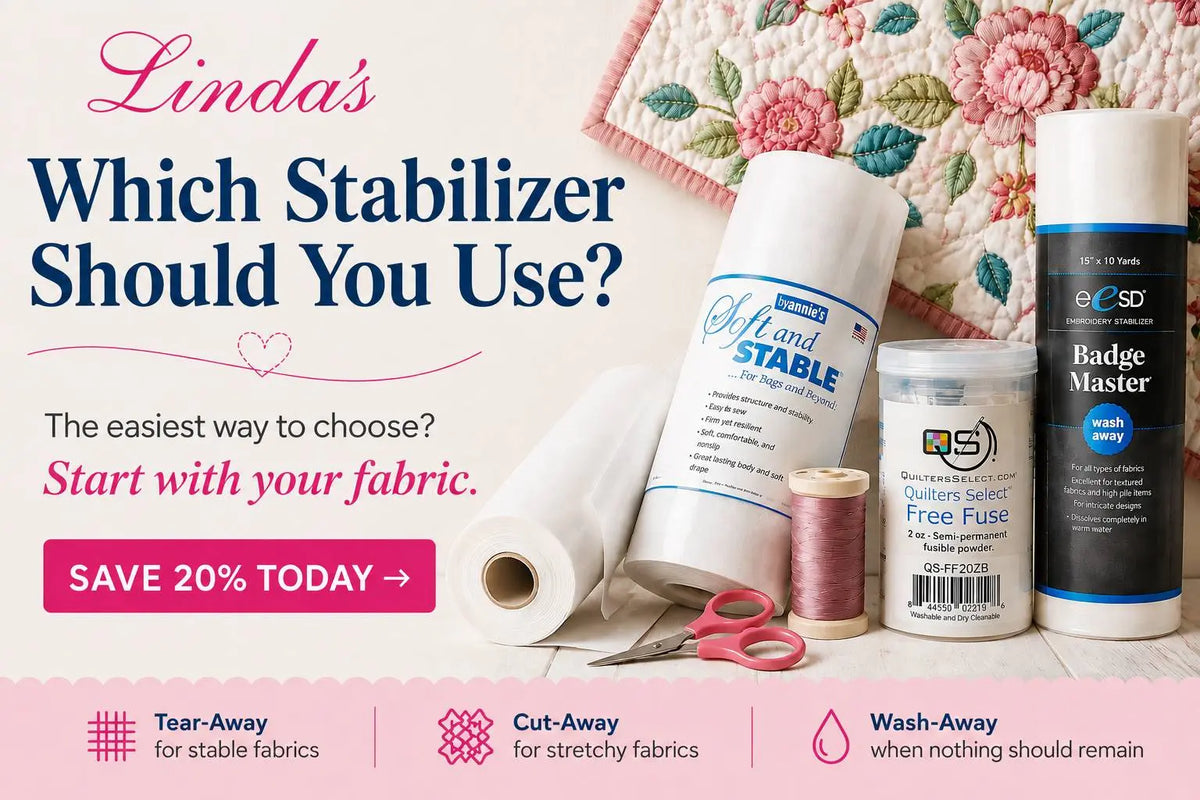
Ever stand in front of a wall of stabilizers and think… which one do I actually need?
Don't Start With the Stabilizer — Start With Your Fabric
Here's the trick: don't start with the stabilizer. Start with your fabric.
How much your fabric moves, and whether you want the stabilizer to remain afterward, can quickly point you in the right direction.
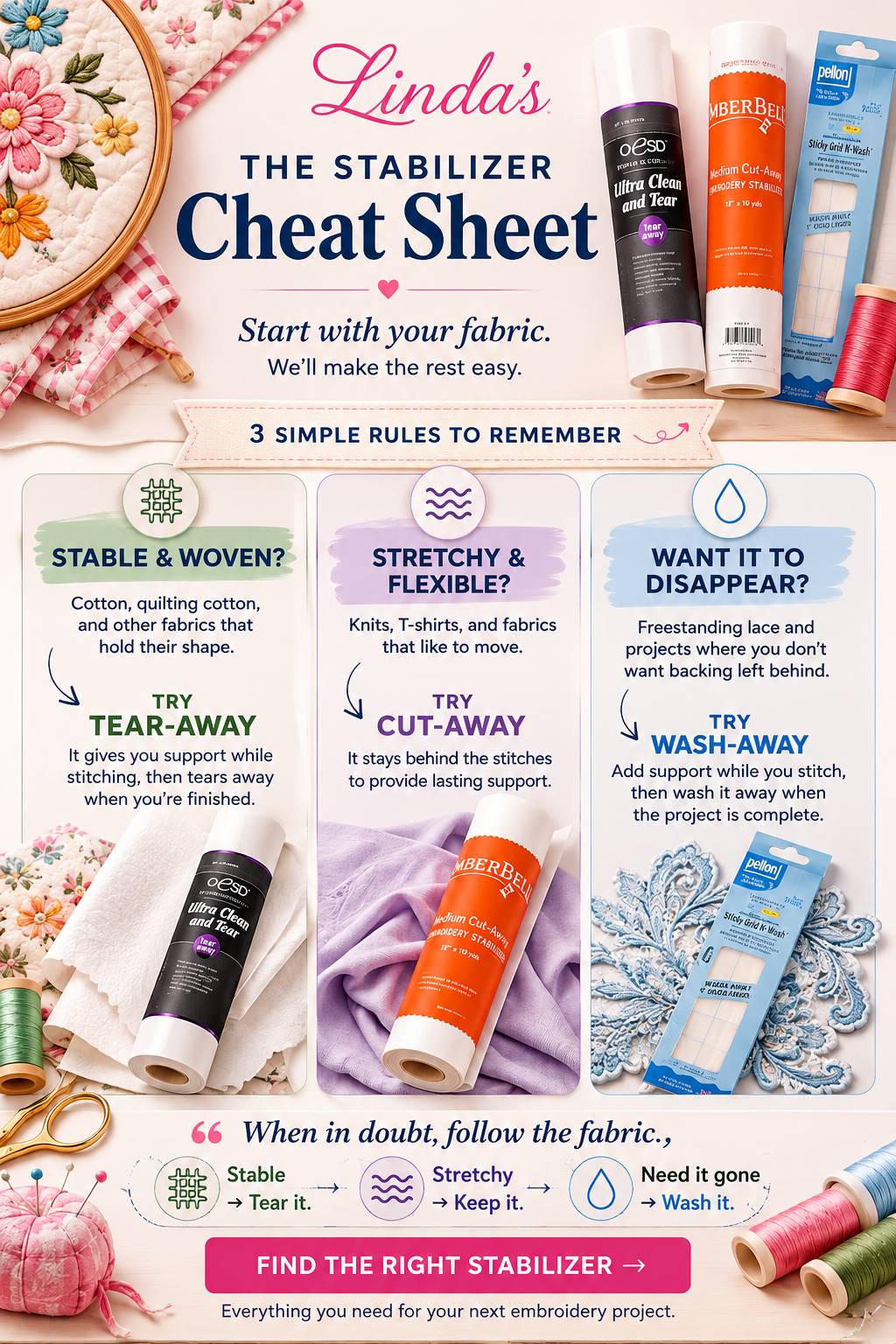
Not Sure? Remember This
Stable → Tear it.
Stretchy → Keep it.
Need it gone → Wash it.
That's your stabilizer shortcut.
Why Your Fabric Makes the Decision
Machine embroidery packs thousands of stitches into a small area, and every one of those stitches pulls on the fabric. A stabilizer's whole job is to absorb that pull so your fabric doesn't pucker, stretch, or tunnel.
A stable woven barely moves on its own, so it only needs temporary backup — that's why a tear-away can rip cleanly out once the stitching is done. A stretchy knit keeps moving every time it's worn or washed, so a cut-away stays behind to support those stitches for the life of the garment. And when the stabilizer would show — sheer fabrics, freestanding lace, toppers — a wash-away dissolves completely and leaves only your stitches.
It's the same logic as matching your thread weight to the project: the materials tell you what they need.
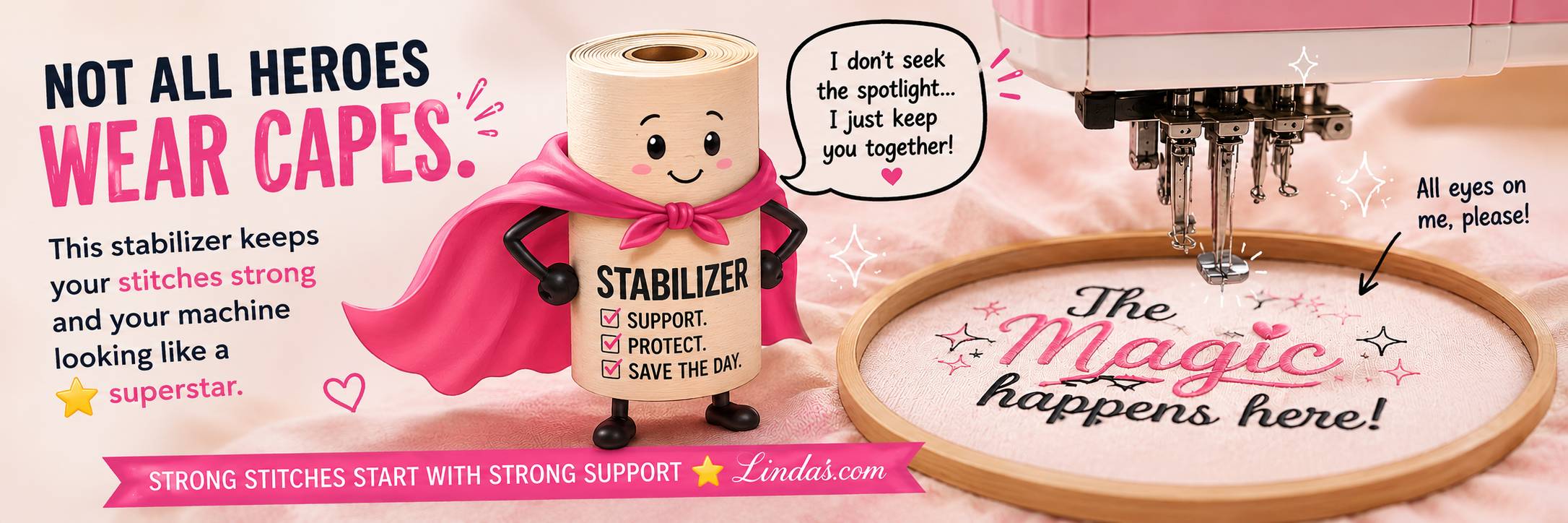
Remember,
Beautiful embroidery starts before the first stitch.
Your stabilizer is the behind-the-scenes hero keeping everything supported while your machine works its magic.
Therefore, choose the right support underneath, and let your stitches steal the show.
Happy Quilting!
From Corey.
Labor Day savings are rolling at Linda's — shop batting cut by the yard or browse all the current sales and deals.
Frequently Asked Questions
What is the difference between tear-away, cut-away, and wash-away stabilizer?
Tear-away is temporary — it supports the fabric while you stitch, then rips cleanly away, which makes it ideal for stable woven fabrics. Cut-away is permanent — you trim the excess, but the rest stays in the garment to support stitches on stretchy fabrics through washing and wear. Wash-away dissolves completely in water and leaves nothing behind. You can compare all three types in our stabilizer collection.
Which stabilizer should I use for stretchy or knit fabrics?
Use a cut-away. Knits keep stretching every time they're worn and washed, so the stabilizer needs to stay in place permanently to keep the embroidery from distorting. A soft mesh option like Soft N Sheer cut-away supports the stitches without adding bulk or scratchiness against the skin.
Is stabilizer the same as interfacing?
They're cousins, not twins. Interfacing permanently changes how a fabric behaves — adding body, crispness, or structure — like the featherweight fusible in our Pellon 911FF guide or the foam in our Soft and Stable guide. Stabilizer's job is to manage the stress of stitching, and much of the time it's removed once the stitching is done.
Do I always need a stabilizer for machine embroidery?
Almost always, yes. Machine embroidery places thousands of stitches in a small area, and without support underneath, even sturdy fabric will pucker and shift. The denser the design, the more support you need — and pairing the right stabilizer with the right needle keeps everything stitching smoothly.
What stabilizer should I use for embroidering towels?
Use your regular stabilizer underneath plus a wash-away topper on top. The topper keeps your stitches from sinking into the terry loops, then dissolves completely the first time the towel is washed.