
Hi Bestie,
When was the last time you looked underneath your needle plate?
A) This week
B) A few projects ago
C) I'm suddenly afraid to look 😅
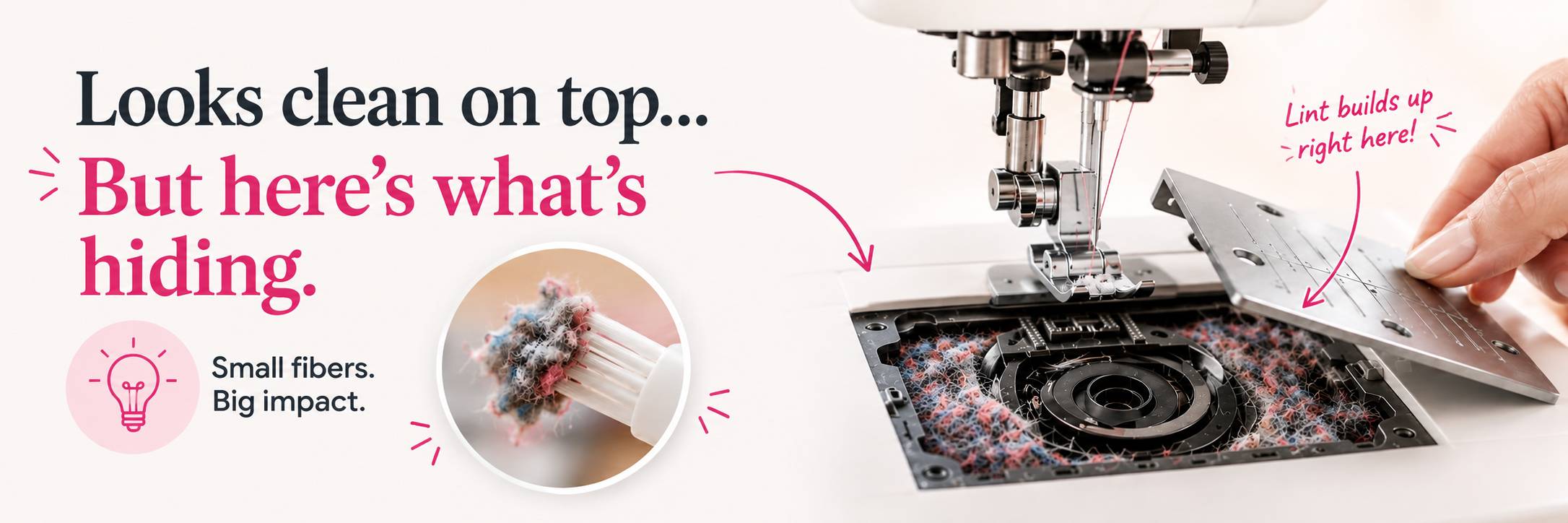
Your sewing machine may look perfectly clean from the outside.
Under the needle plate? That can be a very different story.
As fabric and thread move through your machine, tiny fibers can work their way below the surface and collect where you rarely look.
How Does Lint Get Down There?
Think about what happens during a single quilt: yards of fabric pass over the feed dogs while yards and yards of thread race through the machine.
Along the way, tiny fibers shed from both fabric and thread. Some stay on your table. Others make their way below the needle plate and settle around the feed dogs and bobbin area.
One stitch? Practically nothing.
Thousands of stitches? Now we're talking.

Why It's So Easy To Miss
Lint buildup is sneaky because most of it isn't sitting somewhere obvious. Your machine can look spotless while fibers are collecting underneath the surface.
So wiping down the outside is only half the story. Every so often, the places you can't see deserve some attention too.
Remember
It is important to make the "peek under the plate" a habit.
You don't need to turn Sunday afternoon into sewing-machine surgery. A quick check and gentle cleanup of the appropriate accessible areas can help keep lint from accumulating project after project.
The humble little cleaning brush? This is exactly why it earns its spot in the sewing room.
(It joins a family of small maintenance habits that quietly protect your quilting: swapping needles at the right time, keeping rotary blades sharp, and flipping your cutting mat.)
Happy Quilting!
From Corey.

While you're in maintenance mode: quilting essentials are up to 50% off, and the machine maintenance tools collection has the brushes and tools for the job.
Frequently Asked Questions
How often should I clean under my sewing machine's needle plate?
A quick check after every project — or every 8–10 hours of sewing — keeps buildup from ever getting serious. Quilting sheds more lint than garment sewing (batting and cotton thread are big shedders), so heavy quilting sessions deserve a peek sooner.
What's the best way to clean lint out of a sewing machine?
Remove the needle plate (and bobbin case if your manual shows how), then lift lint out gently with a small lint brush — brush toward yourself and out of the machine, not deeper in. A soft makeup brush or pipe cleaner reaches tight spots. Always check your machine's manual for which areas are user-accessible.
Can I use canned air to clean my sewing machine?
It's risky — compressed air tends to blow lint deeper into the machine body and can drive moisture into the mechanism. Brushing lint out or using a small vacuum attachment is safer. If you do use air, aim so debris exits the machine rather than travels further inside.
What are the signs of lint buildup in a sewing machine?
Skipped stitches, thread nests under the fabric, tension that suddenly seems off, squeaking or a duller sound while sewing, and a bobbin area that feels sluggish. If your machine "isn't sewing like it used to," lint under the plate is one of the first things to rule out — along with a fresh needle.
Does thread quality affect lint buildup?
Yes — lower-grade threads shed noticeably more fiber as they run through the machine. A quality long-staple polyester like Omni sheds less, which means cleaner tension discs and less frequent digging under the plate.