Hi Bestie,
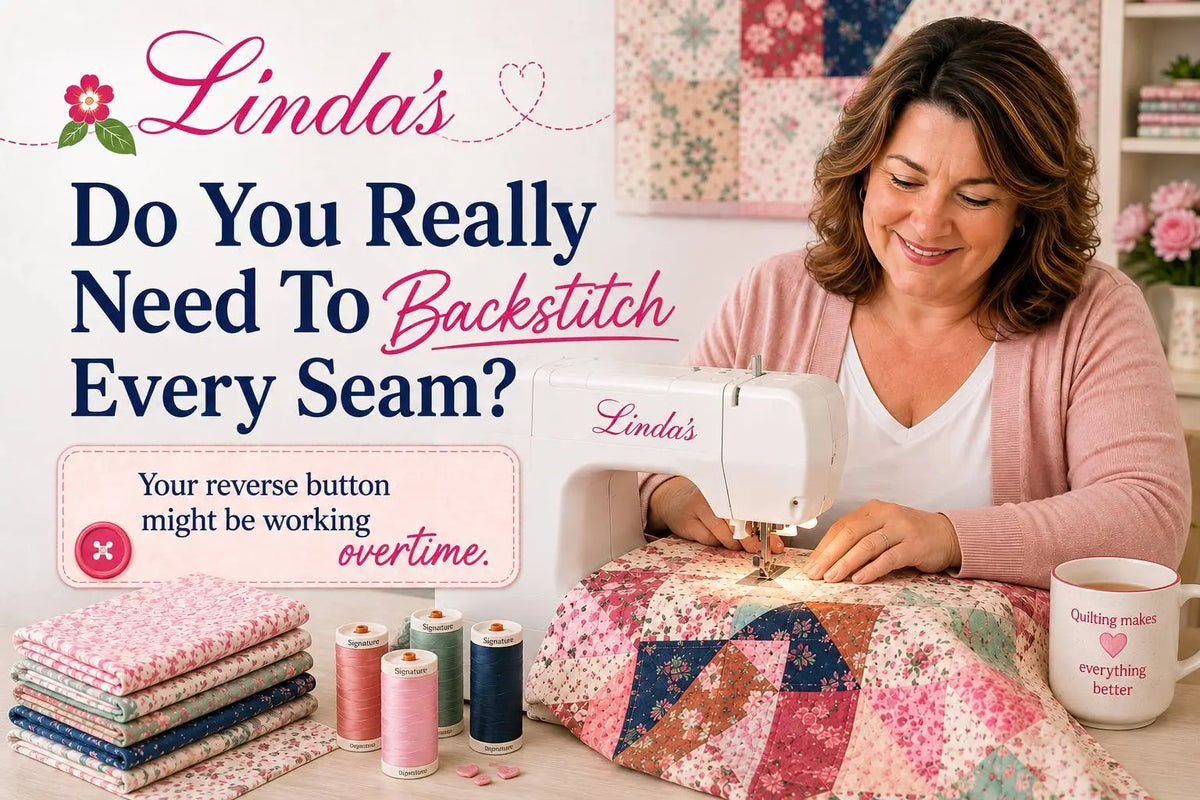
You sit down at your machine.
Line up your pieces.
Lower the presser foot.
And almost without thinking...
Tap reverse. Sew. Tap reverse again.
It is a habit many quilters learn early.
But when you are piecing quilt blocks, here is something worth knowing:
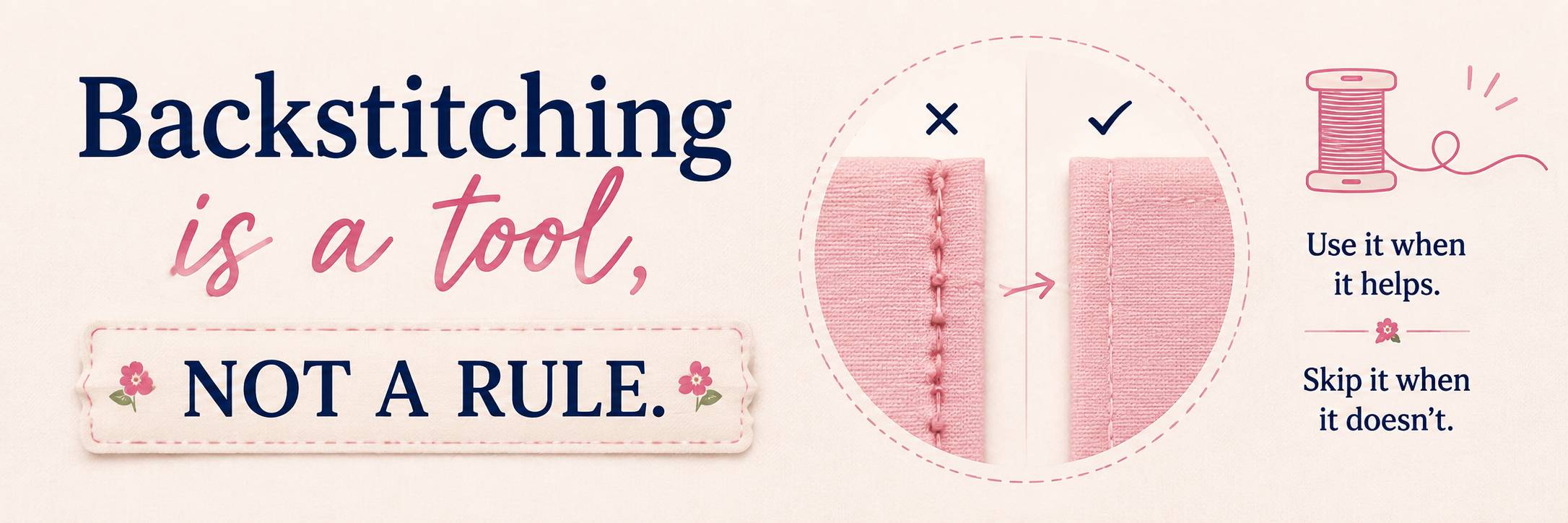
You usually do not need to backstitch every seam.
And the reason is hiding in the construction of the block itself.
Here's Why You Can Usually Skip It
Think about what happens after you sew a seam.
As you continue building your block, another seam will often cross right over the end of the one you just stitched.
When that happens, the new line of stitching helps secure the stitches underneath.
Pretty clever, right?
Your block is essentially helping secure itself as you piece it. (This is the same logic behind a lot of quilting "rules" — once you understand why the rule exists, you know when you can skip it.)
So instead of automatically reaching for reverse, ask yourself:
Will another seam cross this one?
If the answer is yes, you can usually skip the backstitch and keep sewing.
But There Are Times You Will Want To Backstitch
Backstitching still has its place.
If the end of your seam will not be crossed by another line of stitching, securing it can help keep those stitches from coming loose.
It can also be useful when a pieced section will be handled, moved, or worked with quite a bit before another seam has a chance to secure it.
Think of backstitching as a little extra insurance.
If another seam will secure your stitches soon, you probably do not need it. If nothing else is going to secure them, a few backstitches can be worth it.
Remember
Once you understand why you are backstitching, you can spend a little less time stopping and reversing and a little more time happily piecing.
Your reverse button might even appreciate the vacation. 😉
(Fewer stops and starts also means less thread churn through the machine — which your bobbin area will thank you for, as we covered in yesterday's peek under the needle plate.)
Happy Quilting!
From Corey.

Blocks piling up? All batting rolls are on sale — shop the batting collection and give those finished tops something to hug.
Frequently Asked Questions
Do you need to backstitch when piecing quilt blocks?
Usually not. In quilt piecing, most seam ends get crossed by another seam as the block comes together, and that crossing line of stitching secures the threads underneath. Ask one question before hitting reverse: will another seam cross this one? If yes, skip the backstitch.
When should you backstitch in quilting?
Backstitch when a seam end will never be crossed by another seam — like the outer edge of a border or a seam that ends mid-fabric — and when a pieced section will be handled a lot before the next seam secures it. Think of it as insurance for exposed seam ends only.
How do quilt seams stay secure without backstitching?
Piecing seams are sewn edge to edge, so subsequent seams, sashing, borders, and eventually the quilting itself all cross and lock the stitches in place. A slightly shorter stitch length (around 2.0mm) adds security too, and quality thread like Omni holds tension well at seam ends.
Does skipping the backstitch save time?
Meaningfully, yes — across the hundreds of seams in a quilt top, dropping two reverse taps per seam adds up to real chain-piecing speed. It also produces flatter seam ends with less thread bulk at intersections, which makes accurate piecing easier to maintain.
Should you backstitch when sewing quilt binding or borders?
Yes — those are the exposed-end cases. Binding starts and stops, border seams at the quilt edge, and any seam that finishes at raw fabric that won't be crossed again deserve a few securing stitches, since nothing else will lock them in.