Hi Bestie,
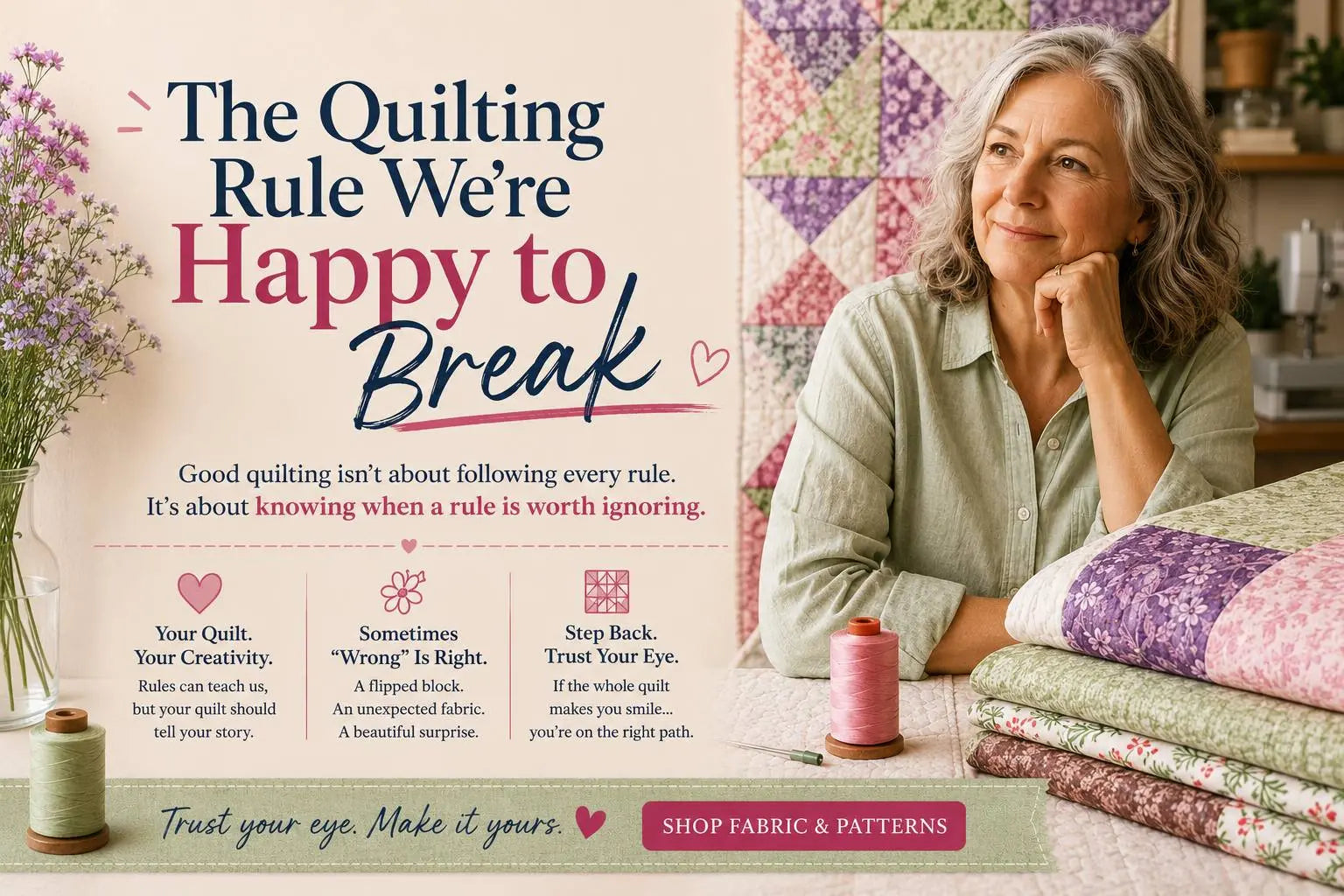
You've probably heard plenty of quilting "rules": which colors belong together, how fabrics should be paired, which direction a pattern should go.
But rules are starting points, not finish lines.
If flipping a block, mixing an unexpected print, or changing the layout makes you love the quilt more… that may be the right choice.
Remember
There's a reason quilting has guidelines — they help us learn.
But once you understand the why, you get to decide when to break them.
Contrast, balance, and visual interest matter more than doing something simply because it's the "proper" way. (If you want the classic starting points first, my guides on choosing fabric that actually works and the fabric grain trick are good places to learn the rules before you bend them.)
Happy Quilting!
From Corey.

Rule-breaking fuel: browse the full batik fabric collection or the Island Batik line for prints bold enough to break a few rules with.
Frequently Asked Questions
Do I have to follow quilting color rules?
No — color rules are teaching tools, not laws. They exist to help you understand contrast, value, and balance. Once you know why a rule exists, you can break it deliberately. Tools like a design wall or a color wheel help; see 7 Pro Tools for Stunning Quilt Color Schemes.
How do I know if breaking a quilting rule will actually work?
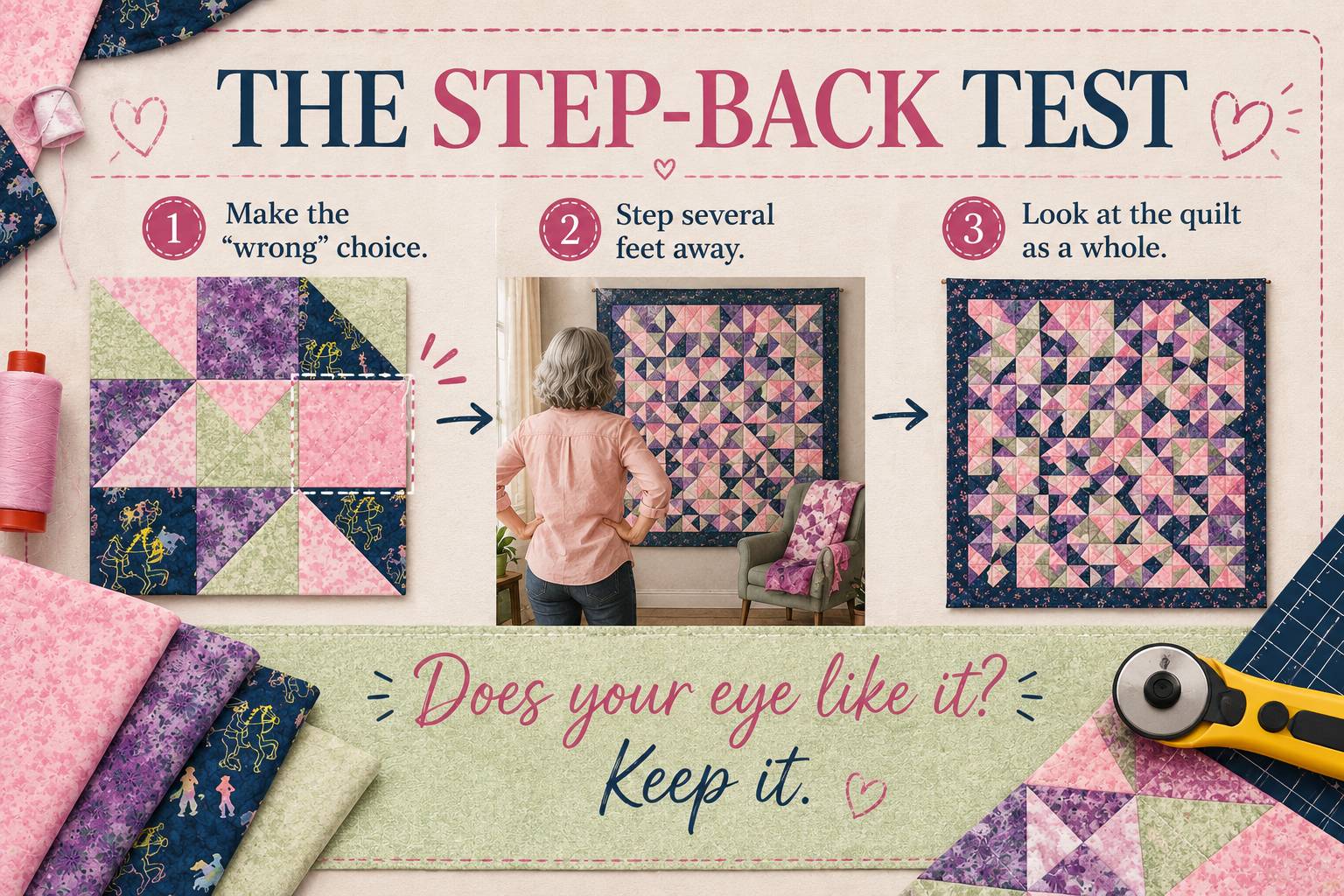
Use the step-back test: make the "wrong" choice, step back six feet, and trust what your eyes tell you. If the block reads well from a distance — good contrast, clear pattern, balanced color — it works, regardless of what the rule says.
What quilting rules should beginners still follow?
Accuracy rules are worth keeping: consistent quarter-inch seams, accurate cutting, and paying attention to fabric grain. Design rules — color pairings, print mixing, layout direction — are the ones you can bend freely.
Can I mix batiks with regular quilting cotton?
Yes. Batiks have a tighter weave and slightly different hand, but they piece beautifully with standard cottons and add saturated color and visual texture. Just prep your batiks properly before cutting.
What matters more than following the rules?
Contrast, balance, and visual interest — and whether you love the quilt. A technically "correct" quilt you don't love is a worse outcome than a rule-breaking quilt you can't stop looking at.