Hi Bestie,
Running out of fabric halfway through a quilt? Not fun.
Buying way more than you needed? Also not fun.
The trick is to figure out how many pieces fit across your usable fabric width, then let a little simple math do the rest.
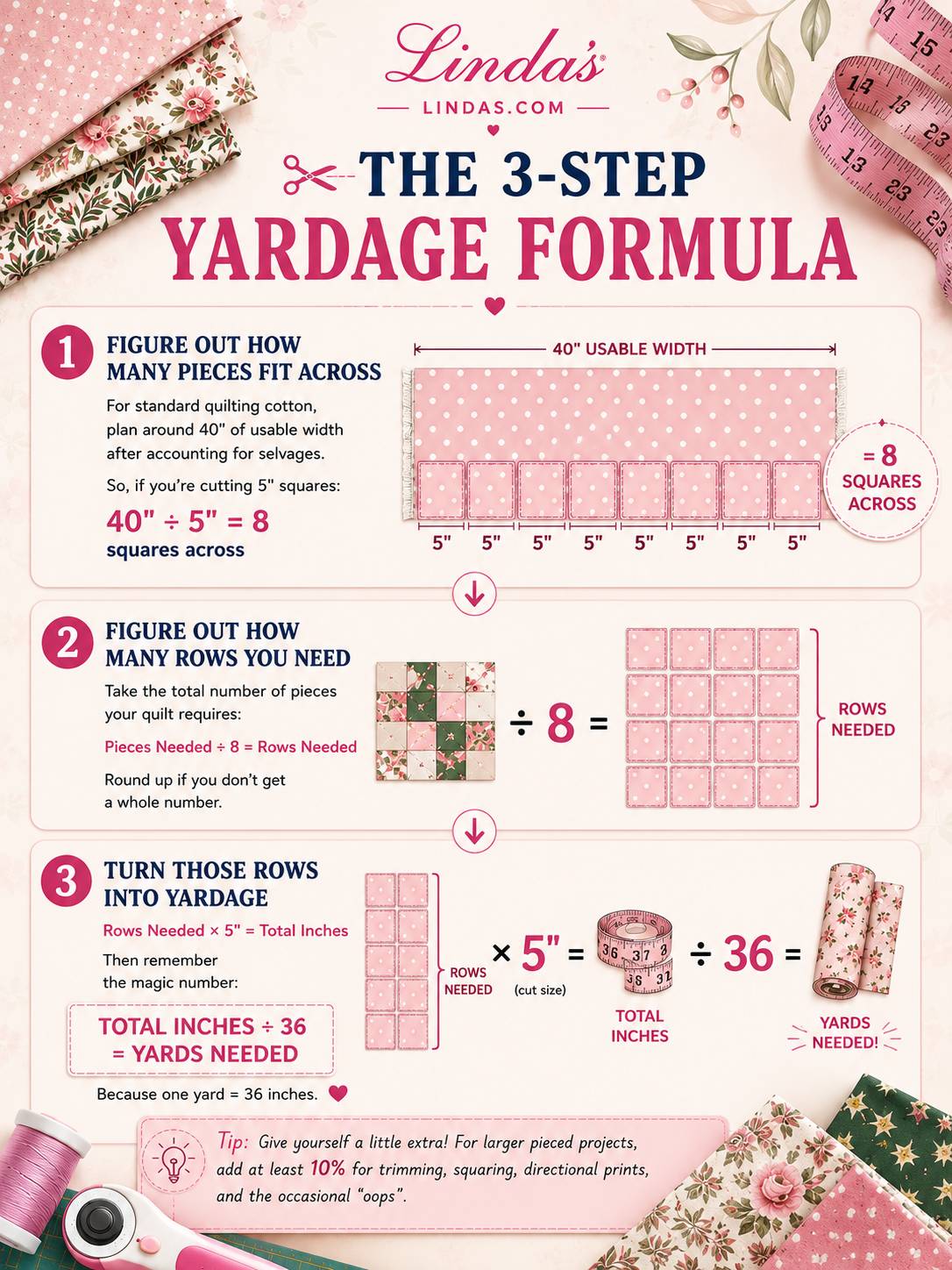
Let's See It In Action
One yard of fabric is 36" long.
With 5" squares:
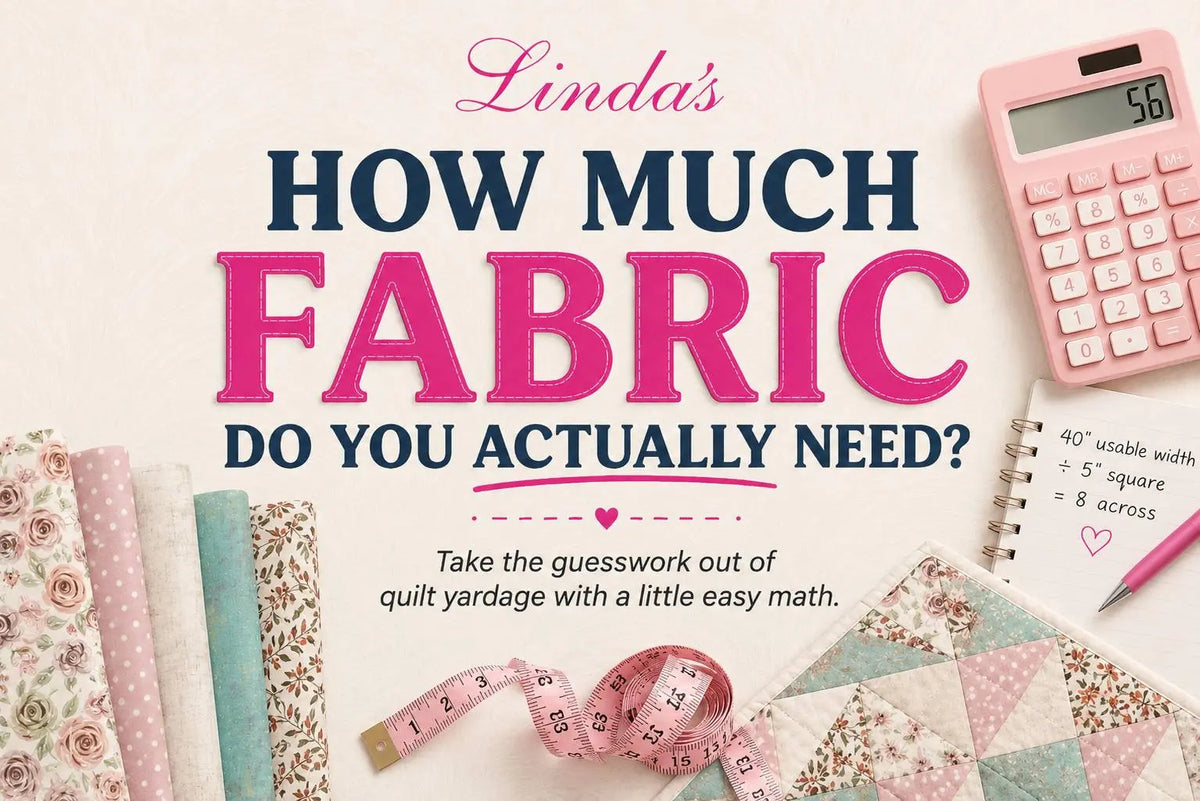
40" usable width ÷ 5" = 8 squares per row
36" length ÷ 5" = 7 full rows
8 × 7 = 56
That means you can cut approximately 56 five-inch squares from one yard.
Not so scary after all, right?
Why "Usable Width" Matters
Quilting cotton is sold as 43"–45" wide, but you don't get to use all of it. The selvage edges are woven tighter, are often printed with the manufacturer's info, and can pucker when washed, so they get trimmed off. Once you square up the cut edge and lose the selvages, you're usually left with about 40" of fabric you can actually cut into. That's why the formula starts with 40" and not 44". If you're working with 108" wideback, the same math applies, just with a much bigger number on top.
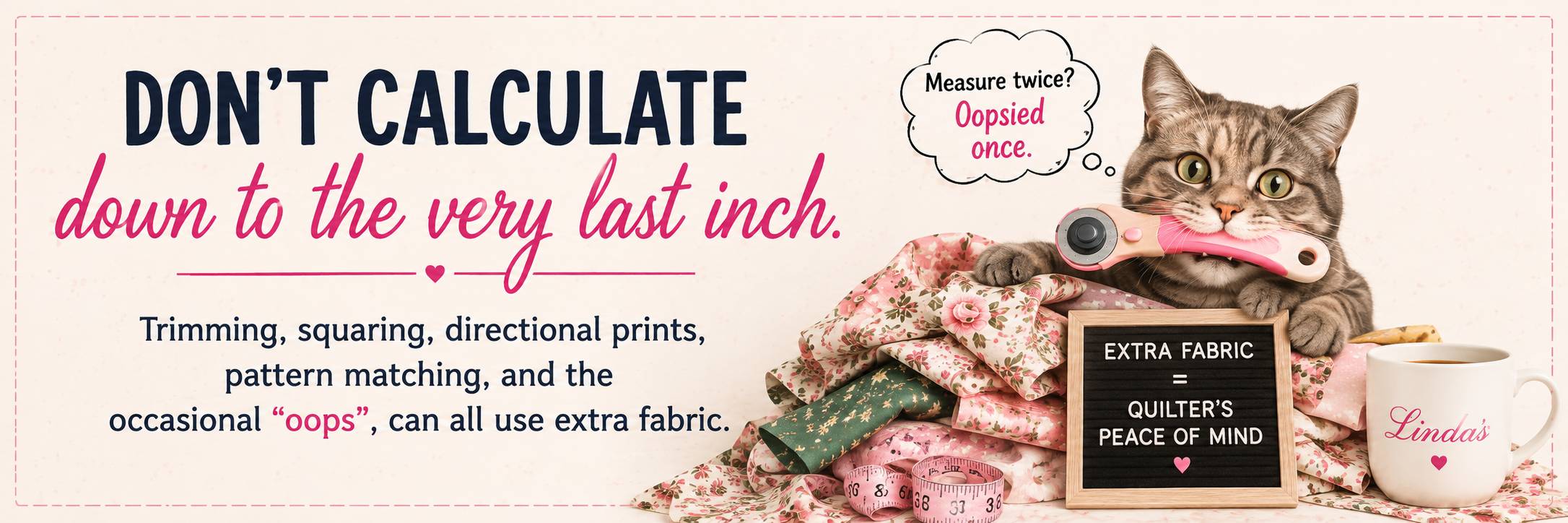
Remember
Don't calculate down to the very last inch.
Trimming, squaring, directional prints, pattern matching, and the occasional "oops", can all use extra fabric.
For larger pieced projects, give yourself at least 10% extra so you're not scrambling for matching fabric later.
Happy Quilting!
From Corey.
Once your top is figured out, don't forget the rest of the sandwich: shop batting cut by the yard, 108" wideback for backing, and quilting cotton by the yard.
Frequently Asked Questions
How many 5-inch squares can I cut from a yard of fabric?
About 56. With 40" of usable width you get 8 squares per row, and 36" of length gives you 7 rows. 8 × 7 = 56. If you're buying quilting cotton by the yard, that's a good planning number, but round down a little if your fabric is narrow or you're squaring up a crooked cut.
How do I calculate fabric yardage for a quilt?
Use the 3-step formula: divide your usable fabric width (about 40") by your piece size to get pieces per row, divide 36" by your piece size to get rows per yard, then multiply those two numbers for pieces per yard. Divide the total pieces your pattern needs by that number, and you have your yardage. Then add 10% for safety. The same divide-and-multiply thinking works for thread math, too.
Why is usable width 40 inches if the bolt says 44 inches?
Because you lose the selvages and the squaring-up cut. Selvages are tightly woven, often printed, and shrink differently, so quilters trim them off. What's left is usually 40"–42". Planning on 40" gives you a little cushion. For a deeper look at fabric widths, see 45" vs. 108" Wide Fabrics and The Ultimate Fabric Cheat Sheet.
How much extra fabric should I buy for a quilt?
At least 10% more than the math says, and more than that for directional prints, fussy cutting, or large-scale pattern matching. A crooked first cut is one of the most common ways to burn through your cushion, so read The Cutting Mistake That Gets Worse With Every Block and keep your rotary blade sharp. Backing has its own rules, covered in This Mistake Can Ruin Your Quilt Backing.
Is it easier to just buy precuts instead of calculating yardage?
For many patterns, yes. A charm pack is already cut into 5" squares, so you skip the math and the cutting. The trade-off is less control over color and fewer scraps to play with. Our Precuts Guide breaks down fat quarters, charm packs, jelly rolls, and layer cakes. If you do cut your own, a wide non-slip ruler like the Quilters Select 6.5" x 24" and a large cutting mat make strip cutting much faster.