Hi Bestie,
Before the quilting begins, your quilt top, batting, and backing need to stay together as one happy quilt sandwich.
The problem?
Those three layers can shift, wrinkle, and pucker while you quilt.
Basting helps keep everything where it belongs.
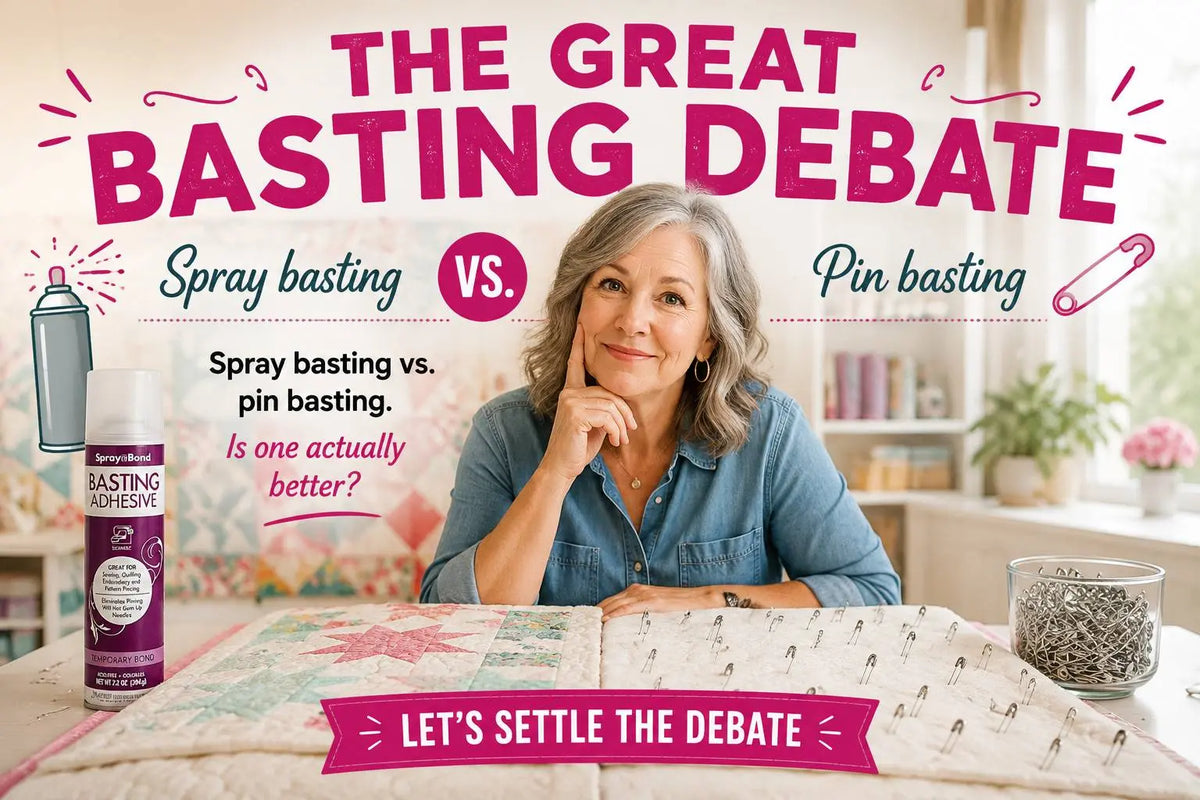
The debate is simply how you do it.
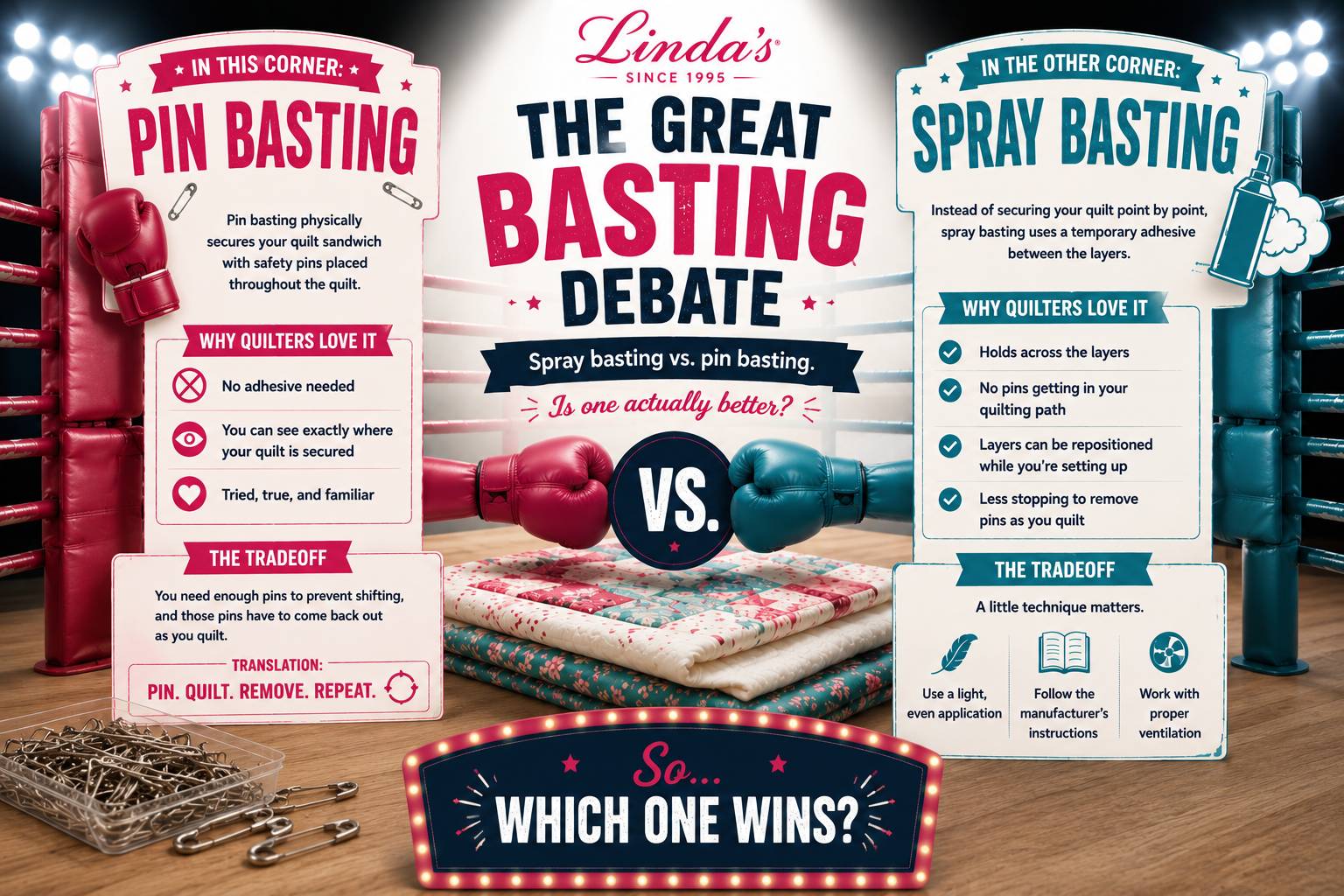
So... Which One Wins? 🏆
Plot twist.
Neither.
The better question is:
Which one makes quilting more enjoyable for YOU?
Choose Pins If...
📌 You prefer physically securing each section with curved safety pins
📌 You don't want to use adhesive
📌 You're perfectly happy removing pins as you go
Try Spray If...
💨 You want to baste without placing lots of pins
💨 You don't want pins interrupting your quilting
💨 You like being able to reposition your layers during setup with a temporary basting spray
Why Basting Matters More Than the Method
Here's the thing both camps agree on: the quilt sandwich has three layers, and each one moves at its own pace under a presser foot or a hopping foot. The backing gets dragged by the feed dogs, the batting stretches, and the top floats on the batting. Without something holding them together, that difference shows up as puckers and tucks on the back that you can't quilt out.
Pins hold the layers at points, so you want them close together (a hand-width apart is the usual rule) and you remove them as you approach each one. Spray holds the layers across the whole surface, so nothing is in the way of the needle, but you need a well-ventilated space and a light, even coat so the adhesive doesn't gum up your needle. If your machine has started skipping stitches after a spray-basted project, a needle change and a quick clean usually fixes it.
Remember,
There's no quilting police coming to inspect your basting method.
The winner is whichever method gives you a smooth, stable quilt sandwich and lets you spend more time enjoying the quilting.
Happy Quilting!
From Corey.
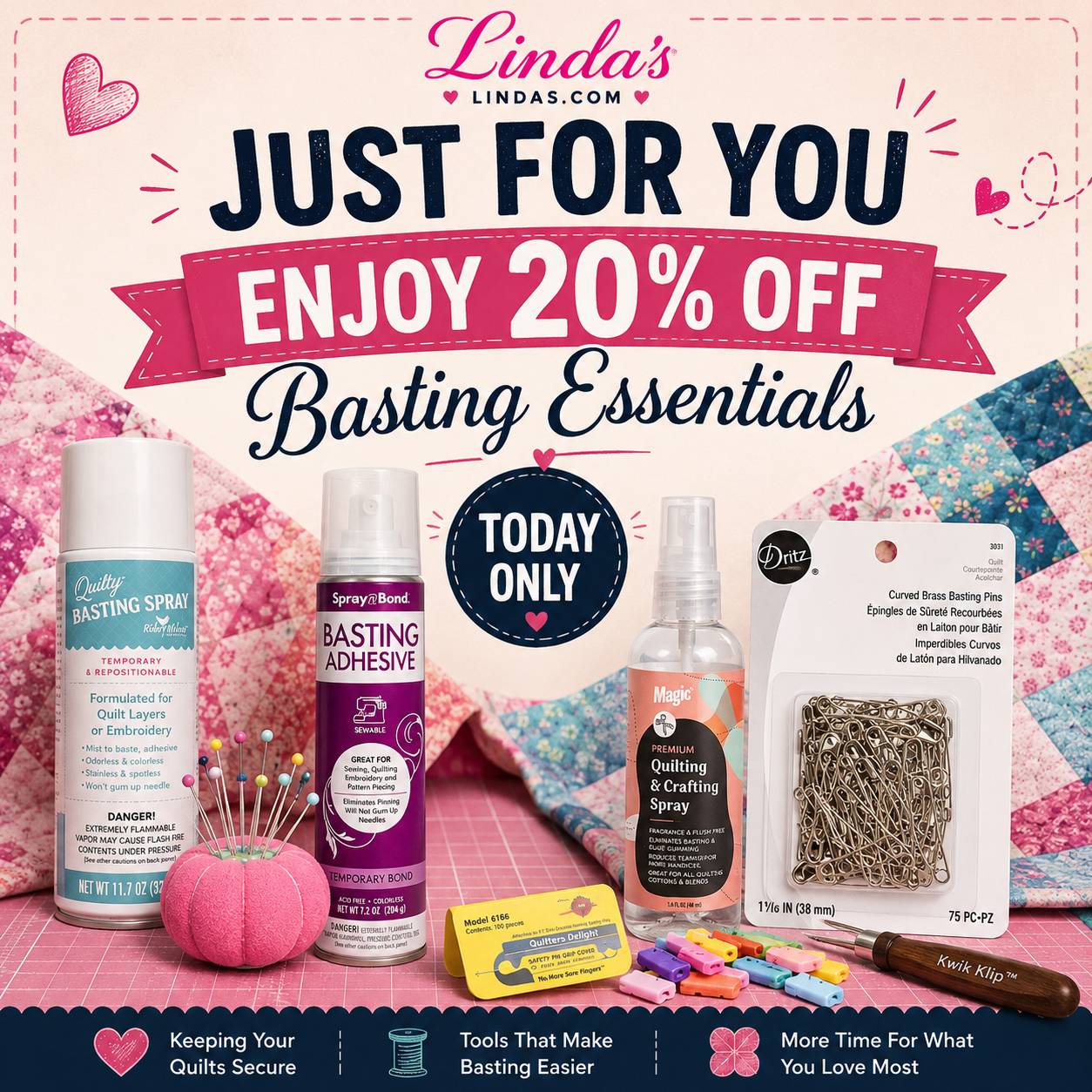
Stock your basting kit at Linda's: shop pins and pin tools, grab a can of SpraynBond basting adhesive, or browse the full quilting notions collection for tape, glue, and everything in between.
Frequently Asked Questions
Is spray basting or pin basting better for quilting?
Neither is objectively better. Pin basting uses no chemicals, costs less over time, and works for any quilt size, but the pins are in your way while you quilt. Spray basting is faster, leaves nothing to remove, and lets you reposition layers, but it needs ventilation and a light touch. Most quilters settle on whichever one makes the process feel easier for them, and many switch depending on the project.
How far apart should basting pins be on a quilt?
A common rule is about a hand-width (roughly 4 inches) apart in a grid across the whole quilt. Closer spacing is better for slippery fabrics, thick or lofty batting, and dense quilting. Curved safety pins are designed for this job because the bend lets you scoop through all three layers without lifting the quilt, and a Kwik Klip closes them without tearing up your fingertips.
Does basting spray gum up your sewing machine needle?
It can if the coat is too heavy or applied too close to the fabric. Use a light, even mist from the distance on the can, let it tack up for a moment before smoothing the layers, and keep the spray on the batting rather than soaking the fabric. If you notice skipped stitches or a sticky needle mid-project, swap in a fresh needle and wipe the old residue off the throat plate. See our HeatnBond and SpraynBond guide for product-specific tips.
Does the batting you choose affect how you should baste?
Yes. Lofty polyester and wool battings shift more than a low-loft cotton or an 80/20 blend, so they benefit from closer pins or a slightly more generous spray. Battings with scrim are more stable and forgiving either way. If you're deciding between batting types, why 100% cotton isn't always the answer and selecting batting for quilting walk through the trade-offs.
Are there basting options besides pins and spray?
Yes. Thread basting with long stitches and basting needles is the traditional method and is still popular for hand quilting. Glue basting with a washable fabric glue and basting tape are handy for bindings, borders, and small projects. Our glue basting and spray mister guide covers the tools for each approach.