
Hi Bestie,
You know the size of your quilt.
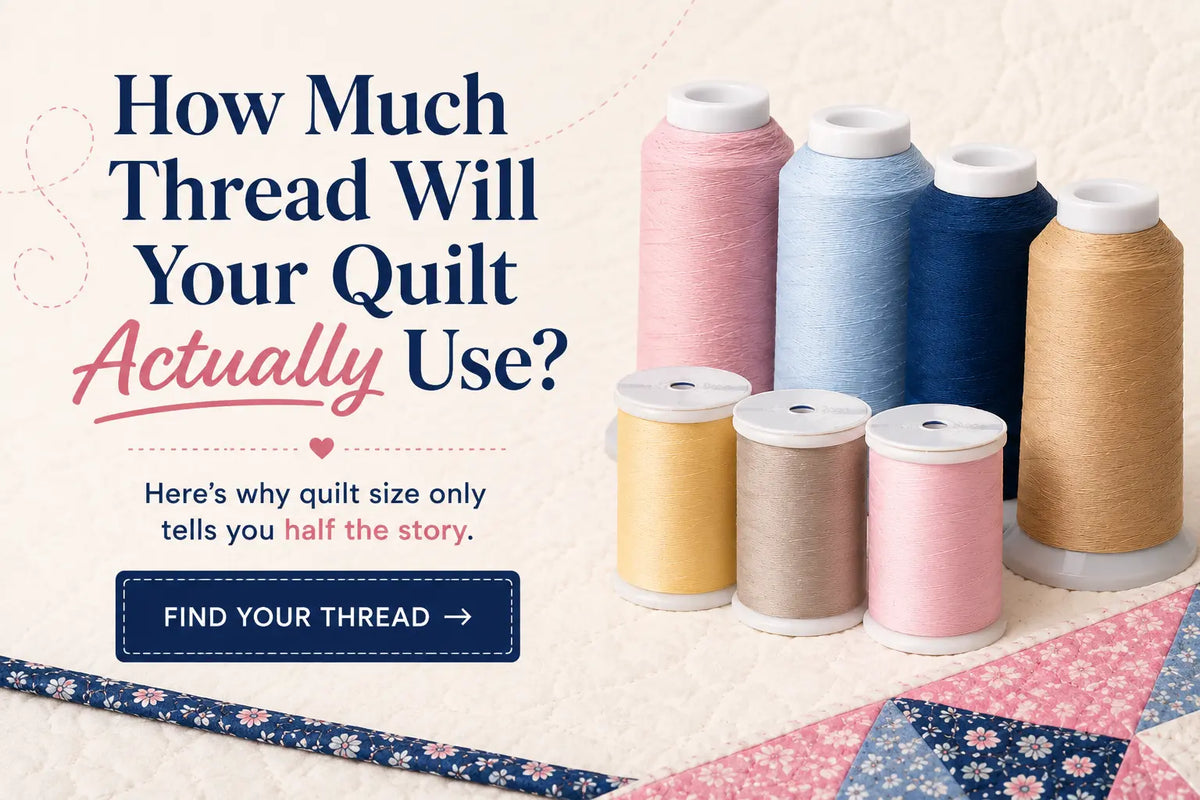
So you know how much thread you'll need… right?
Not quite.
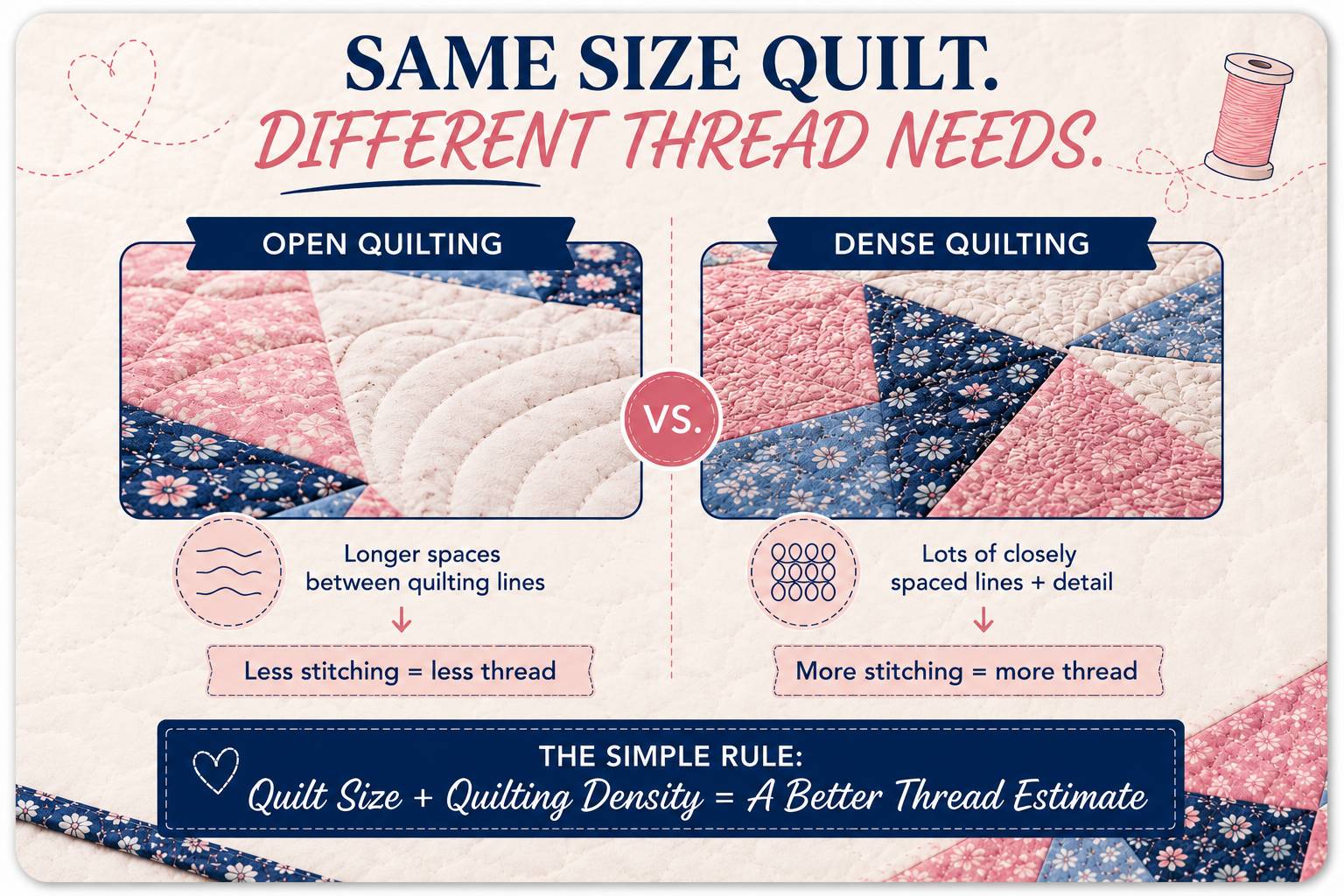
Two quilts can be the exact same size and use very different amounts of thread.
The reason? Quilting density.
Before Choosing Your Thread, Ask Yourself 3 Questions
1. How big is my quilt?
More surface area generally means more stitching. A king-size quilt with even a simple edge-to-edge design covers far more distance than a baby quilt with the same motif.
2. How densely am I quilting it?
A simple, open design requires less stitching than dense custom quilting. This is the factor most quilters underestimate: an airy meander might space lines 2–3 inches apart, while dense fills like micro-stippling or ruler work can pack stitching lines a quarter-inch apart — many times more thread across the exact same surface.
3. Am I using this thread for piecing, too?
If one thread is doing double duty, factor that into how much you keep on hand. Piecing a full quilt top quietly consumes hundreds of yards before the quilting even begins.
Quilt Size Is Only Half the Equation
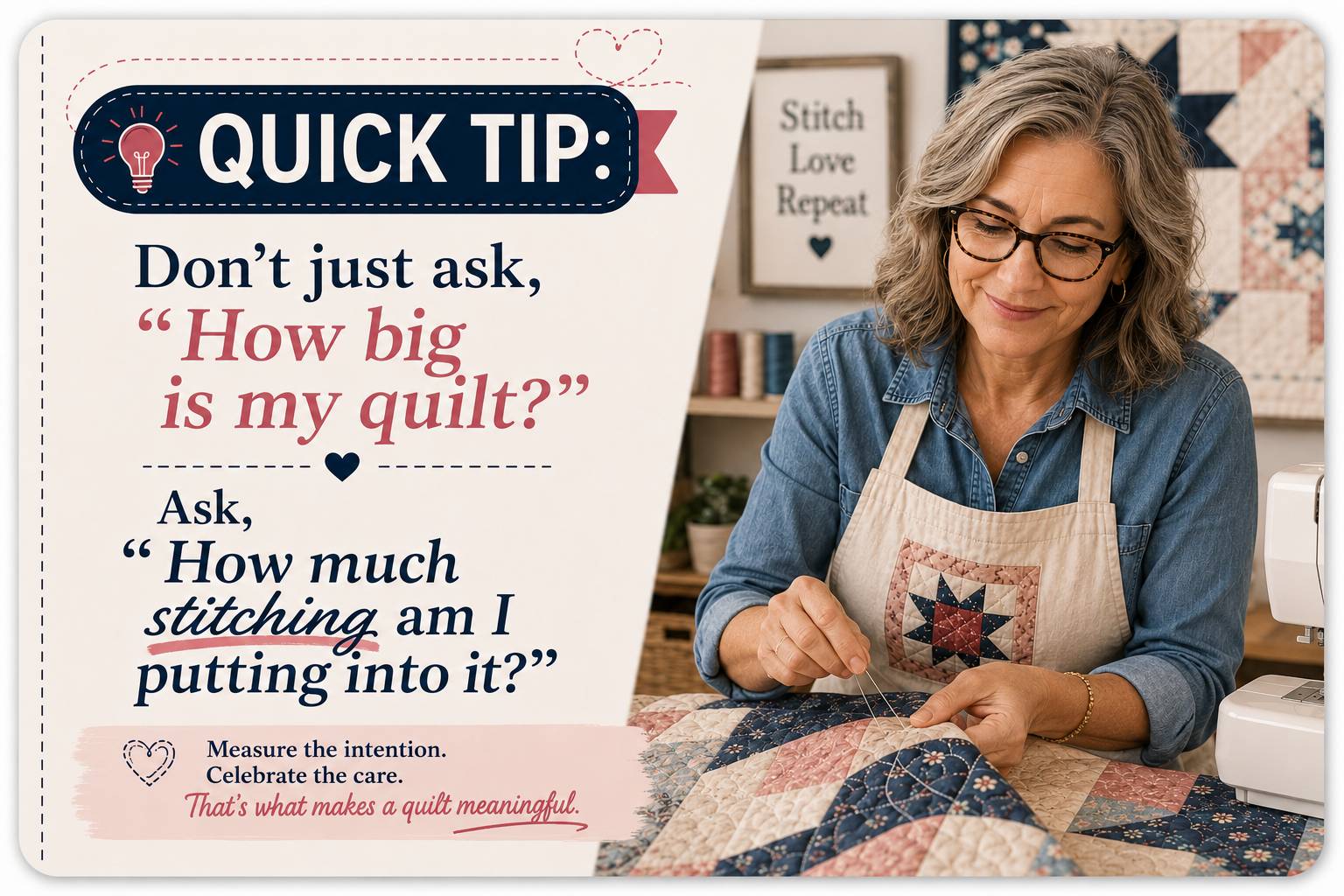
The amount of thread you'll use depends just as much on how much stitching you're putting into that quilt.
An open, airy quilting design means fewer stitches and less thread, while close, detailed quilting adds thousands more stitches across the same amount of fabric.
A practical rule of thumb: for open, all-over designs, a quilt often uses roughly its area's worth of light coverage — but dense custom work can multiply that several times over. When in doubt, buy the larger spool or a cone; running out mid-quilt means hunting for a matching dye lot later. And don't forget the bobbin — it's consuming thread at nearly the same rate as the top.
So before choosing your thread, think beyond the dimensions: consider the size, the density of your design, and whether you'll use the same thread for piecing and quilting.
Remember,
A little planning before your first stitch can help make sure you have enough thread to see your quilt all the way through.
Happy Quilting!
From Corey.


