You're standing in the batting aisle with a quilt pattern under one arm and several packages balanced in the other. One label promises softness, another highlights loft, and a third emphasizes low shrinkage. With limited time, it's easy to choose by fiber name alone and discover later that the finished quilt doesn't drape, wash, or quilt the way you hoped.
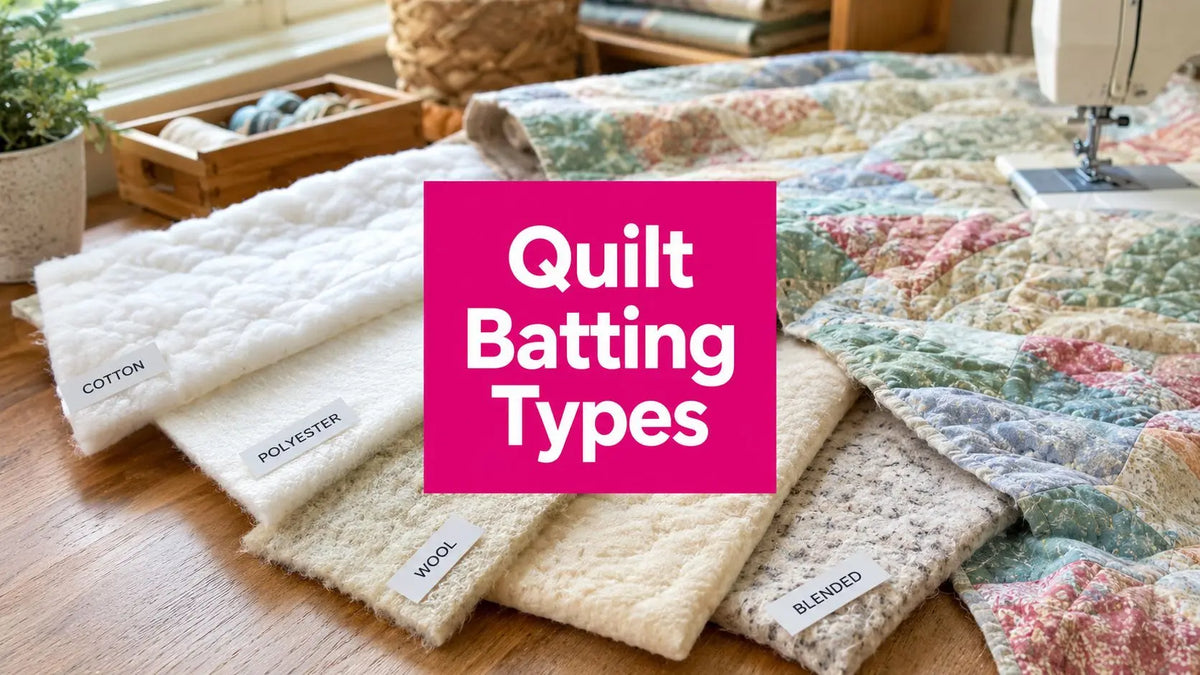
The practical answer is simple: choose batting by the job you want the finished quilt to do. Cotton creates a flatter, breathable quilt with traditional crinkle. Polyester gives loft, stitch definition, and minimal shrinkage. Wool adds warmth and resilient texture. Blends balance several of those traits. This guide maps the main types of quilt batting to real project outcomes, then connects fiber choice to loft, shrinkage, quilting density, needle selection, and care.
Finding the Right Batting on Your Next Project
A quilter in McKinney can spend several minutes comparing batting packages and still leave with more questions than answers. The labels may list fiber content, loft, bonding, and recommended quilting distance, but those details only help when you know what kind of finish you want.
Start with the finished quilt, not the shelf label. If you're making an heirloom bed quilt, you may want a soft hand, breathable layers, and a washed, puckered surface. If you're quilting a wall hanging, you may prefer enough loft to hold sculptural motifs. A baby quilt needs a batting that tolerates regular washing, while a show quilt may need clean stitch definition and dimensional texture.
Historically, quilt batting wasn't one standardized product. Quilters used hand-prepared fillings such as carded cotton, wool, flannel sheets, and old wool blankets. In England and Australia, the material is commonly called wadding. Commercial cotton batting appeared in 1846, while Eli Whitney's 1793 cotton gin helped accelerate cotton processing and supported wider use of cotton as quilt filling. By the twentieth century, bonded polyester changed construction by reducing fiber migration and allowing less dense quilting than traditional cotton or wool fills. This history of quilt batting shows why today's main choices still echo those earlier materials.
You'll move through cotton, polyester, wool, and blends with one question in mind: What should this quilt feel and do when it's finished?
That approach works for:
- First-time finishers who need a clear starting point.
- Garment sewers choosing between drape and warmth.
- Longarm clients deciding how loft will affect tensioning, stitch definition, and quilting density.
- Experienced quilters who want to compare a familiar fiber with a specialty option.
Practical rule: If you can describe the finished quilt in three words, you're already close to the right batting. “Soft, flat, washable” points toward cotton. “Puffy, dimensional, easy-care” points toward polyester.
Batting Basics Every Quilter Should Know First
Before comparing the types of quilt batting, learn four label terms. They work together, so relying on only one can lead you astray.
Fiber sets the hand
Fiber is the raw material, such as cotton, polyester, wool, silk, bamboo, or a combination. The fiber is the primary component. It affects breathability, softness, warmth, resilience, and how the quilt feels against the body.
Loft controls puff
Loft means thickness. Picture the height of a pillow. Low-loft batting gives a flatter quilt and usually makes dense quilting easier. Higher loft creates more puff and makes stitched motifs stand out, but it can require closer attention to basting, tensioning, and stitch spacing.
Shrinkage changes the surface
Shrinkage is the amount the batting contracts during washing. Think of a favorite shirt that changes size after laundering. Cotton batting is commonly listed at 3–5% shrinkage, while polyester is commonly listed around 0–1%, according to this quilt batting comparison chart. That difference determines whether washing creates intentional crinkle or a smoother finish.
Construction keeps fibers in place
Construction describes how the fibers are held together. Needle-punched batting uses barbed needles to interlock fibers. Resin-bonded batting uses a bonding agent, and scrim-backed batting includes a stabilizing layer that helps anchor the fill. Construction influences how batting handles on a frame and how far apart quilting lines can be placed.

A package might advertise high loft, but that doesn't tell you whether the quilt will feel warm, breathe well, or hold its shape after washing. Fiber, loft, shrinkage, and bonding form a system. Once you understand that system, every batting label becomes easier to interpret.
Comparing the Main Quilt Batting Types
Choose batting by the finished quilt you want to hold, wash, and use. A flat heirloom bed quilt calls for a different fill than a puffy baby quilt or a textured show piece. The table offers a starting point, then the project notes connect each fiber to what you will notice on the frame and after laundering.
Main Quilt Batting Types at a Glance
| Fiber Type | Typical Loft | Avg. Shrinkage | Drape & Hand | Best Project |
|---|---|---|---|---|
| Cotton | About 1/16 inch | 3–5% | Flat, breathable, traditional | Heirloom bed quilts |
| 80/20 cotton-poly blend | About 1/16 inch | 2–3% | Soft with added stability | Everyday quilts and longarm work |
| 60/40 cotton-poly blend | About 1/8 inch | 2–3% | More loft with balanced drape | Throws and dimensional designs |
| Polyester | About 1/4 inch | 0–2% | Lofty, stable, less traditional drape | Baby quilts and washable everyday quilts |
| Wool | Varies by product | 2–3% | Warm, resilient, lightweight for its warmth | Show quilts and lap throws |
The batting reference chart lists natural cotton at about 1/16 inch loft with 3–5% shrinkage, 80/20 cotton-poly at about 1/16 inch with 2–3% shrinkage, 60/40 cotton-poly at about 1/8 inch with 2–3% shrinkage, and polyester at about 1/4 inch with 0–2% shrinkage. Treat those figures as orientation, since the package directions for your product control quilting and care decisions.
Cotton for traditional drape
For an heirloom bed quilt that should feel breathable and settle into a soft, antique-style surface, cotton remains the familiar choice. Its low loft gives the quilt a flatter silhouette, while washing brings out the gentle crinkle many makers want. Cotton batting guidance from Freshly Pieced describes that lower-loft, washed character as a central reason quilters choose it.
On a longarm, cotton usually behaves predictably with closer quilting than a lofty batt. Use a standard quilting or topstitch needle suited to your thread and fabric stack, then test the stitch length on a sample sandwich before loading the full quilt. Cotton provides comfortable warmth without making the quilt feel puffy, so it fits bed quilts and heirloom pieces especially well.
The trade-off is shrinkage. If you want a pronounced washed texture, cotton helps create it. If you want the top to stay smoother, choose a product and quilting plan that limit that effect. Fabric weight also changes the result, so these heirloom quilt fabric tips can help coordinate the top with the batting's drape and intended use.
Polyester for loft and easy care
Choose polyester when the finished quilt should have puff, clear quilting definition, and little change after laundering. Its bonded structure limits fiber movement, making it useful for baby quilts, everyday throws, tied quilts, and projects that need to retain a stable shape.
That loft changes the work at the machine. Polyester can feel less breathable and less fluid than natural fibers, and a higher-loft batt may need more careful tensioning, basting, and frame handling. Give the sandwich enough support so the layers do not shift while the needle travels through the design.
Wool for warmth and texture
For a warm lap throw or show quilt that should feel light for its warmth and keep visible quilting texture, wool offers resilient loft. It recovers well from handling, helping motifs remain distinct instead of flattening quickly. Wool's shrinkage is commonly described around 2–3%, placing it between cotton's stronger crinkle potential and polyester's minimal-shrink behavior. The comparison chart provides that fiber comparison.
Use a needle suited to the specific wool product and quilt closely enough to secure its loft. Follow the package care instructions, particularly when the batting contains a wool blend.
Blends for balanced performance
Cotton-poly blends suit a quilt that needs cotton's soft hand with added stability and less shrinkage. The 80/20 blend stays relatively flat, while the 60/40 blend supplies more loft for throws and dimensional designs. That middle ground can make a longarm project easier to handle without giving up all of cotton's natural feel.
How Loft, Shrinkage, and Quilting Density Work Together
Choose the finished surface first. A soft, lightly crinkled quilt, a warm textured throw, and a smooth quilt with sharp motifs each ask the batting and stitch plan to behave differently. On a longarm frame, loft controls how much bulk sits beneath the foot, shrinkage changes the quilt after washing, and quilting density holds the fibers in place.
Use these stitch-spacing windows as working references, then confirm the manufacturer's instructions for the specific product:
| Batting Fiber | Typical Loft | Expected Shrinkage | Max Stitch Spacing | Longarm Implication |
|---|---|---|---|---|
| Low-loft cotton | About 1/8 inch | 3–5% | 8–10 inches | Flat drape, closer control of crinkle |
| Wool | About 1/4 inch | 2–3% | 4–6 inches | Warm loft with visible texture |
| High-loft polyester | About 3/8 inch or more | 0–1% | 2–4 inches | Strong stitch definition, closer support |
For a cotton quilt where washed crinkle is part of the design, the 3–5% shrinkage creates that puckered surface. Wider quilting areas may work when the construction and product guidance allow them, while closer lines secure the fibers and limit distortion as the quilt contracts. Polyester keeps its size more consistently after washing, so it suits a smoother finish, though it will not create the same antique-style texture.
Loft also changes how the quilt handles on the frame. Low-loft cotton compresses readily, wool needs enough quilting to stabilize its resilient fill, and high-loft polyester usually calls for closer spacing so the batting does not shift between motifs. The loft differences explain why a thin cotton batt behaves mechanically differently from a lofty polyester batt, even when both use the same stitch length.
Reading the frame behavior
A low-loft cotton sample may make dense feathers, background fills, and custom work feel controlled because less bulk sits under the needle. Wool adds visible dimension, while high-loft polyester can sharpen motifs when the quilting provides close support.
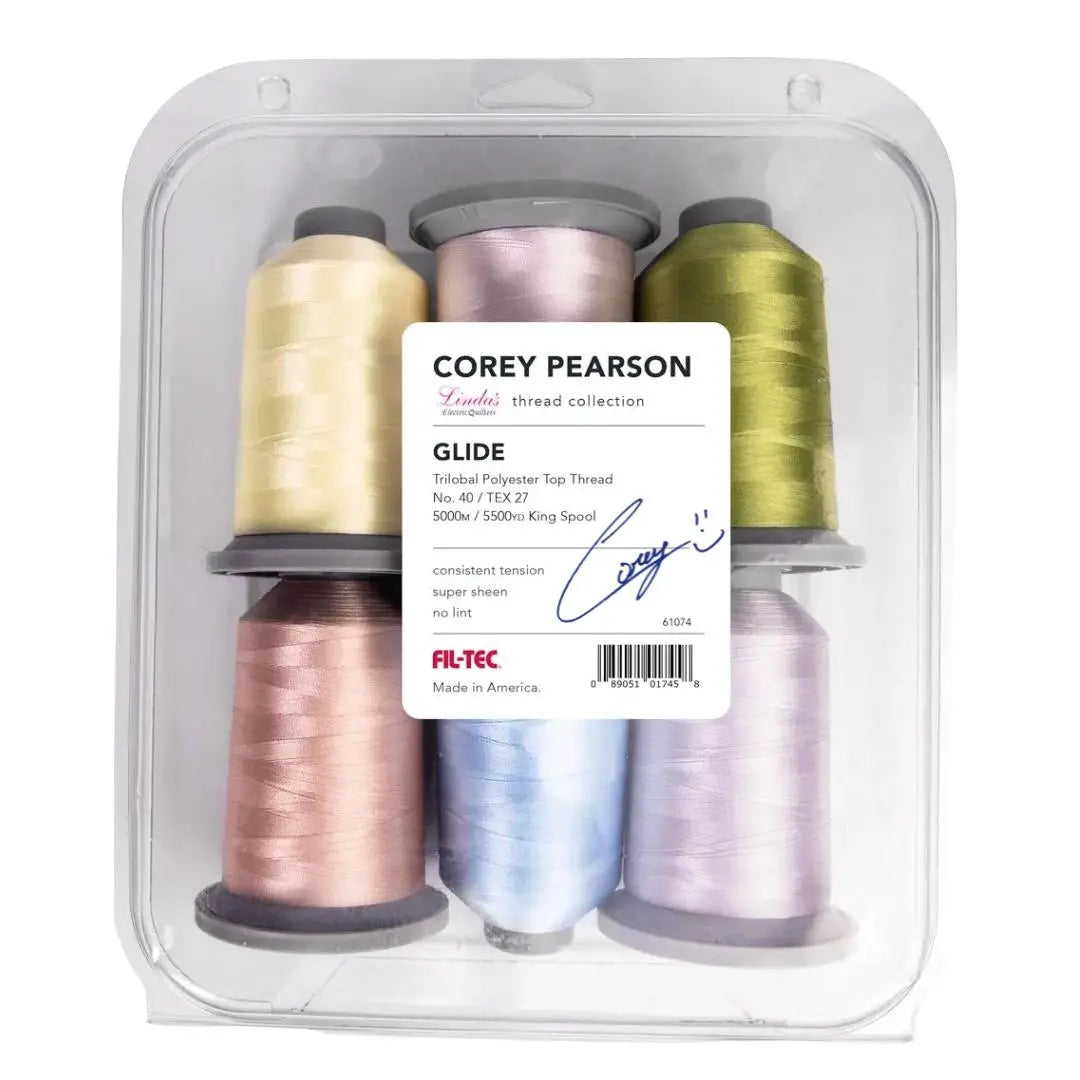
If you are testing white polyester thread, the 10002 Super White Glide Polyester Thread, 1,100 yards Mini Spool is a 2-ply, 40-weight thread on a 1,100-yard spool. Its catalog description lists trilobal technology, consistent tension, coverage, tensile strength, and lint-free running. Evaluate those features on a controlled sample rather than assuming the thread and batting will suit every design.

Stitch the sample with the actual quilt top, backing, batting, needle, bobbin casing, and thread. Check the front for puckering, the back for balanced tension, and the cut edge for bearding before committing to dense quilting.
Matching Batting Types to Your Project
Choose the finish first, then select the fiber. That order prevents a common mistake, choosing a batt because it sounds natural or luxurious even though it works against the project's purpose.
Heirloom bed quilts
For a traditional bed quilt, start with low-loft cotton. It gives the quilt a relaxed drape, breathable hand, and washed crinkle. A cotton-bamboo blend can offer a similar lightweight direction, but bamboo deserves a closer look because its environmental profile depends on processing, transportation, and end-of-life disposal, not on the plant's renewability. This batting selection guide discusses bamboo, silk, wool, blends, and the broader range of modern batting choices.
If the quilt will live on a bed, consider how its surface will coordinate with the bedding and frame. Quilters planning a complete bedroom look may also browse solid-wood bed frame companion sets for related bedding context.
Baby quilts
Baby quilts need practical laundering and a comfortable hand. Choose washable cotton or polyester in a low-to-mid loft when you want a lighter finish, or polyester when drying speed and minimal shrinkage matter more than natural breathability.
Keep quilting secure enough to hold the layers together, especially around open areas. Avoid choosing high loft solely because it looks puffy on the bolt. The finished quilt should remain easy to handle and wash.
Garments and lightweight lap quilts
Garments need movement, so thin cotton, silk, or wool can be more suitable than a bulky polyester batt. Wool adds warmth while keeping the piece light, and silk can provide smooth drape for a carefully handled project. Always test the fabric, batting, and seam construction together because a soft batting can still behave differently under pressing and stitching.
Wall hangings and art quilts
A wall hanging benefits from stability. Thin polyester can support a clean structure without making the piece heavy, while mid-to-high loft polyester or wool can emphasize sculptural quilting. For detailed art quilts, fine needle-punched wool can provide a responsive surface and visible stitch definition.
Show quilts
Show quilts often call for sharp texture and controlled dimension. Wool or a cotton-wool blend can make detailed motifs stand out, while cotton may suit a flatter, more traditional presentation. Your design, thread, tension, and quilting density still matter as much as the batt, so make a sample before loading the competition piece.

Care and Sewing Tips That Protect Your Finish
A quilt can look smooth on the frame and change after its first wash. Before basting, decide how much shrinkage, loft, and handling your finished project can tolerate.
- Pre-wash thoughtfully: If you want cotton or cotton-blend batting to shrink before quilting and lose some sizing, hand-wash it in cool water and dry it flat. Cotton is commonly described as shrinking 3–5%, which can create a puckered texture. Check the product label first, because care instructions vary by fiber and construction.
- Skip unnecessary pre-washing: Polyester and wool generally should not be pre-washed unless the label directs you to do so. Keeping their loft intact can matter more than removing sizing.
- Match the needle: A 90/14 or 100/16 topstitch needle may suit cotton or polyester batting. A 90/14 Microtex needle may work better with wool and silk. Sew a test sandwich before committing to the quilt.
- Control stitch density: Begin with a moderate stitch length, then adjust for the result you want. Closer quilting can support heirloom-style cotton work, while high-loft batting needs the spacing recommended by its manufacturer.
- Store batting rolled: A loose roll prevents fold lines from pressing through the quilt top. Keep the batting covered and away from dust and moisture.
- Protect the finished hand: Air-dry completed quilts flat when practical. If the care label permits machine drying, choose a gentle setting and limit heat, especially with synthetic batting.
Run your palm over the basted sandwich before stitching. A ridge, crease, or loose pocket will affect the needle path and can become a permanent mark in the finish.
For a visual review of preparation, basting, and longarm setup, see Freshly Pieced's batting guide. Watch how the batt is smoothed before the layers are tensioned. That small handling step helps the quilt finish evenly.
Linda's Electric Quilters in McKinney keeps an in-store batting wall and online selection for comparing options before you load the frame.
Your Quick Batting Checklist and Where to Shop
Use this seven-question check before you buy or load any of the types of quilt batting:
- Fiber choice: Do you need cotton, polyester, a blend, wool, silk, bamboo, or another specialty fill?
- Loft: Should the quilt lie flat, feel moderately full, or hold a pronounced sculptural puff?
- Shrinkage tolerance: Do you want washed crinkle, or do you want to avoid puckering?
- Quilting density: Will your design use broad open areas, close custom work, or dense free-motion fills?
- Project type: Is it a bed quilt, baby quilt, garment, throw, wall hanging, or show quilt?
- Pre-wash decision: Does the product label support pre-washing, and do you want to remove sizing before quilting?
- Care plan: Will the finished piece be gently washed, frequently laundered, air-dried, or stored as an heirloom?
Pro tip: Let loft guide your stitch spacing. A practical starting point is 8–10 inches for low-loft cotton, 4–6 inches for wool, and 2–4 inches for high-loft polyester. Confirm the specific manufacturer recommendation, because bonding and scrim can change the safe spacing.
Linda's Electric Quilters in McKinney keeps an in-store batting wall and online selection for quilters comparing cotton, wool, polyester, and blends. Staff can help identify an option for longarm, hand, or garment work, and special-order conversations can be useful when a specific batting construction isn't on the shelf.
Linda's Electric Quilters offers batting, thread, fabric, and quilting supplies for projects that need a carefully chosen finish. Visit Linda's Electric Quilters to compare batting options online or get help selecting the right fiber and loft for your next quilt.