Your embroidery machine is humming through a glossy satin-stitch monogram, and the result looks beautifully polished. Then the same rayon spool shreds halfway through a batch of towels, leaving you wondering whether the thread is defective or your machine needs attention. Rayon thread for embroidery offers exceptional silk-like sheen and a soft, smooth finish, but its low-twist filament construction becomes more vulnerable as tension, speed, dense stitching, and laundering increase.
That trade-off doesn't make rayon a poor choice. It makes rayon a project-specific choice. Use it when light reflection and refined stitch definition matter most, then adjust your needle, tensioning, stitch speed, stabilizer, and care routine to respect the fiber.
What Rayon Thread Brings to Embroidery
A rayon monogram can make a plain cuff look custom-made. Long satin stitches reflect light across the lettering, curved columns look fluid rather than rigid, and dark fabric gains vivid contrast from the reflective surface. These qualities suit decorative machine embroidery and Brazilian embroidery, where rayon supports dimensional stitches such as French knots, bullion stitches, and couching. The Embroiderers' Guild of America's Brazilian embroidery project notes that twist direction affects certain hand stitches, so check the instructions before using specialty rayon skeins.
Rayon is particularly effective when the thread itself should contribute to the design:
- It catches light on lettering. Satin columns and monograms gain a liquid-looking surface that can resemble silk.
- It settles smoothly over digitized details. Its soft hand lets close stitches lie together without the stiff, plastic feel some synthetic threads create.
- It gives gifts and heirloom pieces a finished appearance. Bridal handkerchiefs, framed samplers, and special-occasion linens usually benefit more from visual luxury than from maximum abrasion resistance.

The practical cost of that sheen
Rayon's low-twist construction preserves its aligned, light-reflecting filaments, but it gives friction and tension less room for error. Rayon embroidery thread is commonly a 40 wt continuous-filament viscose thread. The Madeira guide to rayon embroidery thread explains why tension, needle choice, and machine speed deserve careful attention, particularly during dense designs or long production runs. A thread that behaves beautifully at moderate speed may shred when heat, rubbing, and repeated needle penetrations increase.
Water creates another handling demand. Technical buying guidance places rayon's practical tensile-strength window around 180 to 220 cN, with 12 to 16% elongation at break. Saturated rayon may lose approximately 40 to 50% of its dry tensile strength and retain only about 50 to 60% of that dry strength. Consult the rayon thread buying guidance before choosing it for towels, uniforms, or items exposed to repeated wet handling.
Practical rule: Choose rayon when the embroidery must look exceptional. Choose a more durable fiber when the finished item must withstand aggressive use and frequent washing.
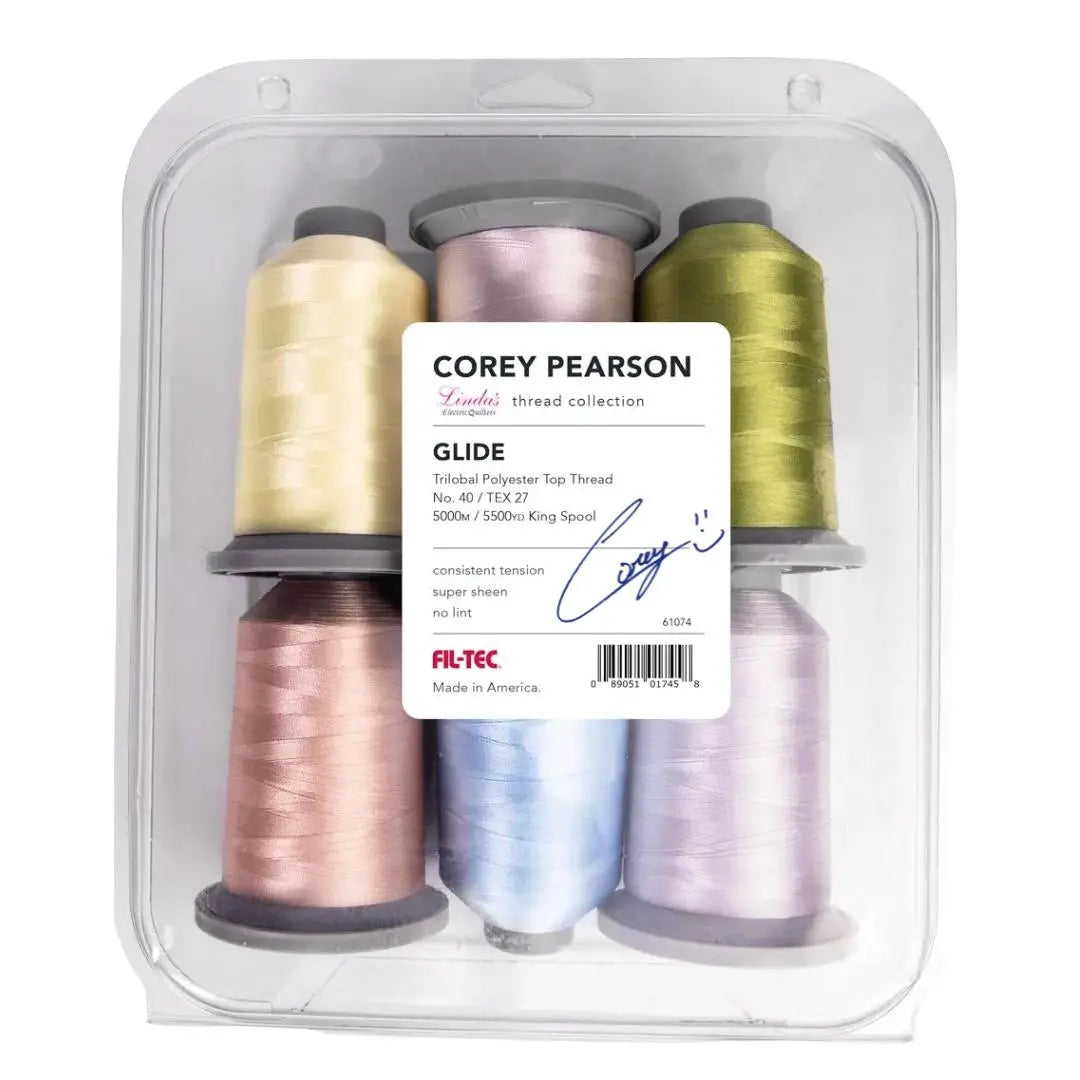
For a luminous finish, explore the Splendor™ 40wt Rayon Thread collection and compare colors with the fabric before stitching the complete design.
How Rayon Thread Performs
Rayon begins with regenerated cellulose. Manufacturers purify cellulose into a material that can be extruded into continuous filaments, then form those filaments into embroidery thread. The history of rayon's industrial development places its introduction in the mid-1800s, with full production reached by the turn of the 20th century. Cellulose chemists had produced an early surviving viscose-rayon specimen by 1898, and Courtaulds is documented as producing the first commercial viscose rayon in 1905.
Think of the finished thread as a bundle of fine glass rods held in a loose spiral. The aligned rods reflect light beautifully, but they can slip, abrade, or separate when the bundle meets excessive friction. That analogy helps explain why rayon looks luxurious and demands careful machine preparation.
Four properties you can feel at the machine
Luster comes first. Rayon reflects light more strongly than cotton and generally appears richer than polyester. On a dark navy or black blank, that reflection can make a monogram look deeper without changing the design itself.
The thread has modest stretch and stable stitch placement. Once the fabric is properly hooped and stabilized, the thread doesn't behave like a highly elastic material. That stability helps lettering retain its intended shape, especially when the digitized design uses controlled satin columns.
Strength is adequate for moderate embroidery, not unlimited abuse. Rayon can run smoothly when the thread path is clean and the upper tension is balanced. Its wet-strength limitation is more serious than its dry performance, particularly on items that go directly from machine to wash.
The soft hand changes coverage. A 40 wt rayon thread generally settles flatter than a heavier 30 wt thread. That makes it useful for small lettering and curved satin columns, where a bulky thread could close counters or create a raised, stiff ridge. A 30 wt rayon can create a bolder statement, but the design may need density and needle adjustments so the extra coverage doesn't overload the fabric.
Before stitching, inspect the spool and thread path. A damaged cone edge, a cross-wound spool placed incorrectly, or lint inside the tension discs can create friction that looks like a thread-quality problem. Rayon rewards a smooth path because every unnecessary rub disturbs the filament bundle.
Rayon, Polyester, and Cotton Compared
Rayon's low-twist filament structure explains both its visual appeal and its handling demands. The loose bundle reflects light beautifully, but tension, high speed, repeated washing, and wet handling leave less room for error. Polyester is the production workhorse, while cotton provides a matte, natural-fiber surface. Choose according to the project's priorities: visual depth, laundering resistance, or a quiet texture.
| Property | Rayon | Polyester | Cotton |
|---|---|---|---|
| Finish | High sheen with a silk-like surface | Moderate sheen with a polished appearance | Matte and natural |
| Surface feel | Soft hand and smooth drape | Slightly crisper and more resilient | Soft, tactile, and fabric-like |
| Dry machine performance | Good with controlled tension and speed | Forgiving across many machine conditions | More sensitive to speed and lint |
| Wet and laundering behavior | Vulnerable to strength loss when saturated | Better suited to repeated washing and demanding use | Natural appearance, but can distort or weaken with harsh care |
| Stretch and recovery | Limited stretch, stable when balanced | Stronger, resilient, and tolerant of production demands | Limited recovery and more breakage risk at high speed |
| Best visual use | Monograms, bridal work, decorative lettering, dark fabrics | Logos, uniforms, sportswear, frequently washed items | Heirloom embroidery, redwork, quilting, vintage effects |
| Main compromise | Less forgiving under tension, speed, and wet handling | Less liquid-looking than rayon | Less shine and more lint |
Rayon for appearance
Rayon gives decorative embroidery the strongest reflective depth of these three choices. Long satin stitches on a personalized cuff or framed monogram catch light across the surface, creating a soft, refined result. That same low-twist construction can become a liability when the thread is pulled aggressively, run too quickly, or washed repeatedly. It needs a clean path and balanced handling rather than force.
Polyester for endurance
Polyester suits production runs, workwear, athletic garments, and items exposed to frequent washing. Its resilience makes it more tolerant of abrasion, bleaching, demanding laundering, and the repeated tension of machine production. Choose it when maintenance and service life matter more than a silk-like finish.
Cotton for a quiet surface
Cotton brings a matte, natural look to redwork, heirloom embroidery, and quilted pieces where shine could distract from the fabric. Its tactile surface can show more lint, and high-speed stitching may require closer attention to the thread path and machine settings. The trade-off is a calm, fabric-like appearance rather than reflective depth.
The thread-type comparison from Stitchfast also emphasizes matching thread weight to the design. 40 wt is a common starting point for machine embroidery, while 30 wt provides heavier coverage and a stronger visual statement. A heavier thread can crowd dense areas, close small counters, or make satin columns feel stiffer, so check the stitch file before changing weight.
For decorative rayon colors and project supplies, browse Linda's embroidery thread and sewing supplies, then test the shade on the actual fabric. Screen previews cannot show how rayon's reflection changes against a particular ground cloth, and a small sample reveals whether the selected thread can withstand the project's tension and care requirements.
Machine Settings and Needle Choices
A rayon thread can stitch beautifully on the first sample and still fail during a long run. Its low-twist construction leaves the filaments smooth and reflective, but that structure is less forgiving when tension rises, the needle moves quickly, or the thread path adds friction. Set the machine conservatively, then judge the result on the actual fabric and design.
There is no universal tension number for every home machine, multi-needle head, or bobbin casing. Independent embroidery guidance commonly recommends starting rayon around 400 to 600 stitches per minute or 600 to 750 stitches per minute, depending on the machine and design. The rayon versus polyester workflow comparison describes reducing tension by one to two settings as a practical starting adjustment, not a replacement for test stitching.
On many home machines, upper tension may begin around 80 to 120 g, but treat that range as a starting point. Industrial multi-needle machines often need a bobbin-casing check followed by small upper-tension changes. A sudden, large adjustment can hide the underlying problem.
| Machine Type | Upper Tension | Stitch Speed | Recommended Needle | Stabilizer |
|---|---|---|---|---|
| Home embroidery machine | About 80 to 120 g starting range | Begin conservatively, often around 400 to 600 spm | 75/11 ballpoint for knits, 90/14 light-ball or sharp for wovens | Cutaway for knits, appropriate tearaway or combination support for stable wovens |
| Industrial multi-needle machine | Tune upper tension with bobbin casing | Around 600 to 750 spm for dense satin testing | 90/14 light-ball or sharp, selected for the blank | Strong, design-appropriate backing with firm hooping |
| Dense satin or metallic-adjacent design | Reduce tension only after test stitches | Use the slower end of the machine's safe range | Size-specific topstitch needle when the design requires added eye clearance | Stable backing that limits shifting and puckering |
A test-stitch protocol that saves production blanks
Before stitching the garment, use three samples on matching scrap:
- A 2-inch satin column exposes tension imbalance and thread shredding.
- A 3 × 3 cm fill shows whether density and stabilizer support work together.
- A small letter reveals looping, sink, registration problems, and thin coverage.
Inspect both sides. Look for balanced thread visibility, clean column edges, and no loose loops. Change one variable at a time, such as speed, upper tension, needle, or stabilizer, so the successful correction is clear.
Pro-Tip: Clean the entire thread path before changing tension. A burr on the needle plate, a rough hook, or a contaminated bobbin casing can create micro-snaps that resemble incorrect tension.
Keep the cone oriented correctly, especially on a multi-needle machine. Confirm that the thread unwinds smoothly, the bobbin is evenly wound, and the bobbin casing is not dragging. These checks reduce false tension diagnoses before a long production run.
Best Embroidery Projects for Rayon
A short monogram on a lightweight cotton cuff shows why rayon has a place in embroidery. The fabric receives little abrasion, while the thread's sheen makes each satin stitch visible. Heirloom linens, framed samplers, bridal handkerchiefs, children's keepsake bibs, and fashion embellishments can also benefit from rayon's soft drape and reflective surface.
Use 40 wt rayon for most decorative machine embroidery. It suits fine lettering and satin work without making the design feel heavy. Choose 30 wt for a bolder line or fuller coverage, then check that the digitized file can handle the added thickness without becoming stiff. Rayon's low-twist construction gives it a smooth, lustrous surface, but that same structure can become less forgiving as speed, stitch density, tension, and laundering increase.
Good matches for rayon
- Decorative monograms: Long satin stitches catch light across initials and names.
- Heirloom quilting accents: Rayon adds a polished highlight to appliqué and selected motifs. For larger quilt projects, match the thread's shine with the quilt's loft and intended drape.
- Framed artwork: Designs protected from routine washing can prioritize surface finish.
- Bridal and occasion details: The sheen supports a formal look on delicate accessories.
Rayon suits projects where appearance receives more attention than repeated hard use. It can be a practical choice for a small run of premium gifts, because the finish is immediately visible.
Projects that deserve another fiber
Free-standing lace, dense logos on workwear, athletic uniforms, restaurant napkins, baby garments washed often, and large production batches demand steadier performance. Repeated breaks mean rethreading, re-hooping, scraps, and downtime. Polyester generally fits these conditions better. For a matte, traditional surface, cotton remains useful for redwork, heirloom work, and selected quilt projects.

If you're matching thread to a larger quilting project, Linda's quilting thread and batting category can help coordinate the embroidered surface with the quilt's loft, drape, and intended use.
The Sustainability Trade-Off
Rayon is often described as an environmentally preferable thread because it comes from cellulose rather than a petroleum-derived synthetic source. That description is incomplete. Cellulose is renewable in origin, and rayon may be biodegradable under suitable conditions, but the conversion from pulp to filament involves industrial processing, including solvents, energy, and water.
The eco-embroidery discussion from iDress Myself frames rayon within a wider movement toward plastic-free or lower-impact embroidery materials. That perspective is useful, but material origin isn't the only factor a stitcher should weigh.
Performance affects material waste
Rayon can lose approximately 40 to 50% of its dry tensile strength when saturated, as reported in an independent rayon and polyester performance comparison. On a frequently washed item, a broken or frayed design may require repairs, restitching, replacement stabilizer, and additional machine time.
Polyester begins with a fossil-fuel-derived material, but its durability can make it the more practical choice for garments expected to withstand demanding use. Cotton offers a renewable, biodegradable fiber option with a quieter finish, though it also has its own machine and laundering limitations.
Sustainability is a project decision, not a fiber label. Consider sourcing, processing, expected service life, thread breaks, rework, and disposal together.
Rayon can still be a responsible choice for a decorative piece that receives gentle care and remains attractive for a long time. The honest question isn't whether rayon is automatically green. Ask whether its visual benefit and intended lifespan justify the processing and maintenance trade-offs.

Troubleshooting Rayon Thread Problems
Rayon faults usually become easier to solve when you identify the symptom before touching the tension dial. Work through the machine in a consistent order, and change one variable at a time.
- Fraying or shedding: The low-twist filaments may be rubbing against a rough needle, burr, guide, or tension disc. Replace the needle, inspect the path with your fingertip, clean the discs, and reduce stitch speed.
- Looping on top: The upper path may be incorrectly threaded, or the needle may be too large or damaged. Completely re-thread with the presser foot raised, then test with a fresh needle.
- Looping underneath: The upper thread may not be seated in the tension discs, or the top tension may be too loose. Re-thread first, then increase upper tension in a small step if the sample still shows loose bobbin-side loops.
- Sudden snapping: Excess speed, a dull needle, a damaged needle eye, or a tight thread path can break the filament bundle. Try a larger needle, check for burrs, and slow the design before changing several settings.
- Puckering: The fabric may lack stabilizer support, the hoop may be loose, or the design may be too dense for the blank. Re-hoop without stretching the fabric excessively and test a more suitable backing.
- Dull stitches: A twisted cone, dirty thread path, or excessive abrasion can flatten the reflective surface. Confirm the cone orientation, remove lint, and check whether the thread is rubbing during take-up.

Test tension without guessing
Professional tension test: Stitch a 2-inch satin column on scrap backing, then pull the thread ends gently from the front and back. The break point and the balance of top and bobbin thread tell you more than a tension number viewed in isolation.
If the same fault continues, isolate the variables. Keep the design, fabric, bobbin, and needle fixed while changing only speed. Then restore the original speed and test tension. This method tells you whether the liability comes from the rayon itself, the machine setup, the design density, or the material combination.
Watch this rayon thread troubleshooting video for a visual review of threading, looping, snapping, and tension checks.
Care, Shopping, and Final Recommendations
A rayon project succeeds when its thread choice matches the way the finished piece will be used. Decorative lettering and heirloom accents can benefit from rayon's reflective surface. Items exposed to frequent or industrial laundering usually suit polyester better. Choose rayon when a pronounced sheen matters, while cotton offers a quieter, matte appearance.
Before stitching, confirm that the machine can handle rayon at the planned speed. A clean thread path, suitable needle, balanced bobbin case, controlled tension, and a test sample matter more than changing spools quickly. Rayon's low-twist construction can look beautiful in a satin column, yet it has less tolerance for abrasion and sudden tension changes. Fast stitching, dense designs, or repeated washing can turn that advantage into fraying, breaks, or flattened shine.
For finished embroidery, turn the item inside out and wash it on a gentle, cold-water cycle with mild detergent. Avoid chlorine bleach, fabric softener, wringing, twisting, and direct high heat. The rayon embroidery care guidance recommends gentle laundering and flat drying because rough handling and heat can distort the embroidery or damage the thread.
Air-dry flat when possible. If a dryer is necessary, use a low setting and remove the item before prolonged heat affects the fabric or stitching. Test colorfastness in an inconspicuous area before washing a valuable piece, especially with deep or highly saturated thread colors.
Build the setup around the thread: choose a suitable stabilizer, review digitizing instructions, and keep a needle reference nearby while testing. Record the needle, backing, speed, and tension that produce clean coverage, so a successful sample can be repeated on customer garments.
Linda's Electric Quilters offers rayon thread colors and embroidery supplies for decorative work, plus fabrics, batting, notions, and educational resources. Visit Linda's Electric Quilters to select a rayon shade and assemble materials for a monogram or other project whose use and laundering match rayon's strengths.