
Hi Bestie,
We’ll spend forever holding thread colors against a quilt top.
Too light? Too dark? Does it blend?
But when it’s time to choose batting, many of us automatically reach for white.
Here’s the question we don’t ask nearly enough: Does the color inside the quilt make sense for the colors on the outside?
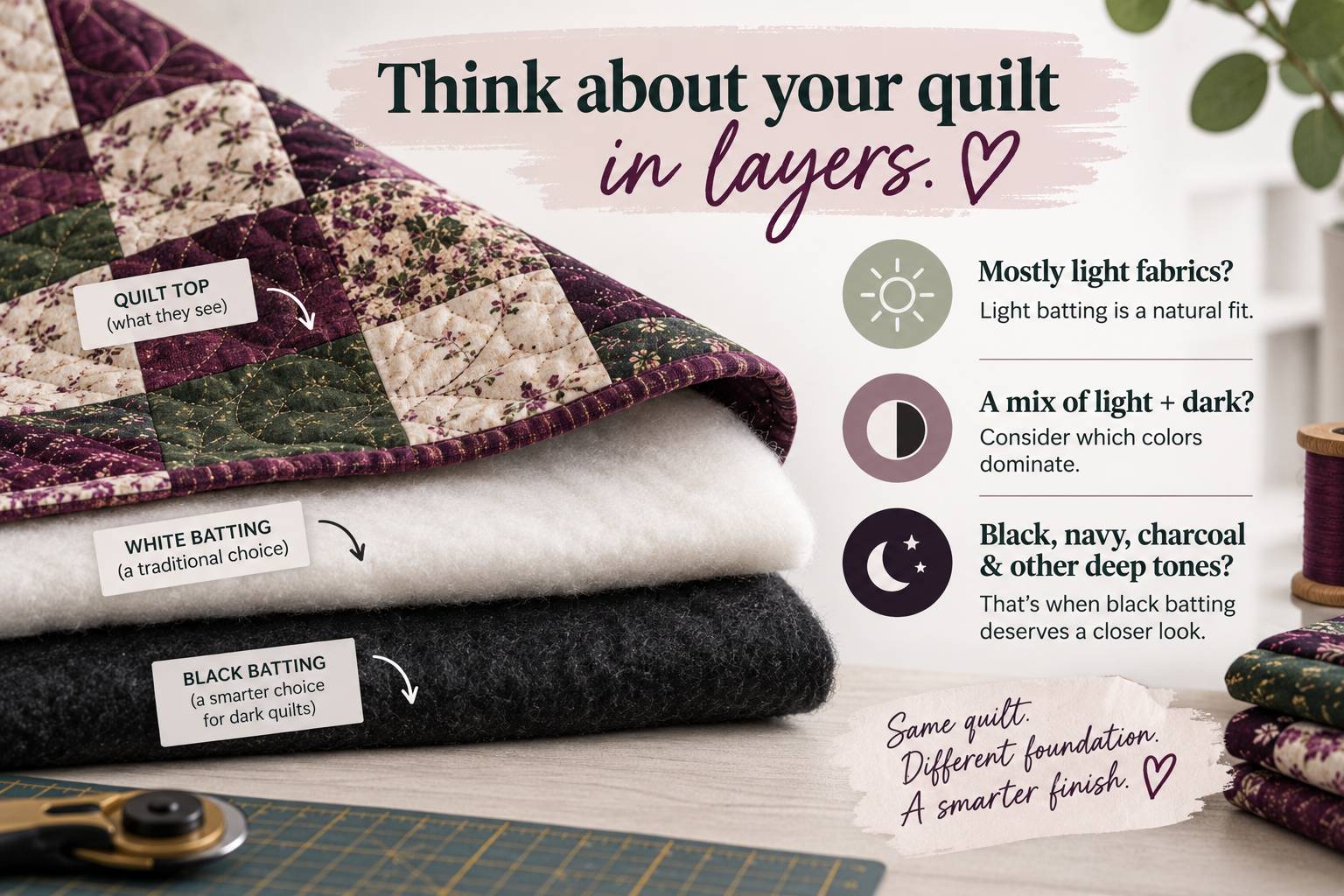
But if the batting is hidden, does the color really matter?
Sometimes, yes. Tiny batting fibers can occasionally work their way through the fabric.
Against lighter colors, a light fiber may barely catch your eye. Against a deep black or navy?
That same light fiber has a lot more contrast.
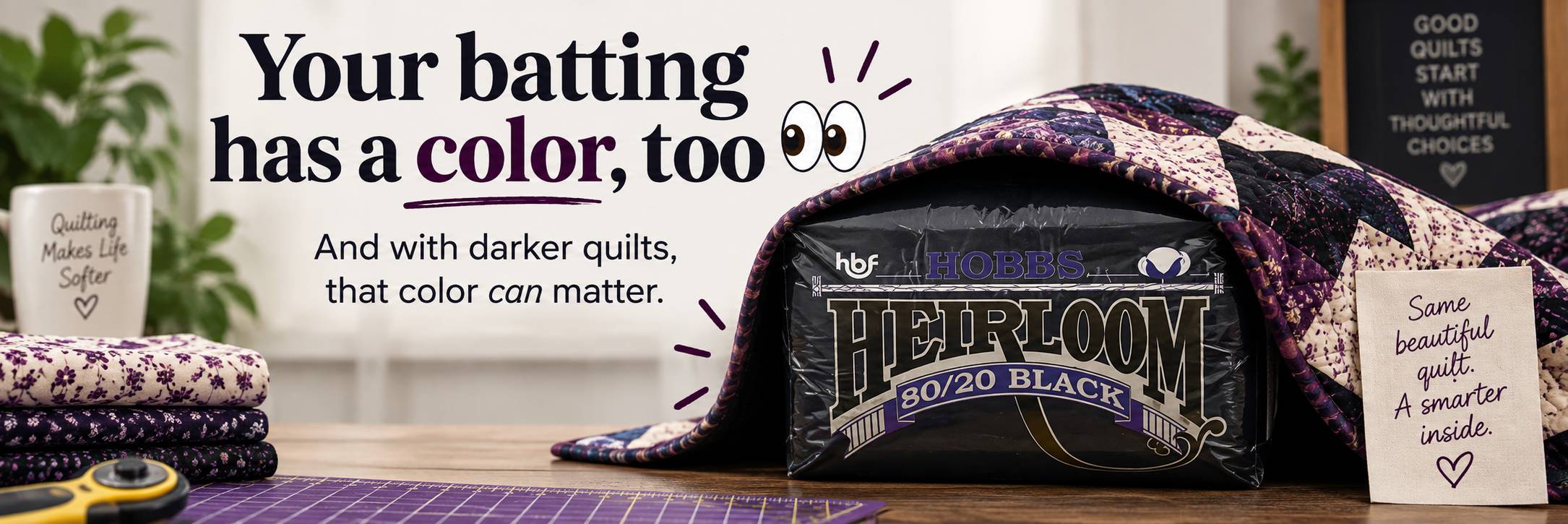
Black batting gives darker quilts a darker foundation underneath, so what’s inside works with your fabric choices, rather than against them.
Why batting fibers migrate (and why it's called bearding)
Quilters call this bearding: individual batting fibers get pulled up through the weave of the quilt top or backing, usually along needle holes or where the fabric has a looser weave. Every stitch your needle makes is a tiny opening, and with thousands of stitches in a quilt, a few fibers will eventually find their way out. Washing and everyday use can nudge more through over time. You can't stop it completely, but you can decide what color those fibers are. A darker batting under dark fabric simply makes them nearly invisible. If you want to go deeper on fiber content and how different battings behave, our quilt batting comparison chart and batting selection guide walk through it.
Still wondering if you actually need black batting?
Try this, look at your quilt top and imagine one tiny batting fiber eventually peeking through.
Would you rather see white…or black?
If your quilt is predominantly dark, the answer can make your batting decision surprisingly simple.
Remember,
One dark fabric doesn’t mean you automatically need black batting.
But if your next quilt is filled with rich blacks, navies, charcoals, or other deep shades, don’t choose what goes inside it on autopilot.
Take a second look at black batting, it might simply make more sense for the quilt you’re making.
Happy Quilting!
From Corey.
Ready to give your dark quilt a darker foundation?
Our Black Batting collection has the two options I reach for most: the Hobbs Heirloom 80/20 Black batting package for a soft, natural cotton-blend hand, and Quilters Dream Select Black Poly if you want a wash-and-go polyester. Longarmers, the Hobbs Black 108" roll is also available by the yard. And if you're stocking up on the classic white and natural options too, check the Sales and Deals page for the current batting offers.
Frequently Asked Questions
Does batting color really matter if it's hidden inside the quilt?
Usually less than you'd think, but not never. Batting color matters in two situations: when fibers migrate through the fabric (bearding), and when a very light or very dark batting subtly shifts how the fabric reads. White fibers peeking through black fabric are far more noticeable than white fibers through cream. For mostly light quilts, standard white or natural batting from our batting collection is the natural fit.
When should I use black batting instead of white?
Use black batting when the quilt is predominantly dark: black, navy, charcoal, deep plum, forest green. If the quilt is a mix of light and dark, go with whichever family dominates. A single dark border or a few dark blocks isn't reason enough on its own. Our Hobbs Black 80/20 package guide covers the decision in more detail.
What is bearding in quilting and how do I reduce it?
Bearding is when batting fibers work their way up through the quilt top or backing, typically through needle holes. To reduce it: use a quality batting with a scrim or good needle-punching, use a sharp, appropriately sized needle (see what those needle numbers mean), avoid loosely woven fabrics on dark quilts, and match batting color to your fabric so any fibers that do escape blend in.
Is black batting the same quality as white batting?
Yes. Black battings from Hobbs and Quilters Dream are the same construction as their white counterparts, just dyed. Hobbs Heirloom Black 80/20 is 80% cotton and 20% polyester, the same blend quilters love in the standard Heirloom line. The ultimate guide to Hobbs batting compares the whole family.
Does black batting show through light fabrics?
It can. Black batting under white or pale fabric may give the top a slightly grayer, shadowed cast, especially with thin fabrics. That's the mirror image of the white-under-black problem, and it's why the rule is to match the batting to the dominant tone rather than defaulting to either color. If you're unsure how a fabric will behave, this post on testing fabric before you commit is a good starting point.