
Hi Bestie,
Every quilter eventually hears that little voice:
“Maybe I can just leave those stitches…” 👀
But here’s the thing: good quilting isn’t about never making mistakes. It’s about knowing when something is worth fixing.
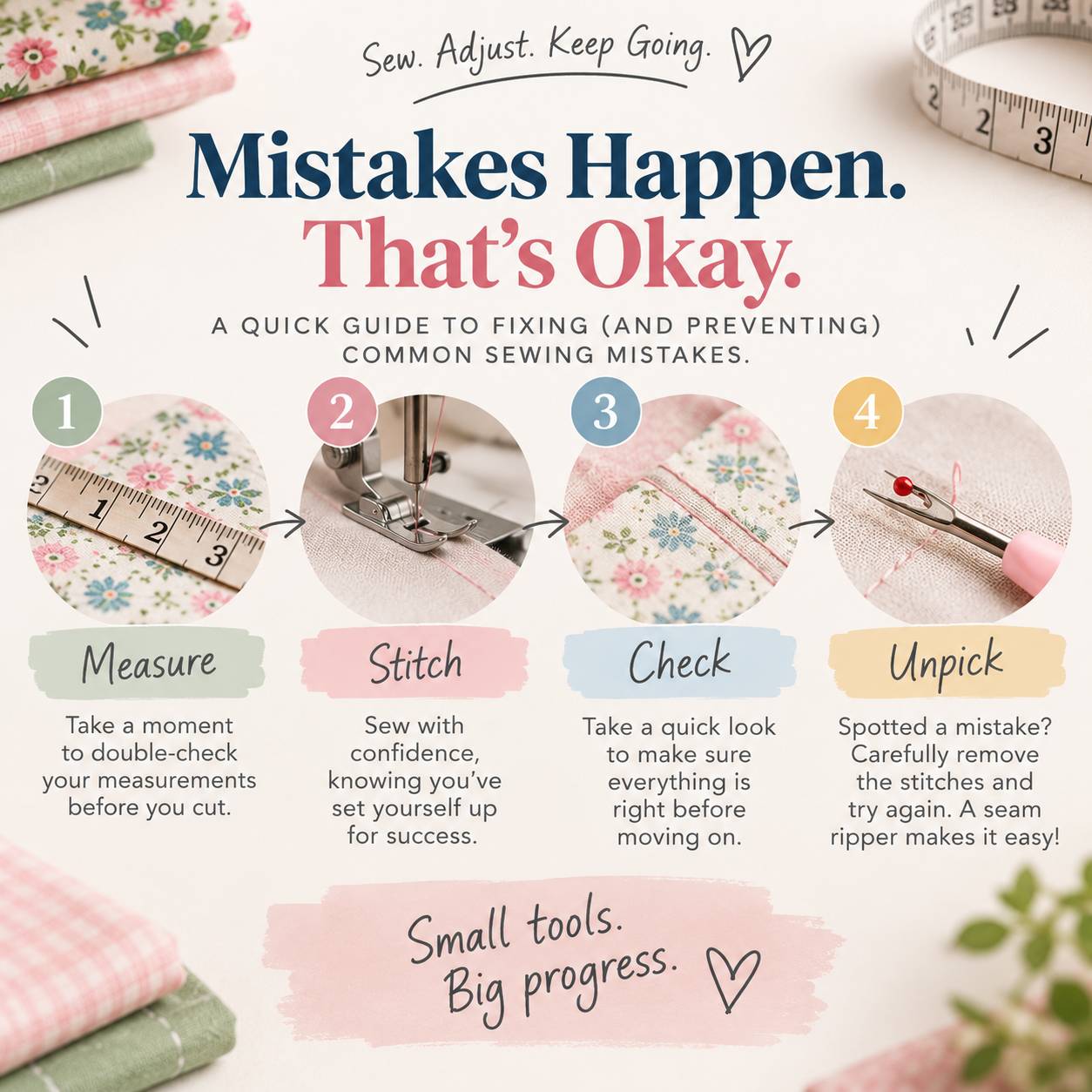
Why a Seam Ripper Is One of Your Smartest Tools
A seam ripper lets you carefully undo the stitches that aren’t quite right, so a small mistake doesn’t follow you through the rest of your project.
No frustration. No starting over.
Just a few stitches backward, so you can move forward with confidence.
Why Fixing It Early Matters
Here’s the part nobody tells you: a crooked or off-size seam doesn’t stay the same size. It compounds. If one block finishes 1/8" short, the next row has to stretch or ease to meet it, your points start drifting, and by the time you reach the borders you’re fighting ripples that no amount of pressing will fix. Ripping out ten stitches in the first block is a two-minute job. Squaring up a wavy quilt top is an afternoon.
That’s the same lesson behind the cutting mistake that gets worse with every block: small errors early become big errors late. If your seams keep coming out uneven, it’s worth checking whether you’re pressing too aggressively or whether your bobbin tension is quietly pulling things off.
Remember,
The best quilters aren’t the ones who never reach for a seam ripper, they’re the ones who know when a stitch is worth redoing.
Fixing a small mistake early protects everything that comes after it: your alignment, your finish, and ultimately the project you had in mind.
Sometimes, a few stitches backward are exactly what it takes to move forward.
Happy Quilting!
From Corey.
If it’s time to upgrade the seam ripper that came free with your machine, take a look at the Dual Seam Fix Thread Remover (the rubber tip pulls out the loose threads after you rip) or a classic small-blade seam ripper for tight quilting stitches. Browse the full Seam Rippers & Measuring Tapes collection.
And this week’s deal: all Pellon batting is on sale.

Shop the Pellon batting sale → · Not sure whether Pellon or Hobbs is right for your quilt? Read the comparison.
Frequently Asked Questions
How do you use a seam ripper without cutting the fabric?
Slide the sharp point under a single stitch and push forward so the small blade in the curve cuts the thread. Cut every third or fourth stitch on one side, then flip the piece over and pull the bobbin thread; the seam will open in one strip. Never drag the ripper along the seam line—that’s how fabric gets sliced. A small-blade ripper gives you more control on the short stitches quilters typically use.
When should you rip out a seam versus leave it?
Rip it if the error affects anything that comes after it: an inaccurate 1/4" seam, a block that finishes the wrong size, or points that won’t match. Those problems compound across rows, as we covered in this post on compounding cutting errors. Leave it if it’s a slightly wobbly line on a seam that will be hidden inside the quilt and doesn’t change any measurement.
How do you remove the little thread bits after ripping a seam?
A lint roller or a piece of painter’s tape lifts most of them. Some seam rippers, like the Dual Seam Fix Thread Remover, have a rubber tip that rolls the loose threads right off the fabric. For stubborn bits, a quick pass with a stiff brush works too.
Why do my seams keep coming out uneven?
The usual causes are an inaccurate 1/4" seam guide, over-pressing that stretches the seam (see Are You Pressing Your Seams TOO Much?), or tension that’s pulling one layer. Check your bobbin tension and make sure your needle size matches the fabric before you assume it’s your piecing.
How often should you replace a seam ripper?
When it starts pushing threads instead of cutting them. A dull ripper takes more force, which is when fabric gets damaged. Most quilters replace theirs every year or two with regular use; a fresh one from our seam ripper collection is one of the cheapest upgrades in your sewing room. For more small habits that prevent big problems, see Small Sewing Habits That Save Hours of Frustration.