
Hi Bestie,
Before you rethread...
Raise your presser foot.
It sounds almost too simple to matter.
But when you're troubleshooting messy stitches, loops underneath your fabric, or tension that suddenly seems “off,” this tiny step can make a big difference.
Here’s Why the Presser Foot Matters
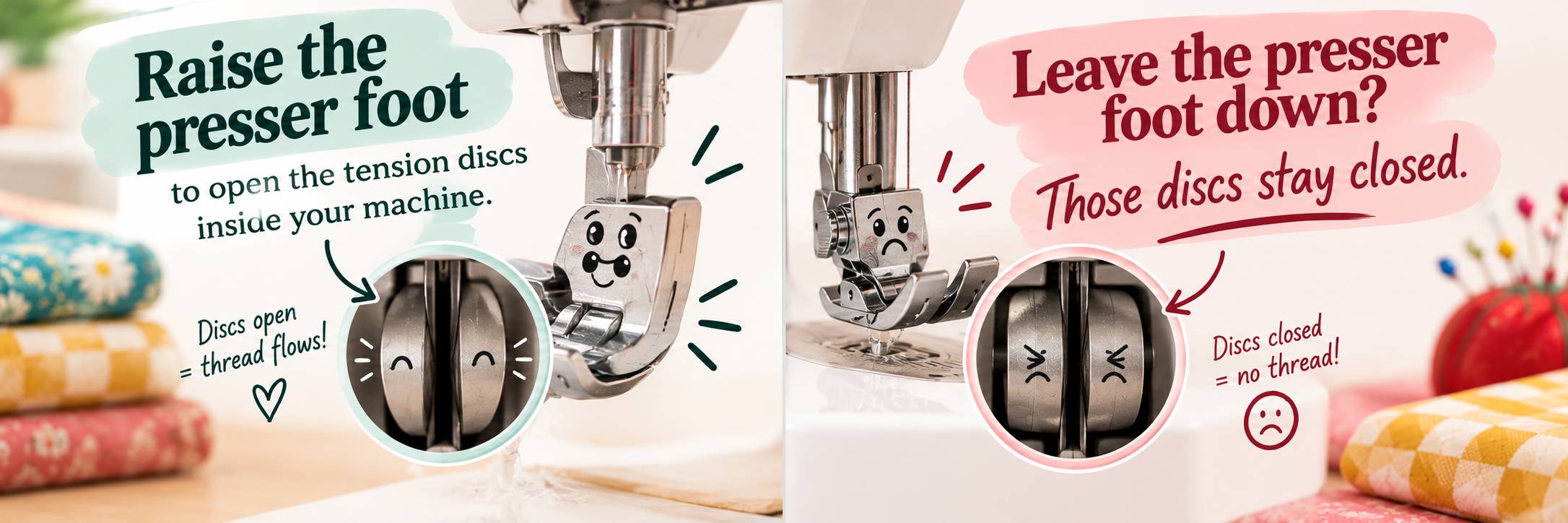
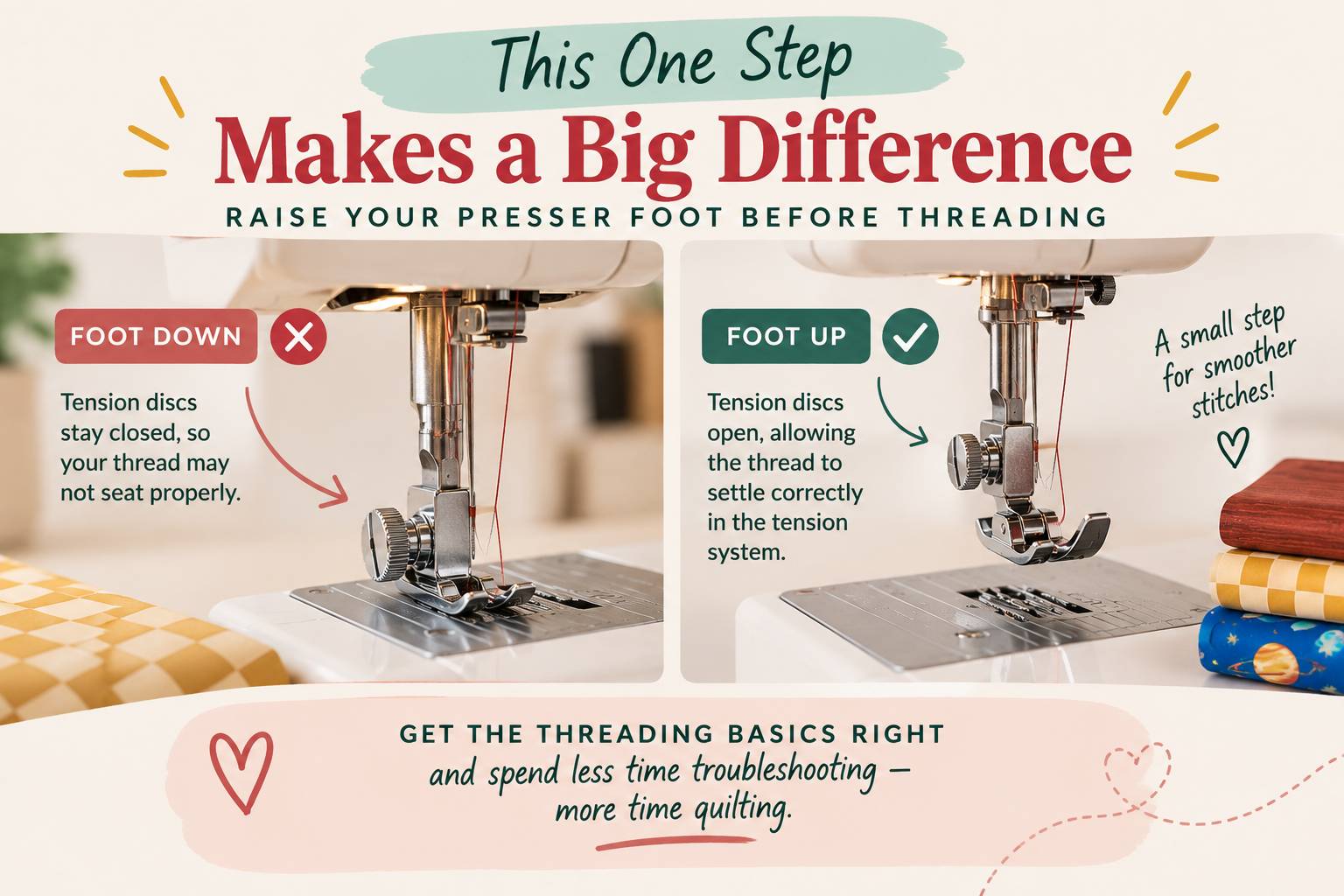
Raising the presser foot opens the tension discs inside your machine.
That gives the thread space to slide between them and properly seat itself as you follow the thread path.
Leave the presser foot down?
Those discs stay closed.
Your thread may not settle between them correctly, which means you can pull everything out, carefully rethread your machine…
…and accidentally recreate the exact same problem.
Same Rethreading. Same Problem.
So before you start adjusting tension settings, swapping thread, or wondering what your machine has against you today, try this:
Presser foot up.
Take-up lever up.
Then rethread from the beginning.
Once you're done, test a few stitches on scrap fabric before changing anything else.
Because sometimes what looks like a tension setting problem is really a threading problem.
One small setup check could save you a whole lot of troubleshooting.
Why the Take-Up Lever Needs to Be Up, Too
The take-up lever is the little arm that bobs up and down above the needle. When it's at its highest point, its eye is exposed so your thread can actually hook through it. If it's hidden inside the machine when you thread, the thread skips the lever entirely. You won't notice until you sew: the top thread never gets pulled taut on the upstroke, and you get a bird's nest of loops on the underside. A slow turn of the handwheel toward you brings the lever (and the needle) to the top, and it takes two seconds.
Remember,
Good troubleshooting starts with the simplest things first. Before you change tension settings or assume something is wrong with your machine, raise the presser foot, rethread carefully, and test again. That tiny habit can save you a lot of frustration, and get you back to the part you actually enjoy: quilting.
Happy Quilting!
From Corey.
Thread That Behaves in the Tension Discs
Once your threading is right, a smooth, consistent thread makes the difference stick. Superior's King Tut is a long-staple Egyptian cotton that runs clean through the discs with very little lint, and the cones are on sale right now.

Frequently Asked Questions
Why should the presser foot be up when threading a sewing machine?
Lifting the presser foot releases the upper tension discs. With the discs open, the thread slips between them and seats fully. With the foot down, the discs are clamped shut, so the thread often sits on top of or beside them instead of between them. The machine then has almost no control over the top thread, which shows up as loose, loopy stitches. If you're not sure your discs are open, listen for the tiny click as the foot lifts, then rethread from the spool. For a deeper walk-through, read our guide to sewing machine tension settings.
Why is my thread looping or bunching underneath the fabric?
Loops on the bottom are almost always a top-thread problem, not a bobbin problem. The top thread isn't being held tightly enough, so the bobbin thread pulls it through to the underside. The usual culprits, in order: the thread never seated in the tension discs (presser foot was down when you threaded), the thread missed the take-up lever, or the needle is bent or dull. Rethread with the foot up and the take-up lever at the top before you adjust anything else. We covered why the bottom of the quilt shows the problem but rarely causes it in The Problem Is Underneath. The Cause Isn't.
Should the take-up lever be up when threading?
Yes. Turn the handwheel toward you until the take-up lever reaches its highest point, which also raises the needle. At the top, the lever's eye is exposed so the thread can pass through it; lower down, the eye is partly hidden and the thread can skip it. A thread that misses the take-up lever won't be pulled tight on each stitch, and you'll get skipped stitches or a nest of loops underneath. Presser foot up plus take-up lever up is the two-second setup that prevents both.
How do I know if it's a tension problem or a threading problem?
Rethread first, then test. Raise the presser foot, bring the take-up lever to the top, pull the thread all the way out, and thread from the spool with a fresh needle if yours has more than about eight hours on it. Sew a few inches on two layers of scrap cotton with a scrap of batting between them. If the stitch is balanced now, it was a threading problem and your tension dial was never the issue. If it's still off after a clean rethread and a new needle, then it's time to move the tension in small steps. That order matters because adjusting tension to compensate for bad threading just hides the problem until the next time you thread. If your machine has been gradually sewing worse, also check the hidden reason your machine isn't sewing like it used to.
Does the thread or needle I use affect tension?
Very much. A linty or uneven thread drags inconsistently through the tension discs, and a needle that's too small for the thread forces it through a too-tight eye, both of which read as tension trouble. Match your thread weight to your needle size (see what those needle numbers actually mean and are you using the wrong thread weight), and choose a smooth long-staple thread. Our sewing machine thread guide and longarm thread hub compare the options, and the King Tut cotton guide covers the thread we reach for on traditional quilts. Fresh machine needles and King Tut cones are both in stock.