Hi Bestie,
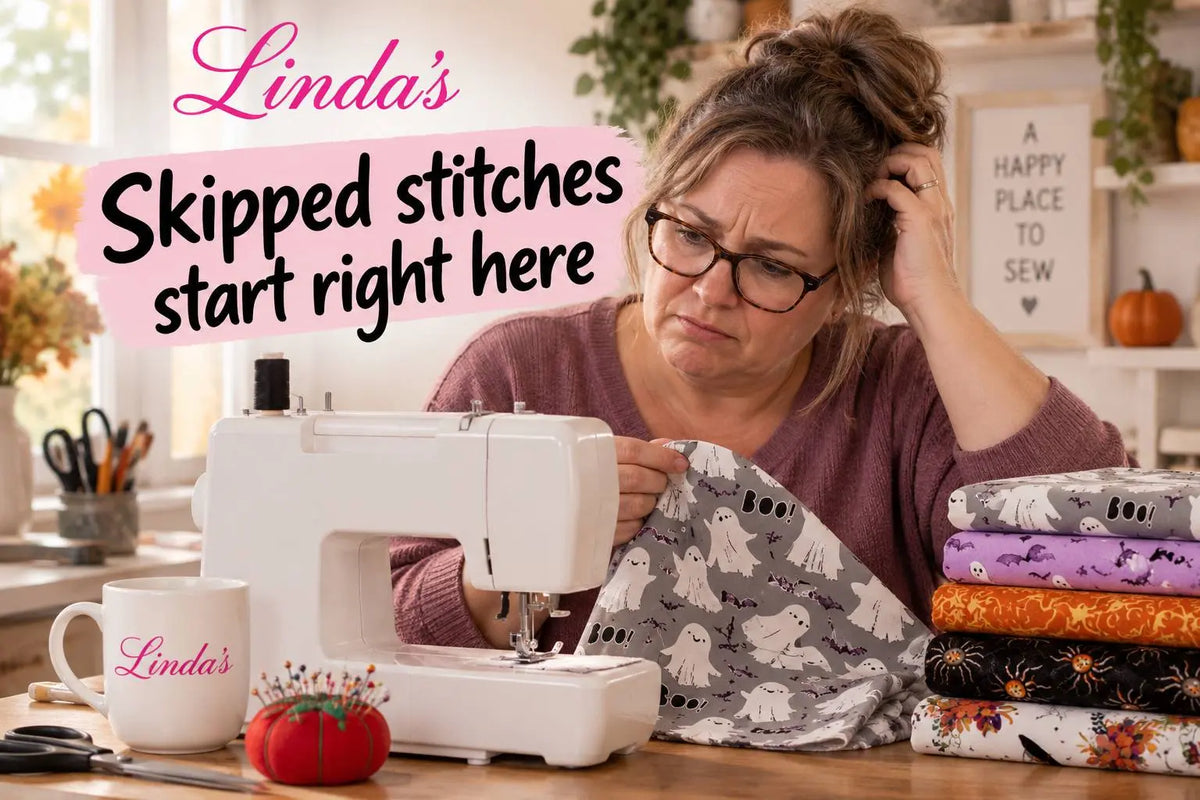
When your machine starts skipping stitches, it’s tempting to go straight for the tension dial.
But before you change a setting that may already be correct, check something much simpler:
Your needle.
A tiny problem at the needle can show up as a much bigger problem in your stitching.
Why The Needle Matters
Every stitch depends on a split-second handoff.
As the needle carries the top thread down through the material, it creates the loop the hook needs to catch.
That happens over and over again as you sew.
But if the needle is bent, damaged, incorrectly installed, or poorly matched to the material, that handoff may not happen cleanly.
The hook misses the loop.
The stitch never forms.
And you see a skip.
So while skipped stitches can have other causes, your needle is one of the simplest places to start troubleshooting.
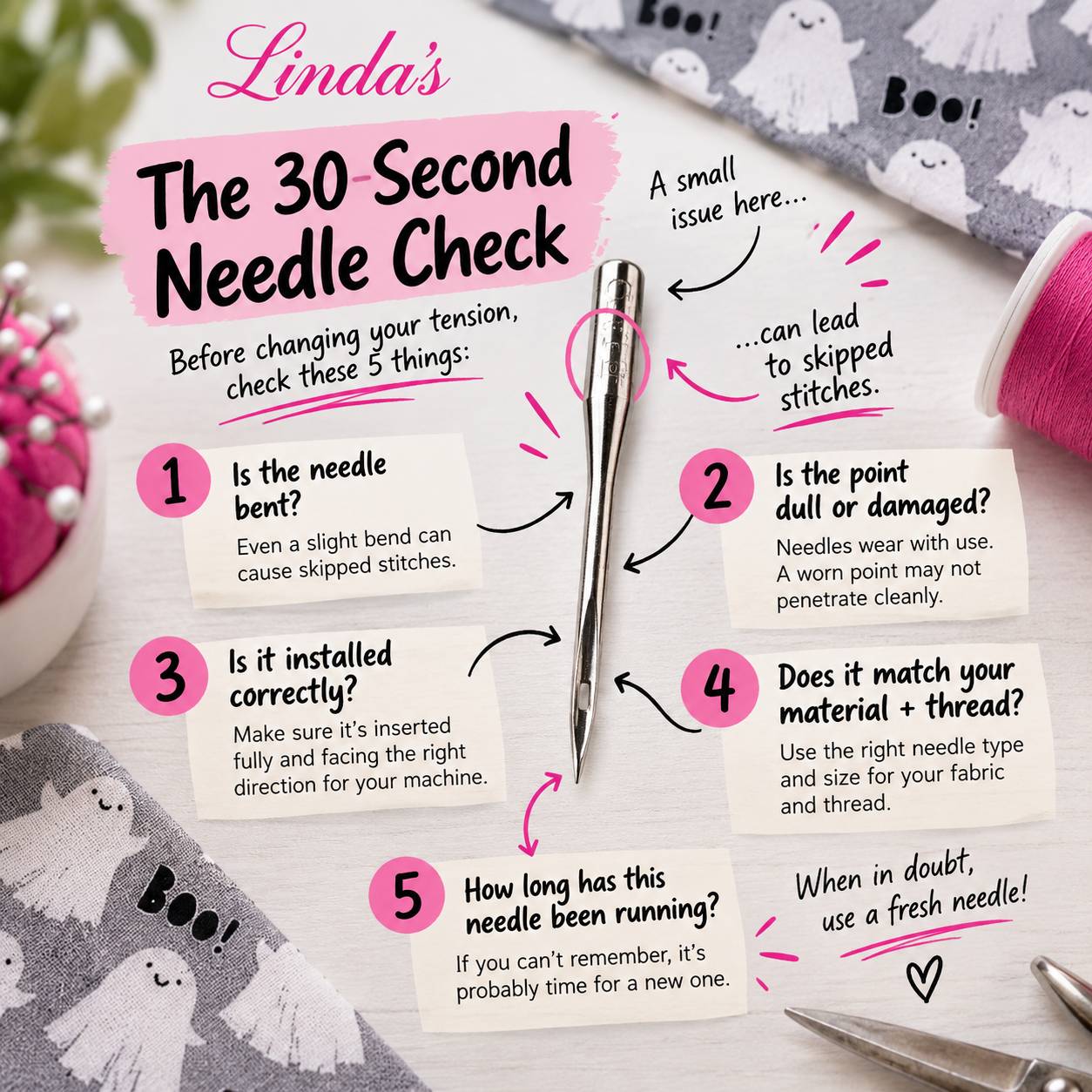
The 30-Second Needle Check
Before you touch the tension dial, run through these five questions:
- Is the needle bent? Even a slight bend moves the eye away from where the hook expects it. Roll the needle on a flat surface; if it wobbles, replace it.
- Is the point dull or damaged? Needles wear with every stitch. A worn or burred point may not penetrate cleanly, and the thread loop forms late or not at all.
- Is it installed correctly? Push it all the way up and face it the right direction for your machine. A needle that sits even slightly low changes the timing between needle and hook. Here’s a step-by-step on inserting a needle if you want a refresher.
- Does it match your material and thread? The needle type and size should suit both. If the eye is too small for the thread, or the point is wrong for the fabric, the loop can’t form cleanly. If the sizing is confusing, here’s what those needle numbers actually mean.
- How long has this needle been running? If you can’t remember, it’s probably time for a new one. I wrote about how often to change your needle if you want a rule of thumb.
When in doubt, use a fresh needle. It’s the cheapest troubleshooting step you have.
Remember,
Skipped stitches don’t automatically mean your tension is wrong. Start with the simplest variable first: check that your needle is straight, sharp, properly installed, and right for your fabric and thread. A quick needle check can save you from unnecessary adjustments, and get you back to smooth, consistent stitches faster.
And if the needle checks out and you’re still seeing skips, the next stops are the thread path and the bobbin before the tension dial. I covered that in Stop Fighting Your Thread Tension and Before You Rethread Your Machine.
Happy Quilting!
From Corey.

Shop Halloween Fabrics at Linda’s →
Frequently Asked Questions
Why is my sewing machine skipping stitches?
The most common cause is the needle: it’s bent, dull, inserted incorrectly, or the wrong type or size for your fabric and thread. Any of those keeps the hook from catching the thread loop, so the stitch never forms. Check the needle first, then the threading path and bobbin, and only adjust tension if a fresh, correctly installed needle doesn’t fix it. If you’ve already been chasing the dial, read The Tension Fix That Creates Another Problem before you turn it again.
How do I know if my sewing machine needle is bent or dull?
Roll the needle on a flat surface: a bent needle wobbles instead of rolling smoothly. A dull or damaged needle makes a popping or punching sound as it enters the fabric, leaves visible holes or pulled threads, and often produces uneven or skipped stitches. If you notice any of these signs, replace it rather than trying to “work through” it. Browse quilting and sewing machine needles to keep spares on hand.
How often should I change my sewing machine needle?
A good rule of thumb is roughly every eight hours of actual sewing, or at the start of each new project, whichever comes first. Change it sooner if you hit a pin, hear a thumping sound, or start seeing skipped stitches or snags. Needles are inexpensive compared to the time you lose troubleshooting a worn one. I go into more detail in How Often Should I Change My Needle?
Which way does a sewing machine needle go in?
On most home sewing machines, the flat side of the needle shank faces the back of the machine and the needle is pushed all the way up before the clamp screw is tightened. If it sits low or is turned even slightly, the hook can miss the thread loop and you get skipped stitches. Round-shank longarm needles orient by the groove and scarf instead; see the Longarm Needle Hub guide for your machine. For a home machine walkthrough, read How to Insert a Sewing Machine Needle.
What needle should I use for quilting cotton and 50wt thread?
For piecing quilting cotton with 50wt cotton thread, a size 80/12 universal, sharp, or topstitch needle is the usual starting point. Move up to a 90/14 for heavier 40wt threads or thicker seams, and down to a 70/10 for very fine thread and lightweight fabric. The eye should be large enough that the thread passes freely without fraying. For a fuller breakdown, see How to Choose Sewing Machine Needles and A Guide to Sewing Machine Needle Types, and pair the needle with the right Aurifil thread for your project.