Ask ten longarm quilters what causes thread breaks, skipped stitches, and shredding, and nine will blame tension. In my experience running quilts through Gammills every week, the needle is the culprit at least as often - wrong size, wrong point, or simply worn out. Longarm needles are cheap, and the right one fixes more problems than any tension adjustment. This is the complete size and point selection system for the Groz-Beckert 134MR needles we stock.
How Longarm Needle Sizing Works
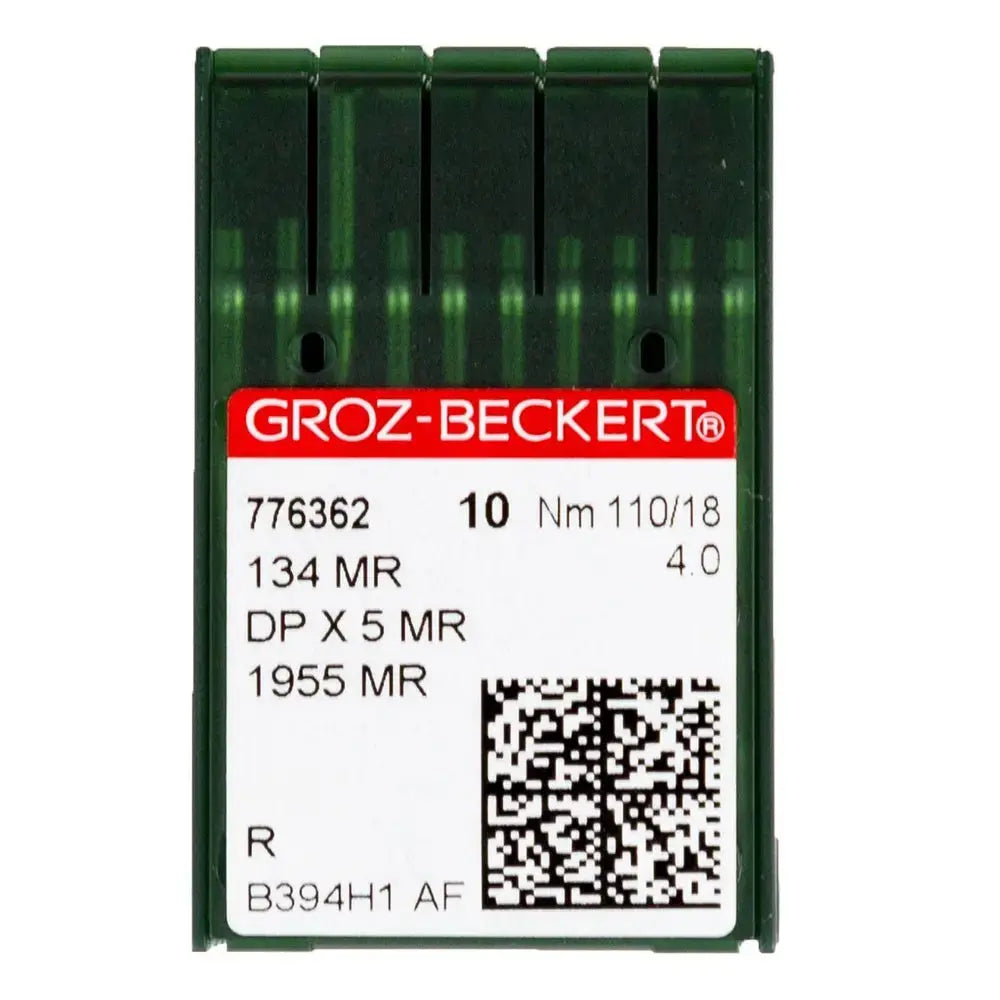
Longarm machines use the 134MR system, sized by the metric number: 2.5, 3.0, 3.5, 4.0, 4.5, 5.0 - which correspond to the familiar #12, #14, #16, #18, #19, and #21. Bigger number, thicker blade, bigger eye. The rule that governs everything: the needle's eye must match the thread's diameter. Too small an eye saws the thread and shreds it; too big a needle leaves visible holes in the quilt.
Pick Your Size by Thread
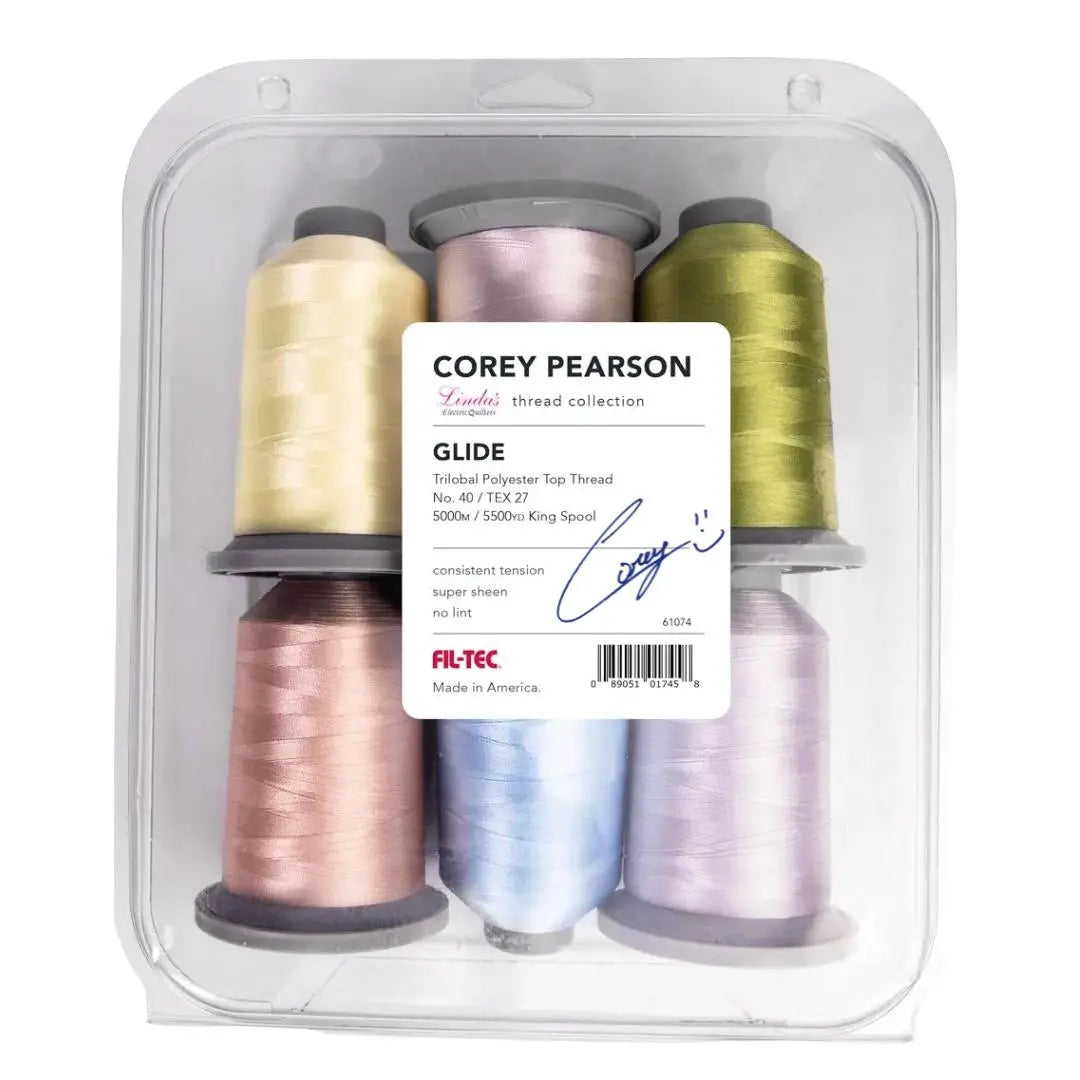
Match the needle to what is threaded, not to habit. Fine threads - 100wt MicroQuilter, 80wt DecoBob, 60wt Bottom Line - want the #12 MR 2.5 or #14 MR 3.0. Standard 50wt cotton and fine poly runs the #14 or #16 MR 3.5. The everyday 40wt workhorses - Glide, Omni, Sensa Green - are happiest in the #18 MR 4.0, which is the default needle in most studios for a reason. Heavy 30wt cottons, metallics, and monofilament step up to the #19 MR 4.5, and dense or rough work - denim quilts, heavy specialty threads - takes the #21 MR 5.0. Full detail on each size lives in our SKU guides: #12, #14, #16, #18, and #19.
Pick Your Point by Fabric
Three points cover longarm work. R-Point (regular sharp) pierces cleanly through tightly woven cottons and batiks - the default for quilting cotton tops. FG ball point pushes between knit fibers instead of cutting them - the needle for t-shirt quilts and minky backs, in #18 FG and #21 FG (guide here). FFG light ball splits the difference - gentle on loose weaves and flannel while still piercing cotton, available from #12 FFG up. And for high-volume studios, the #16 and #18 Titanium FFG needles hold their point 3-5x longer than chrome - the per-quilt economics favor titanium the moment you quilt weekly.
When to Change the Needle
Every 8-10 hours of stitching, at the start of every customer quilt, and immediately after any thread break you cannot explain. A needle does not have to snap to be dead - a microscopic burr from one batting seam is enough to shred thread for the rest of the quilt. Popping sounds as the needle enters the fabric mean it is already overdue. Install with the eye facing dead forward - the needle alignment magnet makes perfect orientation a ten-second job.
Frequently Asked Questions
- What needle size should I use with Glide or Omni thread?
- #18 MR 4.0 R-Point is the standard pairing for 40wt polyester on cotton quilts. Drop to #16 for a smaller hole on fine fabrics; go #19 if you run metallics or notice shredding at speed.
- Do longarm needles fit my domestic machine?
- No - 134MR needles have a round shank and different length than the flat-shank 130/705H needles domestic machines use. They are not interchangeable in either direction.
- Why does my thread shred only at high speed?
- Heat and friction concentrate at the eye. Move up one needle size, check for a burr, and add a drop of thread lubricant for stubborn threads - our Ease-A-Thread guide covers it.
- Are titanium needles worth it?
- If you quilt more than one quilt a week, yes - the titanium nitride coating keeps the point sharp several times longer, which means fewer mid-quilt changes and more consistent stitch quality across a big top.
- What needle for a t-shirt quilt or minky backing?
- FG ball point, sized to your thread - usually #18 FG. A sharp point cuts knit loops and creates runs; the ball point slides between them.
Stock the drawer from the full Groz-Beckert needle guide, pair sizes to thread with the Longarm Thread Hub, and keep tension honest with the Towa gauge. Needle, thread, tension - in that order - solves nearly every stitch problem a longarm can throw at you.