Thread Breakage: A Friction Problem With a Simple Solution
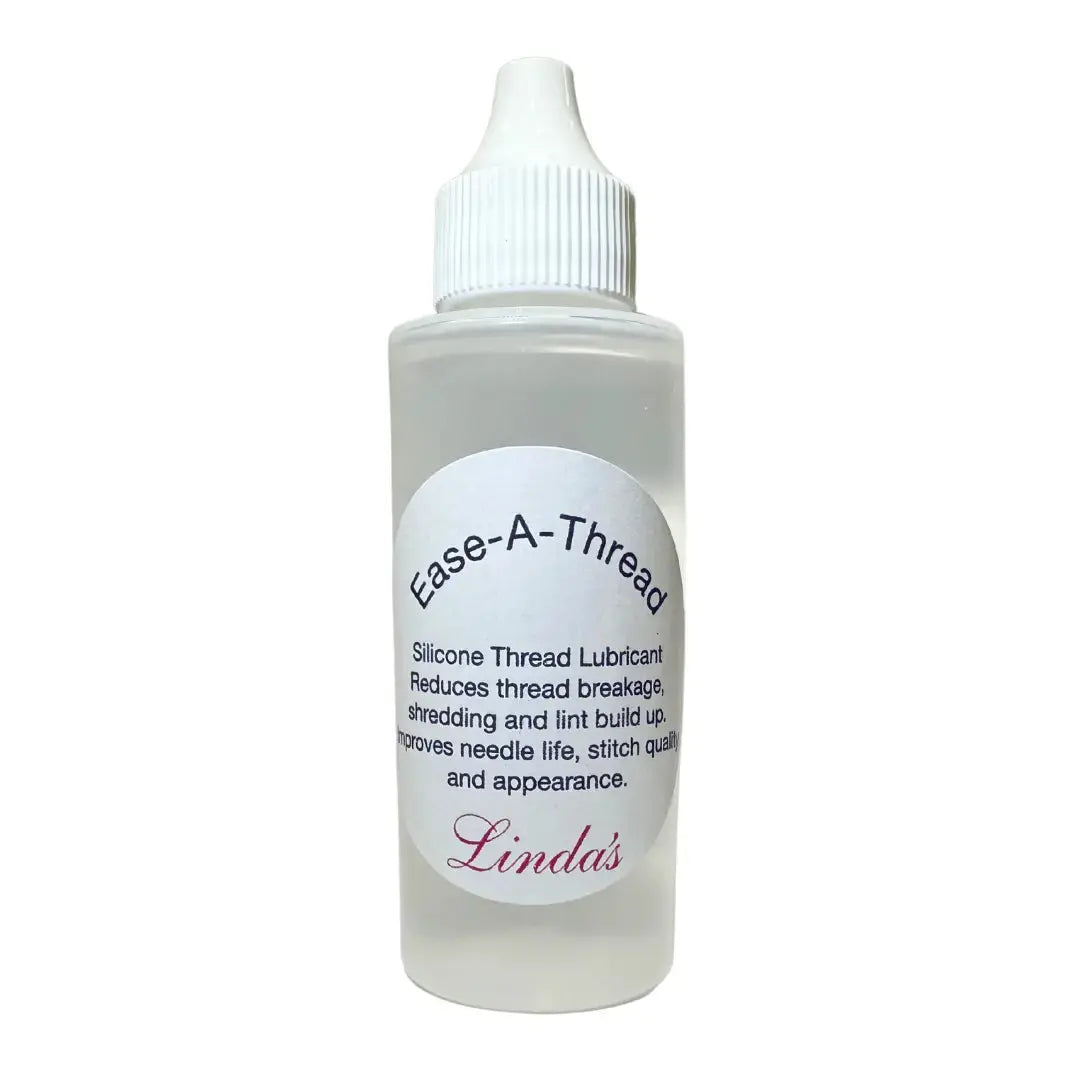
Thread breaks in longarm quilting are frustrating, time-consuming, and -- in many cases -- entirely preventable. The most common cause of unexpected thread breakage is not thread quality or tension settings. It is friction: thread running over thread guides, through tension discs, and past the needle eye at high speed generates heat and stress that gradually weakens the fiber until it breaks. Ease-A-Thread is a silicone-based lubricant applied directly to the thread that reduces friction at every point in the thread path, dramatically reducing breakage frequency and extending thread and needle life. It earns its place in the same kit as the Towa bobbin case and the threads in the Glide White guide and Omni Natural White guide.
What Is Ease-A-Thread?
Ease-A-Thread is a concentrated silicone lubricant formulated specifically for quilting thread applications. Silicone is the ideal thread lubricant because it is non-staining, colorless, does not build up on thread guides or tension mechanisms, and does not affect thread color, dye stability, or the washability of finished quilts. A small amount applied to the thread before it enters the machine's thread path creates a microscopic lubricating layer that reduces friction at every subsequent contact point.
Application is simple: apply 2 to 3 small beads of the lubricant along the thread between the spool and the first thread guide, then allow the thread to carry it naturally through the machine path as quilting begins. Reapply every 20 to 30 minutes during a session or whenever thread tension begins to feel inconsistent.
Top 10 Uses and Benefits of Ease-A-Thread
- Reducing Thread Breakage -- The primary benefit. Apply before a longarm session and watch thread breakage frequency drop noticeably, especially with fine threads.
- Metallic Thread Management -- Metallic threads are the most friction-prone of all thread types. Ease-A-Thread is particularly effective at reducing metallic thread shredding and breakage.
- Fine Thread (60wt and Smaller) Applications -- Finer threads have less mass and less inherent resistance to friction-induced breakage. Lubrication is especially valuable at fine thread weights.
- High-Speed Computerized Quilting -- At the speeds used in production computerized quilting, friction builds faster. Ease-A-Thread allows sustained high-speed operation with lower breakage risk.
- Tension Consistency Improvement -- Reduced friction means more consistent thread tension delivery from spool to needle, resulting in more even stitch quality.
- Needle and Machine Life Extension -- Reduced friction means less heat at the needle, extending needle sharpness and reducing wear on thread guides and tension components.
- Dense Quilting Applications -- High-density quilting (micro-stippling, dense featherwork) stresses thread more than open designs. Lubrication helps manage this stress.
- New Thread Types Troubleshooting -- When switching to an unfamiliar thread that runs inconsistently, try Ease-A-Thread as an immediate first step before adjusting tension settings.
- Dry Climate and Low-Humidity Conditions -- In dry environments, thread loses moisture and becomes more prone to breakage. Silicone lubrication compensates for this environmental factor.
- Domestic Machine High-Volume Quilting -- The benefits apply equally to domestic machine quilting at high volume -- any machine moving thread at speed benefits from reduced friction.
What It Pairs Well With
Ease-A-Thread is compatible with all thread types -- cotton, polyester, cotton-wrapped poly, silk, and metallic. It is particularly valuable with the thread types most prone to friction-related breakage: fine threads (60wt and above), metallics, and threads with surface textures that increase friction (some variegated and specialty threads). Keep a bottle at both your longarm and domestic machine for immediate access when thread issues arise.
Safety and Fabric Impact
Silicone lubricants are colorless, non-reactive, and do not stain fabric. Ease-A-Thread does not affect the color or hand-feel of finished quilts and washes out with normal laundering. It is non-toxic and safe for use in home studio environments.
Frequently Asked Questions
How often should I apply Ease-A-Thread during a quilting session?
Apply 2 to 3 beads along the thread before starting and reapply approximately every 20 to 30 minutes during continuous quilting. For sessions with particularly fine or problem threads, more frequent application may be beneficial.
Does Ease-A-Thread affect thread tension settings?
Reduced friction can marginally affect the tension balance, but the effect is typically minor. Check your tension after the first application and adjust if needed. Most users find that lubricated thread runs slightly more smoothly with no adjustment required.
Will Ease-A-Thread damage my machine's tension mechanism?
Silicone lubricant is safe for all standard thread guide and tension disc materials. It does not build up or leave residue that affects mechanical function. It is used by professional longarm studios on a daily basis without machine component concerns.
Is this the same as thread conditioner products like Thread Heaven?
Thread conditioners (beeswax-based products) add a wax coating for hand sewing applications. Ease-A-Thread is a liquid silicone lubricant optimized for machine quilting thread paths. They address similar problems by different mechanisms; Ease-A-Thread is specifically optimized for the friction conditions inside quilting machines.
Shop Ease-A-Thread Thread Lubricant
One small bottle, kept at the machine, prevents the thread breakage that interrupts every quilting session. A small investment with an outsized impact on production efficiency.