Hi Bestie,
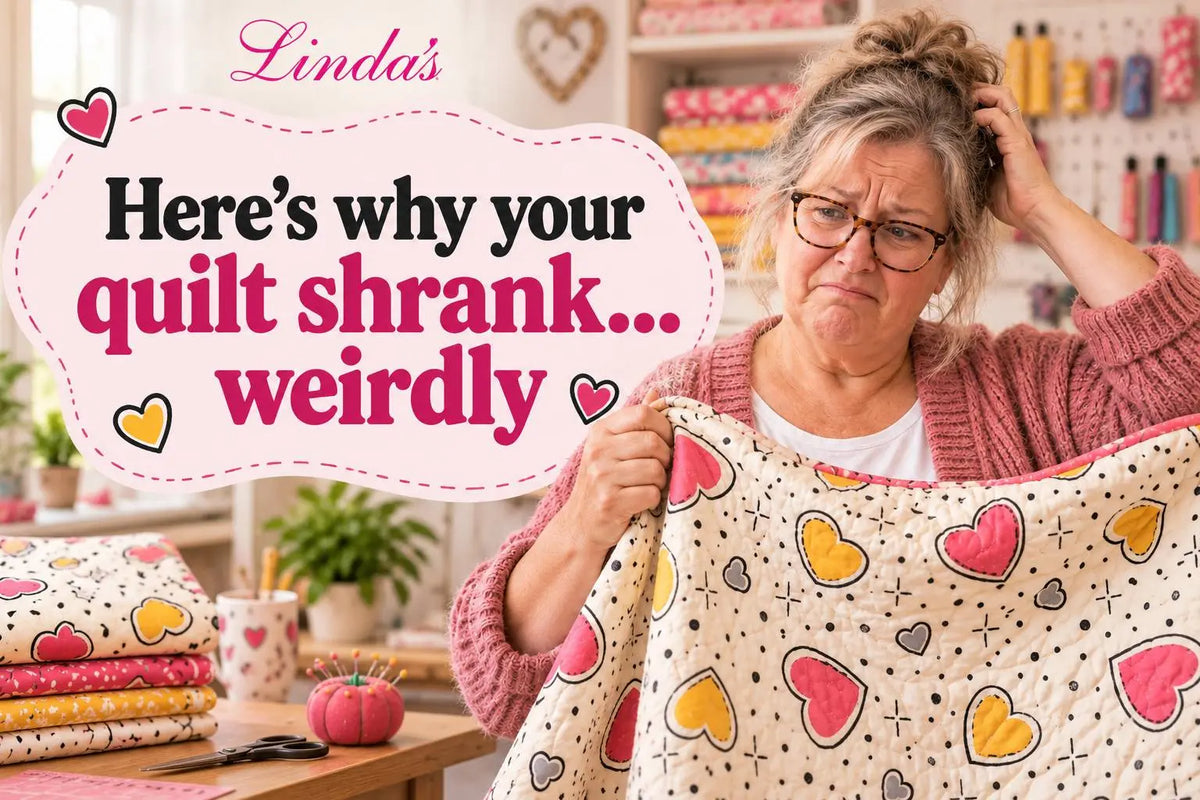
You finish your quilt, give it that first wash…and suddenly it looks a little different than you remember.
More crinkle here. A little puckering there. Maybe one area seems to have pulled in more than another.
Before blaming your stitching, look at what’s happening inside the quilt.
Your Quilt Is Three Layers Behaving as One
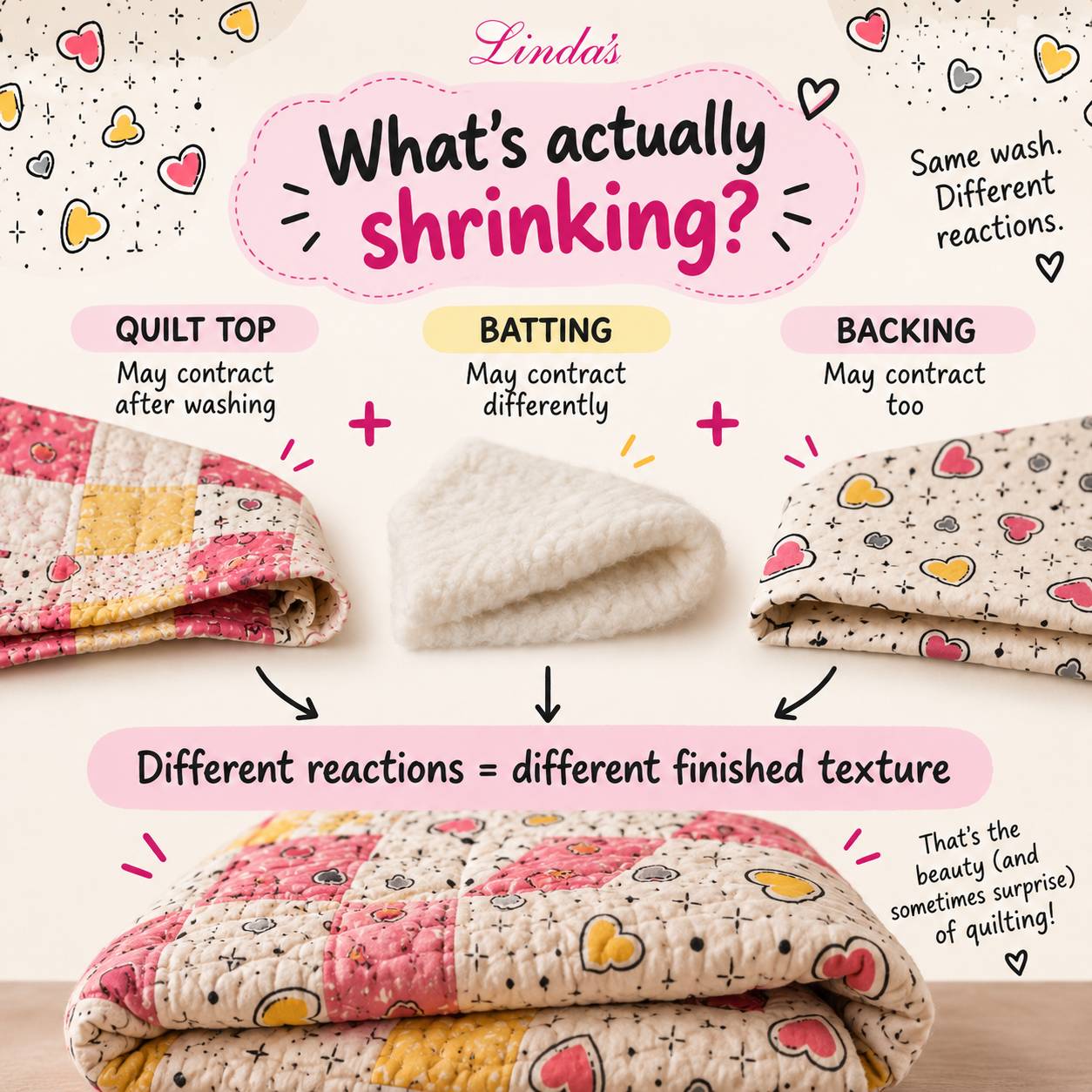
Your quilt is really three layers behaving as one: the quilt top, backing, and batting. But once water and heat enter the picture, those layers don’t necessarily behave the same way.
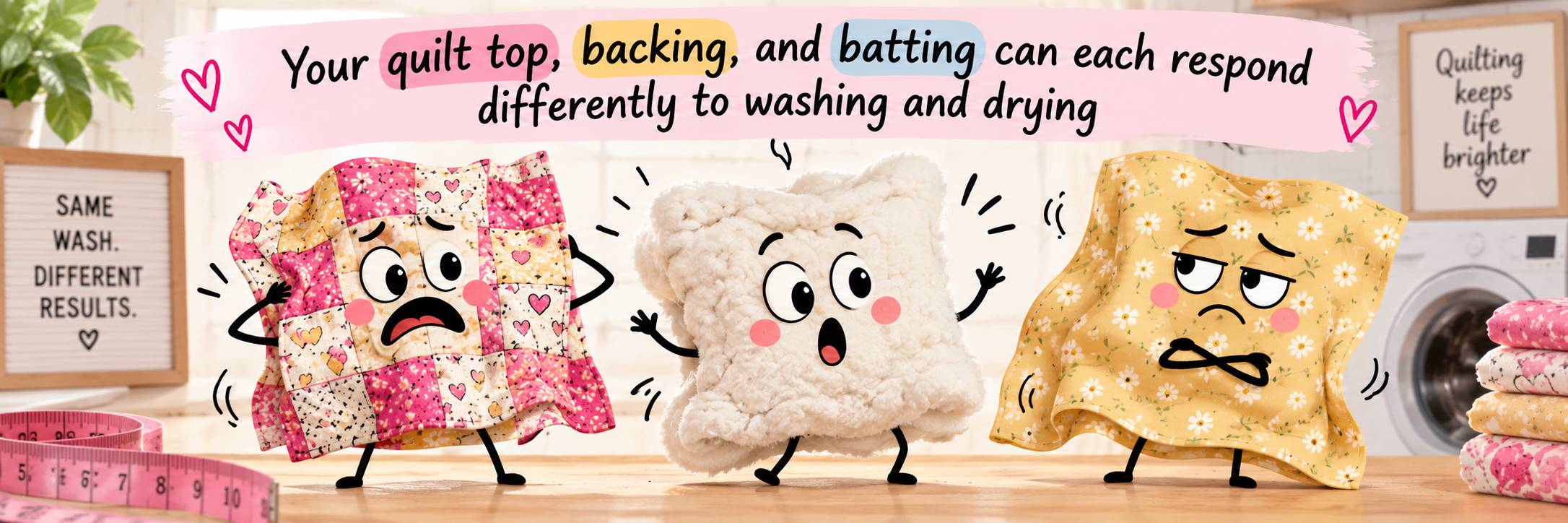
Your quilt top, backing, and batting can each respond differently to washing and drying.
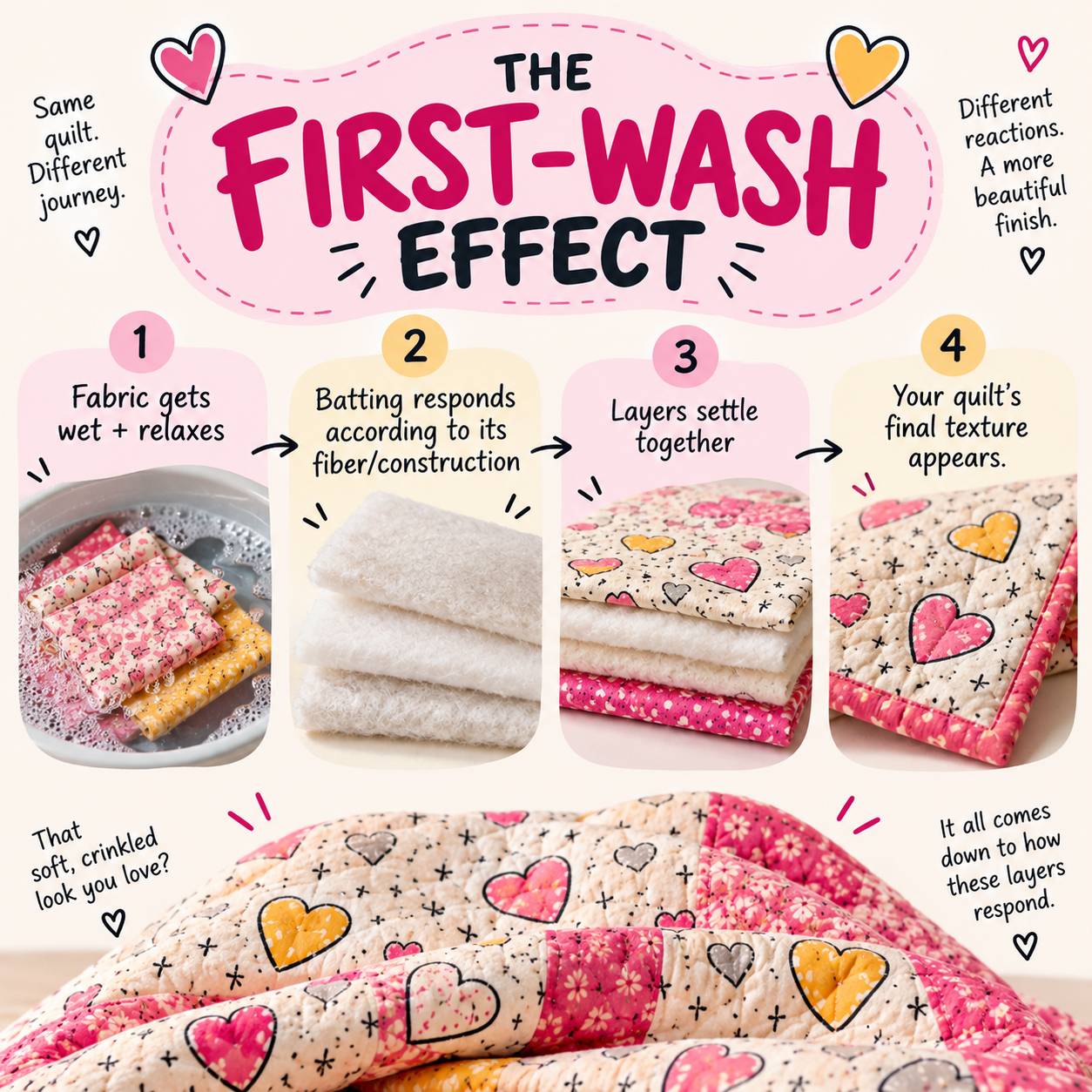
Fabric fibers can relax and contract. Batting can respond differently depending on its fiber and construction. Then, as everything dries, those layers settle together into their new shape.
The result? That first wash can reveal more texture, crinkle, or unevenness than you expected.
Why the Layers Don’t Shrink Together
Here’s the part most of us never think about until the quilt comes out of the dryer. Each layer has its own shrinkage rate, and the batting usually isn’t the same as the fabric. Most cotton and cotton-blend battings list a few percent of shrinkage on the package (check the number for your brand, it varies), polyester batting shrinks very little, and unwashed quilting cotton lands somewhere in between. When the batting pulls in more than the top, the fabric has nowhere to go but up, and that’s the crinkle.
The uneven part usually comes from your quilting density. Where the stitching is close together, the layers are locked to each other and can only move a little. Where the quilting is sparse, the batting has room to draw up on its own. Those lightly quilted areas shrink more, and the quilt looks like it pulled in more in some places than others. If you want a deeper comparison of how different battings behave, my batting comparison chart lays it out brand by brand, and I covered why I don’t always reach for 100% cotton in this post.
Quick Tip
Want fewer surprises after the first wash?
Check the care and shrinkage information for your batting before you start quilting, then consider how it compares with your top and backing fabrics.
Knowing how each layer is expected to behave can help you better anticipate whether your finished quilt will stay relatively smooth or develop that cozy, crinkled texture.
Remember,
Batting isn’t just what goes inside your quilt, it helps shape how your quilt looks after that first wash. Knowing how your fabric and batting may react beforehand means fewer surprises and a finished quilt that looks more like the one you pictured.
If batting loft has been working against you too, I wrote about that in Your Batting Is Flattening Your Quilting. And if you’re still deciding which batting belongs in your next quilt, start with Selecting Batting for Quilting.
Happy Quilting!
From Corey.
Ready to pick the right batting for your next quilt? My go-to for a soft, predictable crinkle is Hobbs Heirloom 80/20, and you can browse every brand we carry in the batting collection. This week’s savings are on the Sales and Deals page.
Frequently Asked Questions
Why did my quilt shrink unevenly after washing?
Uneven shrinkage almost always comes down to two things: the three layers shrinking at different rates, and quilting density varying across the quilt. Batting usually shrinks more than the fabric, and lightly quilted areas let the batting draw up more than densely quilted areas, so some sections pull in more than others. It is rarely a stitching mistake. If the puckering looks concentrated along the backing, it may also be a loading issue, which I covered in The “Perfectly Tight” Backing Mistake.
How much does quilt batting shrink?
It depends on the fiber. Cotton and cotton-blend battings like Hobbs Heirloom 80/20 and Warm & Natural typically list shrinkage in the low single digits (around 3% is common), polyester battings shrink very little, and wool sits in between. The exact number is printed on the package or the product page, so check it before you quilt. My quilt batting comparison chart puts the major brands side by side.
Should I pre-wash batting before quilting?
Only if you want a flatter, smoother finished quilt and the manufacturer says the batting can be pre-washed. Pre-shrinking the batting removes most of the crinkle. If you love that soft, antique crinkled look, skip pre-washing and let the first wash do its work. Most needle-punched cotton battings can be gently soaked and air-dried, but bonded and some polyester battings should not be, so always read the label on your batting first.
Should I pre-wash my quilt fabric and backing?
If you pre-wash your top fabric but not your backing (or the reverse), you have built in a mismatch before the batting even enters the picture. Pick one approach and use it for both the top and the backing. Pre-washing everything gives you the most predictable result; washing nothing gives you the most crinkle. Mixing the two is where surprises come from.
How do I get the crinkled quilt look on purpose?
Use unwashed quilting cotton for the top and backing, choose a cotton or 80/20 batting with a few percent of shrinkage, and quilt at a moderate density so the batting has room to draw up. Then wash on gentle in cool water and tumble dry low. Dense quilting flattens the effect, so leave some breathing room between lines. For more on how batting choice changes the look of your finished quilting, see The Batting Question We Don’t Ask Enough and Types of Quilt Batting.