
Hi Bestie,
The true cost of piecing a quilt back isn't just the price per yard. Factor in seams, preparation time, and extra yardage, and that bargain fabric may not save as much as you think. Sometimes, choosing a wide backing means fewer steps, less hassle, and more time doing what you love most: quilting.
You find the perfect fabric at a great price, and piecing your quilt back seems like the smart way to save.
But then comes the extra yardage, cutting, matching seams, and pressing everything into place. Before you know it, you've spent more time and fabric than you planned. And that bargain? It might not be saving you as much as you think.
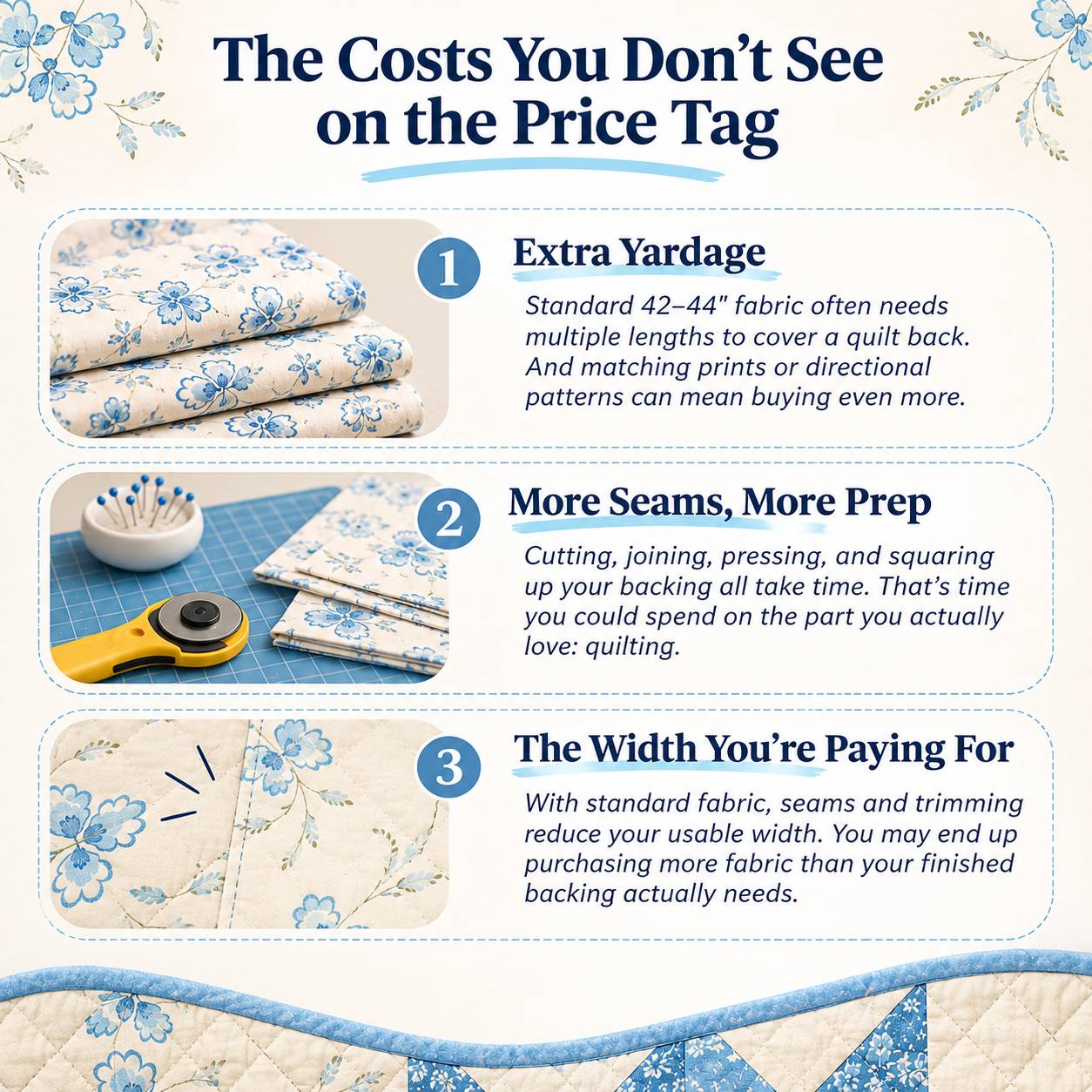
The Costs You Don't See on the Price Tag
1. Extra Yardage. Standard 42–44" fabric often needs multiple lengths to cover a quilt back. And matching prints or directional patterns can mean buying even more.
2. More Seams, More Prep. Cutting, joining, pressing, and squaring up your backing all take time. That's time you could spend on the part you actually love: quilting.
3. The Width You're Paying For. With standard fabric, seams and trimming reduce your usable width. You may end up purchasing more fabric than your finished backing actually needs.
Remember,
The true cost of your quilt backing isn't just the price per yard. It's also the extra fabric, the seams you sew, and the time you spend preparing it. Sometimes, choosing a wide backing means fewer steps, less hassle, and more time doing what you love most. Because every minute saved on preparation is another minute spent bringing your beautiful creation to life.
Happy Quilting!
From Corey.
Frequently Asked Questions
What is the hidden cost of piecing a quilt back?
The true cost of your quilt backing isn't just the price per yard. It's also the extra fabric, the seams you sew, and the time you spend preparing it — the extra yardage, cutting, matching seams, and pressing everything into place.
Why can standard-width fabric end up costing more for a quilt back?
Standard 42–44" fabric often needs multiple lengths to cover a quilt back, and matching prints or directional patterns can mean buying even more. With standard fabric, seams and trimming also reduce your usable width, so you may end up purchasing more fabric than your finished backing actually needs.
How does choosing a wide backing help?
Sometimes, choosing a wide backing means fewer steps, less hassle, and more time quilting. Every minute saved on preparation is another minute spent bringing your beautiful creation to life.


