

Hi Bestie,
Too much heat or pressure applied directly to your fabric can leave an unwanted shiny patch where your iron touched it. Matching the heat to the fabric and putting a pressing cloth between the iron and the fabric can help prevent that shine.
You've carefully cut, stitched, and pressed your project. Then you notice it: an unwanted shiny patch right where your iron touched the fabric.
The culprit? Too much heat or pressure applied directly to the fabric.
On some fabrics, especially dark wool and synthetic blends, excessive heat and pressure can flatten or alter the fibers, causing light to reflect differently.
And unfortunately, that shine isn't always reversible.
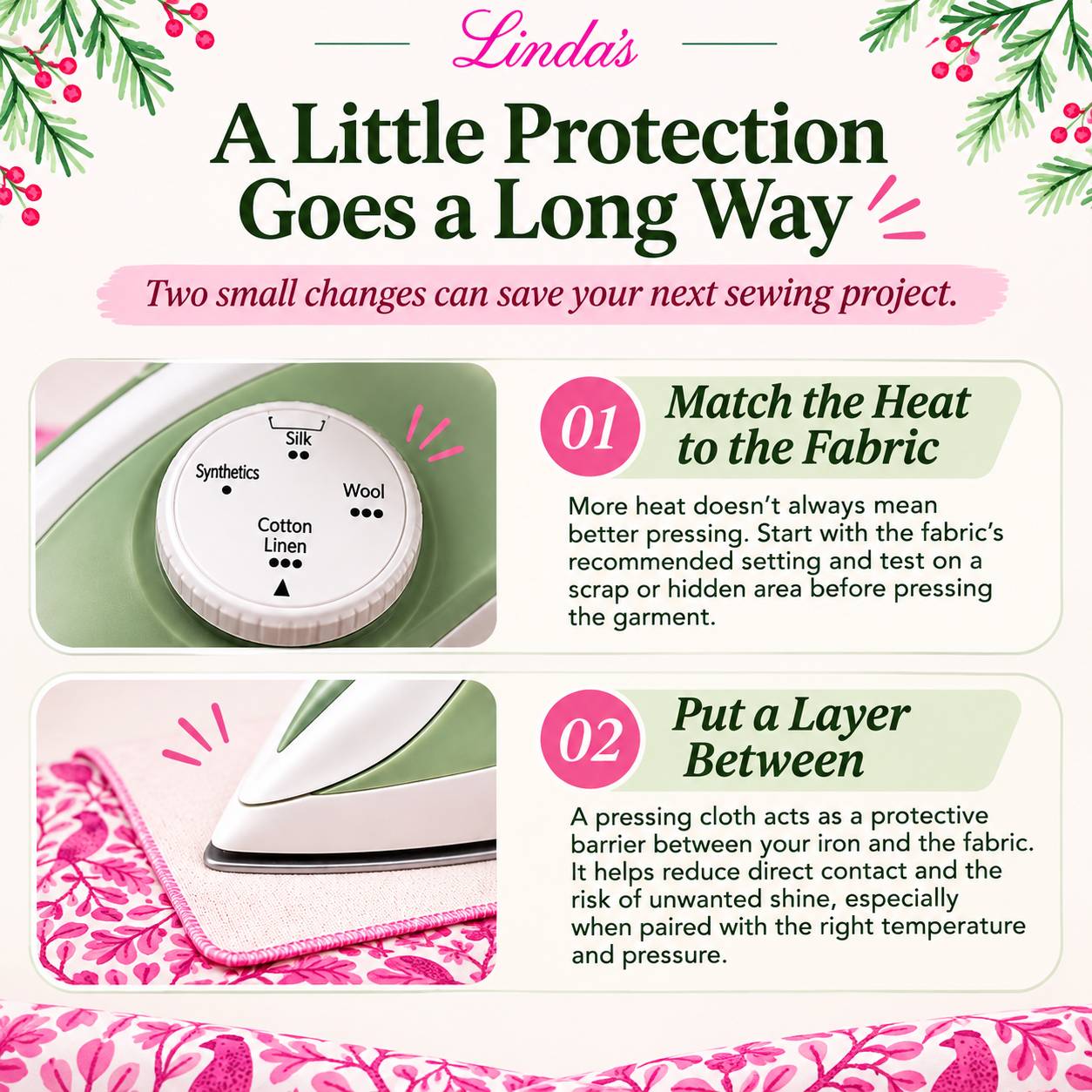
A Little Protection Goes a Long Way
Two small changes can save your next sewing project.
01. Match the Heat to the Fabric. More heat doesn't always mean better pressing. Start with the fabric's recommended setting and test on a scrap or hidden area before pressing the garment.
02. Put a Layer Between. A pressing cloth acts as a protective barrier between your iron and the fabric. It helps reduce direct contact and the risk of unwanted shine, especially when paired with the right temperature and pressure.
Remember,
A beautiful finish isn't about how much heat you use, but how carefully you press. A little patience, the right temperature, and a simple pressing cloth can make all the difference between unwanted shine and a beautifully finished project. After all, you've put too much love into your sewing to let one small pressing mistake steal the spotlight!
Happy Quilting!
From Corey.
Frequently Asked Questions
What causes a shiny patch on fabric when pressing?
Too much heat or pressure applied directly to the fabric. On some fabrics, especially dark wool and synthetic blends, excessive heat and pressure can flatten or alter the fibers, causing light to reflect differently.
How can I reduce the risk of unwanted shine when I press?
Match the heat to the fabric: start with the fabric's recommended setting and test on a scrap or hidden area before pressing the garment. And put a layer between: a pressing cloth acts as a protective barrier between your iron and the fabric, helping reduce direct contact and the risk of unwanted shine.
Is the shine from pressing always reversible?
No. That shine isn't always reversible, so a beautiful finish isn't about how much heat you use, but how carefully you press — a little patience, the right temperature, and a simple pressing cloth can make all the difference.


