
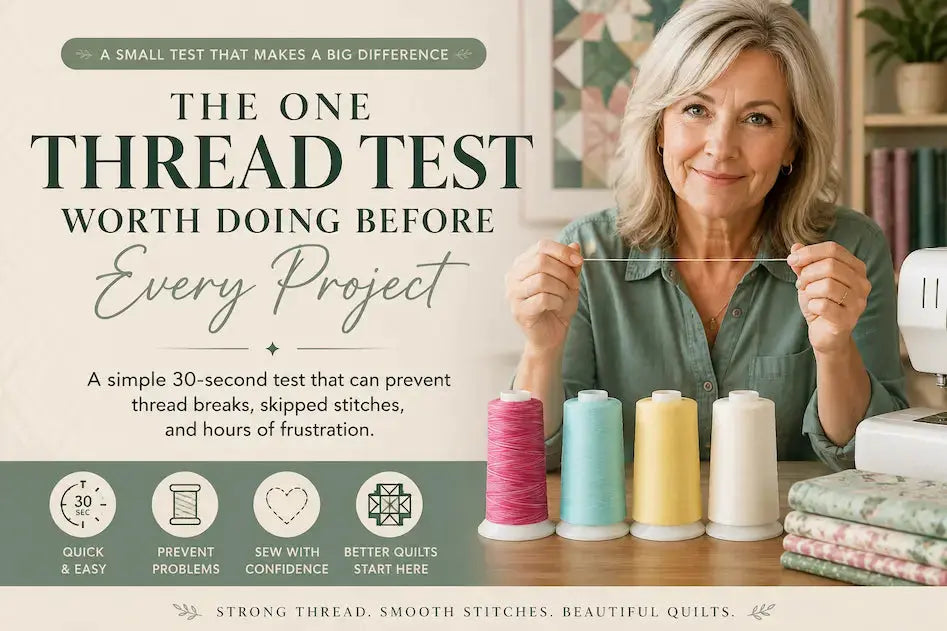
Most quilters blame their machine when stitches start skipping or thread begins snapping.
But sometimes the problem started long before the first stitch.
Before every project, pull about 8–10 inches of thread and give it a firm tug.
If it stretches excessively, frays, or breaks easily, it's better to replace it now than halfway through your quilt.
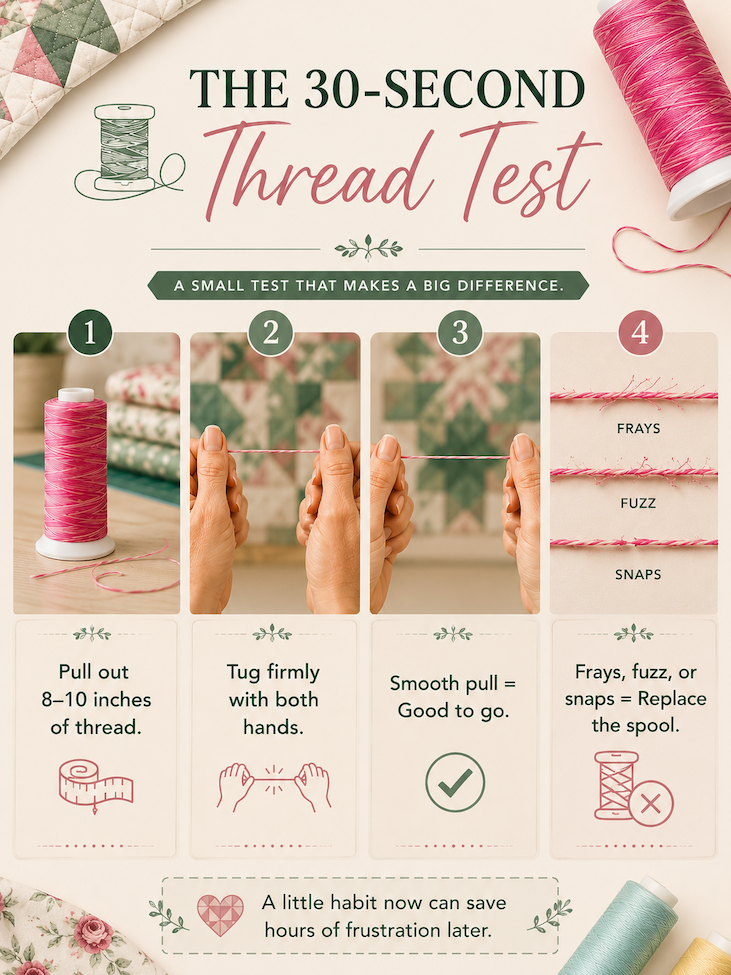
Think of it as a stress test before you commit to thousands of stitches.
If the thread can't handle a firm pull in your hands, it won't hold up under the speed and tension of your sewing machine.
Making this simple check part of your routine helps eliminate one of the easiest-to-avoid causes of thread breaks, skipped stitches, and uneven seams.
Remember
The best quilts are built on small, consistent habits, not shortcuts.
Before your next project, take 30 seconds to test your thread.
If it passes, sew with confidence. If it doesn't, replacing the spool now is far easier than repairing a quilt later.
Shop our premium quilting threads and start every project with thread quality you can trust.
Happy Quilting!
— Corey


