Clean Soleplates, Clean Fabric
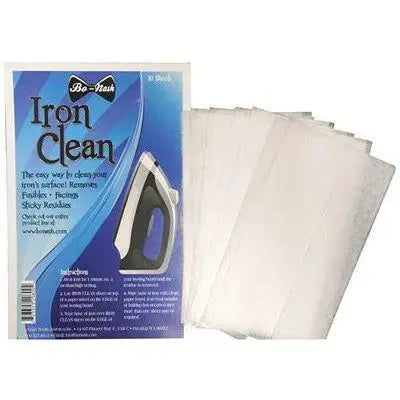
Every quilter who uses fusible interfacing, fusible batting, spray starch, or pressing sprays regularly eventually encounters the problem: the iron soleplate accumulates deposits that transfer to fabric during pressing. A slightly sticky soleplate drags across fabric. A contaminated soleplate leaves brown or gray marks on light fabric at exactly the wrong moment. Bo-Nash Iron Clean Sheets solve this with a simple, fast process: run the hot iron across the cleaning sheet and the accumulated deposits transfer from the soleplate to the sheet, leaving the iron clean and ready for the next project.
Why Regular Soleplate Cleaning Matters
Iron soleplate contamination builds up gradually and invisibly until it creates a visible problem. Regular cleaning prevents the buildup from reaching the problem stage -- a few seconds with a cleaning sheet after every fusible-heavy pressing session keeps the soleplate in pristine condition. The cost of a ruined quilt top from soleplate contamination is orders of magnitude higher than the cost of keeping cleaning sheets on the pressing station shelf.
Top 10 Uses
- Removing Fusible Interfacing Residue -- The most common use. Fusible adhesive from products like Pellon SF101 and 987F Fusible Fleece that migrates to the soleplate removes instantly with cleaning sheets.
- Cleaning After Fusible Batting Application -- Fusible batting work accumulates soleplate deposits; clean immediately after each application session.
- Starch and Pressing Spray Residue Removal -- Best Press and other pressing sprays can build up on soleplates over extended sessions.
- Maintaining a Production Pressing Station -- Regular cleaning keeps the studio iron -- whether an Oliso Pro Plus or Reliable Velocity -- in peak condition through months of heavy use.
- Before Pressing Light or White Fabric -- A quick pass on the cleaning sheet before pressing light fabric eliminates the risk of transfer marks.
- After Wonder-Under and Fusible Web Work -- Wonder-Under adhesive is notorious for soleplate contamination; clean sheets remove it without residue.
- Restoring a Neglected Iron -- An iron with accumulated deposits can often be restored to clean condition with several applications of cleaning sheets.
- Teaching Studio Iron Maintenance -- Model proper iron maintenance practice for students and demonstrate the cleaning process visibly.
- Travel Iron Maintenance -- Keep cleaning sheets in the retreat bag alongside the travel iron for field maintenance.
- Protecting the Iron Investment -- Regular cleaning extends iron soleplate life and maintains pressing performance throughout the iron's service life.
How to Use
Heat the iron to its cotton setting. Place the cleaning sheet on a heat-safe surface (the ironing board is fine). Run the hot iron across the cleaning sheet with gentle pressure. The deposits transfer from the soleplate to the sheet. Discard the used sheet. The soleplate is clean and ready for the next project. No waiting for the iron to cool, no chemicals, no mess.
Frequently Asked Questions
Are these safe for all soleplate types?
Bo-Nash Iron Clean Sheets are safe for standard stainless steel and non-stick soleplates. Check product instructions for any specific material cautions before use on specialty coated soleplates.
How many cleaning sessions per sheet?
One sheet handles one to several cleaning passes depending on the level of deposit. For light maintenance cleaning, one sheet provides multiple passes. For heavy deposit removal, use a fresh sheet for each section of the soleplate.
Shop Bo-Nash Iron Clean Sheets
Fast, effective soleplate cleaning in seconds. The maintenance supply that protects your iron and your fabric.