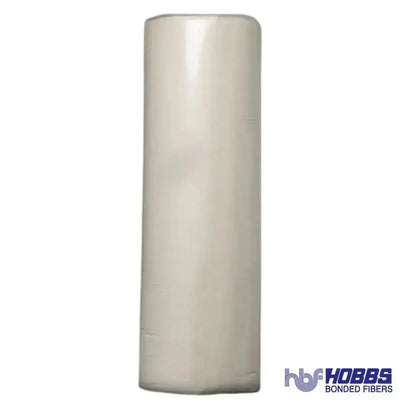

When 96 Inches Is Not Enough: Meet the 120 Inch Roll
King-size quilts present a unique challenge for longarm quilters. A standard king top measures 90 to 110 inches wide depending on the pattern and seam allowances, and the backing needs another 6 to 8 inches on each side to load securely on the frame. The Hobbs 80/20 Heirloom 120 inch wide batting roll was built exactly for this reality. At 120 inches wide, it provides full coverage for even the most generously sized king tops with comfortable margin on both sides -- no piecing, no seams running through the body of the quilt, no compromises. For queen and smaller work, see the 96 inch roll guide; the same blend is also available in pre-packaged sizes and a bleached 108 inch version for light-background quilts.
Everything that makes the 80/20 Heirloom the top-selling batting in the industry applies here: the 80% cotton and 20% polyester blend, the scrim-free needle-punched construction, the soft heirloom drape, and the reliable performance under machine and hand quilting. The only difference is the width -- and for king-size work, that difference is everything.
What Makes the 120 Inch Width Different
Width in batting is not just about physical coverage. A wider batting changes how you load and work at the frame. With 120 inches, you load your king top, layer the batting, and have 5 to 15 inches of floating margin depending on your frame width. This extra margin means fewer tension issues at the edges, more consistent stitch quality from side to side, and the ability to quilt all the way to your designed borders without the batting running short. For studios doing consistent king-size work, the 120 inch roll is simply the professional standard.
Top 10 Uses for Hobbs 80/20 Heirloom 120 Inch
- Standard King Quilts -- The obvious application. Full coverage without seaming for tops up to 112 inches wide.
- California King Quilts -- California king tops often run narrower but longer; the 120 inch width handles both orientations comfortably.
- Oversized or Pillow-Tuck King Quilts -- Some patterns add 10 to 20 extra inches for deep pillow tucks. The 120 inch batting accommodates these generously.
- Wide-Back Quilt Projects -- If you're using a 108 or 120 inch wide-back fabric as your top, this batting matches the scale perfectly.
- Queen Quilts with Large Borders -- A queen top with 8 to 10 inch borders can push the overall width past 96 inches. The 120 inch batting keeps you covered.
- Longarm Studio King Volume Work -- For studios loading multiple kings per week, buying the 120 inch roll eliminates the mid-project piecing decision.
- Competition King Quilts -- No batting seam means one fewer technical flaw for judges to find.
- Bed Runners and Large Table Toppers -- The 120 inch roll can be cross-cut for wide decorative projects that would otherwise require piecing narrower batting.
- Whole-Cloth King Quilts -- Maximum width for maximum design surface on whole-cloth work.
- Custom Bedding Projects -- Duvet inserts, custom mattress toppers, and oversized throws all benefit from this generous width.
What It Pairs Well With
Wide-Back Fabrics
The 120 inch batting is a natural partner for 108 and 120 inch wide-back fabrics. Brands like Moda, Robert Kaufman, Northcott, and Benartex all produce excellent wide-back options. Load the wide-back, float the 120 inch batting over it, and you have a no-seam sandwich at full king scale.
Thread
The same thread principles that apply to the 96 inch version apply here. Cotton threads (Aurifil 50wt, Superior MasterPiece) produce a soft, integrated look ideal for traditional patterns. Poly threads (Superior Bottom Line, Glide) run smoothly at speed for production work. For king quilts with dense design work, a thread that minimizes friction and heat is preferred -- this is where fine poly threads earn their place.
Needles
For the 80/20 Heirloom at 120 inches, a standard longarm needle in size 18 or 4.0 works well for most applications. For very fine thread and high density quilting, drop to a 16 or 3.5 needle. For heavier thread (40wt and above), step up to a 4.5.
Care and Washing
Wash finished quilts in cool to warm water on a gentle cycle with mild detergent. Dry on low heat or air dry flat when possible for large king quilts, as the weight of a wet king quilt can stress seams in the dryer. Expect 3 to 5 percent shrinkage on the first wash, which is normal and produces the classic heirloom crinkle. Do not dry clean.
Frequently Asked Questions
Is the 120 inch batting really necessary for king quilts, or can I just piece the 96 inch?
Technically you can piece two narrower battings, but there are real drawbacks: a seam line running through the quilt can create a ridge that shows in the finished quilt, it adds prep time, and it is a potential weak point through washing. For professional work or competition quilts, the 120 inch roll is strongly preferred.
What is the maximum quilt top width the 120 inch roll can accommodate?
With standard loading practice (leaving 3 to 4 inches of batting extending beyond each side of the top), the 120 inch roll comfortably accommodates tops up to 112 inches wide. For extremely oversized tops beyond that, you would need to piece the batting.
How many king-size quilts does a 30-yard roll yield?
A standard king batting cut runs approximately 110 to 120 inches long. A 30-yard roll (1,080 inches) yields approximately 9 king-size battings at 120 inch length cuts. Adjust your cutting plan based on your specific top dimensions.
Can I use the 120 inch roll for smaller quilts?
Yes, though it is economically more efficient to use the 96 inch roll for queen and smaller projects and reserve the 120 inch for kings and oversized work. The batting cuts down cleanly to any size you need.
Does the 120 inch version have the same fiber content and construction as the 96 inch?
Yes. Both are identical in fiber blend (80% cotton, 20% polyester), needle-punched construction, and Heirloom designation. The only difference is width.
Does this batting work on all longarm frame sizes?
The 120 inch batting is appropriate for longarm frames with a throat space of 26 inches or more. For smaller frames (18 or 22 inch), a king-size batting may exceed the practical usable width of the frame, and the 96 inch version may be a better fit. Check your frame manufacturer's specifications for maximum batting width.
Shop the Hobbs 80/20 Heirloom 120 Inch Roll
For longarm quilters who work at king scale regularly, the 120 inch roll is the smarter buy. Eliminate piecing, eliminate seams in your batting, and load king tops with confidence every time.