The Most Trusted Longarm Batting in the Industry
Ask any professional longarm quilter which batting they reach for first and you will hear the same answer: Hobbs 80/20 Heirloom. This batting accounts for more yardage loaded onto longarm frames every day than any other product on the market, and this guide explains exactly why it has earned that reputation. We cover fiber content, best project types, thread and fabric pairings, care instructions, and answers to the questions quilters ask most. For king-scale work see the 120 inch roll guide; for pre-packaged sizes see the 80/20 Heirloom package guide; to compare fibres before committing, the Hobbs sample packs are the smart starting point.
What Is the Hobbs 80/20 Heirloom Batting?
The 80/20 designation refers to the fiber blend: 80% natural cotton and 20% fine polyester. Hobbs engineered this ratio deliberately. The cotton provides the soft, breathable, natural drape that longarm quilters prize, while the 20% polyester adds resilience to prevent bearding, resist clumping, and hold loft through decades of washing. The result is a batting that performs like a premium natural-fiber product but outlasts pure cotton by years.
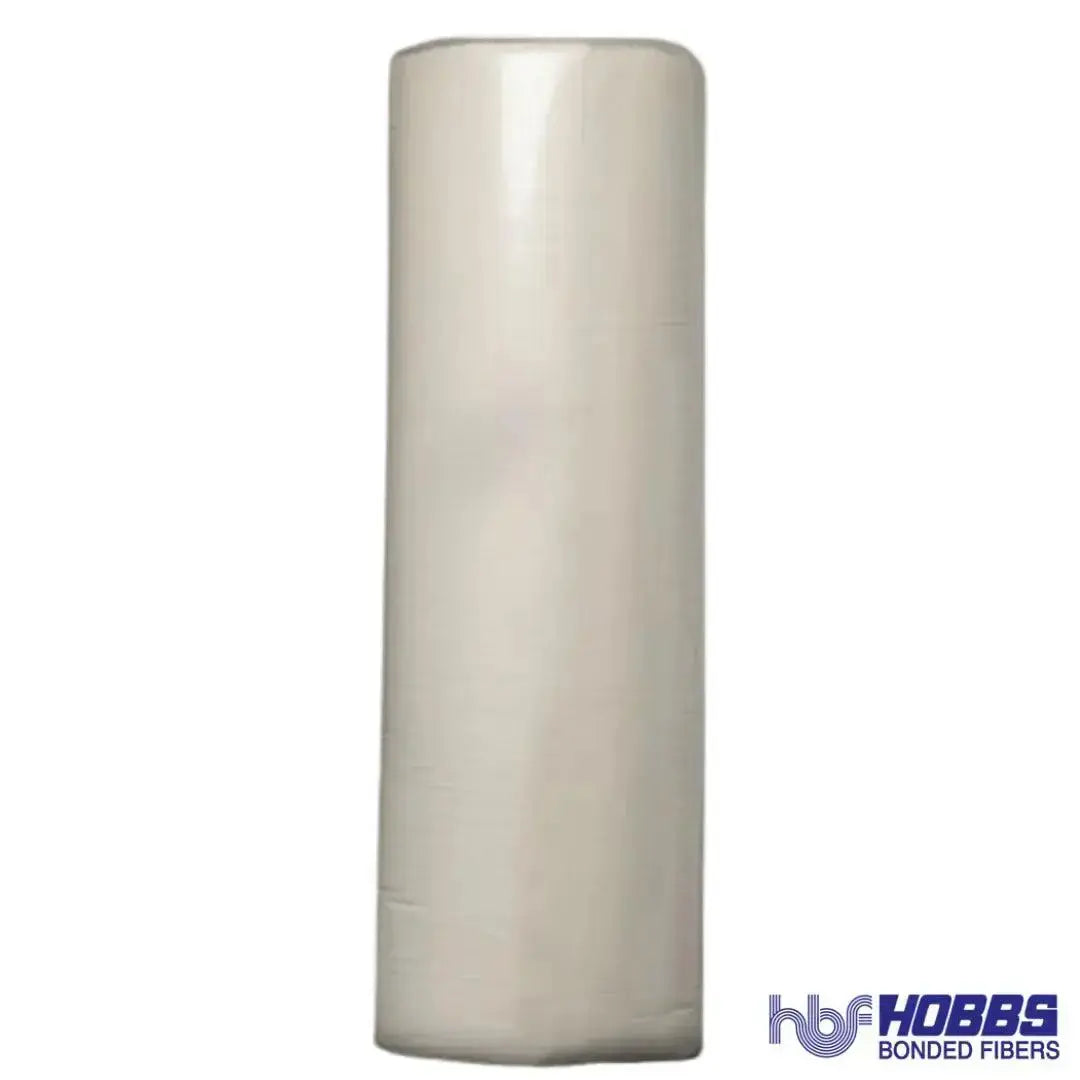
The 96 inch width is the workhorse size for longarm quilting -- wide enough to accommodate most queen and king quilt tops without seaming. The 30-yard roll eliminates the waste and prep time of pre-packaged batting and keeps your workflow moving. The Heirloom designation means this is scrim-free and needle-punched, not bonded with chemicals, which gives it exceptional breathability and the soft antique drape that traditional and heirloom quilts demand.
Top 10 Uses for Hobbs 80/20 Heirloom Batting 96 Inch
- Queen and King Longarm Quilts -- The 96 inch width covers a standard queen top without seaming, saving setup time on every load.
- Traditional and Heirloom Quilts -- The soft drape and cotton-forward feel is ideal for classic patterns like Double Wedding Ring, Grandmother's Flower Garden, and Flying Geese.
- Heavily Used Bed Quilts -- The poly content prevents bearding and pilling, making it the right choice for quilts washed frequently.
- Dense Free-Motion Quilting -- The needle-punched construction handles heavy quilting density without distortion or shifting.
- Pantograph Work -- Feeds smoothly under the longarm needle with consistent tension, reducing thread breaks and skipped stitches.
- Art Quilts with Drape Requirements -- The 80/20 gives graceful drape to wall hangings and bed quilts where stiffer batting would look boxy.
- Competition Quilts -- The clean, even surface accepts micro-stippling and dense featherwork without the batting showing through light fabrics.
- Baby and Lap Quilts -- Soft against skin and lightweight enough for small quilts that need to feel cozy rather than heavy.
- Whole-Cloth Quilts -- Consistent loft and smooth surface let the quilting design carry the piece without batting texture competing for attention.
- High-Volume Longarm Studio Work -- Buying in 30-yard rolls dramatically reduces per-quilt batting cost versus pre-packaged products, making it the economical choice for production studios.
What It Pairs Well With
Thread
Cotton thread is the natural pairing. Superior Threads MasterPiece, Aurifil 50wt, and Signature Cotton all glide through this batting effortlessly and create a subtle, integrated look. Polyester thread such as Superior Bottom Line and Glide adds a touch more sheen and is ideal for free-motion work at speed. Avoid very heavy thread weights (28wt or heavier) for dense quilting on this batting, as the cotton layer can compress unevenly under heavy tension.
Fabric
This batting is an excellent partner for 100% quilting cottons like Moda, Riley Blake, and Northcott. The similar fiber content means batting and fabric shrink at comparable rates, producing the sought-after puckered vintage look after the first wash. It also works beautifully under batiks and tone-on-tone solids where consistent loft and minimal show-through are essential.
Backing
Wide-back cottons in the 108 to 120 inch range pair naturally with the 96 inch batting roll. Load your backing, float the batting, and you have an efficient no-seam sandwich from edge to edge.
Care and Washing
Hobbs recommends washing finished quilts in cool to warm water on a gentle cycle. Use a mild detergent without fabric softener and dry on low heat or air dry. Expect 3 to 5 percent shrinkage on the first wash -- this is intentional and produces the classic heirloom crinkle that makes this batting so beloved. Do not dry clean.
Frequently Asked Questions
What is the difference between Hobbs 80/20 and 100% cotton batting?
The 20% polyester in Hobbs 80/20 prevents bearding (fiber migration through fabric) and adds resilience through washing. Pure cotton batting is slightly softer but more prone to bearding and clumping over time. Most longarm quilters prefer the 80/20 for its balanced performance and long-term durability.
How far apart can I quilt on Hobbs 80/20 Heirloom?
Hobbs recommends quilting lines no more than 4 inches apart to maintain the batting's integrity through washing. For heirloom and dense quilting, quilting every 1 to 2 inches is common and produces outstanding results.
Does the 96 inch width cover a king-size quilt?
A standard king quilt top measures approximately 90 to 96 inches wide. The 96 inch roll covers most king tops edge-to-edge, but if your top runs wider than 92 inches, consider stepping up to the 120 inch wide roll to ensure adequate float on both sides. For queen tops, the 96 inch is ideal.
Can I use Hobbs 80/20 for hand quilting?
Yes. The needle-punched, scrim-free construction pulls a hand needle through smoothly without resistance. Many hand quilters prefer it specifically because it lacks the stiff bonded layer found in some competing battings.
Will this batting beard through dark fabrics?
The 20% polyester content significantly reduces bearding compared to 100% cotton battings. For very dark or tightly woven fabrics, this is one of the better-performing natural-fiber battings available. If bearding is a primary concern, Hobbs also offers a bleached 80/20 version with even finer fibers.
How many quilts does a 30-yard roll yield?
A 30-yard roll (1,080 inches) typically yields 8 to 10 queen-size quilt battings depending on cutting length. Most queen tops require 100 to 112 inches of length. This makes roll format substantially more economical than pre-packaged batting.
Is Hobbs 80/20 Heirloom good for longarm machines?
It is arguably the best batting for longarm machines. The consistent density and needle-punched construction feed evenly under the machine head, produce consistent stitch quality, and do not shift during quilting. It is the default choice for most professional longarm studios worldwide.
Shop the Hobbs 80/20 Heirloom 96 Inch Roll
We stock this batting in 30-yard rolls because our customers -- working longarm quilters and serious home quilters alike -- demanded it. Roll format pricing delivers significant savings over pre-packaged batting, and the 96 inch width eliminates piecing for the vast majority of projects loaded on a longarm frame.