Some of the most useful sewing projects are also the simplest. Hanging kitchen towels are a great example. They keep towels within easy reach. They also prevent them from falling off appliance handles.
Crafters love making kitchen towels. They combine practicality with creativity. A basic kitchen towel can be transformed into a decorative accessory. So, the finished project adds both function and personality to a kitchen.
Whether you enjoy sewing or crocheting, there are countless ways to do these projects - from simple crochet kitchen towel toppers to sewn fabric hangers.
In this guide, we'll explain why hanging kitchen towels are so popular. We also tell you how to make your own using simple methods. Plus, we’ll share easy pattern ideas and practical tips for creating these durable kitchen accessories.
Why Hanging Kitchen Towels Are Popular in Home Kitchens
Kitchen towels are mainly used for drying hands and wiping counters. They also clean spills and handle everyday kitchen tasks.
The problem? Standard towels rarely stay where you leave them. They slide off oven handles. Or they fall from refrigerator bars. All too often, they end up draped across countertops.
Hanging kitchen towels solve all that by securing the towel directly to a handle or drawer pull. Homeowners also appreciate the decorative value. Handmade towels add color and texture to any kitchen. With the right design, it even brings seasonal charm.
For busy households, this combination of convenience and style makes hanging towels a practical addition to the kitchen.
Different Types of Hanging Kitchen Towels
There are several ways to create a hanging kitchen towel. Examples include:
Crochet Towel Toppers
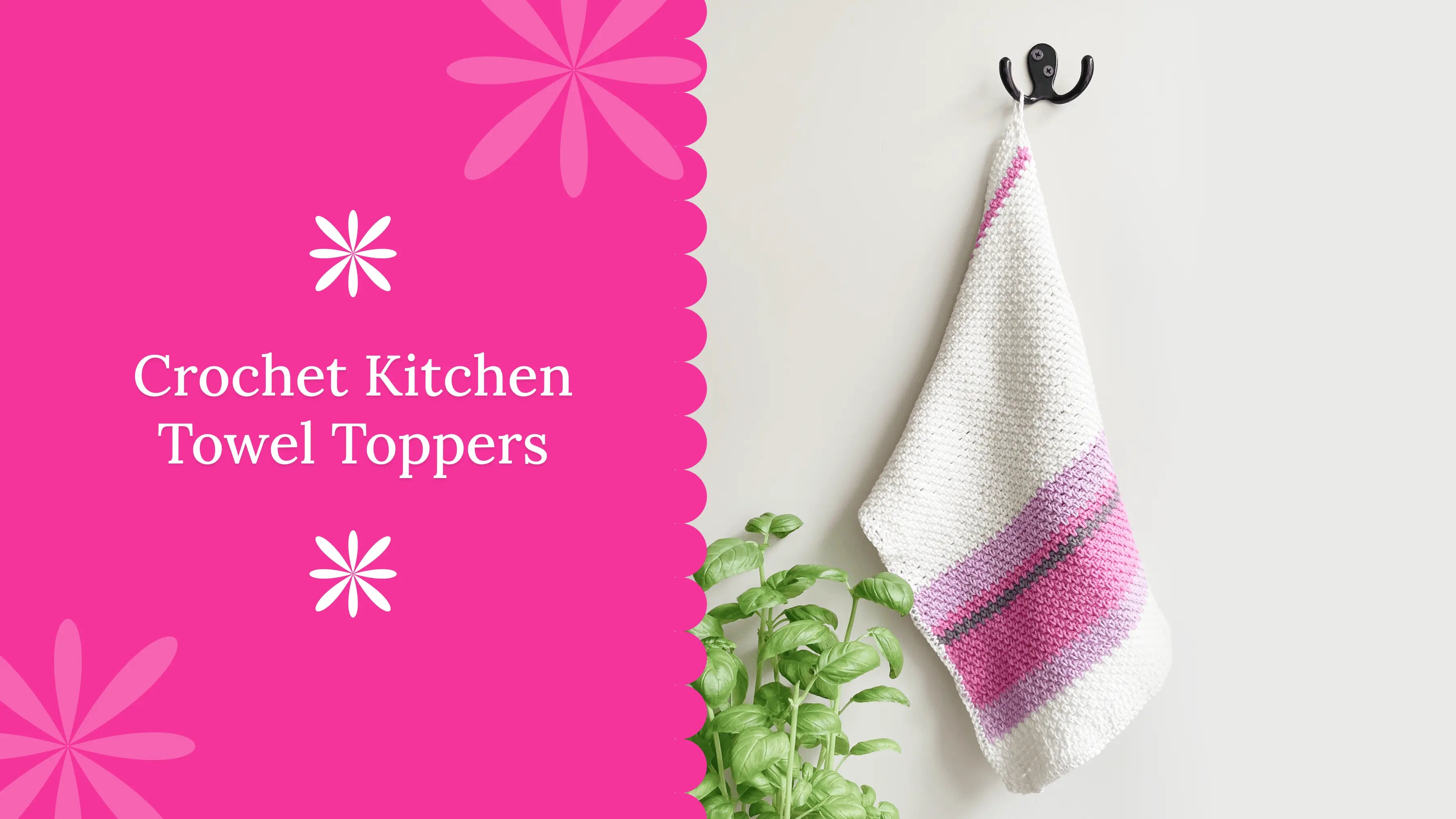
Crochet towel toppers feature a crocheted section attached to the top of a kitchen towel. It includes a button loop that allows the towel to hang securely. Many crocheters enjoy this style. It adds decorative texture while remaining highly functional.
Sewn Fabric Towel Toppers
Sewn toppers use fabric for the hanging section. A folded fabric topper is stitched to the towel and finished with a loop or button closure. This only requires basic sewing skills and minimal supplies.
Button Loop Hanging Towels
A button loop towel uses a button closure. The design is simple, making it a popular choice for beginners.
Materials Needed for Crochet Kitchen Towel Toppers
-
Cotton Yarn
Cotton yarn is strong and absorbent. Unlike most synthetic fibers, it doesn’t stretch easily. This helps the topper maintain structure. It also makes textured or decorative patterns look more polished. -
Crochet Hook
This determines your stitches’ size and tension. For balanced structure, most topper patterns recommend a hook size that matches the yarn weight. A properly sized hook helps create stitches that are neither too tight nor too loose. This is important for durability and neat shaping. -
Kitchen Towel
The kitchen towel serves as the project’s base. Cotton towels are usually the best option because they’re absorbent and easy to work with. The towel’s thickness also affects the final result. Case in point, lighter towels are easier to gather. Thicker ones add more structure and weight. -
Button
A sturdy button ensures the towel stays in place during everyday use. Crafters often choose medium-sized, washable buttons that can withstand repeated handling and washing. -
Scissors
Sharp scissors are essential for cleanly cutting yarn and trimming fabric edges. Clean cuts prevent fraying and make finishing work more precise. -
Measuring Tape
The measuring tape helps maintain consistency in size and placement. It is especially useful when aligning buttonholes, spacing stitches, or ensuring the topper’s sides are symmetrical. -
Yarn Needle
A yarn needle is used for weaving in loose ends and securing finishing details. It hides yarn tails and reinforces key areas for a polished look.
How Crochet Kitchen Towel Toppers Work

A crochet towel topper functions as a bridge between the towel and the hanging surface. It is attached near the upper edge of the towel.
Some patterns crochet directly into the towel using evenly spaced holes. Others create a separate crochet panel that is sewn onto the fabric afterward.
The crocheted section gradually narrows toward the top, where a button loop is added.
Once the loop wraps around an oven handle or cabinet pull, the button secures everything in place. The towel hangs neatly while remaining easy to remove for washing. This design distributes stress across the topper rather than the towel itself.
How to Make a Hanging Kitchen Towel
Step 1: Choose Your Kitchen Towel
Select a quality cotton kitchen towel. Towels that are too thin may wear out quickly. Meanwhile, excessively thick towels become bulky when folded.
Step 2: Fold or Cut the Towel
Many hanging towel designs use a folded towel shape. This creates a double-layered hanging section. Others use a towel cut into specific dimensions before assembly.
Step 3: Create the Topper
Depending on your preference, you can either crochet a topper or sew a fabric topper.
Step 4: Add the Hanging Section
Attach a loop, buttonhole, snap, or crocheted hanger. This keeps the towel attached to a handle.
Step 5: Attach the Closure
Finish the project by adding a sturdy button or closure system.
After a final inspection, your hanging towel is ready for everyday use.
Simple Crochet Towel Topper Patterns for Beginners
Several popular crochet towel topper patterns rely on simple, beginner-friendly stitches:
Single Crochet Topper
Single crochet is usually the first stitch beginners learn. It creates a dense, sturdy fabric that stands up well to frequent use. Because of the firm texture, it supports the weight of the towel without stretching excessively.
This pattern allows beginners to focus on construction rather than complicated stitchwork. It also simplifies shaping the topper. Creating button loops also becomes much easier. If you're making your first hanging kitchen towel, this is an excellent pick.
Granny Square Topper
Granny square toppers bring a classic handmade charm. They use simple combinations of chains and double crochet stitches. This makes them approachable even for newer crocheters. The textured design also adds visual interest without requiring advanced techniques.
Moreover, these toppers are perfect for using leftover yarn. Crafters enjoy mixing colors to create seasonal or holiday themes. Because granny square patterns are highly customizable, each piece is unique. No two finished toppers look exactly alike.
Shell Stitch Topper
Shell stitch toppers create a softer, more decorative appearance. It uses repeating fan-shaped stitch groups. The finished texture adds elegance.
Many crafters pick this pattern when they want a towel topper that feels a little more decorative without becoming overly complicated.
While shell stitches require slightly more attention than basic crochet, they are still manageable for confident beginners. The repeating stitch pattern is easy to memorize after a few rows. The result is a topper with added texture and a more decorative handcrafted finish.
Topper Pattern Types: A Comparative Table
Not sure which pattern to try first? Here’s a quick comparison to help you choose:
|
Pattern Type |
Skill Level |
Main Benefit |
Best For |
|
Single Crochet Topper |
Beginner |
Durable and easy to construct |
Everyday kitchen use |
|
Granny Square Topper |
Beginner |
Colorful and customizable |
Scrap yarn projects, decorative towels |
|
Shell Stitch Topper |
Beginner to Intermediate |
Decorative texture and visual appeal |
Gift projects, seasonal kitchen décor |
Practical Tip: When learning a new topper pattern, use inexpensive cotton yarn. This allows you to practice shaping and button placement. That way, you can learn and experiment before investing time in more decorative versions.
Free Kitchen Towel Patterns and Where to Find Them
Finding free kitchen towel patterns is easy. Go online and look up available tutorials before exploring larger pattern collections. Free sources have photos, step-by-step instructions, and helpful tips for interested learners.
Popular places to find free patterns include:
-
Craft blogs
-
Crochet pattern websites
-
Sewing tutorial sites or YouTube channels
-
Social media crafting groups
For beginners, free patterns offer an excellent opportunity to practice techniques. These easy versions help you discover your preferred construction methods and styles.
Sewing a Fabric Towel Topper

Fabric towel topper transforms an ordinary kitchen towel into a practical hanging accessory.
To create one, do the following steps:
-
Cut two matching topper pieces. Use a simple hanging towel sewing pattern.
-
Sew the pieces together. Turn them right side out for a clean finish.
-
Press the topper flat to create crisp edges and improve appearance.
-
Insert and secure the towel inside the lower edge of the topper.
-
Add a closure (such as a button, snap, or fabric loop). That way, the towel can hang securely.
-
Finish the edges. Reinforce key seams for long-term durability.
Many crafters prefer this method because it requires only basic sewing skills while delivering a polished result.
Some of the biggest advantages of fabric towel toppers include:
-
Endless fabric choices.
This allows you to match kitchen color schemes or holiday themes. -
Easy customization.
Sewists can add embroidery, appliqué, patchwork accents, or decorative trims. -
Quick project completion.
This makes them ideal for beginner sewists and weekend crafting sessions. -
Excellent scrap-fabric potential.
Topper pieces only require small amounts of material. -
Practical everyday use.
They keep towels accessible and prevent them from slipping onto the floor.
With just a few fabric pieces and basic sewing techniques, a simple kitchen towel adds both convenience and personality to the kitchen.
Tips for Making Durable Hanging Kitchen Towels
A hanging kitchen towel needs to withstand daily use. Between constant handling and repeated washing, durability should be part of the design from day 1.
A few thoughtful material and construction choices can help your towels last much longer:
-
Start with quality cotton towels.
Strong cotton towels hold their shape better and remain absorbent after repeated laundering. They also provide a sturdier base for sewn and crocheted toppers. -
Reinforce high-stress areas.
Attachment points around buttons, loops, and topper seams experience the most wear. Adding extra stitching in these areas prevents premature failure. -
Choose washable cotton yarn.
Cotton yarn handles moisture well. It also maintains its shape better than many synthetic alternatives. -
Use sturdy closures.
Buttons should be selected for durability. A secure closure keeps the towel attached during everyday use and repeated handling. -
Pay attention to finishing details.
Even seams, secure stitching, and properly attached closures contribute to a more professional output.
Creative Ideas for Decorative Kitchen Towels

One of the best things about making hanging kitchen towels is the opportunity to personalize them.
Consider incorporating some of these creative ideas into your next project:
-
Seasonal themes.
Holiday prints, autumn patterns, spring florals, and summer-inspired fabrics can instantly refresh the look of a kitchen throughout the year. -
Embroidery details.
Monograms, kitchen sayings, floral motifs, or simple decorative stitching add a custom handmade touch. -
Patchwork toppers.
Small fabric scraps can be combined into unique patchwork designs that add color, texture, and visual interest. -
Themed crochet designs.
Crochet toppers often feature decorative elements, such as flowers, hearts, pumpkins, snowflakes, or other seasonal motifs. -
Coordinated kitchen sets.
Match hanging towels with potholders, oven mitts, table runners, or placemats for a cohesive handmade collection. -
Gift-ready embellishments.
Decorative trims, contrasting buttons, or personalized color combinations make a simple towel feel extra special when given as a gift.
Using Handmade Kitchen Towels as Gifts

Handmade kitchen towels are especially popular for:
-
Housewarming gifts
-
Holiday gifts
-
Hostess gifts
-
Bridal showers
-
Wedding or anniversary gifts
-
Handmade kitchen gift baskets
Crafters create coordinated sets that include matching towels, potholders, and kitchen accessories. Recipients appreciate these simple, handmade gifts. Besides, they reflect effort and personal attention. Unlike store-bought items, DIY towels carry a more personal touch.
Because the projects are relatively affordable, they also work well when making multiple gifts throughout the year.
Final Thoughts
Hanging kitchen towels are simple projects that are both practical and decorative. They keep towels within reach, prevent slipping, and add a handmade touch to the kitchen.
Whether you choose a crochet topper or a sewn fabric version, the project is beginner-friendly and easy to customize.
With quality materials and durable construction, an ordinary towel can become a useful everyday accessory.
Start with a simple pattern. Next, experiment with different fabrics, yarns, colors, and decorative details as your skills grow.
In no time, you'll be making beautiful hanging kitchen towels with confidence and creativity.