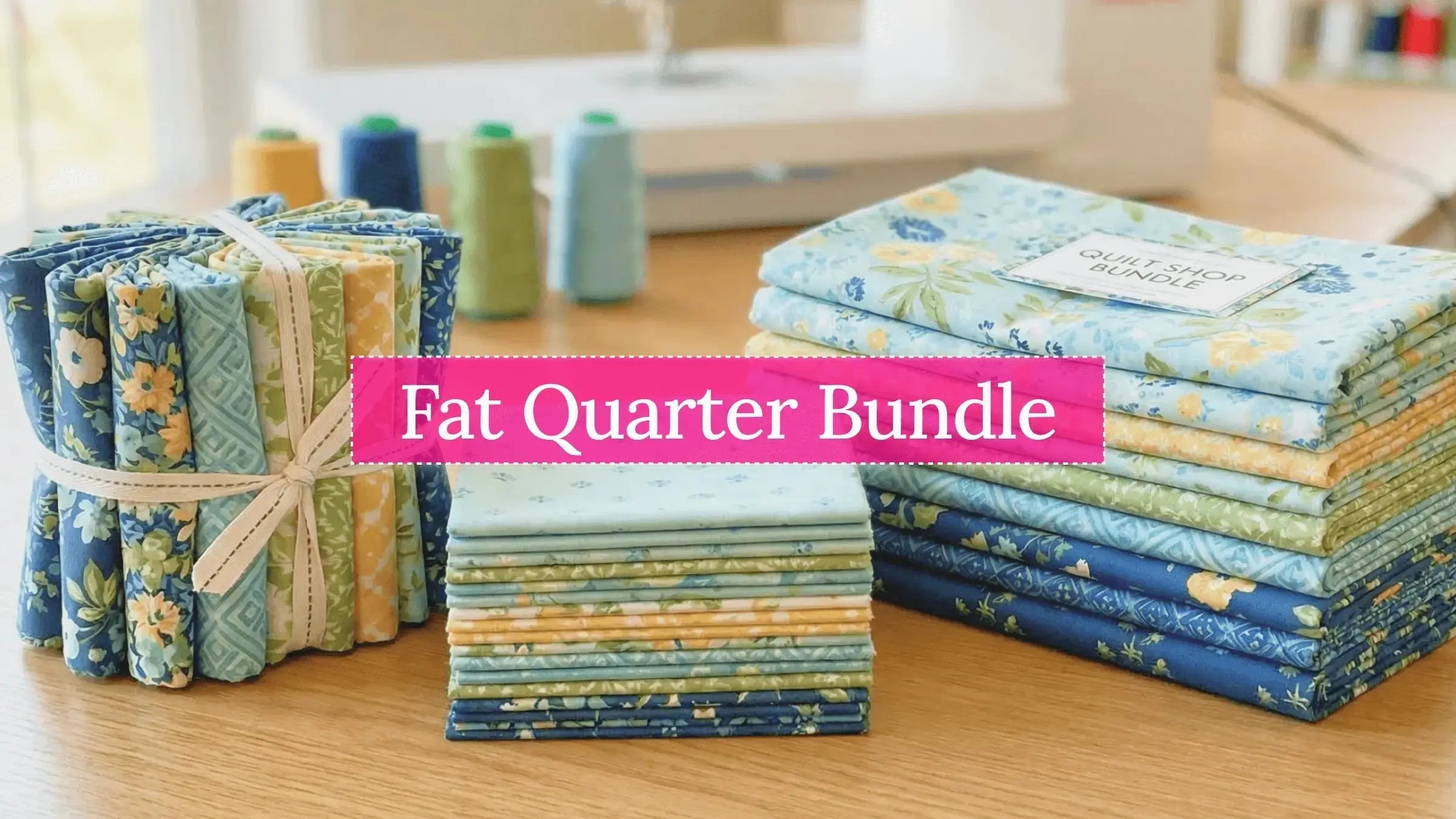
If you’re new to quilting, you’ve probably seen fat quarters online. You may have wondered, “Wait, is this just a fancy name for a quarter yard?” or, “Why do some bundles cost $15 and others cost $65?”
While fat quarters are one of the most popular fabric cuts in quilting, they’re also among the most misunderstood. Sure, they’re a smart way to build a variety of fabric stash without buying full yardage. But when online listings are vague, they’re surprisingly easy to get wrong.
In this practical guide, we’ll shed light on what fat quarters actually are and how much they usually cost. We also show you what quality really means and where to buy fat quarter bundles online without guesswork.
What Is a Fat Quarter of Fabric?

A fat quarter is a specific way of cutting fabric. It allows a wider, more usable shape than a regular quarter yard. Sewists use fat quarters for quilting, patchwork blocks, small sewing projects, and stash-building. A standard fat quarter typically measures 18” x 22”. Measurements vary slightly depending on the fabric width and how it’s cut.
How it’s cut
Instead of cutting a quarter yard as a long skinny strip, a fat quarter is cut like this:
-
Start with a half-yard cut (about 18” x 42” to 44”)
-
Cut that piece in half vertically
-
You get two fat quarters
This is the reason why it’s called “fat.” It’s the same amount of fabric as a quarter yard but in a shape that’s more useful for quilting.
Fat quarter vs regular quarter yard

Here’s the difference:
-
Quarter yard: about 9” x 42” to 45”
-
Fat quarter: about 18” x 22”
Same amount of fabric; totally different usability.
And that shape difference is the whole reason fat quarters became a quilting staple.
Why Quilters Prefer Fat Quarters

Fat quarters are basically the quilting version of a variety pack. They’re popular because they give you more cutting flexibility, more color options, and more project potential. All without committing to full yardage!
Here are several reasons why quilters love them:
1) Better shape for patchwork blocks
Most quilt blocks need pieces that are wider than 9 inches. A regular quarter yard is long and narrow, which limits what you can cut from it.
Fat quarters give you a squarer piece of fabric. This means bigger cuts, fewer seams, and less waste. You also enjoy more layout options.
2) More cutting flexibility
With fat quarter fabric, you can cut strips, squares, rectangles, triangles, block pieces, and still have leftovers.
This makes fat quarters extremely useful for sampler quilts, scrap quilts, and other similar projects.
3) Ideal for color variety and scrap quilts
If you’ve ever wanted a quilt that looks rich and layered (instead of “I used 4 fabrics and called it a day”), fat quarters are your friend.
Bundles make it easy to get:
-
coordinated colors
-
balanced contrast
-
prints + solids that play well together
4) Popular in precut bundles
Fat quarter bundles are popular because they’re ready-made.
Instead of hunting down 12 matching fabrics yourself, the bundle does the work for you. It’s quilting convenience.
How Much Does a Fat Quarter Cost?

The direct answer is: it depends. If you’re wondering how much is a fat quarter, there are realistic ranges you can use to spot a good deal.
Individual fat quarters cost between $3.50 to $6.50. If you’re seeing something sold at $1.25 each, that’s unusually low. It may indicate thinner fabric or non-quilting cotton.
Fat quarter bundles are often sold in sets, with the following cost ranges
-
5-pack: $7 to $25
-
10-pack: $30 to $55
-
12-pack: $40 to $70
-
20-pack: $60 to $120
-
40-pack: $120 to $240
Why fat quarter bundles vary so much in price
Fat quarter bundles aren’t priced like basic yardage. Pricing depends on:
Fabric quality
Quilt-shop cotton is usually tighter woven, more consistent, and better printed. Craft cotton tends to feel thinner and looser. It can still be useful, but it’s not the same category.
Brand/designer
Designer collections often cost more. Higher-end manufacturers tend to have better dye quality, print clarity, and fabric base.
Print method
Crisp, detailed prints (especially those with multiple colors or fine line work) cost more to produce. If a print looks blurry or “washed out,” it’s often a cheaper printing process.
Bundle coordination vs random assortments
A coordinated bundle usually costs more. The fabrics are intentionally curated so they’re often from the same collection. The colors are balanced and you’re paying for design, not just yardage
Meanwhile, random bundles can still be fun. But don’t expect them to always be project-friendly.
What Makes a “Quality” Fat Quarter?

A quality fat quarter doesn’t need to be expensive to be good. But it has to be consistent. It should have a reliable quilting-cotton weight, a tight weave, clean printing, and predictable shrinkage.
That consistency matters. In quilting, small differences in fabric thickness or stretch can throw off piecing and make matching seams harder.
Here’s how experienced quilters judge quality fat quarter fabric quickly:
Fabric weight and weave
Quality quilting cotton has a tighter weave and a more stable feel than thin craft fabric.
It shouldn’t feel:
-
paper-thin
-
loosely woven
-
stretchy on the grain
-
fuzzy right out of the package
You want fabric that feels sturdy but still smooth.
Colorfastness and dye quality
Quality fat quarters hold color after washing.
They do not:
-
fade quickly
-
bleed more
-
look dull after one wash
This matters a lot if you’re using high-contrast prints or mixing lights and darks.
Print clarity
Print quality is one of the easiest tells.
Good quilting fabric has:
-
crisp edges
-
clean lines
-
rich, even color
Cheaper prints often look slightly blurry, especially on small details.
Shrinkage consistency
All cotton shrinks a bit. But excellent quilting fat quarters shrink more predictably. This makes piecing easier and helps blocks stay square.
Feel after washing
Some fabric feels okay out of the package. But then, it turns stiff, scratchy, or dull after washing. Quality fabric usually gets softer after washing while still holding structure.
Where to Buy Quality Fat Quarter Bundles Online

Buying fat quarter bundles online helps buyers save time. It also opens up access to quilting-quality cotton and fabric print choices you might not find locally.
Below are some of the most trusted sellers in each category:
Quilt-focused online fabric shops
These shops specialize in quilting cotton and curated bundles. So, you’re far more likely to get true quilting-weight fabric and great bundle assortments from these sources.
-
Fat Quarter Shop. Many sewists consider this as the go-to destination for coordinated fat quarter sets and quilting fabrics online.
-
Cotton Pickins’ Quilts. A quilt-focused shop known for quality fat quarter bundles, including designer prints and curated color themes.
-
Missouri Star Quilt Co. Offers a big variety of fat quarter bundles in various themes and designs.
General fabric retailers with quilting sections
These aren’t exclusively quilt shops, but they carry quality cotton and fat quarter bundle options:
-
Flash Sew & Quilt. This online store sells quilting cotton, batiks, and precut bundles in a range of designer prints.
-
Mary Jo Fabrics. Trusted source for cotton quilting fabrics and precuts in multiple cuts (including fat quarters).
Small-batch or artisan fabric sellers
These sellers often carry unique bundles, limited-run prints, or handpicked collections that offer character and individuality:
-
Platinum Son Sews. This shop has a small selection of handpicked fat quarters with unique batiks and designer pieces when available.
-
Angels Neverland. Offers curated fat quarter bundles and exclusive mixes that blend designer prints with hand-picked selections for inspiration.
-
Happy Little Quilt Shop. A smaller online quilt shop with themed fat quarter bundles (seasonal, modern, classic) that feel thoughtfully coordinated.
Marketplace sellers
These well‑reviewed Etsy and eBay shops are known for quality fat quarter bundles and coordinated quilt cotton sets. They also have generally positive customer feedback.
-
CraftsFabrics. This Etsy-based seller offers assorted quilt cotton fat quarter bundles with vibrant floral prints and solid collections.
-
Threadart. On eBay, this shop has well-rated fat quarter bundles and quilting cotton packs in standard sizes. They also have assorted prints and solids.
Fat Quarter Bundles vs Buying Individual Fat Quarters
So, the big question: Should you buy bundles or pick individual fat quarters?
Honestly, both are great but what you pick depends on how you quilt. Let’s compare them:
|
Fat Quarter Bundles |
Individual Fat Quarters |
|
|
Cost efficiency |
Often cheaper per piece when bought as a set. |
Can be more expensive if buying multiple different prints. |
|
Color coordination |
Pre-selected bundles ensure a cohesive palette. |
You choose each piece, allowing total customization. |
|
Project flexibility |
Great for scrap quilts or projects using multiple prints. |
Ideal if you only need specific fabrics or quantities. |
|
Creative limitations |
Limited to the prints in the bundle. |
No limitations. Pick exactly what you want. |
To sum it up, fat quarter bundles are best for beginners creating gift projects and patchwork quilts. Meanwhile, advanced sewists prefer individual fat quarters for custom projects and precise color matching.
Common Mistakes When Buying Fat Quarters Online
Even experienced quilters slip up online. For example, some get deceived by misleading photos and listings.
Here are the most common mistakes (and how to avoid them):
1) Not checking fabric type
Not all cotton is quilting cotton. If a listing says “craft cotton,” it may be thinner and less durable for quilts. For starters, look for terms like “quilting cotton”, “quilt-shop quality”, and “premium cotton”.
2) Assuming all fat quarters are the same size
Fat quarter size varies. Generally, sellers cut 18” x 22”. But some go with 18” x 20” or 18” x 21”. Always check measurements to be sure.
3) Ignoring washing instructions
Some prints bleed, shrink more, or need special care. If the listing doesn’t include care instructions, that’s not a dealbreaker. But it’s a trust signal you’re missing. Send the seller a message to ask questions.
4) Buying bundles without a project plan
Bundles are fun. But they’re also how you accidentally build a fabric stash that never turns into quilts.
Before buying, ask:
-
What will I use this for?
-
Do I need background fabric too?
-
Do I like all the prints, or just the top two?
How to Store and Care for Fat Quarters

Fat quarters are small enough to store easily. Here are some practical reminders:
Pre-washing advice
Some quilters always pre-wash. Some never do. If you’re mixing dark and light fabrics, pre-washing reduces bleeding risks. If you’re using bundles, pre-washing also helps you learn how the fabric behaves before cutting.
Folding and storage tips
Most quilters use mini comic-book board inserts, small bins, or drawers by color family.
The golden rule here is: you want to see what you own without unfolding everything.
Labeling bundles
If you buy bundles from collections, keep the label or note the collection name. It helps later when you want to buy coordinating yardage.
Preventing color bleed
If you’re working with deep reds or saturated prints, wash separately and consider a color catcher. Also, avoid soaking for long periods.
Frequently Asked Questions About Fat Quarters
Is a fat quarter always the same size?
Not always. A fat quarter is usually around 18” x 22”. Some sellers offer 18” x 20” or 18” x 21”. Exact measurements depend on fabric width and cutting method. Always check the listing.
How many fat quarters do I need for a quilt?
It depends on the quilt size and pattern. A small baby quilt might use 6 to 12 fat quarters. A throw quilt often uses 12 to 20. Larger quilts can use 20 to 40, especially for scrappy designs.
Are fat quarters cheaper than yardage?
Sometimes. Bundles can offer better value per cut. But yardage is usually cheaper per inch if you need large pieces. Fat quarters are best for variety and patchwork.
Can beginners use fat quarters easily?
Yes. Fat quarters are one of the easiest ways to start quilting. They’re manageable, less intimidating than full yardage, and great for learning cutting and piecing.