What Is Quilt Batting?
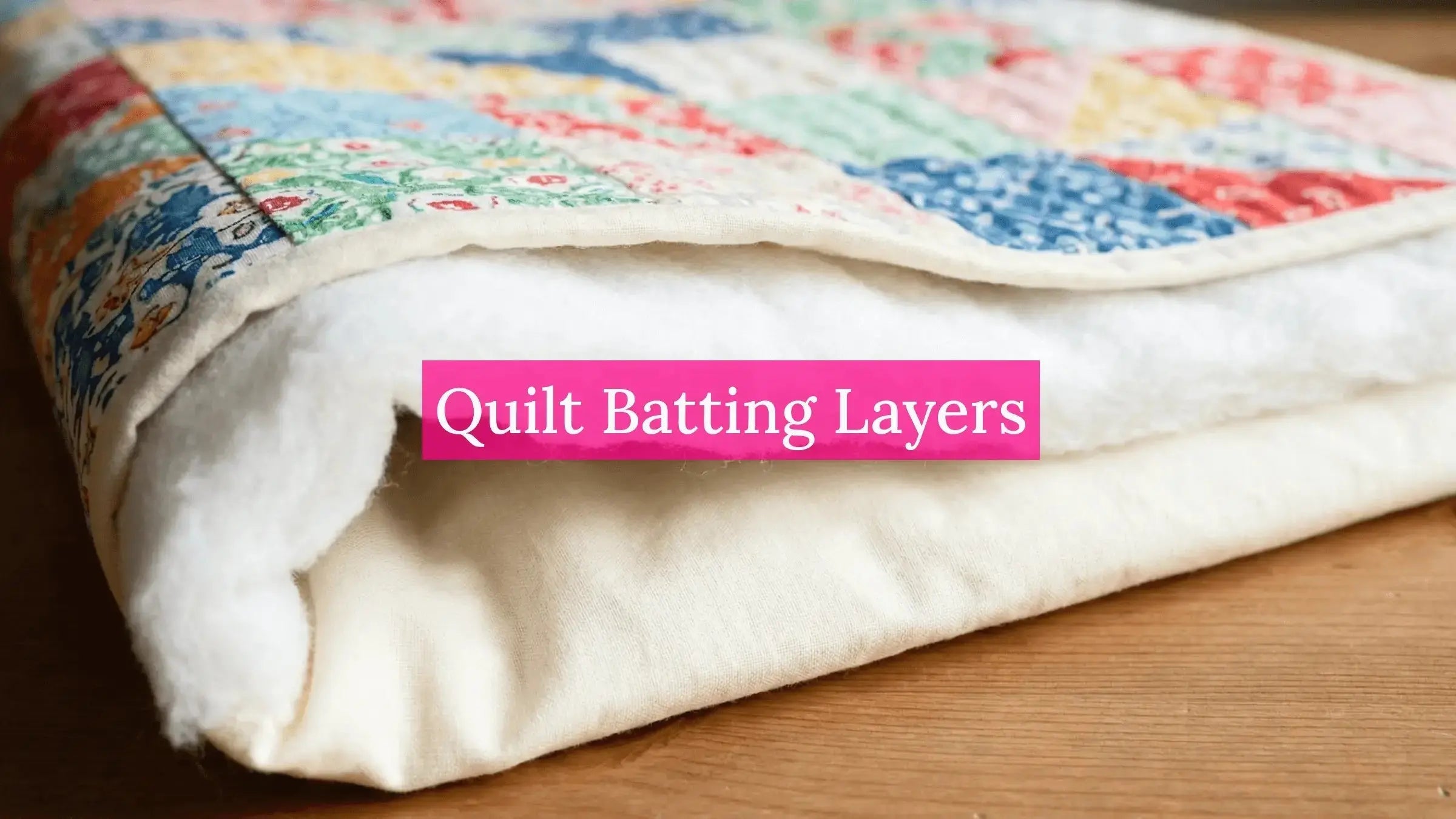
Quilt batting is the soft middle layer of a quilt. It is placed between the quilt top and the backing. Also called quilting batting, it’s the part of the quilt that you feel but don’t see. Over time, it’s likely what determines how well your quilt ages.
Batting controls warmth, loft, drape, stitch definition, and long-term durability. Once you understand how different battings behave in real quilts, choosing the right one gets a whole lot easier than the packaging makes it seem.
This guide is here to take batting from “mystery fluff” to something you can choose with confidence. We tell you based on how it behaves in real quilts, not just what the packaging says.
What Does Quilt Batting Do in a Quilt?

First off, batting isn’t just there to “fill space.” It plays a huge role in how your quilt performs in real life.
1) Warmth
This is the obvious one. Batting traps air, and trapped air = insulation. But warmth isn’t only about thickness. Fiber type is important.
For example, wool feels warmer than cotton, even at a similar loft. Cotton is more breathable but not as insulating. Meanwhile, bamboo blends are often cozier without being heavy.
2) Weight
Batting determines whether your quilt feels light and drapey or substantial and “blanket-heavy.”
Cotton gives a comforting weight. Wool adds loft without a ton of weight. Polyester can feel light but puffy.
3) Drape
Drape is how a quilt falls when you hold it or lay it over a body. This is one of the biggest differences between batting types in the real world.
-
A quilt with 100% cotton batting often has a structured feel.
-
A quilt with bamboo batting feels softer and more fluid.
-
A quilt with high-loft polyester is usually stiffer and more “poofy.”
4) Stitch Definition
Want your quilting to pop? Batting is a big part of that.
Wool is famous for stitch definition. Cotton gives a flatter, more traditional look. On the other hand, polyester can make quilting look dramatic, especially with a thicker loft.
5) Longevity of the Quilt
Here’s one of the most common misconceptions new quilters have:
“Batting is just batting. It’s all basically the same.”
It isn’t.
Some battings:
-
resist bearding (fibers poking through the top)
-
wash well for years
-
hold their shape
-
resist bunching and shifting
Others don’t.
If you’ve ever seen an older quilt that looks “baggy” inside, that’s often a batting issue.
Types of Quilt Batting (By Fiber)
Batting is usually categorized by fiber content, and that’s the most helpful way to understand it.
There are also blends, scrim/no scrim, needle-punched vs bonded, and loft levels—but fiber type is the first decision that drives the rest.
Let’s break down the big three you’ll see most often:
Cotton Quilt Batting

Cotton batting is what many quilters use when they create a traditional bed quilt.
What cotton batting feels like
-
soft, breathable warmth
-
slightly heavier “hug” feeling
-
flatter, traditional look
It’s not as lofty as wool or polyester, and that’s part of its charm.
Why quilters love it
Cotton is especially popular for quilts where you want it to feel substantial, not fluffy.
What to watch out for with cotton
Cotton batting can:
-
shrink (some more than others)
-
wrinkle after washing (which many people actually like)
-
have less dramatic stitch definition
-
feel slightly stiff until washed a few times
If you love the “antique quilt crinkle,” cotton batting is one of the easiest ways to get it.
Best uses for cotton batting
-
Bed quilts
-
Baby quilts (especially for breathability)
-
Heirloom quilts
-
Wall hangings (if you want a flatter look)
-
Quilts that will be washed regularly
Wool Batting for Quilts

If you’ve ever seen a quilt with quilting lines that look crisp and dimensional (even without thick thread), there’s a good chance wool was used.
What wool batting feels like
Wool batting is:
-
warm without being heavy
-
springy and resilient
-
lofty but not stiff
It’s a great balance between comfort and structure.
Why wool batting is popular
Wool is known for its beautiful stitch definition, excellent loft, warmth, and drape. It’s also durable and often longarm-friendly. Plus, it handles dense quilting well and gives a gorgeous texture.
What to watch out for with wool
Wool batting can:
-
cost more
-
require more careful washing (depending on the quilt)
-
feel “too warm” for some climates if used in large bed quilts
-
sometimes have a faint natural smell when new (usually disappears)
Also, some wool batting is smoother and more consistent than others.
Best uses for wool batting
-
Show quilts
-
Quilts with lots of quilting detail
-
Quilts you want to feel cozy but not heavy
-
Longarm quilts
-
Modern quilts with negative space
Bamboo Quilt Batting

Bamboo batting has become a favorite in modern quilting. Some quilters prefer it for how it drapes and feels against the skin. This batting type is usually a blend of bamboo and cotton. Besides, pure bamboo can be tricky to stabilize.
What bamboo batting feels like
-
soft
-
fluid and drapey
-
slightly silky to the touch
-
lightweight but cozy
It often creates a quilt that feels more like a high-end blanket than a traditional “heavy quilt.”
Why quilters like bamboo batting
Bamboo batting is popular because it offers:
-
excellent drape
-
a soft, modern feel
-
a smooth look
-
less stiffness than cotton
It’s also commonly marketed as eco-friendly. However, that depends on manufacturing and processing.
What to watch out for with bamboo
Bamboo batting can:
-
be more prone to stretching during quilting if not basted well
-
sometimes beard (depending on the blend and scrim)
-
be less “crinkly” after washing than cotton
It’s also not always the best for super-dense quilting unless the batting is specifically designed for it.
Best uses for bamboo batting
-
throw quilts
-
quilts meant to drape nicely over a couch
-
quilts for warmer climates
-
modern quilts
-
baby quilts (especially for softness)
Quilt Batting vs Alternatives (What NOT to Use)

Let’s talk about the question that every quilter asks at least once, with a half-finished quilt top and no batting in the house: “Can I just use something else?”
Surprisingly, the answer is sometimes a “yes.” In most cases, you might regret it.
Here are the most common substitutes and what actually happens when you use them.
Can I Make a Quilt Without Batting?
Yes. You can quilt without batting. This is sometimes called a “summer quilt,” a “two-layer quilt,” or a “coverlet-style quilt.”
When it makes sense
Skipping batting can work well for:
-
hot climates
-
lightweight quilts
-
picnic quilts
-
wall hangings
-
quick projects
Trade-offs
Without batting, your quilt will:
-
have less warmth
-
have less structure
-
show less quilting texture
-
feel more like a thick sheet than a quilt
It’s not entirely “wrong”. But it’s definitely a different type of finished piece.
Can I Use a Sheet for Quilt Batting?
Technically, yes. But it’s not ideal.
A sheet is woven fabric. It doesn’t behave like batting.
Why it’s not ideal
Using a sheet as batting can lead to:
-
stiff quilts
-
poor stitch definition
-
less warmth
-
more shifting inside the quilt sandwich
-
weird puckering after washing
When it might work short-term
If you’re making:
-
a lightweight summer quilt
-
a very flat wall hanging
-
a practice quilt
But again, don’t expect it to feel like a traditional quilt.
Can I Use an Old Blanket as Quilt Batting?
This is a classic thrift-store hack, and it can work. However, it comes with real risks.
| Pros | Cons |
|
cheap (or free) |
inconsistent thickness |
|
already warm |
unknown fiber content |
|
can create a heavy, cozy quilt |
can shrink unpredictably |
|
|
may be difficult to quilt through |
|
|
can create lumps or stiff areas |
Of course, the biggest issue here is consistency. Batting is designed to be even. Old blankets are not.
When it makes sense
-
utility quilts
-
picnic quilts
-
heavy winter quilts
-
practice quilts
Can I Use Flannel for Quilt Batting?
Flannel is a popular substitute for batting.
Why people use flannel
Flannel is:
-
soft
-
easy to find
-
cozy
-
lightweight
The big concern? Shrinkage!
Flannel can shrink more than you expect. If your quilt top shrinks differently than the flannel layer, you’ll end up with puckering or distortion.
If you use flannel instead of batting, pre-wash it. And ideally, pre-wash your quilt top fabrics too.
When flannel works best
-
baby quilts
-
lightweight quilts
-
rag quilts
-
quilts where you want softness but minimal loft
How Is Quilt Batting Used?

Quilt batting sits between your quilt top and backing. Quilters often call this the “quilt sandwich.” Once those three layers are stacked, you have to keep everything aligned and stable while you quilt. Because batting loves to shift the second you look away.
Learning how to add batting to a quilt is actually simple. You only need to layer it under the quilt top, then secure everything before stitching. Most quilters do this with spray baste, safety pins, or basting stitches. It all depends on the quilt size and how they plan to quilt it.
A common beginner question is how to put batting in a quilt without wrinkles, lumps, or weird tension. The trick is less about “perfect technique” and more about preparation. Use a flat surface, smooth from the center outward, and give the batting time to relax before you start quilting.
Next is the quilting step.
As for how to sew a quilt with batting that looks natural, it depends on your machine and project type. A domestic machine usually needs a lower-loft batting and a manageable quilt size. Longarm quilting handles thicker lofts and larger quilts more comfortably.
Can You Piece Together Batting for a Quilt?

Yes, you can absolutely piece batting. And most experienced quilters do it at some point.
You might piece batting because:
-
you’re using leftovers
-
you’re short on batting for a large quilt
-
you’re working with batting scraps from a roll
Best practices for piecing batting
For the cleanest result:
-
Use butt seams (edges touching, not overlapping)
-
Zigzag stitch the seam on a sewing machine
-
Or use batting tape made specifically for joining batting
-
Keep seams away from high-visibility areas if possible
What not to do
Avoid the following:
-
overlapping batting (creates a ridge)
-
leaving gaps (creates thin cold spots)
-
piecing with wildly different lofts (creates uneven texture)
When it’s better to use a full piece
If you’re quilting:
-
a large bed quilt
-
a show quilt
-
something you want to longarm smoothly
…it’s usually worth using one continuous piece.
This is also one of the reasons serious quilters love batting by the roll: you get consistent material and fewer piecing headaches.
Where Can I Buy Quilt Batting?
You’ve got a few good options, and the best one depends on how often you quilt and how picky you are .
Local quilt shops
Local quilt shops often carry higher-quality batting and batting suited for longarm quilting. They also have staff members who can answer your questions, if you have any.
The downside is the price and limited selection.
Big-box craft stores
These stores can be convenient, but quality varies. They usually carry polyester-heavy batting, “craft batting”, and limited fiber options.
When purchasing from these sources, read labels carefully.
Online quilting stores
Online stores are where many quilters buy batting now because selection is bigger and comparing fiber types can be done easily. Customers can also buy larger cuts and batting by the roll.
The key is buying from a quilting-focused retailer that gives clear product info, not vague descriptions.
Where to Buy Quilt Batting by the Roll (Best Option for Serious Quilters)

The best place to buy quilt batting by the roll is a reputable online or local quilting retailer. Look for shops that sell true quilt-grade batting, give clear details about fiber content, and offer consistent cuts. Make sure to check reviews from past customers to see if a store has a strong track record.
Batting rolls are ideal for:
-
Quilters making multiple quilts per year
-
Longarm quilters
-
Quilters who do charity quilts
-
Small quilting businesses
-
Anyone who hates paying per-yard markups repeatedly
Buying batting in larger quantities typically lowers the overall cost. As such, the savings add up fast if you make throws, bed quilts, or anything bigger than a baby quilt.
Another major benefit is consistency. When you use the same roll across multiple quilts, you get the same loft, drape, shrink behavior, and stitch definition every time.
Finally, rolls are simply more convenient, especially for large quilts. You don’t have to guess whether you have enough batting or do an emergency craft store run when you’re already deep into quilting mode.
👉 Shop quilt batting rolls for quilting & longarm projects here.
How to Choose the Best Batting for Your Quilt
This is where batting stops being “what’s on sale” and becomes a real quilting decision.
Here are the practical factors that matter most:
1) Quilt size
Small quilts (baby quilts, wall hangings) are forgiving. However, large quilts magnify every batting choice because drape, weight, shifting, and warmth all matter more.
2) Quilting method
If you’re hand quilting, you may prefer softer cotton, certain wool battings, or battings without scrim.
If you’re machine quilting or longarming, you’ll want batting that stays stable and handles dense quilting well.
3) Climate and intended use
Case in point, a quilt for Florida is not the same as a quilt for Minnesota. Cotton and bamboo are great for warmer climates while wool is perfect for colder locations. Polyester can be warm but may feel less breathable.
4) Desired loft
Loft affects warmth, puffiness, stitch definition, and how “modern” or “traditional” the quilt looks.
-
Low loft = flatter, classic.
-
High loft = puffier, more dramatic quilting.
5) Frequency of washing
If the quilt will be washed often (baby quilts, couch throws), prioritize durability, shrink predictability, and fiber stability. Cotton is often a safe bet here. Wool can work too, depending on care.
Final Thoughts: Choosing Quilt Batting with Confidence
Quilt batting isn’t the glamorous part of quilting, but it’s one of the biggest “make or break” choices you’ll make. It’s the hidden layer that controls the feel of the quilt, how it drapes, how warm it is, and how well it holds up after real-life washing and use.
Sure, you don’t need to memorize every batting option on the planet. But you definitely need to choose based on the quilt you’re making.
To sum it up, use:
-
cotton for breathable, traditional quilts.
-
wool for warmth, loft, and stitch definition.
-
bamboo blends for softness and drape.
If you quilt often, buying quilt batting by the roll can make quilting less stressful.
Because the only surprise you want in quilting… is how good your finished quilt looks.
Browse batting rolls and read product descriptions carefully. That way, you can match batting to your next project with confidence.