
Press a knit hem with the iron set for the fiber, not for the project: polyester knits glaze and can wave permanently above a low-medium setting, cotton jersey tolerates more heat but stretches if the iron is pushed instead of lifted, and steam relaxes some waves while setting others. Always test-press a hemmed scrap of the same knit, let it cool flat and undisturbed, and judge the result only after it has cooled.
If you have not yet confirmed that pressing is the branch at fault, diagnose first with the wavy knit hem decision tree. This protocol assumes the wave appeared at, or got worse at, the iron.
Why heat waves a knit
A knit is a structure of loops under slight tension. Heat lets those loops relax and re-set; pressure and motion decide the shape they set into. Slide a hot iron along a hem and you are stretching the edge while it is at its most impressionable, then letting it cool in the stretched state. Add steam and some fibers relax further, which is why the same steam that rescues one hem ruins another. Every check below removes one of those variables.
Check 1: Temperature against the fiber
Use the fabric's own care instructions first — they outrank any general table. As fiber-general starting points: polyester and other synthetic knits belong at low to low-medium heat, where too much heat glazes the surface and can set a wave permanently; cotton and cotton/spandex jersey tolerate a medium setting but scorch risk rises with spandex content; bamboo and viscose jerseys are pressed at low-medium and are easily marked, so a press cloth earns its place; acrylic knits stay low, because heat damage there is irreversible. Heat damage to synthetic knits does not wash out or press out — say that plainly before anyone reaches for a hotter iron to "fix" a wave.
Check 2: Steam and moisture
Test the hemmed scrap twice: once dry, once with the steam level you used on the garment. Steam relaxes cotton-loop tension and can level a mild wave; on a heat-sensitive synthetic it can lock distortion in. If the dry test is flatter, press the garment dry. If a light steam relaxes the scrap's wave without adding shine or stiffness, use steam sparingly and only in lift-and-press placements.
Check 3: Iron motion
Never push or pull the iron along a knit hem. Set it down on one placement, hold briefly, lift straight up, and move to the next placement with a small overlap. The hem should not travel with the iron at all. If your earlier pressing involved long gliding strokes, that alone explains many waves — re-press the scrap correctly and compare before changing any setting.
Check 4: Cooling, undisturbed
A pressed knit is still deciding its final shape while it is warm. Leave each placement — and the finished hem — flat and completely undisturbed until cool. Hanging, folding or trying on a warm hem stretches the edge you just set. Judge every test only after cooling; a hem that looks flat on the board and waves an hour later was probably moved too soon.
The fiber table, in one view
- Polyester / synthetic jersey: low to low-medium heat, press cloth recommended, steam only after a scrap test, glaze and permanent wave are the risks.
- Cotton / cotton-spandex jersey: medium heat, steam usually tolerated, stretching under a moving iron is the main risk.
- Bamboo / viscose jersey: low-medium heat, press cloth, minimal steam until tested, surface marking is the risk.
- Acrylic knit: low heat, dry press first, heat damage is irreversible.
Recovering an already-waved hem
Treat recovery as an experiment on the actual hem's fabric, in an inconspicuous placement first: relax with light steam and lift-and-press shaping, or press dry, then cool completely undisturbed and inspect. Mild relaxation waves may level; waves baked into a synthetic at high heat will not. If two honest tests fail, the fix is re-sewing, not more heat — and if the wave predates pressing entirely, return to the decision tree.
The same lift-cool discipline matters when pressing delicate woven fabrics; the Apparel Fabric School hub collects those guides. Browse jerseys to practise on in the knit fabrics collection:
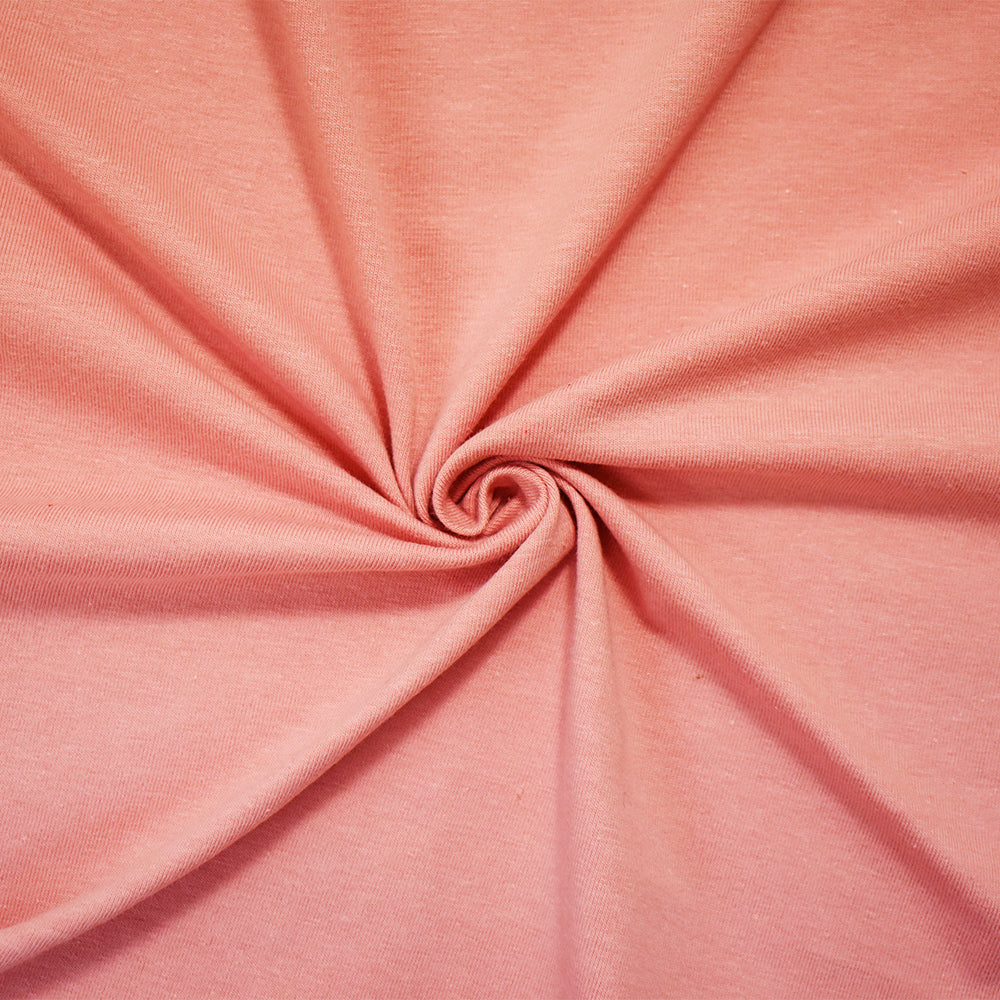
- Pink Cotton Solid Stretch Spandex Jersey Knit Fabric ($0.82) — the cotton/spandex case: tolerant of medium heat, unforgiving of a sliding iron.
- Brown Bamboo Solid Stretch Jersey Knit Fabric ($1.25) — the bamboo case: press cloth and low-medium heat.
- Beige-Black-White Poly Slub Jersey Knit Fabric ($1.25) — the synthetic case: stay low, test steam on a scrap, and never chase a wave with more heat.
More pressing diagnostics are in the Sewing Problems Solved hub.


