Choosing the Best Batting for Quilts
Choosing the Best Batting for Quilts: When you're trying to pick the best batting for a quilt, it really comes down to what you want the finished project to be. That said, if I had to recommend one go-to option for your next project, a high-quality 80% cotton and 20% polyester blend is a fantastic all-purpose choice. It gives you the soft, natural feel of cotton but adds the stability and durability of polyester—making it perfect for just about anything, from a cozy bed quilt to a decorative wall hanging. At Linda's, we carry exceptional blends that will help you finish your project beautifully.
The Hidden Heart of Every Great Quilt
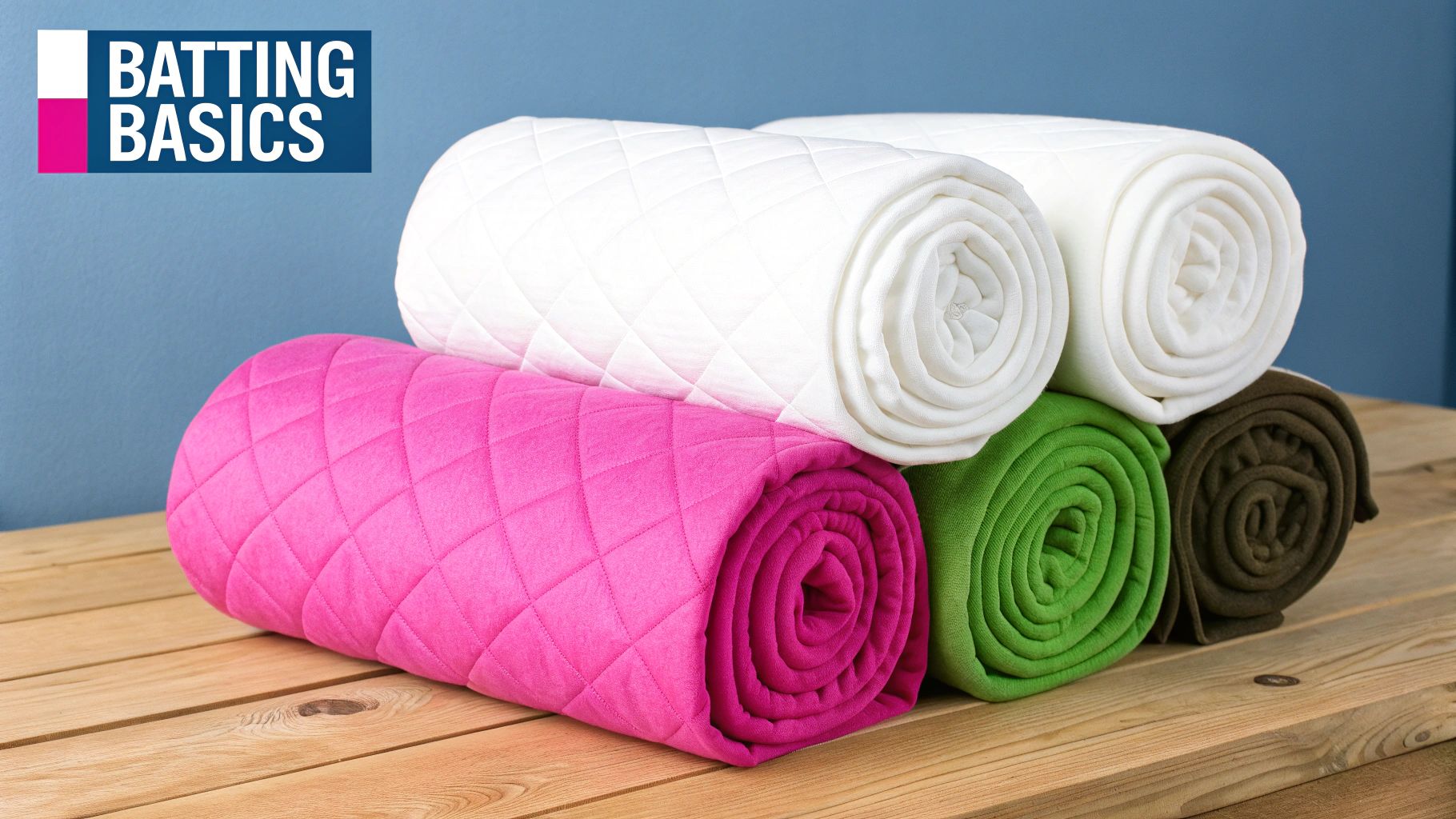
Welcome to the most important decision you'll make after picking your fabric. The batting is the hidden heart of your quilt. It’s the secret layer that provides warmth, texture, and character. You can think of it as the soul of your project.
Choosing the right one transforms a simple quilt top into a cozy, durable masterpiece. This guide is your roadmap to understanding how different battings behave, feel, and wear over time, so you can bring your vision to life and finish your project with confidence.
Why Batting Choice Matters
The batting you select dictates the final drape, weight, and warmth of your quilt. A thin, dense batting creates a flat, modern look that lets intricate piecing shine. On the other hand, a thick, fluffy batting produces a plush, comforter-like feel that’s all about coziness.
The right batting doesn’t just fill your quilt; it defines its personality. From a crinkly, vintage heirloom to a smooth, contemporary throw, the batting is what brings your creative vision to its final form.
This choice is what separates a good quilt from a great one. It's the layer that ensures all your hard work results in a functional and beautiful piece that can be loved for generations.
A Quick Guide for Your Next Project
To get started, let’s jump right into a quick comparison. This little cheat sheet will help you match your project's needs to the perfect batting type.
Quick Guide to Common Quilt Batting Types
Whether you're crafting a modern heirloom or a durable everyday throw, this table will point you in the right direction. It's a simple breakdown of the most popular fibers and what they do best.
| Fiber Type | Key Characteristic | Best For | Drape |
|---|---|---|---|
| 100% Cotton | Soft, breathable, traditional crinkle finish | Bed quilts, baby quilts, traditional designs | Soft and gentle |
| Wool | Lightweight, warm, excellent stitch definition | Show quilts, warm bed quilts, hand quilting | Bouncy and resilient |
| Polyester | Durable, high loft, resists shrinkage | Tied quilts, kid's quilts, budget projects | Puffy and light |
| Cotton/Poly Blend | Stable, versatile, less shrinkage than cotton | All-purpose quilts, machine quilting | Smooth and consistent |
| Bamboo Blend | Silky soft, breathable, eco-friendly option | Modern quilts, lap quilts, baby items | Fluid and luxurious |
By the end of this guide, you’ll be able to select the ideal foundation for your work with total confidence. Here at Linda's, we have every exceptional option you'll need to get the job done, from trusted cotton blends to luxurious wool. Let's find the perfect batting for your next masterpiece.
Exploring Core Batting Materials
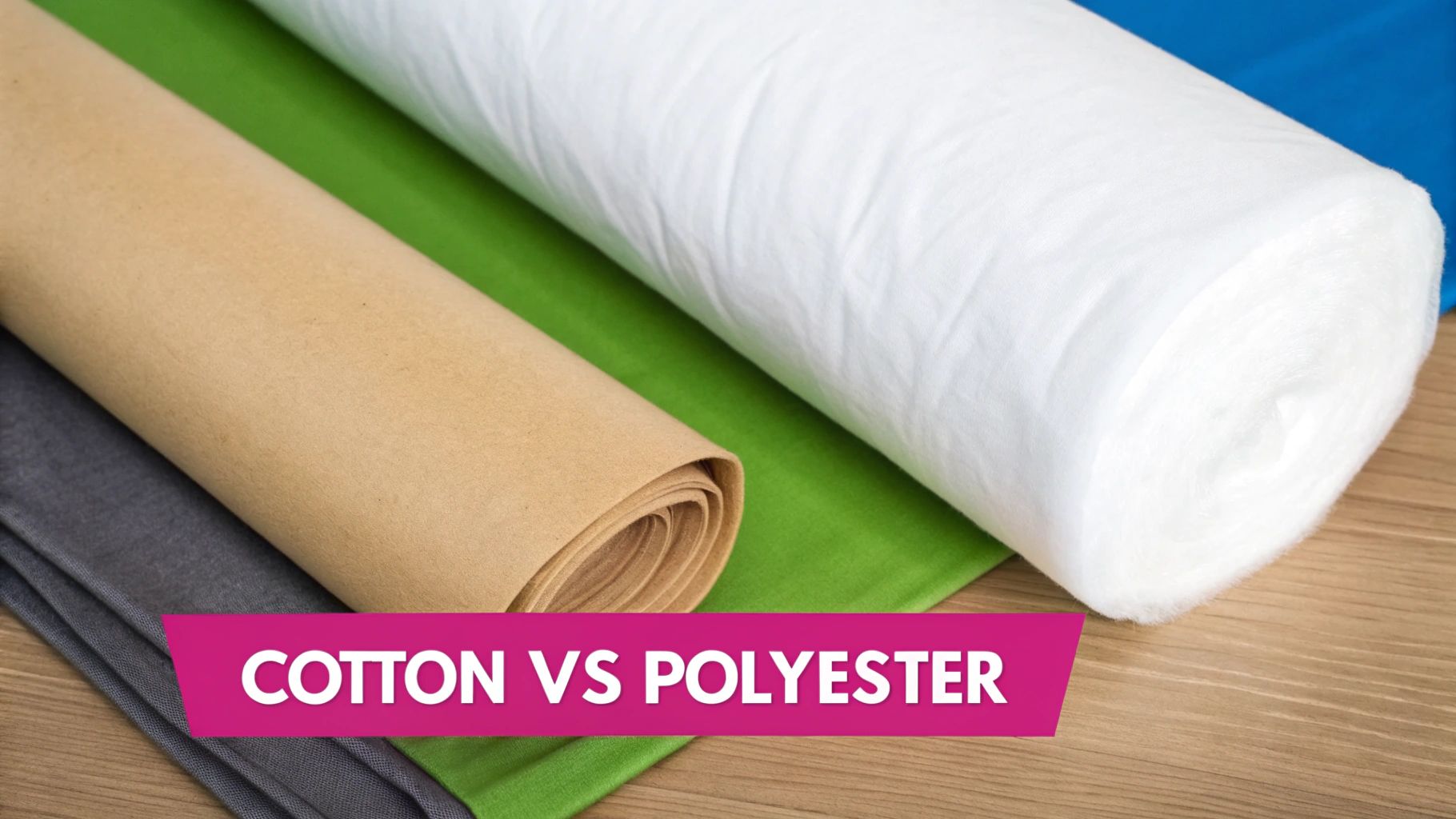
To find the best batting for your quilt project, you first need to get familiar with what it's made of. The fiber content is the single biggest factor that will shape your quilt's final look, drape, and feel. Think of it like choosing the right flour for a recipe—the type you pick determines the entire outcome.
Each material has its own personality, influencing everything from how it behaves under the needle to the way the finished quilt lays across a bed. Let’s break down the most common and beloved options you’ll come across so you can choose wisely for your project.
The Timeless Classic: Cotton
When you picture a classic, well-loved quilt with that perfectly crinkled texture, you're almost certainly thinking of one made with 100% cotton batting. This natural fiber is a favorite for its softness, breathability, and gentle weight, giving quilts a substantial, comforting feel that has stood the test of time.
Cotton batting handles beautifully, almost like a thick flannel. It’s a fantastic choice for machine quilting because it stays put and gives your stitches a stable foundation. Just know that it will shrink a little after the first wash—and that’s a good thing! It’s what creates that gorgeous, puckered vintage look we all love.
The Modern Workhorse: Polyester
Polyester batting is a tough, affordable, and resilient modern option. It's perfect for quilts that are going to see a lot of love, use, and frequent trips through the washing machine. It’s known for being lightweight yet surprisingly warm, and it resists shrinkage, which means your quilt will keep a smooth, flat finish.
This makes it a go-to choice for children's quilts or any project where durability is key. Because it holds its shape so well, it's also a great fit for tied quilts where you want a fluffier, comforter-like result without dense quilting.
Choosing a batting material is an exciting step in the quilting process. While cotton offers a traditional feel and polyester provides durability, understanding the nuances between these and other fibers like wool is key. For a deeper dive into how these materials compare, Manchester Factory offers a great resource on wool vs. synthetic quilts that can help guide your decision.
The Luxurious Insulator: Wool
For incredible warmth without the weight, wool batting is a quilter's dream. This natural fiber is exceptionally resilient, meaning it resists creases and bounces back into shape beautifully. This quality gives it fantastic stitch definition, making your quilting patterns truly pop off the fabric.
Wool is also breathable and naturally regulates temperature, making it a luxurious choice for bed quilts you want to use year-round. While it does come with a higher price tag, its lightweight warmth and elegant drape make it a worthy investment for a special heirloom project.
The Best of Both Worlds: Blends
Sometimes you don't have to choose just one. Batting blends, most commonly an 80% cotton and 20% polyester mix, give you a fantastic combination of benefits. You get the soft, natural feel of cotton with the added strength, stability, and lower shrinkage of polyester.
This versatility makes cotton/poly blends one of the most popular choices for all-purpose quilting. They are strong enough for machine quilting but still soft and breathable, striking a perfect balance for just about any project you can dream up. Our guide on selecting batting for quilting provides more detail on why blends are such a popular choice.
The interest in unique, handmade home goods is booming. As of 2023, the global quilt market hit an estimated USD 231.26 billion, and it's projected to more than double by 2032. This growth is all about consumers wanting unique, textured, and eco-friendly decor, with cotton, flannel, and cotton/poly blends leading the way.
Innovative Specialty Fibers
Beyond the big three, a few other innovative fibers offer unique qualities for modern quilters.
- Bamboo: Known for being silky-soft and breathable, bamboo batting is often blended with cotton. It has a beautiful, fluid drape that's perfect for modern quilts and baby items.
- Silk: A true high-end choice, silk batting is incredibly lightweight and soft, offering warmth without any bulk. It's an excellent option for delicate wall hangings, show quilts, or wearable art.
Each of these materials is waiting to become the heart of your next quilt. You can find a curated selection of these trusted batting types right here at Linda's, ready to help you finish your project perfectly.
How Loft Defines Your Quilt's Personality
Once you’ve settled on the fiber for your batting, the next big decision is its loft. Think of loft as the quilting world’s word for thickness or puffiness. It’s what gives a quilt its final character, deciding whether it has the flat drape of an antique heirloom or the plush, cloud-like feel of a cozy comforter.
Getting the loft right is the key to controlling the final dimension and feel of your quilt. It directly impacts how your quilt will drape, how warm it will be, and even how you approach the quilting process itself. This single choice truly defines the personality of your finished piece.
Low Loft: The Artist’s Canvas
Low-loft batting is thin, dense, and creates a beautifully flat, lightweight quilt. Imagine a delicate wall hanging where every single stitch is meant to be a star. Low loft is the perfect stage for intricate, detailed quilting to shine because it won't puff up and hide all your beautiful work.
This is a great go-to batting for quilts intended for display or any project that needs a graceful drape without adding bulk.
- Ideal Projects: Wall hangings, table runners, placemats, and modern quilts with dense, artistic quilting.
- Final Look: Flat and smooth, with that soft, antique-like crinkle after washing (especially with cotton).
- Stitching: Lets you get in there with very close, detailed machine quilting without fighting the fabric.
Mid Loft: The Versatile Favorite
Mid-loft batting is the dependable, all-around choice for quilters everywhere. It strikes a perfect balance between the flatness of low loft and the puffiness of high loft, which makes it incredibly versatile. This is the batting you want for a cozy bed quilt that gets used and loved every single day.
It offers enough substance for warmth and a gentle puff to highlight your quilting, but not so much that it becomes a beast to handle on a home sewing machine. For most quilters, this is the sweet spot.
Honestly, picking a mid-loft batting like a quality 80/20 blend is often the safest and most satisfying choice for a functional quilt. It just delivers the perfect combo of cozy warmth, a beautiful drape, and enough definition to make your quilting patterns pop.
High Loft: The Cozy Comforter
When you want dramatic texture, maximum warmth, and a billowy, luxurious feel, high-loft batting is your answer. This thick, fluffy batting creates a quilt that feels much more like a plush comforter. It’s perfect for projects where the goal is ultimate coziness rather than showing off intricate stitch work.
Because it's so thick, high-loft batting is often used for tied quilts, where yarns secure the layers instead of dense stitching. It’s designed to create that bold, puffy look that just screams comfort. This image really shows how batting thickness directly relates to the warmth and dimension of your finished quilt.
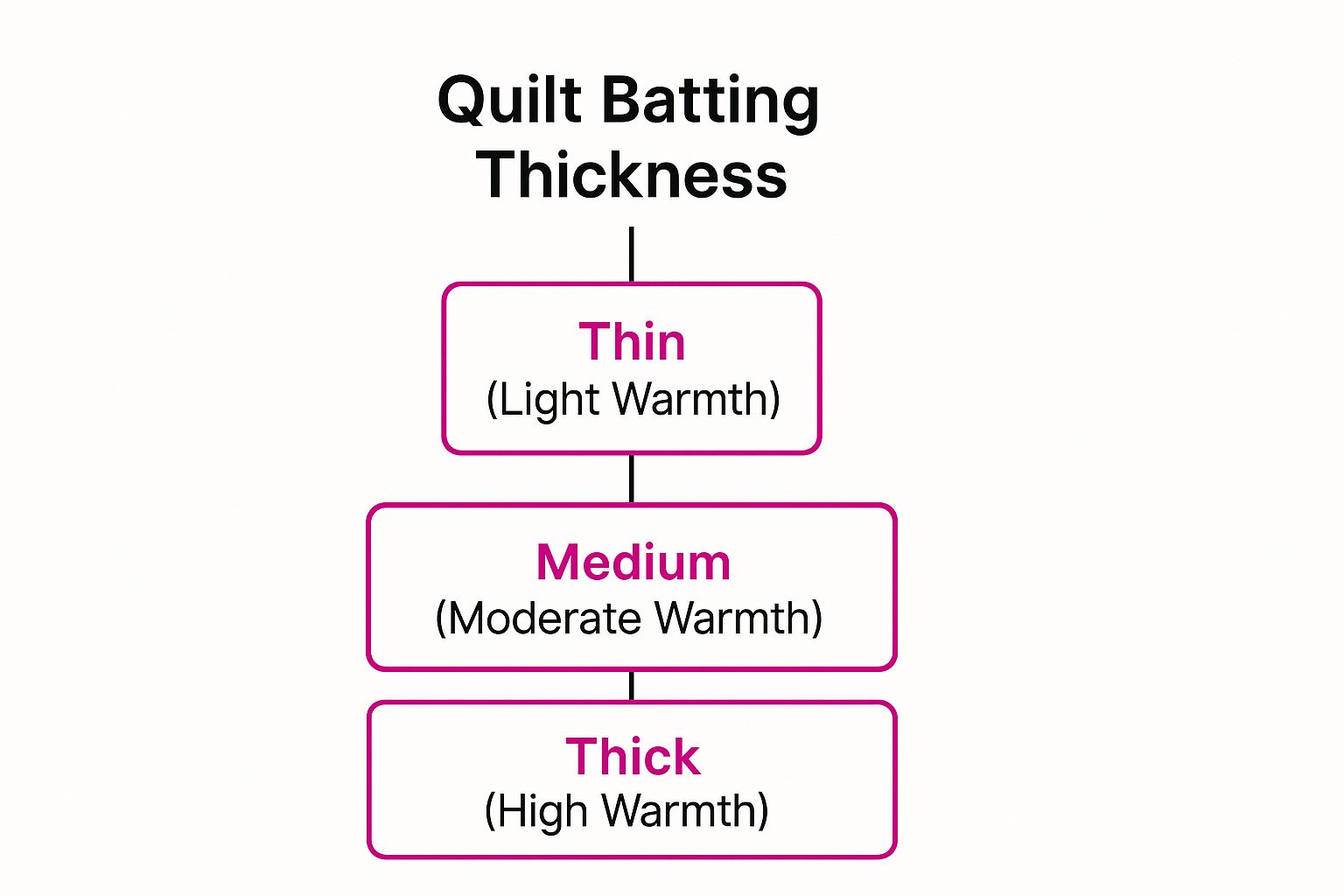
As you can see, choosing a thicker, high-loft batting is the most direct route to a quilt with serious warmth and a plush, dimensional look.
How Loft Dictates Quilting Distance
Beyond just looks, loft plays a critical structural role. It dictates your quilting distance—the maximum space you can safely leave between your lines of stitching. A lower loft batting is denser and more stable, so it often requires your stitches to be closer together (usually 3-4 inches apart) to keep the fibers from shifting around.
On the other hand, a high-loft polyester or a batting with a scrim (a thin stabilizer sheet) can often be quilted up to 8-10 inches apart. This is because the fibers are bonded or interlocked, which stops them from bunching up or separating inside your quilt over time. Always, always check the manufacturer's packaging for the recommended quilting distance to ensure your project stays beautiful and structurally sound for years.
Choosing the right loft is one of the most fun and creative parts of the process. Whether you need a low-profile base for your art or a fluffy cloud of comfort, Linda’s has the perfect batting to bring your quilt's personality to life.
Matching The Batting To The Project
This is where your knowledge comes into practice. Knowing all about fibers and lofts is one thing, but applying that education to your specific project is what really makes a difference. Choosing the right batting isn't just about picking your favorite material; it’s about playing matchmaker between your quilt top and its intended job.
Every quilt has a purpose. A baby quilt needs to be soft, cuddly, and survive a thousand washes. A wall hanging needs to hang perfectly straight without a hint of sag. Each of these jobs calls for a totally different kind of batting to make sure your finished quilt looks, feels, and performs just the way you imagined.
For A Cherished Baby Quilt
When you're making a quilt for a little one, three things matter most: softness, breathability, and washability. The batting has to be gentle enough for sensitive skin but tough enough to handle constant trips through the laundry.
- Best Choices: You really can't go wrong with a 100% cotton or a bamboo/cotton blend. These natural fibers are incredibly soft, breathe beautifully, and are naturally hypoallergenic.
- Key Consideration: Check the packaging to make sure it’s machine washable and dryable. Many modern cotton and bamboo battings are made for exactly this, so the quilt stays just as soft and safe as the day it was finished.
For A Durable Bed Quilt
A quilt that lives on a bed needs to pull its weight. It should offer warmth, a comforting drape, and the durability to stand up to daily use for years to come.
For an everyday bed quilt, versatility is key. You want something that offers warmth in the winter but isn't stifling in the summer. A wool or a high-quality cotton/poly blend provides that perfect balance of insulation and breathability.
This is where blends are brilliant. An 80/20 cotton/poly blend gives you the best of both worlds—the soft feel of cotton with the strength and low shrinkage of polyester. For a touch of luxury and incredible temperature regulation, wool batting is a fantastic choice. It's surprisingly lightweight but wonderfully warm. If you're curious, it's helpful to compare wool vs down quilt materials for warmth and breathability to really understand how different fibers perform.
For An Artistic Wall Hanging
When your quilt is destined for the wall, its job changes completely. Now, it’s all about stability and a low profile. You need a batting that will support intricate stitching and prevent any kind of puckering or sagging as it hangs.
A low-loft, bonded polyester or a cotton batting with scrim will be your best friend here. The bonding or the scrim gives the batting the structure it needs to keep your quilt hanging straight and true, letting your stitchwork shine. A thin profile ensures the focus stays on your piecing, not on puffiness. For more tips on getting the pairing just right, check out our guide on how to create stunning quilts with the right batting.
For Functional Home Decor Items
Projects like placemats, table runners, and potholders are workhorses. They need to lie flat, handle heat, and survive spills and frequent washing without falling apart.
- Placemats & Table Runners: A thin, low-loft cotton batting works beautifully. It gives them just enough body without making them bulky or unstable on a table.
- Pot Holders & Trivets: This is non-negotiable—you must use an insulated batting like Insul-Bright. It contains a heat-reflecting material that protects hands and surfaces from hot dishes, a job that standard batting just can't do.
It’s no surprise that quilters are making more items for the home. The Four Seasons Quilt market alone hit around USD 3.71 billion in 2021 and is expected to climb to USD 4.80 billion by 2025. This shows a huge demand for quilts that are both beautiful and functional year-round, making smart batting choices more important than ever.
Here's a quick cheat sheet to help you pair your next project perfectly.
Project-Based Batting Recommendations
This table gives you a starting point for some of the most common projects quilters tackle.
| Project Type | Recommended Batting | Ideal Loft | Primary Consideration |
|---|---|---|---|
| Baby Quilt | Cotton or Bamboo Blend | Low | Softness & Washability |
| Bed Quilt | 80/20 Cotton/Poly or Wool | Low to Medium | Durability & Drape |
| Wall Hanging | Bonded Polyester or Cotton with Scrim | Low | Stability & Flatness |
| Table Runner | Thin Cotton | Low | Lays Flat & Washable |
| Pot Holder | Insulated Batting (e.g., Insul-Bright) | Low | Heat Resistance |
| Modern Quilt | Cotton or 80/20 Blend | Low | Crisp Stitch Definition |
Think of these as reliable guidelines, not strict rules. The most important thing is to consider how the finished quilt will be used and choose a batting that helps it do its job beautifully. No matter your project, Linda's has the right batting to ensure your success.
The Great Debate on Pre-Washing Batting
To wash or not to wash? It's one of the oldest questions in quilting, and the answer isn't about right or wrong. It's about what you want your finished quilt to feel like.
This whole debate really comes down to 100% cotton batting. The choice you make here is all about shrinkage—and whether you want to control it for a modern look or embrace it for vintage charm.
The Case for Pre-Washing
If you’re aiming for a perfectly flat, modern quilt where your piecing is the star, then pre-washing your cotton batting is the way to go. Cotton naturally wants to shrink a bit, and pre-washing gets that out of the way before it's stitched into your quilt.
When you pre-wash, the batting and your fabric will shrink more consistently together after the quilt is finished. This gives you a smooth, crisp surface that lets precise quilting lines and sharp piecing really shine.
The Charm of Not Pre-Washing
On the other hand, there’s the beloved "crinkle." If you skip the pre-wash step with your 100% cotton batting, it will shrink by about 3-5% the first time you wash the finished quilt.
This shrinkage is what creates that soft, puckered texture that makes a quilt feel like an instant heirloom. It’s cozy, tactile, and full of character. For many quilters, this isn't a flaw—it's the whole point!
When You Should Never Pre-Wash
While cotton gives you a choice, some battings really don't like a bath before they're quilted. In fact, it can ruin them.
- Polyester Batting: It's a stable fiber that doesn't shrink, so there’s no benefit. Washing it loose can cause it to stretch out of shape, making it a nightmare to work with.
- Wool Batting: Wool is delicate. The agitation from a washing machine can cause the loose fibers to felt or pull apart, destroying that beautiful, consistent loft you bought it for.
Think of pre-washing as a creative tool for texture, not a hard-and-fast rule. Knowing which batting to soak and which to leave alone is key to getting the look you've pictured in your head.
How to Safely Pre-Wash Your Batting
Decided to go for the smooth look? You have to be gentle. Tossing cotton batting into the machine can leave you with a lumpy, stretched-out mess.
- Soak, Don't Agitate: Fill a clean tub or large sink with lukewarm water. Gently push the batting under the water and let it soak for about 20 minutes. No twisting, wringing, or swishing!
- Drain and Squeeze: Let the water out, then carefully press the excess water from the batting. A good trick is to roll it up in a big towel and gently squeeze.
- Dry Flat or Low Heat: The safest bet is laying it flat on a clean surface to air dry. If you must use a dryer, use a very low or no-heat setting and toss in a few dry towels to help it tumble without bunching up.
Great quilts start with great choices, even before you make the first cut. For a deep dive into one of the most trusted brands out there, The Ultimate Guide to Hobbs Batting is an amazing resource. At Linda's, you'll find the perfect Hobbs batting to bring either that crinkly charm or modern smoothness to your next project.
Your Masterpiece is Waiting
You’ve explored the world of batting—from fibers and lofts to project-specific pairings—and now you’re ready. You have the knowledge to pick the perfect batting for any quilt you can dream up. Just remember, the right batting is so much more than a simple filler. It's the very soul of your quilt, giving it the warmth, drape, and texture that elevates a project into a cherished heirloom.
Each choice you make, whether it’s a breathable cotton or a lofty wool, injects your work with a unique personality and purpose. This is your chance to play, to experiment, and to see for yourself how different battings can completely transform your quilting style and the final feel of your work.
Your Creative Journey Awaits
The quilting world is absolutely booming right now, driven by a shared passion for creating beautiful, functional art. It's not just a feeling; the global quilt market hit an estimated USD 5.32 billion in 2024 and is on track to reach a staggering USD 9.26 billion by 2034. This incredible growth is fueled by a demand for quality bedding and a huge increase in global fiber production, which was already at 116 million tons back in 2022.
This trend really drives home how important it is to choose the right materials to meet this growing appreciation for well-crafted quilts. If you're curious, you can learn more about the growing quilt market trends and see exactly how your craft fits into this exciting movement.
At Linda's, we are passionate about supplying your creative journey with the highest quality battings from brands we trust. We believe that the right foundation is essential for creating something truly special.
We invite you to explore our curated collection today and find the perfect batting for your next masterpiece. Whether you've been quilting for decades or are just threading your first needle, we have the materials and expertise to help you bring your vision to life. Let's create something beautiful together.
Answering Your Top Batting Questions
Even after you've got a handle on the basics, a few tricky questions always seem to pop up mid-project. Think of this as your go-to guide for those "what if" moments that can leave you scratching your head. Let's clear up the confusion so you can get back to quilting with confidence.
We'll tackle some of the technical terms and common frustrations you might run into. These practical answers will help you troubleshoot on the fly and make smarter batting choices every time.
What Is Scrim and Do I Need It?
You’ve probably seen the word scrim on batting packages and wondered what it is. Simply put, scrim is a very thin, lightweight stabilizer that's needle-punched right into the batting. Its whole job is to add strength and stability.
Imagine it as a fine, hidden mesh holding all the batting fibers together. This keeps the batting from stretching, shifting, or distorting while you’re working with it.
Because it adds so much stability, batting with a scrim is a dream for machine quilters. It allows for quilting stitches to be much farther apart—sometimes up to 8-10 inches—making it perfect for quilts with large, open areas of negative space. On the flip side, hand quilters usually prefer batting without a scrim because it’s much softer and easier for a needle to glide through.
How Do I Stop Batting Fibers from Bearding?
"Bearding" is that maddening moment when you spot tiny batting fibers poking through the top or back of your quilt. It’s especially noticeable on dark fabrics, making them look like they have a bit of unwanted fuzz.
The key to preventing this is a one-two punch of good materials and the right tools.
- Choose Quality: Start with a high-quality, densely woven batting and quilt fabric. Batting that includes a scrim is particularly good at locking those fibers in place.
- Use a Sharp Needle: This is the big one. A dull needle doesn't cleanly pierce the fabric; it brutally punches a hole through it, dragging batting fibers right along with it. Always, always start a new quilting project with a fresh, sharp needle.
- Check Your Tension: If your machine's tension is cranked too tight, it can also create larger holes in your fabric, giving those sneaky fibers an escape route.
Can I Use Two Layers of Batting?
Absolutely! Layering two different types of batting is a brilliant trick quilters use to achieve really specific effects. It’s your chance to combine the best qualities of different fibers for a totally custom result.
Using two layers of batting is like being a quilt designer and an engineer at the same time. You can precisely control the final texture and warmth to create a truly one-of-a-kind piece.
A super popular and effective combo is layering a thin cotton batting with a wool or polyester batting. The cotton gives you a stable, low-loft foundation, while the wool or poly adds a puffy, high-loft dimension that makes your quilting stitches pop with incredible texture. If you give this a try, just be sure to baste all your layers together securely and think about using a slightly longer stitch length to handle the extra thickness.
With these questions answered, you're better equipped than ever to tackle any quilting challenge. The perfect foundation for your next project, from battings with scrim to luxurious wools for layering, is waiting for you. Explore the amazing collection at Linda's Electric Quilters and get everything you need to finish your project with confidence. Find your perfect batting today!