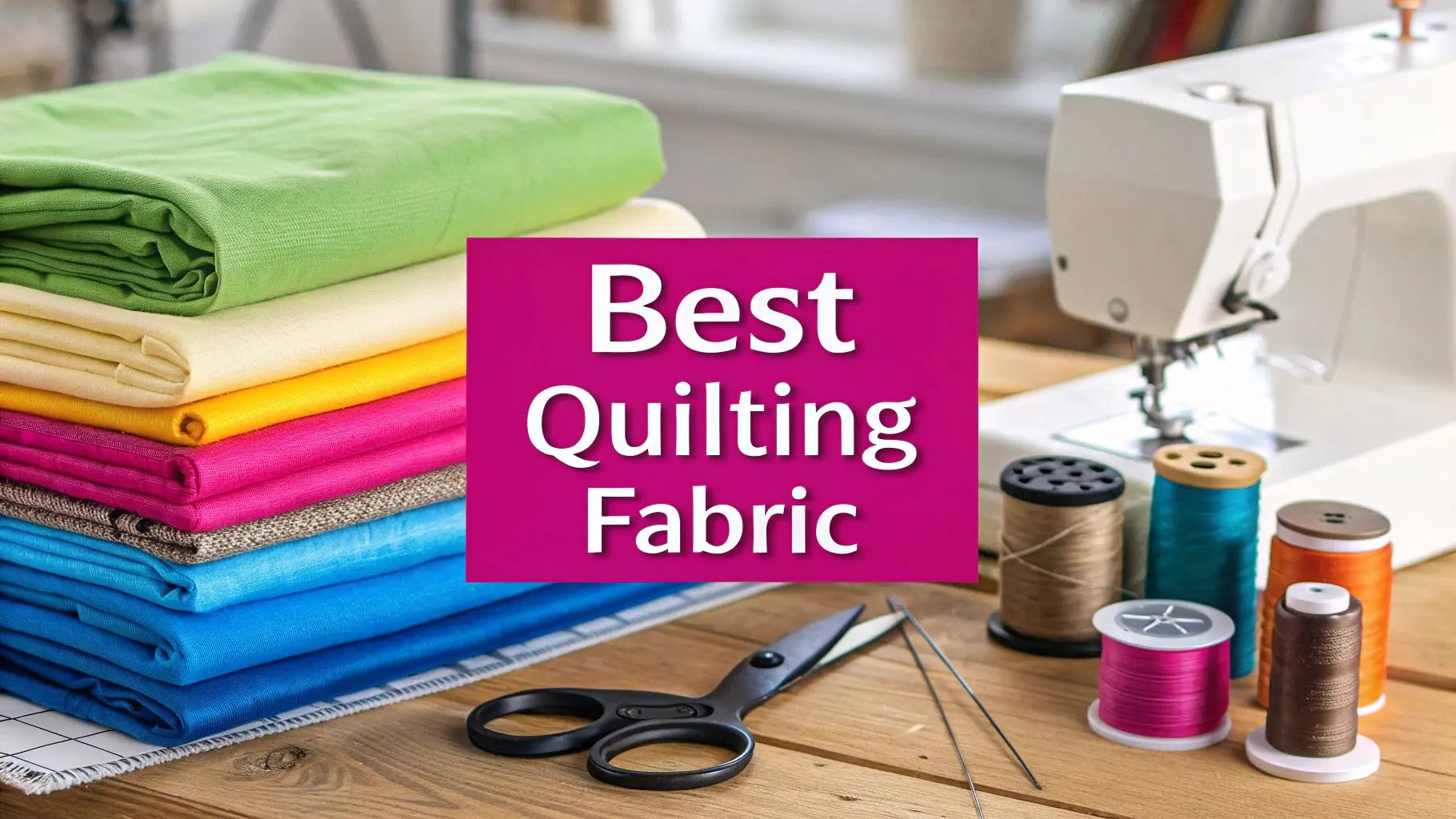
If you ask any seasoned quilter what the best fabric for quilting is, you'll hear the same answer time and time again: 100% quilting cotton. It's the tried-and-true workhorse of the quilting world for a reason. Its stability, gorgeous print quality, and how easy it is to work with make it the undisputed champion for beginners and pros alike. For any quilting project you have in mind, starting with the right materials is the first step to success.
Why Quilting Cotton Is the Gold Standard
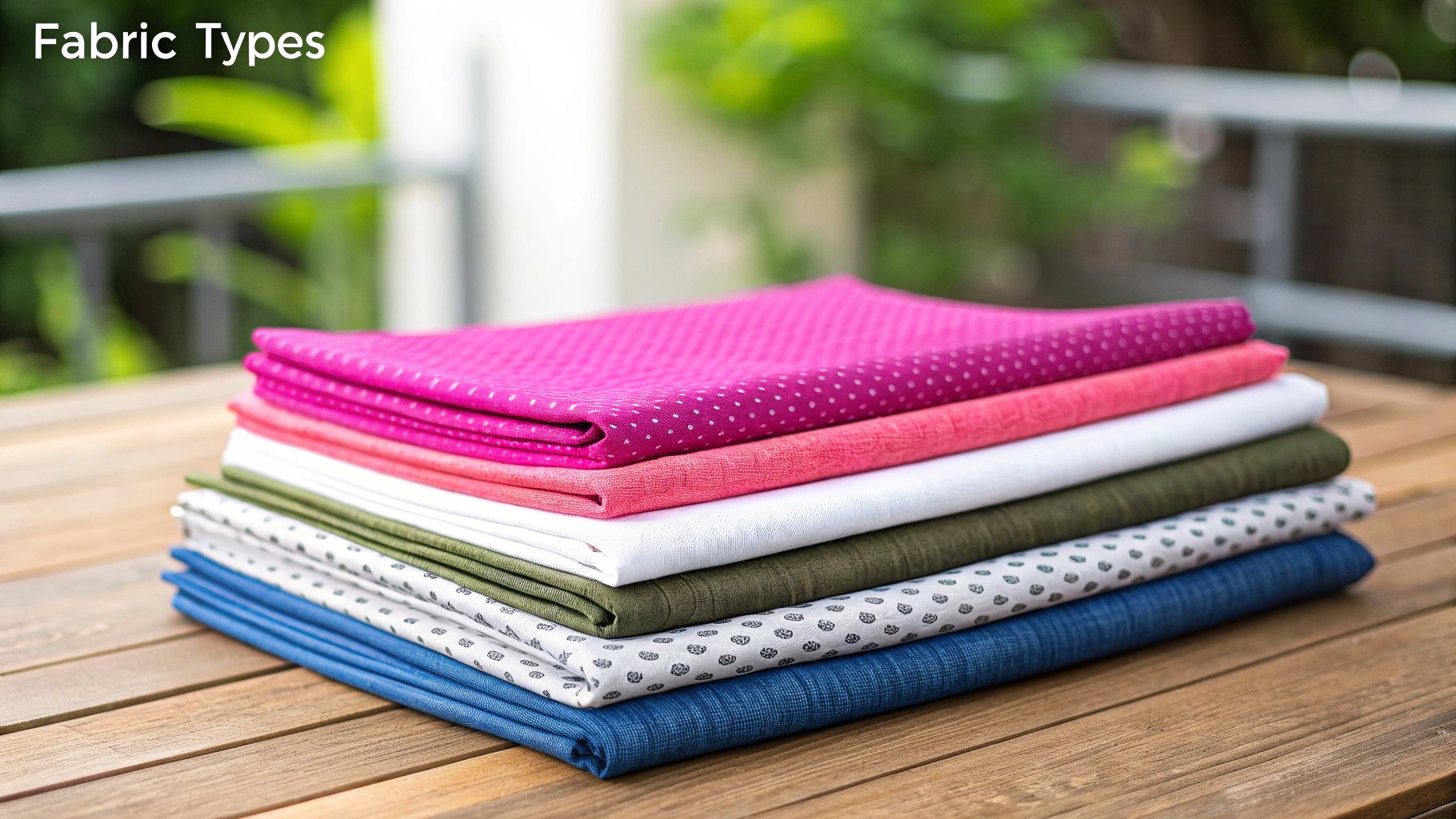
Think about building a house. You wouldn't pour a foundation made of sand, right? Of course not. The same logic applies to your quilt. The fabric is the very foundation of your project, and a high-quality quilting cotton gives you the strongest, most reliable base to build your masterpiece on. It’s the go-to because it’s forgiving when you're just starting out and performs flawlessly for even the most experienced quilters.
This isn't just a friendly opinion—it's backed by a massive global industry. The market for cotton quilting fabric was valued at a staggering USD 5.6 billion in 2023 and is only expected to keep growing. That number alone shows just how much quilters everywhere rely on this fabric. You can dive deeper into these market trends over at Archive Market Research.
The Defining Traits of Quilter's Cotton
So what's the big deal? What actually makes this fabric so special? It boils down to a few key qualities that come together to make your life easier and your finished quilt last a lifetime.
- Tight, Even Weave: Quilter's cotton has a much higher thread count than your average cotton fabric. This dense, sturdy weave is a game-changer—it minimizes fraying, helps you cut with razor-sharp precision, and keeps your seams strong and stable.
- Minimal Stretch: Unlike fabrics meant for clothing that need to drape and move, quilting cotton is wonderfully stable. It holds its shape perfectly when you cut and sew, which is absolutely critical for getting those points to match up and creating crisp, accurate quilt blocks.
- Excellent Pressing Quality: This fabric takes a press like a dream. When you press your seams with a hot iron, they stay put. No fuss, no curling—just flat, neat seams that give your quilt top that polished, professional look we all strive for.
Here's a classic beginner mistake: grabbing any old cotton bolt from the fabric store. But trust me, there's a world of difference between true "quilter's cotton" and standard apparel cotton. The latter is often thinner, has a looser weave, and is designed to stretch—a recipe for frustration, wonky blocks, and inaccurate piecing.
Starting with genuine quilter's cotton is like setting yourself up for success from the very first cut. It's a small investment in your project that pays off big time, both in the joy of the creative process and in the beautiful quilt you'll have at the end.
Ready to feel the difference for yourself? You can start your next project on the right foot by exploring the beautiful, high-quality quilting cottons right here at Lindas.com.
Getting to Know Your Quilting Cottons
Think of a painter deciding between oils, watercolors, or acrylics. Each medium creates a completely different effect, right? It’s the same for a quilter choosing cotton fabrics. Even though "100% quilting cotton" is our go-to, there’s a whole world of variety within that category. Learning the differences is what takes you from just following a pattern to becoming a true fabric artist.
Our community's passion for quilting isn't just a creative outlet; it's a huge economic engine. The demand for high-quality "quilter’s cotton"—with its perfect weight and weave for our craft—has totally shaped the fabric market. In fact, a survey of over 30,000 quilters found that our hobby generates nearly USD 5 billion in annual revenue. It’s amazing to see how big our community really is, and you can read more about these quilting market dynamics to get the full picture.
So, let's walk down the cotton aisle and meet the three main players: solids, prints, and batiks. Each one has its own personality and brings something special to a quilt.
Solids: The Modern Quilter's Canvas
Solid-colored quilting cottons are the real workhorses of our fabric stashes. They’re like a perfectly primed canvas waiting for an artist's touch. Their pure, uninterrupted color is the ideal stage for showing off detailed quilting stitches or for creating those bold, graphic designs we love in modern quilting.
In quilts that feature a lot of negative space or geometric patterns, solids are non-negotiable. They give your eyes a place to rest, which in turn makes those busier, more complex prints pop without overwhelming the design. A good quality solid feels crisp and has a nice weight to it, giving you a stable foundation for accurate piecing. It’s where the real structure of your quilt begins.
Project Tip: Never, ever underestimate the power of a good collection of solids. Keeping a rainbow of basics on hand—especially neutrals like white, cream, gray, and black—means you'll always have the perfect building blocks to make any new printed fabric collection sing. They are essential for finishing your projects.
Prints: The Storytellers of Fabric
If solids are the canvas, prints are the story. This is easily the most exciting section of any quilt shop! You’ll find bolts overflowing with everything from tiny florals and quirky novelty designs to stunning, large-scale geometric patterns. Prints are what inject personality and soul into a quilt.
You’ll encounter prints that are directional (they have a definite "up" and "down") and non-directional. Paying attention to this is crucial when you're cutting your fabric pieces. The scale of the print matters, too. Some are so tiny and subtle they almost look like a solid from far away (we often call these "blenders" or "tone-on-tones"), while others feature huge motifs that are begging to be fussy cut to showcase a specific part of the design.
- Blenders: These are your supporting actors. Their subtle, low-contrast patterns add a lovely texture and depth that helps tie everything together without stealing the show.
- Focus Prints: These are the stars! They’re the fabrics with the big, detailed, or colorful designs that set the whole theme and mood of your quilt.
- Novelty Prints: Got a story to tell? From cute little farm animals to festive holiday scenes, novelty prints are perfect for quilts with a specific, fun-loving narrative.
Batiks: The Hand-Crafted Beauties
Batiks are in a league of their own. They’re made using an incredible hands-on, wax-resist dyeing technique that leaves the fabric with a gorgeous, mottled look full of different tones. Because they’re made by hand, no two bolts are ever exactly the same, which gives every piece a unique, artisanal feel.
The process is fascinating: wax is applied to the fabric, it's dyed, and then the wax is removed. This can be repeated over and over with different colors to build up incredibly complex, layered designs. All that dyeing gives batiks a slightly tighter weave and a stiffer hand than your standard quilting cotton.
So, what makes quilters go crazy for batiks?
- Incredible Texture: The subtle shifts in color create so much depth and movement across a quilt top.
- Hides Imperfections: That mottled look is a lifesaver for hiding quilting stitches, which is a huge confidence booster when you're learning free-motion quilting.
- No "Wrong" Side: The dye penetrates the fabric so thoroughly that batiks are essentially reversible. Super handy!
Whether you love the clean, modern look of a solid, the storytelling magic of a print, or the rich, organic feel of a batik, knowing how they work will make you a more confident quilter. You'll be able to mix and match them to create a quilt that is 100% you.
Ready to start building your own fabric library? You can find a gorgeous selection of cotton solids, prints, and batiks right here at Linda's Electric Quilters to kick off your next masterpiece.
How to Identify High-Quality Quilting Fabric
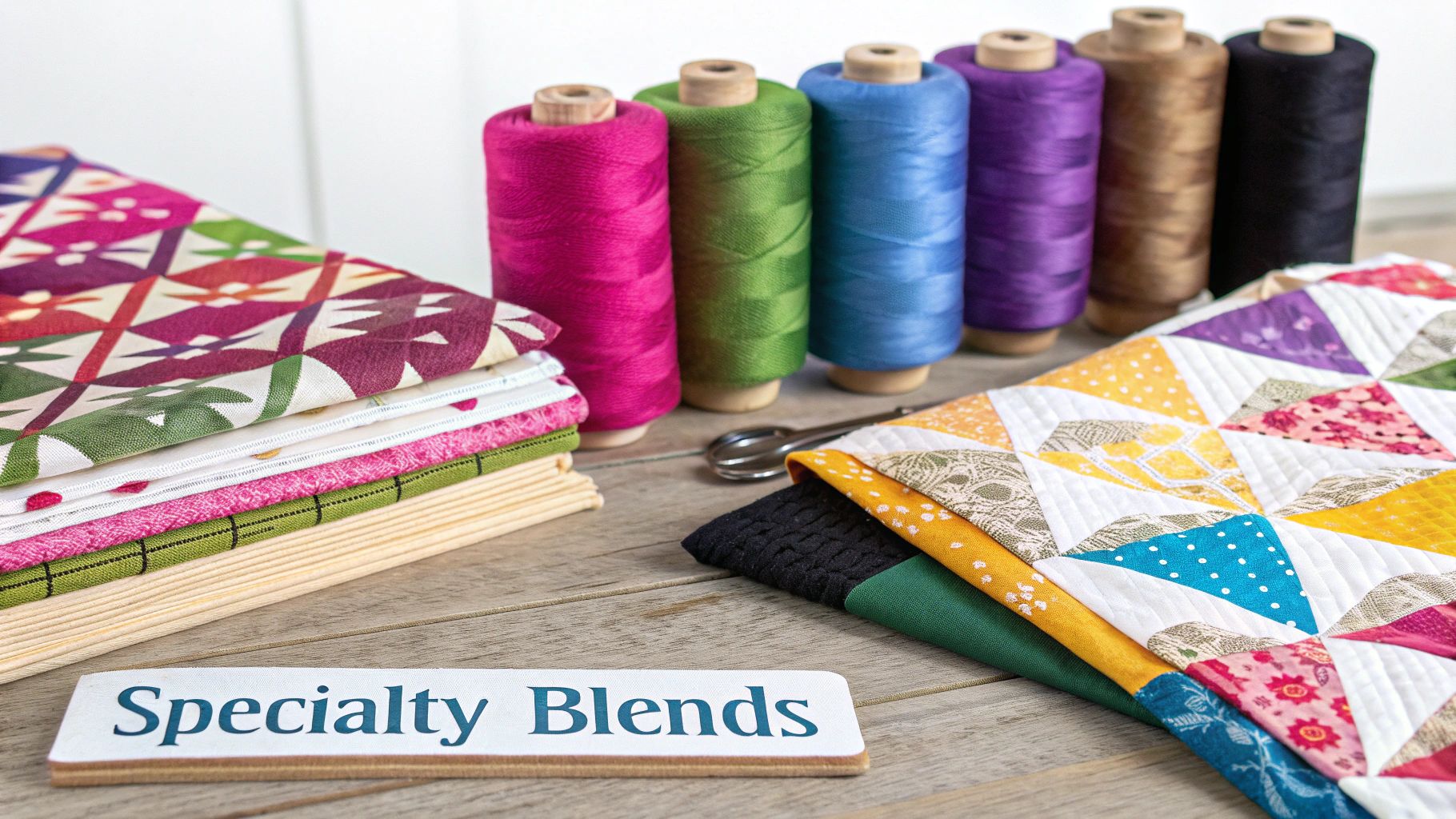
Let's talk about the single most important investment you’ll make in any quilt: your fabric. You're about to pour hours of love and careful work into cutting, piecing, and quilting. The quality of your fabric is what decides if that work lasts for generations or falls apart after the first wash.
To make sure your quilt becomes a treasured heirloom, you need to become a bit of a fabric detective. This isn't about memorizing technical jargon; it's about training your hands and eyes to know what to look and feel for. It’s a skill that will give you the confidence to walk into any fabric store and separate the premium bolts from the flimsy stuff that can ruin a project.
Understanding Fabric Weave and Grain
Think of the weave like the grain in a piece of wood—it’s the underlying structure that gives the material its strength and stability. High-quality quilting cotton has a tight, even weave where the threads are packed together like a close-knit family.
This tight construction is your best friend. It stops the fabric from stretching and distorting as you work, which is absolutely critical for getting those perfectly matched points and sharp, accurate blocks. A loose, flimsy weave is just a recipe for frustration, leading to frayed edges and wonky seams.
The grainline is simply the direction of the threads.
- Lengthwise Grain: This runs parallel to the selvage (the finished edges) and has almost no stretch. It's the backbone of your fabric.
- Crosswise Grain: This runs from selvage to selvage. It has a little bit of give to it.
- Bias: This is the 45-degree angle to the grain, and it's where the fabric has the most stretch. It’s a lifesaver for binding curves but a troublemaker for piecing.
Just like a carpenter cuts with the grain of the wood for strength, a quilter has to respect the fabric grain. Cutting along the lengthwise or crosswise grain ensures your pieces hold their shape, giving your quilt structural integrity from the very first cut.
Hands-On Tests to Spot Quality Fabric
You don’t need any fancy equipment to find the best fabric for quilting. Your own senses are the best tools you have. The next time you're browsing the aisles, try these simple, time-tested tricks.
The Light Test
This is one of the easiest and most revealing tests. Unfurl a single layer of fabric and hold it up to a light source.
- High-Quality Fabric: You’ll see very little light shining through. The weave will look dense and solid, almost like a sheet of paper.
- Low-Quality Fabric: It’ll look more like a sieve. You'll see a lot of light and noticeable gaps between the threads. That’s a sign of a low thread count, and it’s a guarantee of fraying and warping.
The Feel Test
How a fabric feels—what we quilters call its "hand"—tells you a huge part of the story. Unroll a bit from the bolt and really feel it. It should feel substantial, smooth, and crisp. It shouldn't feel thin, coarse, or limp. Good quilting cotton has a satisfying weight and a smooth surface that you just know will press beautifully.
The Dye Quality Check
Take a close look at the print and color. The colors should be rich and vibrant, with sharp, clean lines on any printed designs. Now, flip it over. On high-quality prints, the dye penetrates deeply, so the back will look almost as colorful as the front. If the back is pale or washed out, the dye job is superficial and will likely fade or bleed in the wash.
Learning these simple checks protects your most valuable asset: your time. Investing in top-tier materials is the first step toward a beautiful, long-lasting quilt you can be proud of. For projects that deserve nothing but the best, you can always count on the premium quilting fabrics at Linda's Electric Quilters to provide the perfect foundation.
Venturing Beyond Cotton with Specialty Fabrics
While high-quality quilting cotton is the undisputed champ for its reliability and easy handling, every quilter eventually gets that itch. You know the one—the desire to try something new, to add a different texture or feel to a project.
Stepping outside the world of cotton is like a chef finally exploring the full spice rack. It opens up a universe of creative possibilities, letting you add unique depth, drape, and personality to your quilts. These fabrics can turn a simple pattern into a tactile masterpiece.
From the snuggly warmth of flannel to the rustic charm of linen, each material brings its own unique character to the cutting mat. Having a basic understanding of diverse apparel fabric materials like cotton, polyester, and various blends can give you a real leg up as you explore.
Cozy and Warm Flannel
For most quilters, flannel is the first specialty fabric they try out, and for good reason. It’s a loosely woven cotton that has been brushed to create that soft, fuzzy surface we all love (that’s called the “nap”). It’s unbelievably warm and absolutely perfect for making quilts you just want to curl up in.
Of course, that cozy softness comes with a few quirks. Flannel is notorious for fraying and stretching more than standard quilting cotton. It also loves to shrink, so pre-washing is non-negotiable.
- Project Idea: Snuggly lap quilts, baby blankets, and warm bedding for those chilly months.
- Pro Tip: Bump up your seam allowance to a generous 3/8 inch. This gives your seams extra stability and helps fight the fraying. A walking foot will also become your best friend, preventing the flannel layers from shifting around while you quilt.
Rustic and Textured Cotton-Linen Blends
If you're aiming for a quilt with a more sophisticated, heirloom vibe, a cotton-linen blend is a fantastic choice. This fabric marries the softness of cotton with the crisp texture and gorgeous drape of linen. The result is a material with a lovely, slightly rustic feel that just gets softer and more beautiful with every wash.
The biggest thing to watch for with linen blends is their tendency to wrinkle. A hot, steamy iron is a must, and many quilters swear by using starch to give the fabric a bit more body while piecing. Just like flannel, these blends can also fray, so handle them with a little extra care.
This quick infographic gives a great visual on how thread count, a key factor in any fabric, impacts its final feel and durability.

As you can see, there's a trade-off between the rugged durability you get with lower thread counts and the incredible softness of higher ones. It’s all about matching the material to your project's needs.
Lightweight and Breezy Cotton Lawn
Ever wanted a quilt that feels as light as a summer breeze? That’s cotton lawn. It's a finely woven, high-thread-count cotton that's incredibly soft, smooth, and lightweight. With its silky feel and subtle sheen, it’s perfect for creating delicate and decorative quilts.
Because it’s so fine, you’ll want to adjust your tools. A smaller needle, like a 70/10, and a finer thread (think 50wt or 60wt) are key. Otherwise, a standard thread can look clunky and overpower the delicate fabric. It can also be a bit slippery, so pin carefully to keep your seams accurate!
A Closer Look at Specialty Fabrics
Deciding when to use these unique fabrics can be tricky. Sometimes, seeing the pros and cons laid out side-by-side makes all the difference. This table breaks down the key characteristics of our favorite specialty fabrics to help you choose the right one for your next masterpiece.
Specialty Quilting Fabric Comparison
| Fabric Type | Project Ideas | Pros | Cons & Handling Tips |
|---|---|---|---|
| Flannel | Cozy quilts, baby items | Incredibly soft, warm, forgiving texture | Prone to fraying and shrinking. Pre-wash is a must. Use a 3/8" seam allowance and a walking foot. |
| Cotton-Linen | Heirloom quilts, home decor | Beautiful drape, sophisticated texture, softens over time | Wrinkles easily and can fray. Press with steam and consider using starch. |
| Cotton Lawn | Lightweight & decorative quilts | Silky smooth, lightweight, drapes beautifully | Can be slippery, requires a smaller needle (70/10) and finer thread. Pin carefully. |
| Rayon | Art quilts, wall hangings | Unmatched drape, vibrant color saturation, luxurious feel | Very slippery and prone to stretching. Not for heavy-use quilts. Use a new needle and starch heavily. |
Diving into these materials is a fantastic way to stretch your skills and add new life to your quilting projects. Each one presents a fun little challenge, but the beautiful results are always worth it.
Getting Your Fabric Ready for Quilting
A jaw-dropping quilt doesn't just happen. The real magic begins long before you even think about your rotary cutter, in the simple but critical steps of fabric preparation. Get this part right, and you're laying the foundation for a flawless quilt where your colors pop, your points match, and your finished project looks just as good as you pictured it.
One of the longest-running arguments in quilting is whether or not to pre-wash your fabric. You'll find die-hard fans on both sides of the fence, and honestly, they both have good reasons. The "right" choice really comes down to what you want your finished quilt to feel like.
The Great Pre-Washing Debate
So, do you wash or not? The decision you make here will completely change the final texture and look of your quilt. Let's break down the pros and cons so you can choose with confidence.
Reasons to Pre-Wash Your Fabric:
- Stop Shrinkage in its Tracks: Pretty much all cotton fabric shrinks a little in the wash. By pre-washing, you get that shrinkage out of the way before you cut your pieces. This means your finished quilt won’t pucker or get distorted after its first trip through the laundry.
- Prevent Color Bleeding: Those gorgeous, saturated colors—especially reds and deep blues—are notorious for bleeding excess dye. Washing them first stops them from running onto your lighter fabrics and turning your masterpiece into a mess.
- Wash Away the Gunk: Fabric comes from the factory treated with chemicals and sizing agents. Pre-washing gets rid of all that, leaving you with soft, chemical-free material that’s a joy to work with.
But hold on—there's another side to this story. Some quilters deliberately skip pre-washing to get that classic, crinkly vintage vibe. When you wash a finished quilt made from unwashed fabric for the first time, the slight shrinkage of the cotton and batting creates that cozy, well-loved heirloom feel. It’s all about the texture!
The Right Way to Prep Your Fabric
If you've decided to join Team Pre-Wash, a few simple steps will get your fabric perfectly prepped. Just remember to be gentle!
- Wash on Delicate: Use a delicate cycle with cool water and a gentle, color-safe detergent. To keep your fabric from fraying into a tangled mess, you can serge the raw edges or just snip a little triangle off each corner before tossing it in.
- Dry with Care: Tumble dry on a low heat setting. The key is to pull the fabric out while it’s still just a little damp. If you let it dry completely, you’ll be fighting stubborn wrinkles that are a nightmare to iron out.
- Press, Press, Press: A good, hot iron is your best friend. Press your slightly damp fabric with plenty of steam until it’s perfectly smooth and dry. This step is absolutely non-negotiable for getting accurate cuts.
The Secret Weapon: Starch
Want to take your precision to the next level? Say hello to starch. Treating your fabric with starch (or a starch alternative) is a total game-changer. It makes your flimsy cotton feel more like crisp paper, giving it stability for incredibly accurate cutting and sewing.
Think about it: starched fabric doesn’t shift, stretch, or warp when you’re trying to cut it. It sits still and behaves perfectly, which means your cuts are razor-sharp and your seams lie beautifully flat. This little extra step can truly be the difference between a quilt block that’s "good enough" and one that’s absolutely perfect.
Mastering these prep steps is one of the biggest skills you can build as a quilter. It ensures the beautiful, high-quality fabric you spent your money on can really shine. To stock up on everything you need for perfect fabric prep, from fantastic irons to the best starch sprays, check out the amazing notions at Linda’s Electric Quilters.
Your Next Project Starts with the Perfect Fabric
You can now walk into any fabric store or browse online with the confidence of a seasoned quilter. We've journeyed through the world of quilting textiles together, and hopefully, you can see why 100% quilting cotton is the go-to for so many, especially when you're starting out. But you also know it’s just the beginning—there's a whole playground of fabrics waiting for you.
You're now ready to spot the difference between a high-quality tight weave and a fabric that just won't play nice. From the classic feel of premium cottons to the soft, welcoming touch of flannel, you have the knowledge to pick the right material for your vision. The theory is behind us. Now it’s time to get your rotary cutter and start making something beautiful.
Let Your Creativity Guide You
Every quilt has a story to tell, and you're holding the pen. When it comes down to it, the number one rule is simple: pick the ones you absolutely love. Let the prints, colors, and textures speak to you. They are the start of the masterpiece only you can bring to life.
Don't ever be afraid to experiment, mix and match different lines, or just trust your gut. Your passion is what will see you through to that final stitch.
The heart of quilting isn't just about perfect points; it's about the joy of creation. Choosing fabrics that excite you will make every moment of the process, from the first cut to the final stitch, a rewarding experience.
Ready to start your next adventure? Head over and explore the huge collection of premium quilting fabrics, batting, and patterns at Linda's Electric Quilters. We have everything you need to bring your vision to life.
Frequently Asked Questions About Quilting Fabric
https://www.youtube.com/embed/-TyihOEvJ8E
Even with years of experience, we all run into questions when starting a new project. Getting to know your fabrics is a journey, so let’s tackle some of the most common questions that pop up in quilt guilds and online forums.
Can I Use Bed Sheets for My Quilt Backing?
You sure can! Using a high-quality, 100% cotton bed sheet for your quilt back is a classic money-saving hack. It’s a fantastic way to get a huge piece of fabric without having to piece a backing together.
Back in the day, hand quilters would sometimes grumble about the high thread count making it tough to get a needle through, but that's rarely a problem with modern machine quilting.
One little tip: if you're sending your quilt to a longarmer, just give them a quick call first. Some prefer traditional backing fabric because of the tighter weave on sheets, but plenty are perfectly happy to work with them.
What Is the Difference Between Quilting Cotton and Regular Apparel Cotton?
This is a great question, and the answer comes down to thread count, weave, and quality. Think of quilting cotton as a high-performance material engineered specifically for our craft. It has a higher thread count and a tight, even weave that gives it stability. This means it doesn't stretch much and holds a press like a dream—both are absolutely critical for getting those perfect, sharp points.
Apparel fabrics like poplin or chambray, on the other hand, are designed for drape and comfort against the skin. They usually have a looser weave and more give, which can be a real headache when you need the kind of precision that quilting demands.
Should I Always Pre-Wash My Quilting Fabric?
Ah, the great pre-washing debate! For beginners, I highly recommend it. No question.
Here’s why it’s a good idea:
- It pre-shrinks the fabric. This stops your beautiful, flat quilt top from turning into a puckered mess after its first trip through the laundry.
- It removes excess dyes. Reds, deep blues, and blacks are notorious for bleeding. Pre-washing gets rid of that extra dye before it has a chance to ruin your lighter-colored fabrics.
Now, some seasoned quilters love the crinkly, vintage look that happens when you wash a quilt for the first time without pre-washing. If you decide to go that route, just be sure to toss a color catcher sheet in the wash to save yourself from potential heartbreak.
Hopefully, that clears a few things up! Now you're ready to pick your fabrics with total confidence and start that next masterpiece. Here at Linda's Electric Quilters, we've got an amazing selection of premium quilting cottons, specialty fabrics, and every notion you could ever need.
Explore our full collection of quilting fabrics at Lindas.com today!