When you set out to create a quilt, the very first choice you make—the fabric—is arguably the most important. It dictates the look, the feel, and even how long your masterpiece will last. So, what is the best material for quilts? For most quilters, especially if you're just starting a new project, high-quality quilting cotton is the hands-down winner. It's breathable, surprisingly durable, and a dream to work with.
Your Quick Guide to the Best Quilt Materials
Before we get into the nitty-gritty of each fabric type, let's take a quick look at the main players. This will give you a good starting point for figuring out which material fits your project's vibe and purpose before we dive deeper into making your vision a reality.
There’s a reason cotton is the king of the quilting world. It's soft, reliable, and Linda's offers an endless sea of colors and prints to bring any project to life. While beautiful quilts are also made from linen, flannel, and even silk, cotton’s consistency and ease of use keep it at the top of the list for quilters everywhere.
A great quilt starts with two things: a creative vision and the right materials. Understanding your fabric options ensures your final project looks and feels exactly as you imagined.
Of course, the perfect fabric deserves the right thread. Your thread choice is just as critical as the cloth itself, as it holds everything together. If you need a little help matching the right thread to your fabric's weight for your project, check out our comprehensive sewing thread size guide.
Comparing Popular Quilt Materials at a Glance
This little table is your cheat sheet for the most common quilt fabrics. Use it for a quick snapshot of their best features to help you make a fast, informed decision for your next project. Linda's carries a fantastic selection of all these fabrics, ready to help you finish your project!
| Material | Best For | Feel and Texture | Sewing Difficulty |
|---|---|---|---|
| Cotton | All-purpose quilting, beginners | Soft, crisp, smooth | Easy |
| Flannel | Cozy winter quilts, baby blankets | Very soft, fuzzy, warm | Easy to Moderate |
| Silk | Heirloom quilts, decorative throws | Smooth, lustrous, delicate | Difficult |
| Linen | Summer quilts, modern designs | Crisp, textured, breathable | Moderate |
Each one has its own personality, and picking the right one is the first step to creating a quilt you’ll love for years to come.
Comparing Top Quilt Fabrics in Detail
Alright, let's move past the basics and really get into the nitty-gritty of what makes each quilting fabric tick. We're going to break down the most popular choices based on the stuff that actually matters for your projects: durability, breathability, how easy it is to work with, and the final feel. Getting these nuances right is how you go from a good quilt to a great one, and it all starts with picking the perfect material from Linda's collection.
We'll look at why some fabrics are the undisputed champions of the quilting world, and why others are best saved for those extra-special projects. My goal here is to lay out all the trade-offs, so you can confidently match the right fabric to your vision and start creating.
Quilting Cotton: The All-Around Champion
There's a good reason quilting cotton is everyone's go-to for their next project. Its stable, tight weave is an absolute dream for precise piecing. This fabric holds a crisp press beautifully, doesn't stretch out of shape, and frays very little, making it a fantastic and forgiving choice for quilters at every skill level.
That reliable structure is what allows you to get those perfect points and sharp, intricate block designs. Plus, it's tough enough to handle machine washing over and over, which is a non-negotiable for quilts that get a lot of love, like bedspreads or baby blankets. Being so breathable, it’s comfortable all year long. Honestly, you can't go wrong starting your project with a high-quality quilting cotton from our shop.
Flannel: The Ultimate in Coziness
When your main goal is creating something warm and ridiculously soft, flannel is your answer. It's made from brushed cotton, and that fuzzy surface, known as the nap, is a master at trapping air. This provides incredible insulation, making it the hands-down best choice for quilts meant to fend off those cold winter nights.
But that signature coziness comes with a few strings attached. Flannel is notorious for shrinking, so pre-washing is an absolute must. Skip this step, and you risk a puckered, distorted quilt after its first wash. It also kicks up a lot more lint than standard cotton, so be ready to give your sewing machine a little extra cleaning love as you work. When you're ready to start your cozy project, find the perfect flannel at Linda's.
Key Differentiator: The choice between cotton and flannel really boils down to crispness versus coziness. Cotton gives you those precise, sharp seam lines perfect for complex patterns, while flannel offers a soft, blended look that’s ideal for simpler, comforting quilts.
Silk: A Rewarding Luxury Challenge
For a show-stopping heirloom or a purely decorative quilt, nothing beats the elegance of silk. Its natural sheen plays with the light in a way no other fabric can, and it has a fluid, graceful drape that feels incredible. It's also surprisingly strong and a natural temperature regulator, which means it feels cool in the summer and warm in the winter.
Now for the challenge: silk is slippery. It can be a real pain to cut accurately, and it loves to shift around while you're sewing. To keep it in line, many seasoned quilters turn to a stabilizer. A little pro-tip: if you want to give your silk project more body and stop it from stretching, learning how to use fusible interfacing will be a total game-changer. It takes more patience, but the breathtaking, luxurious result is worth every bit of the effort.
Blends and Other Noteworthy Fabrics
While cotton, flannel, and silk are the big three, the world of quilting fabrics is huge! Linen blends, for example, can give a quilt a modern, textured look and are wonderfully breathable, though they do wrinkle easily.
To get a better sense of how different fibers perform, it can be really helpful to look at the different types of fabric materials used in upholstery, since many of the same principles about durability and wear apply. From rugged denim to soft corduroy, creative quilters have used just about everything to make unique works of art. Let Linda's be your one-stop shop for all the materials your next creative project demands.
Matching Fabric to Your Quilting Project
Picking the right material for a quilt goes way beyond just finding a pattern you love. It's really about matching the fabric's personality to the quilt's future. The purpose of your quilt is your ultimate guide, telling you whether you need something tough and washable or something a bit more delicate and decorative. Making the right call from the start ensures your finished quilt isn't just a beauty, but that it's perfectly suited for its intended life.
So, let's think about the project in front of you. Are you stitching together a quilt for a new baby? You’ll want something incredibly soft, breathable, and—this is the big one—durable enough to handle countless trips through the laundry. A high-quality quilting cotton is a fantastic choice here, and a soft flannel is perfect for adding that extra layer of cozy.
This handy little decision tree can help you see which path to take depending on what you're aiming for, whether it’s pure comfort, sheer elegance, or just an easy-breezy sewing experience.
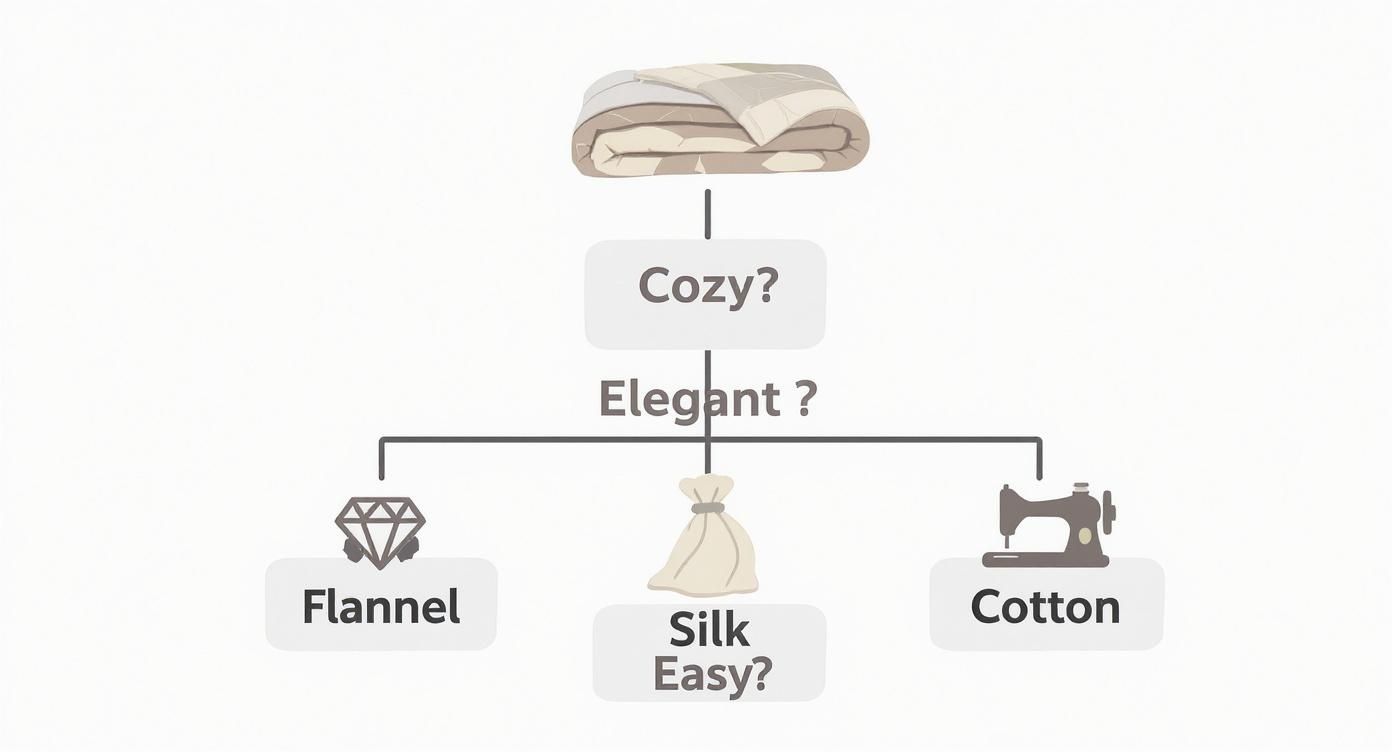
The chart really simplifies things by connecting your project's main goal—like getting maximum coziness or having an easy time at the sewing machine—directly to the best fabric for the job.
For Everyday Use and Frequent Washing
Quilts destined for the daily grind on a bed or couch need fabrics that can take a beating. This is where 100% quilting cotton is the undisputed champion. Its tight weave and strong fibers hold up beautifully against the wear and tear of daily use and the tumbling of a washing machine.
For a child's quilt or a go-to lap blanket, keep these things in mind:
- Durability: Look for a fabric with a high thread count. It’ll be much more resistant to pilling and fading over time.
- Washability: Always, always pre-wash your fabric! It’s the key to preventing shrinkage and nasty color bleeds later on.
- Softness: The fabric should feel great against the skin right away, but the best ones just get softer with every wash.
A quilt made for daily snuggles is a long-term investment in comfort. Opting for a resilient fabric like the quilting cottons available at Linda's ensures it will be loved for years, not just seasons.
For Warmth and Cold Weather Comfort
When your main goal is to create a quilt that’s a fortress against the cold, your fabric choice needs to change gears. You're looking for materials that are experts at trapping heat.
Flannel is an obvious front-runner. Its brushed surface creates tiny air pockets that hold warmth incredibly well. A flannel quilt is basically a wearable hug on a chilly night. Wool is another fantastic, though more advanced, option known for its amazing insulating powers—even when it gets a little damp. It’s a classic choice for those heavy-duty, heirloom-quality winter quilts meant to provide serious warmth. Get started on your cozy creation by shopping our selection of premium flannels and wools.
For Decorative and Heirloom Pieces
Let's be honest, not every quilt is made for cuddling. Some are destined to be art—wall hangings, decorative throws, and heirloom pieces that prioritize visual punch over ruggedness. For these special projects, you can really dive into more luxurious and delicate materials.
Silk brings a shine and an elegant drape that nothing else can match, turning any quilt into a masterpiece. Yes, it needs more careful handling and cleaning, but that stunning finish is perfect for a piece that will be admired from afar. In the same vein, linen blends can give you a sophisticated, modern texture that looks incredible in decorative quilts where you aren't worried about constant washing. Planning a really intricate design for one of these special pieces? Our guide on how to calculate fabric yardage will help you get exactly what you need.
Exploring Luxury and Sustainable Quilt Fabrics
https://www.youtube.com/embed/blloULJmajw
While cotton and flannel are the trusted workhorses of the quilting world, there's a whole universe of specialty fabrics that can take your project from beautiful to truly breathtaking. Venturing into luxury and sustainable options is a fantastic way to elevate your craft, whether you're stitching a once-in-a-lifetime heirloom or a quilt that reflects your eco-conscious values.
Sure, these premium materials might ask for a bit more care and expertise, but the final result is always worth it. The unmatched sheen of silk or the earthy, lived-in texture of linen can bring a whole new dimension of artistry to your work. Here at Linda's, we're excited to offer a curated selection of these exquisite fabrics for quilters ready to embrace a new challenge and finish their project.
The Allure of Luxury Quilt Materials
When you hear "luxury," your mind probably jumps straight to silk. It's easy to see why. Its incredible softness, luminous sheen, and graceful drape are second to none. Silk is also a natural temperature regulator, keeping you comfortable in any season, making it a perfect choice for an heirloom quilt that's as functional as it is stunning.
Digging into the world of luxury fabrics, like beautiful mulberry silk fabrics, really opens your eyes to their unique qualities. Though you see it less often than cotton, silk is actually the fastest-growing material among high-end quilts. Fueled by rising disposable incomes, the silk quilt market is projected to grow at a compound annual growth rate of 7.0% from 2025 to 2034, which is even faster than the overall market.
Silk is a rewarding challenge for the experienced quilter. Its slippery nature demands patience and precision, but the elegant finish and timeless appeal make it a perfect choice for a truly special project.
Embracing Sustainable and Eco-Friendly Fabrics
For many of us, sustainability has become a huge part of how we approach our hobbies. Choosing eco-friendly fabrics is a powerful way to make your passion for quilting a little kinder to the planet. These materials bring their own unique textures and fantastic performance to the table, all while minimizing their environmental footprint.
Here are a few of my favorite sustainable options for your next project:
- Organic Cotton: Grown without any synthetic pesticides or fertilizers, organic cotton feels softer and is more breathable than conventional cotton. It's an absolute dream for anyone with sensitive skin.
- Bamboo: Known for its silky softness and natural antibacterial properties, bamboo fabric drapes beautifully and is surprisingly absorbent.
- Linen: Made from the flax plant, linen is exceptionally strong, breathable, and just gets softer and softer with every wash. That rustic, textured look is perfect for modern quilt designs.
Choosing sustainable materials is a wonderful way to blend your love for quilting with a commitment to the environment. If you're looking for more inspiration, you might enjoy our guide on embracing eco-friendly hobbies. Each of these fabrics adds its own unique character to a project, proving you never have to sacrifice quality to quilt sustainably.
Choosing the Right Batting and Backing
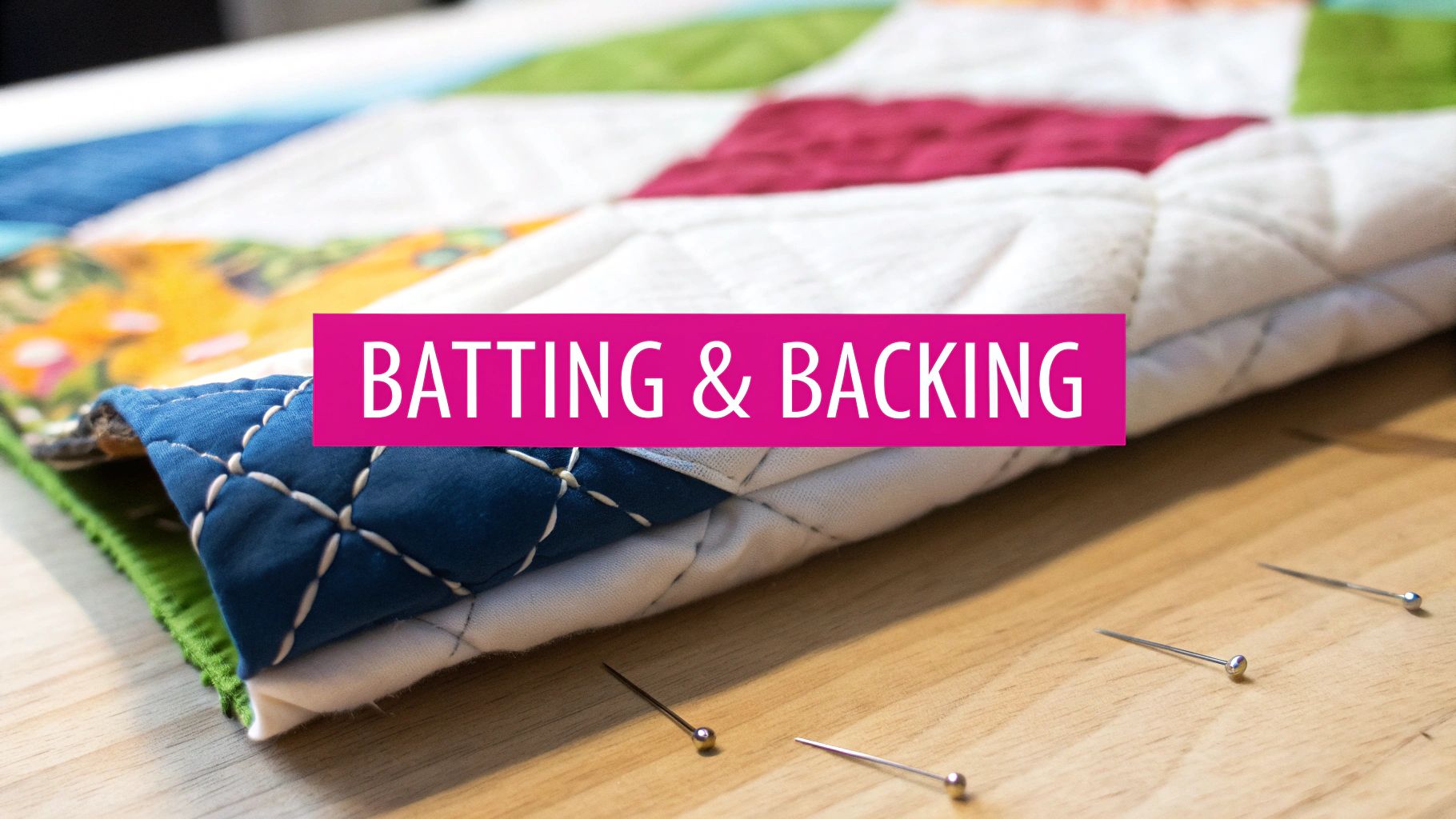
So, you've pieced together a beautiful quilt top. That's a huge accomplishment, but the journey isn't over yet! The real magic comes from what's inside and what's on the back—the batting and backing. These layers are what will give your quilt its final weight, warmth, and personality.
Think of the middle layer, the batting, as the heart and soul of your quilt. It's the powerhouse that determines everything from how warm it is to how it drapes. The batting you choose can create a flat, traditional look or a puffy, modern one. It’s what brings your creative vision to life. Find the perfect batting at Linda's to give your quilt the perfect finish.
Comparing Different Batting Types
Every type of batting brings something different to the table. Knowing the unique personality of each will help you pick the perfect one for your project. Let's walk through the most popular options we carry here at Linda’s.
-
Cotton Batting: This is a quilter's classic for a reason. It's wonderfully soft, breathable, and gives a quilt that beautiful, crinkly drape after washing. If you love the flat, timeless look of antique quilts, a thin cotton batting is your best friend.
-
Wool Batting: Looking for incredible warmth without the bulk? Wool is your answer. It's amazingly insulating but feels surprisingly light. Plus, it resists creases and creates a lovely loft that really makes your quilting stitches pop.
-
Polyester Batting: When you want a quilt with high loft that looks full and puffy, polyester is the way to go. It holds its shape beautifully, it's hypoallergenic, and it’s a great budget-friendly choice, especially for wall hangings or decorative pieces.
-
Blends: Cotton-poly blends are the versatile workhorses of the batting world. You get the best of both materials—the softness of cotton and the stability of polyester. This makes them a reliable, all-around choice for almost any project you can dream up.
Want to dive even deeper? Our comprehensive guide has a more detailed look at quilting and batting choices for the passionate quilter to help you choose with total confidence.
Selecting the Perfect Quilt Backing
Finally, we have the backing fabric—the grand finale! While extra-wide quilt backing fabric is fantastic (often up to 108 inches), you can absolutely use standard quilting cottons or even a high-quality cotton bedsheet. The main thing is to pick a fabric that complements the weight and care instructions of your quilt top.
A well-chosen backing is more than just a final layer; it's a frame for your work. It should be smooth, square, and at least four inches larger than your quilt top on all sides to allow for easy quilting on a machine.
Choosing a complementary color or a subtle print for your backing is a great way to make your quilting stitches shine on the other side. With the right fabric from Linda's, you'll get a professional finish that makes your quilt beautiful from every angle.
Answering Your Top Quilting Fabric Questions
When you're gearing up for a new project, a few questions always seem to pop up about picking the right fabric. Getting these sorted out from the start can save you a ton of headaches later and make sure the quilt you picture in your head is the one you end up with.
Let's dive into some of the questions we hear all the time from quilters.
Should I Pre-Wash My Quilting Fabric?
Absolutely, yes. Think of pre-washing as your quilt's first line of defense. It's an essential step for most quilting fabrics, especially cotton and flannel.
This quick wash-and-dry cycle gets rid of any chemicals left over from the manufacturing process. More importantly, it pre-shrinks the fabric so your finished quilt doesn't pucker after its first real wash. It's also a great way to test for color bleeding before you've invested hours of cutting and sewing.
What's the Real Difference Between Quilting Cotton and Regular Cotton?
It all comes down to quality and construction. Quilting cotton is engineered specifically for the demands of making a quilt.
It features a much higher thread count and is woven from longer, stronger cotton fibers than what you'd find in a typical apparel fabric like broadcloth. The result is a tighter, more stable weave that doesn't stretch or fray easily, which is exactly what you need for precise piecing.
Can I Mix Different Types of Fabric in One Quilt?
You can, but it's a bit like playing on expert mode. Mixing fabrics that behave differently—like a sturdy cotton with a slippery silk—can get tricky fast.
Different materials will shrink, stretch, and wear at their own pace, which can put stress on your seams and distort the quilt over time. If you're just starting out, we always recommend sticking to one type of fabric for the quilt top to get the most durable and predictable results.
It's also worth noting the growing interest in eco-friendly materials. We're seeing more and more quilters ask for sustainable options like organic cotton, bamboo, and even recycled fibers. Shoppers are often willing to pay 10–20% more for quilts made from certified sustainable materials, and some of our favorite brands have seen huge growth in these product lines. This shift shows that choosing a material is becoming as much about personal values as it is about performance. You can discover more insights about the quilt market on archivemarketresearch.com.
With those questions answered, you're all set to pick your fabrics with confidence. Here at Linda's Electric Quilters, we've got a fantastic selection of high-quality fabrics, batting, and notions to get your next project started. Come explore our collection and find everything you need to finish your project at https://lindas.com.