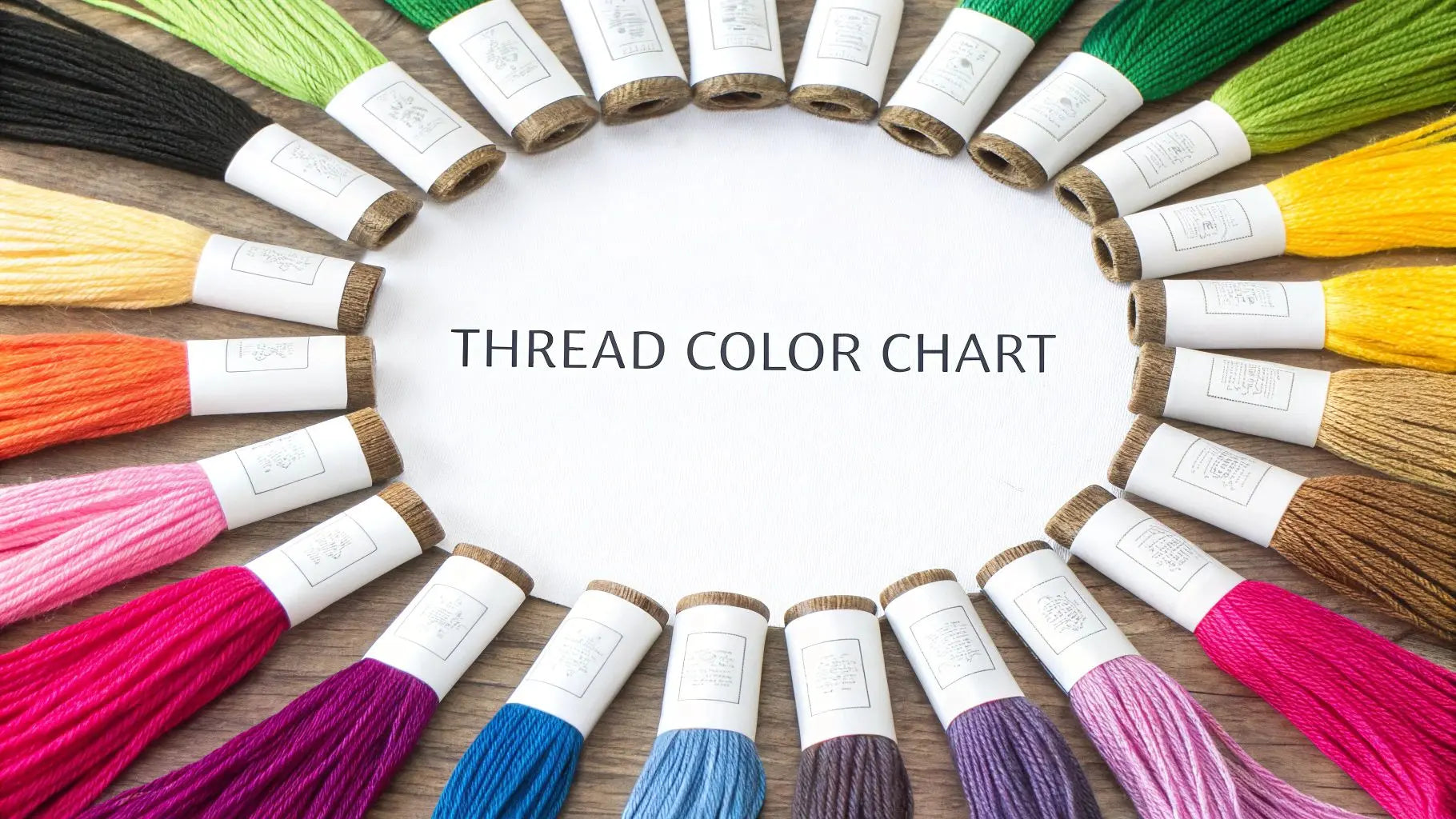
Think of an embroidery thread color chart as your project's secret weapon. It’s a complete map of a brand's entire color palette, with every single shade tagged with its own unique number. For any stitcher, this chart is the key to picking and matching colors perfectly, every single time. This guide will teach you how to master color selection for your next project, making thread conversion a breeze and ensuring your finished piece looks exactly as you imagined.
Your Essential Guide to Embroidery Thread Color Charts
Welcome! You've found the ultimate resource for every embroiderer, whether you're just starting out or have been stitching for years. An embroidery thread color chart is your roadmap to creating projects with stunning, accurate color. Without one, you're just guessing, which often leads to wasted thread and results that don't quite match what you envisioned.
We're going to break down how the big names—like DMC, Anchor, and Madeira—organize their color systems. Getting a handle on their methods is the first step to confidently swapping threads between brands. A good chart saves you time, cuts down on frustration, and seriously levels up the quality of your work.
Why Every Stitcher Needs a Color Chart for Their Projects
A reliable color chart is so much more than a pretty page of colors. It brings a system to your creative chaos and is an absolute must-have for your sewing kit. A chart is the foundational tool for planning and executing a flawless project.
Here’s exactly why you need one:
- Guarantees Color Accuracy: Let's be honest, the color on your computer screen almost never matches the real thing. A physical chart shows you the true-to-life shade, so there are no nasty surprises when you start stitching.
- Makes Project Planning a Snap: You can lay your threads out right against the chart to build a beautiful, harmonious color palette before you even make a single stitch, ensuring your project looks professional.
- Saves You Time and Money: Stop buying the wrong color—or worse, a shade you already own! A chart helps you keep track of your inventory so you can purchase only what you need to complete your design.
- Sparks Your Creativity: Seeing all the available colors laid out in front of you can inspire you to try combinations you'd never have thought of otherwise, opening up new possibilities for your next project.
A color chart turns your messy thread stash into an organized library of creative possibility. It’s the bridge between the vision in your head and the beautiful piece you stitch.
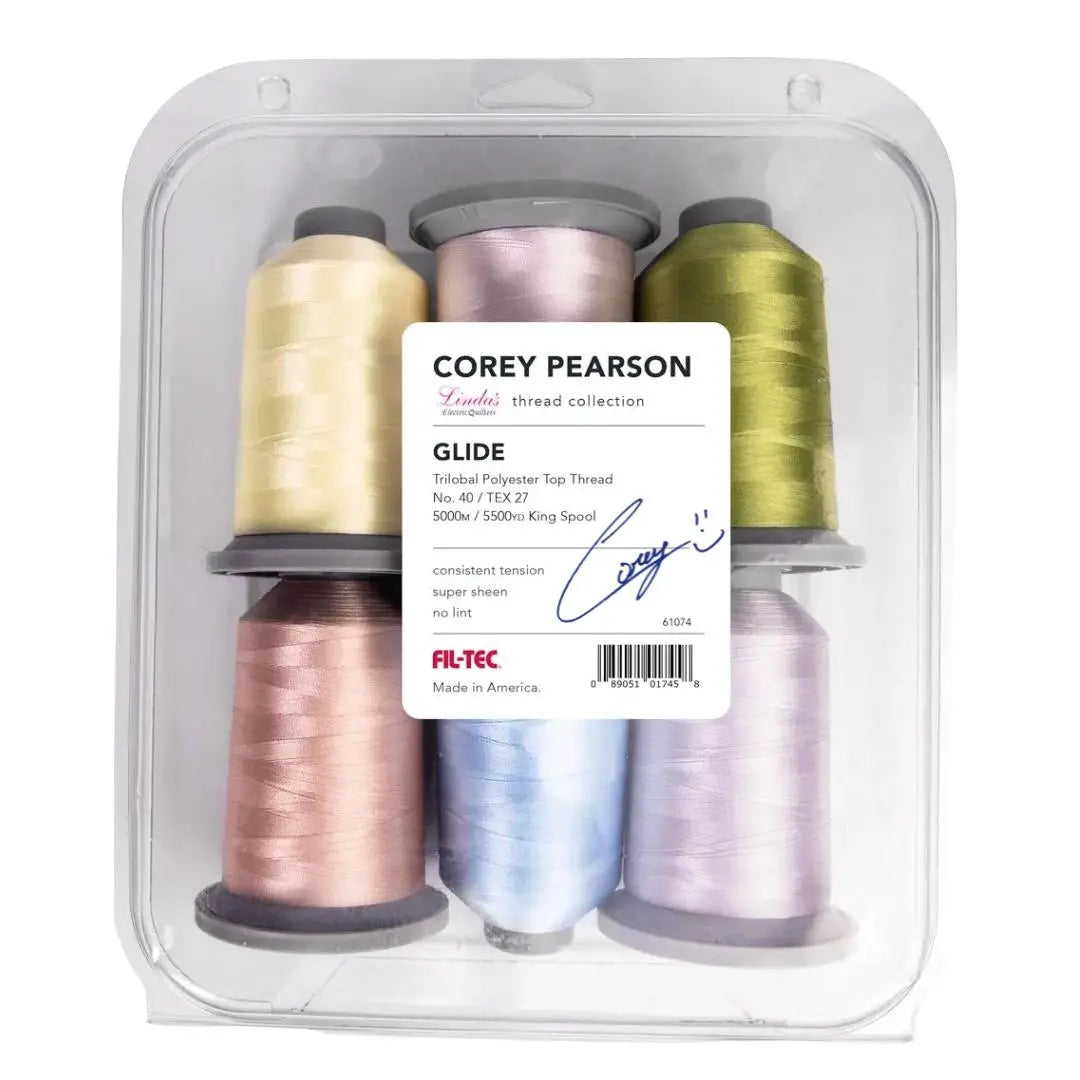
Ready to dive in and find the perfect threads for your next masterpiece? Here at Linda's Electric Quilters, we've got a brilliant selection of high-quality threads, including vibrant lines from Glide and Isacord. Come explore our collection and purchase the amazing products you need to finish your project today.
Download Free Printable Thread Color Charts
I think we can all agree, having a physical embroidery thread color chart is a real game-changer for any project. It takes the guesswork completely out of the equation and lets you match colors with confidence. To help you build that perfect color toolkit, we've put together a collection of high-quality, downloadable PDF charts for the most popular thread brands out there.
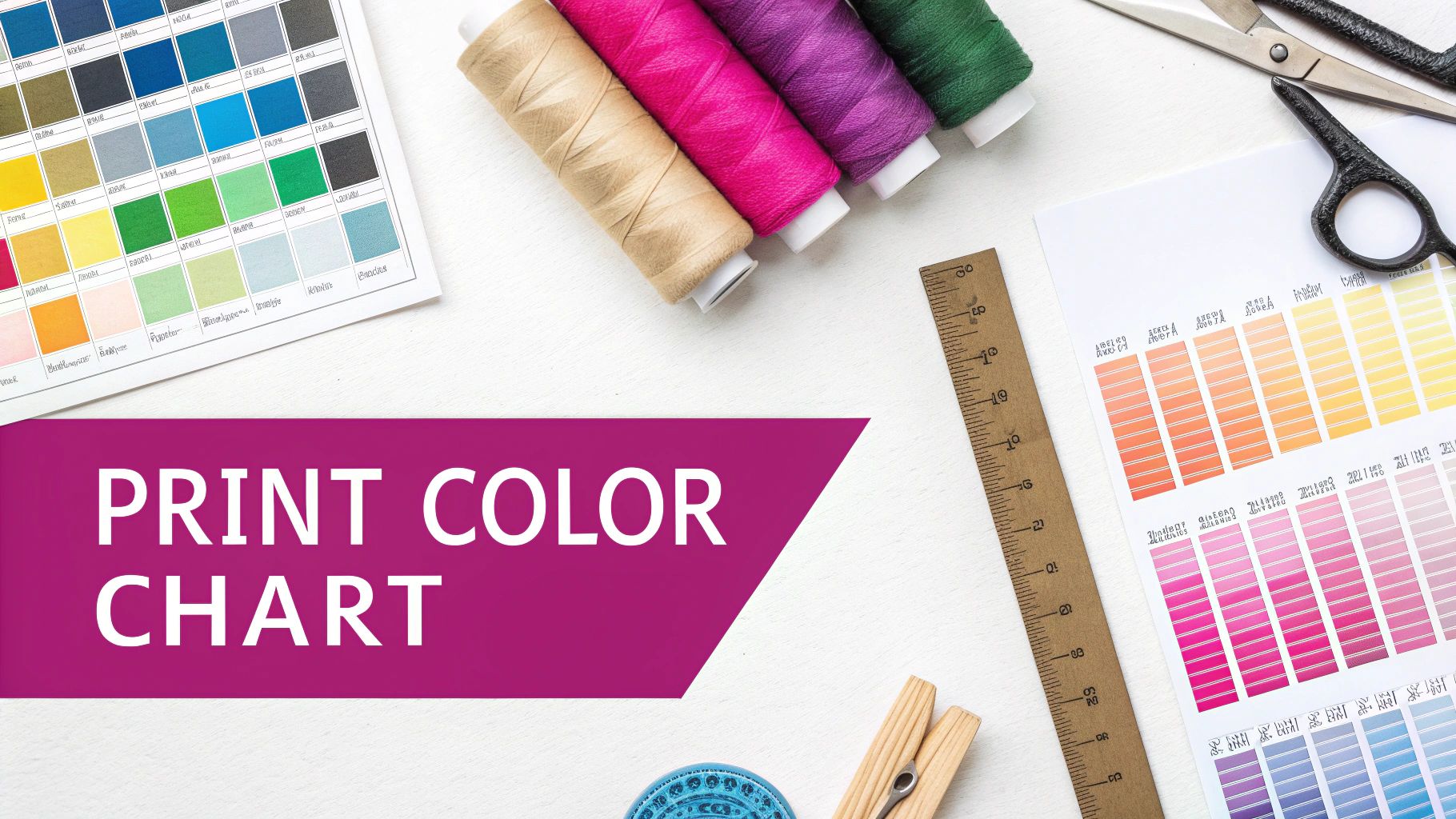
Think of these printables as your go-to reference. You can pin them up on your craft room wall—they look great and are super functional for planning—or tuck a smaller version into your project bag. That way, you’ve always got the full spectrum of colors right at your fingertips whenever inspiration for a new project decides to show up.
Your Printable Chart Library
We’ve created a few different versions so you can grab the one that fits your needs, whether you want a master list for your studio or just a quick, portable guide for shopping.
- DMC Complete Color Chart: This one has all the standard floss colors you'll ever need for hand embroidery projects.
- Anchor Floss Color Chart: An absolute must if you're working on patterns that call for Anchor threads.
- Madeira Thread Color Chart: Perfect for their gorgeous polyester and rayon shades used in machine embroidery.
- Compact "Top 100" Chart: My favorite for quick lookups, featuring the most common, can't-live-without colors.
This whole crafting revival is bigger than just us. The global hand embroidery threads market is expected to hit about USD 1.5 billion by 2025. This boom is really being driven by a new generation discovering the joy of DIY. High-quality tools, like a good embroidery thread color chart, are essential because people want a huge range of reliable, beautiful shades to work with for their creative projects.
Printing for Perfect Color Accuracy
Getting your printed chart to actually match the real-life thread colors takes a little bit of care. When you download a free printable, understanding the basics of preparing digital visuals for print makes all the difference. For the best results, always use a high-quality printer and crank up the settings to "best" or "photo" quality.
Here are a few tips I swear by for getting it right:
- Paper Choice: Go for a matte photo paper or a bright white, heavy cardstock. These surfaces cut down on glare and soak up the ink really well, giving you much truer colors.
- Printer Settings: Always, always print at 100% scale (sometimes called "actual size") so nothing gets distorted.
- Let It Dry: Give the chart a few hours to dry completely before you start judging the colors. Ink can shift a little as it settles into the paper.
Once your charts are printed and ready, you can start mapping out your next masterpiece. Just grab your favorite threads from Linda's Electric Quilters and bring that colorful vision to life.
Mastering Thread Conversion Between Brands
We’ve all been there. You find the absolute perfect embroidery pattern, but it calls for a thread brand you don’t have stashed away. It's a frustrating little roadblock that can stop a project in its tracks. But what if it didn't have to?
Learning to convert colors between the big names like DMC, Anchor, and Madeira is a genuine game-changer. Think of a thread conversion chart as your personal color translator. It helps you find the closest possible match so you can swap threads with confidence, knowing your design will still look fantastic. This educational step empowers you to use the threads you already have or substitute with your favorite brands.
Why You'll Almost Never Find a Perfect Match
When you're using an embroidery thread color chart, it’s crucial to remember you’re looking for the closest match, not an identical twin. Every manufacturer has its own secret sauce—unique dyes and production methods that create subtle differences in color, sheen, and even the feel of the thread.
Then there are dye lots. Thread is made in huge batches, and each batch can have tiny color variations. It’s why a skein you bought last year might look a smidge different from one you buy today, even with the same number. These little quirks are exactly why a good conversion chart is an essential guide, not a magic wand.
How to Use a Conversion Chart the Right Way
The chart gives you the data, but your eyes are the final authority. The process is pretty simple and puts you in control of your project's color story.
- Find Your Starting Point: Look up the brand and color number from your pattern in the chart.
- Check the Equivalents: Scan across the row to find the suggested color numbers for other brands like Anchor or Madeira.
- Do a Visual Check: This is the most important step! Grab the substitute thread from your stash. If you can, hold it right next to the original skein. If not, compare it to a real-thread color card in good, natural light.
- Make the Call: Take a good look. Is it close enough for your project? For a background element that blends in, a near-match is usually fine. For the main subject of your design, you might want to be a bit pickier.
The whole point of converting thread is to keep the original design's feel and color balance. Sometimes, a tiny difference in hue can add a beautiful, unique touch to your work, so don't be afraid to trust your gut.
To give you a head start, here's a quick-reference table for some of the most common colors. Just find the DMC number to see its closest cousins in the Anchor and Madeira families.
Embroidery Thread Conversion Chart (DMC, Anchor, Madeira)
| DMC Number & Color Name | Anchor Equivalent | Madeira Equivalent |
|---|---|---|
| 310 (Black) | 403 | 2400 |
| BLANC (White) | 1 | 2402 |
| 666 (Christmas Red Br) | 46 | 1813 |
| 743 (Yellow Med) | 298 | 205 |
| 995 (Electric Blue Dk) | 133 | 1109 |
This little chart is just a jumping-off point, of course.
Ready to fill in the gaps in your thread collection to finish your project? Here at Linda’s Electric Quilters, we're proud to carry gorgeous, high-quality threads, including beautiful selections from Glide and Isacord. Armed with a trusty conversion chart and our amazing variety, you'll always have the perfect color ready to go.
Choosing Thread Colors for Your Fabric
The real magic in embroidery happens when your thread and fabric sing together. Picking the right colors isn't just about grabbing your favorites; it's about knowing how they’ll play off each other to create that wow factor. This is precisely where a good embroidery thread color chart becomes your most trusted sidekick, helping you map out your project’s entire vibe.
Think of your fabric as the stage and the thread as the star of the show. The relationship between the two can make your design shout with energy or whisper with subtle grace. It all boils down to a few time-tested ideas from color theory.
Applying Color Theory to Your Projects
Just a little bit of color theory can take your embroidery from "nice" to absolutely stunning. You don't need a degree in art to get the hang of it—these are simple, practical concepts that help you make deliberate, beautiful choices for your project. Let's dig into the ones most useful for stitchers.
- High Contrast Palettes: Want your stitches to pop? Grab colors from opposite sides of the color wheel. A bright yellow thread on a deep navy fabric, for instance, creates a dramatic, eye-catching look that really grabs attention. This is perfect for bold lettering or making a central design element the hero of your project.
- Analogous Color Schemes: For a more mellow, blended feel, choose colors that are neighbors on the color wheel, like blue, teal, and green. This creates a really lovely, harmonious effect that’s fantastic for nature scenes or smooth, subtle shading in a landscape project.
- Tonal (Monochromatic) Effects: Sticking to different shades of a single color—like light blue, medium blue, and royal blue on a cream background—builds incredible depth and sophistication. This technique is all about adding texture and interest without a riot of different hues, perfect for elegant projects.
Quick tip: Don't forget to consider the fabric's finish! A shiny satin can make a thread color look a bit brighter, while a matte linen might give it a softer, more muted tone. It’s always a good idea to test a few stitches on a scrap of your project fabric first.
Matching Colors to Fabric and Design
Once you’ve got those basic color concepts in your back pocket, you can start putting them to work. The base color of your fabric is the foundation for your entire color scheme.
This chart gives you a sense of how different thread brands organize their color families, which is a big deal when you're trying to build out a full palette for a project.

Seeing the unique color ranges from top brands laid out like this makes it so much easier to pick the one that has exactly what you need for a specific project.
For darker fabrics like black or chocolate brown, you’ll want to reach for bright, saturated colors to make sure your stitching is vibrant and easy to see. On the other hand, with light or neutral fabrics, the world is your oyster; soft pastels and bold primary colors will both look fantastic.
The key is to build a cohesive palette. Use your embroidery thread color chart to pull three to five colors that you love together before you even thread your needle.
Ready to find your perfect color combo to complete your vision? Check out the amazing selection of Glide and Isacord threads at Linda's Electric Quilters. With our incredible rainbow of shades, you'll find the exact colors you need to purchase and bring your project to life.
How Light and Screens Impact Color Matching
We’ve all been there. You pick out what seems to be the absolute perfect shade of thread for your project at the store, but when you get it home, it looks totally different. It's a frustratingly common problem, and nine times out of ten, the culprit is light. How we perceive color is completely dependent on the light source, which is why understanding it is critical for accurate color matching.
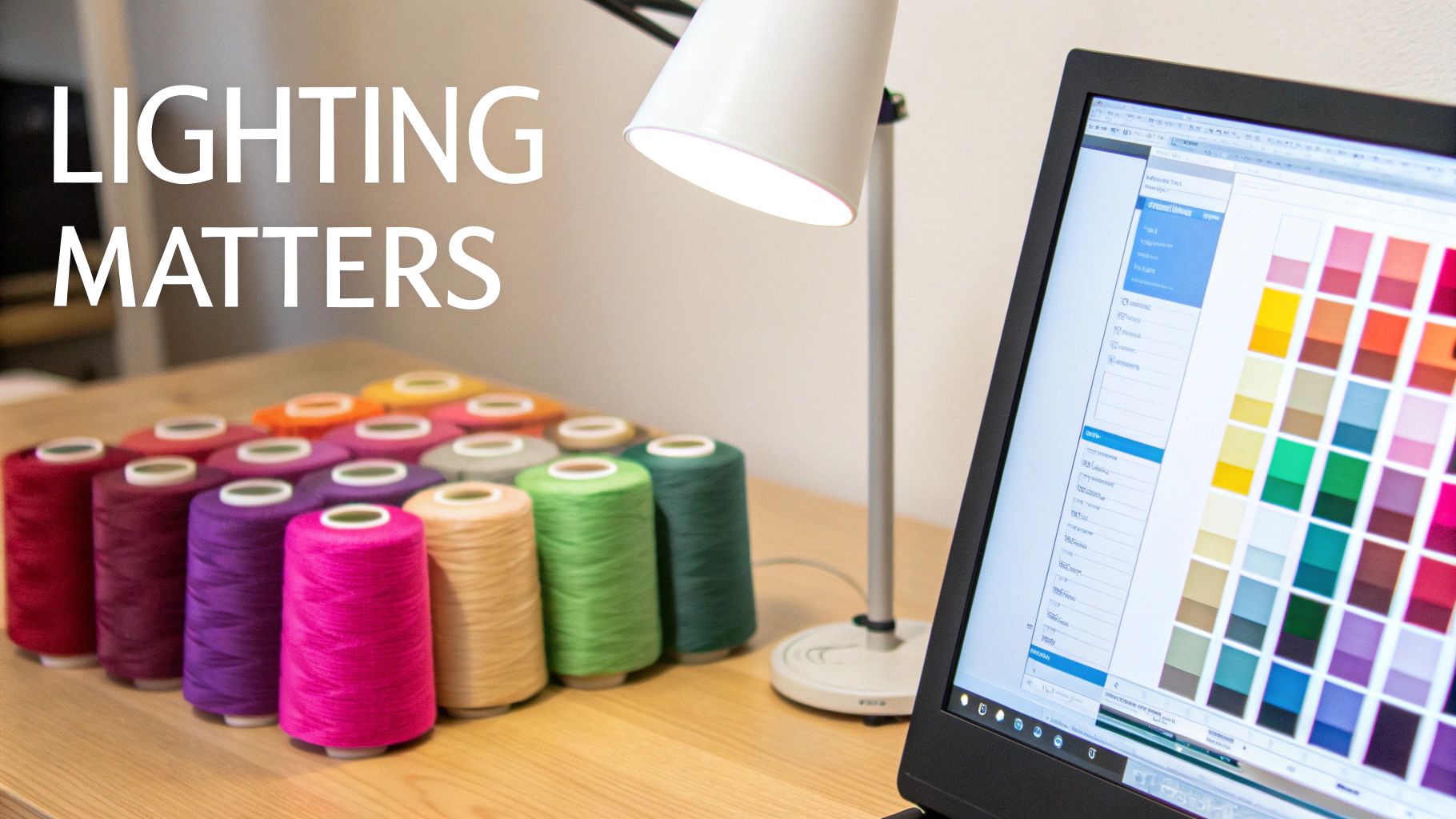
Think of light as an invisible filter. It can warm up, cool down, or completely wash out the true hue of your thread. A vibrant crimson you spotted under a store’s fluorescent lights might suddenly look like a muted burgundy in your cozy living room. This is exactly why a consistent, reliable lighting setup isn’t just a nice-to-have; it's a vital part of your embroidery process, especially for projects with a specific color palette.
The Difference Between Natural and Artificial Light
When it comes to seeing true color for your project, nothing beats natural daylight. The gold standard is the soft, indirect light from a window on a slightly overcast day. This light is full-spectrum, meaning it has a balanced mix of all the colors in the rainbow, letting you see your thread’s actual shade with the most accuracy.
Artificial light, however, is where things get tricky. Every bulb has a unique color temperature that will absolutely alter what you see:
- Incandescent Bulbs: These are the classic household bulbs that cast a warm, yellowish glow. This light tends to make cool colors like blues and purples appear dull while making reds and yellows pop.
- Fluorescent Bulbs: Often found in big box stores and offices, fluorescents give off a cool, bluish light that can wash out your warmer tones.
- LED Bulbs: For an artificial source, these are your best bet. Look specifically for "daylight" or "full-spectrum" LEDs. They're designed to mimic the sun's balanced light and give you the most honest color representation possible for your project.
Pro Tip: If you want a truly dependable color-matching environment, investing in a daylight lamp for your craft space is a game-changer. It’s a simple tool that ensures you’re seeing the same true color whether you’re stitching at noon or midnight, saving you from any more of those costly mismatches in your projects.
Why Screen Colors Can Be Deceiving
Digital embroidery thread color charts are incredibly handy, but they come with one major catch: the color on your screen is almost never a perfect match to the physical thread. Every single monitor, tablet, and phone screen is calibrated differently. Things like brightness, contrast settings, and even how old the screen is can dramatically change how a color appears.
What this means is that the beautiful teal you fell in love with online might show up as a much greener or bluer shade in real life. While digital charts are fantastic for planning your project and getting a feel for a brand's color range, you should never rely on them for your final decision. Always, always cross-reference with a physical thread chart or the actual skeins to guarantee you get the color you want for your project.
Ready to build a thread collection with colors you can trust? Explore the brilliant and reliable shades of Glide and Isacord thread here at Linda's Electric Quilters. We stock the amazing products you need to bring your projects to life with perfect color, every single time.
Find Your Perfect Thread at Linda's Electric Quilters
Now that you've been educated on how to use an embroidery thread color chart, it’s time for the fun part: moving from planning to actual stitching. The next step is getting your hands on high-quality thread that brings your color vision to life, and that's where we come in. Think of Linda's Electric Quilters as your creative partner, with a hand-picked collection of premium threads ready to make your projects pop.
We've always believed that the right materials are just as important as the right design. That's why we proudly stock brands known for their incredible performance and beauty, especially for machine embroidery. Our whole selection is built around giving your projects the consistency and strength they deserve.
Premium Brands for Flawless Stitching
When you're after vibrant, reliable colors that just work, two brands always rise to the top for their exceptional quality.
- Glide Thread: Famous for its brilliant sheen and massive color palette, Glide thread runs like a dream through your machine. It creates a beautiful, lustrous finish that's strong, lint-free, and perfect for any project that needs a little extra shine.
- Isacord Thread: This is the true workhorse for machine embroidery. Isacord polyester thread is unbelievably durable and holds its color wash after wash. With its gigantic color range, you'll always find the exact shade you’re looking for to complete your project.
It's no surprise that the demand for great thread is booming. The embroidery thread market hit a value of about USD 2.0 billion in 2024, which shows just how vital it is in everything from personal crafts to high fashion. This growth just hammers home why having a solid, reliable color chart is so crucial for creators everywhere. If you're curious, you can explore more on the global thread market's expansion to see how color trends are shaping the entire industry.
Think of your embroidery thread color chart as your map, and our thread collection as your destination. We've got the tools you need to turn any color number into a beautiful, tangible result.
Ready to stitch up your next masterpiece? Jump in and browse our amazing collections of Glide thread and Isacord thread today. Purchase the perfect colors right here at Linda's Electric Quilters and watch your creative ideas become beautifully stitched reality.
A Few Common Questions About Thread Charts
Even with the best charts in hand, questions are bound to come up. A good embroidery thread color chart is one of the most important tools a stitcher can have, but getting the hang of all the little details can take a bit of practice. We've gathered some of the most common questions we get right here to help you get the most out of your charts and complete your project successfully.
Think of this as your go-to guide for those tricky situations, from discontinued colors to the quirks of different dye lots. These answers should help smooth out your stitching process.
What’s the Most Accurate Kind of Embroidery Thread Color Chart?
Hands down, the most accurate chart you can get is one made with real strands of thread. You've probably seen the professional cards from brands like DMC or Anchor—those are the gold standard. They show you exactly what the color, texture, and sheen look like in real life, something a screen or a printed piece of paper just can't replicate.
Our printable and digital charts are incredibly handy for planning projects and quick lookups, but always remember there will be slight differences based on your printer and monitor settings. For a perfect match for your project, nothing beats a physical, real-thread chart.
What Do I Do if a Pattern Calls for a Discontinued Color?
Oh, that's a frustrating moment for any stitcher! When your pattern calls for a color that's no longer being made, your first stop should be the manufacturer's website. They often provide a list of recommended substitutes for their retired colors.
If you strike out there, don't worry—the embroidery community is an amazing resource. Hop onto online forums or Facebook groups for stitchers. Chances are, someone has already found a great match for that exact vintage color and is happy to share what they learned.
The industry is always evolving. The global embroidery thread market hit an impressive USD 10.25 billion in 2024 and is only getting bigger. This means brands are constantly updating their color palettes to keep up with trends, so those community resources are more valuable than ever. You can actually learn more about the embroidery thread market's dynamics and see how global demand shapes what colors are available.
Can I Just Use One Conversion Chart for Every Type of Thread?
You'll get the most reliable results using conversion charts for what they were designed for: standard 6-strand cotton floss. When you're trying to find a substitute for specialty threads—think metallics, satins, or variegated floss—it's really best to just trust your own eyes.
The unique way these threads are made drastically changes how they catch the light and look in a finished project. A simple number-for-number swap from a chart might not give you the look you're going for, so doing a visual comparison is always your best bet to ensure your project turns out perfectly.
Ready to put all this color knowledge to good use? At Linda's Electric Quilters, we carry a beautiful selection of top-quality threads from brands you can trust, like Glide and Isacord, that are perfect for any project you can dream up. Come explore our thread collection and purchase the amazing products you need to get started.