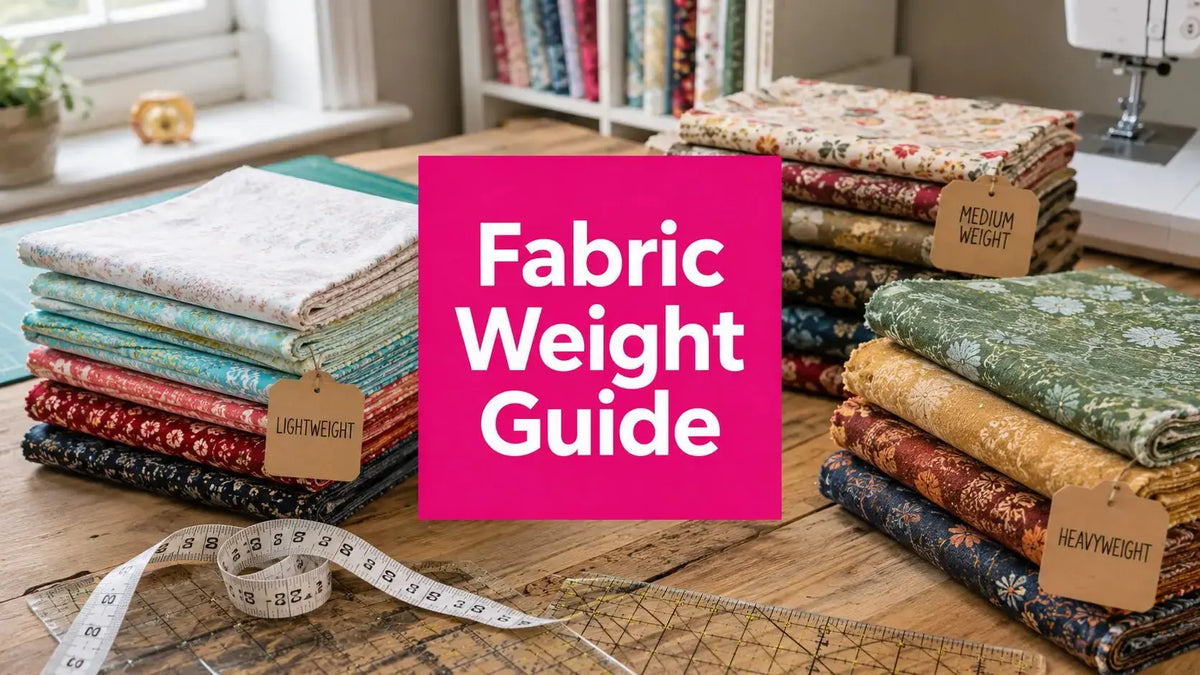
Heavier cloth gets praised as the safer choice, but that advice can backfire on quilts. In longarm work, fabric weight affects seam bulk, stitch path, and how the top behaves under tension, so the right choice isn't the heaviest cloth on the shelf, it's the cloth that matches the project. A good fabric weight guide helps you read GSM and oz/yd² as working numbers, not marketing language, so you can choose fabric that pieces cleanly, quilts smoothly, and stays flat after finishing.
Why Heavier Fabric Is Not Always Better for Quilting
Heavier fabric often gets treated like the safer buy because it feels sturdy in the hand. Quilting changes that equation fast. Once seam allowances, batting, and quilting lines are layered together, dense cloth can build bulk at intersections, make corners harder to turn cleanly, and add drag as the needle moves through the sandwich. In patchwork, more weight can mean more resistance, not better results.

A lighter but tightly woven cotton often pieces better because it gives enough body without overloading the seam allowances. On a longarm frame, that lighter structure can load more evenly and stay flatter under tension, while a heavier cloth may fight the take-up and exaggerate drag at the needle. Published fabric charts place lightweight cloth around 2 to 4 oz/yd², midweight around 4 to 8 oz/yd², and heavyweight at 8 to 14+ oz/yd² (Cut Sew). For quilts, the middle bands usually give the cleanest balance between structure, drape, and sewability.
Practical rule: test the fabric's hand before buying large yardage. Fold it, pinch the seam allowance thickness in your fingers, and picture how it will behave where four or more seams meet.
A quilter planning a wall hanging may want more body than someone piecing a baby quilt, but heavier isn't automatically better. That is the trap. On a frame, cloth that feels too stiff can make you fight the top, while a balanced cotton can still read crisp and hold shape. If you want a shopping shortcut, keep your eye on drape, opacity, and seam feel, not just the number on the bolt.
Understanding GSM and Ounces Per Square Yard
GSM means grams per square meter, and oz/yd² means ounces per square yard. Both are weight-per-area measurements, which is why they are more useful than vague terms like “light” or “heavy” when you are judging how fabric will behave under a quilt top. A textile measurement reference makes the mechanics clear, including the fact that a “12-ounce” denim means 12 ounces per square yard (Threads).

The conversion most buyers need is simple, 1 oz/yd² is approximately 33.9 GSM. So 4 oz/yd² is about 136 GSM, 5 oz/yd² is about 170 GSM, 6 oz/yd² is about 200 GSM, and 14 oz/yd² is around 475 GSM. If you shop across US and metric listings, that shortcut keeps you from comparing apples to oranges.
How to read a label like a quilter
- Look for the unit first: a listing in GSM or oz/yd² gives you a real clue about how much body the cloth will have.
- Read the number with the weave: the same weight behaves differently in cotton, rayon, linen, or polyester.
- Match the weight to the job: lower-GSM fabric usually drapes more and folds into seam allowances with less bulk, while higher-GSM fabric adds stiffness and can build up at intersections (The Fabric Index).
For longarm quilting, that number affects more than shopping. A lower-weight cloth generally feeds more willingly across the frame and settles flatter under tension, while a heavier cloth can resist the take-up system and make needle penetration feel slower. The practical question is whether the fabric will lie flat without fighting the batting and the seams.
A fabric weight guide helps because the number predicts what the cloth is likely to do under your presser foot and on the frame. Lower weights usually mean more flow and less bulk, while higher weights usually mean more opacity and structure. For quilting, that means you are judging seam feel, quilt-top behavior, and whether the fabric will play well with your batting choice, not just picking a category label.
Fabric Weight Categories and Common Quilting Materials

Quilters do not need every apparel category. They need a chart that maps real quilting materials to the weight bands they use at the frame and at the machine. Generic guides often stop at “light, medium, heavy,” but that leaves too much guesswork for patchwork, backing choices, seam bulk, and battings that behave differently under pressure. In practice, quilting cotton sits in the middle range, while canvas and upholstery cloth move into heavier territory.
| Fabric Type | Weight Category | GSM Range | oz/yd² Range | Best Project Uses |
|---|---|---|---|---|
| Voile, chiffon, lightweight shirting | Lightweight | 57 to 85 GSM | 2 to 3 oz/yd² | Sheer accents, linings, very delicate detail work |
| Quilting cotton, cotton shirting, chambray | Midweight | 113 to 227 GSM | 4 to 8 oz/yd² | Piecing, patchwork, quilt tops, everyday sewing |
| Denim, cotton twill, corduroy, canvas, upholstery cloth | Heavyweight | 255 to 340+ GSM | 9 to 12+ oz/yd² | Tote bags, home décor, structured accents, hard-wearing items |
That middle zone is where most quilt work lives. Quilting cotton and similar woven cottons are commonly listed in the range that gives you stable piecing without turning every seam into a ridge. A separate fabric chart also places quilting cotton around 130 to 150 GSM in typical listings, which is another reason to check the exact description before you buy (Fabriculture).
Heavier cloth brings its own trade-offs. It can add body where a quilt top needs structure, but it also adds seam bulk fast, especially where blocks meet, bindings wrap around edges, or multiple layers stack at corners. If you want a quick comparison of how fiber content changes surface behavior, the cotton-versus-polyester discussion in fabric feel and print quality tips is useful because the same weight can still feel and print differently depending on the cloth.
A shop-owner view helps here. I do not choose fabric weight by category alone, I look at how it will sit next to batting, how it will fold in seam allowances, and whether the thread and top layer will cooperate on a longarm without extra drag. That is why the right weight for quilting is the one that gives you clean joins, manageable bulk, and a quilt top that lies flat without fighting the rest of the sandwich.
If you want a cotton thread that behaves cleanly in that midrange quilting zone, 008 Sand Dollar Signature Cotton Thread is a 3-ply cotton thread with Tex 40, long-staple fiber construction, and a 3,000-yard cone size, so it fits the kind of general sewing and longarm work that benefits from steady sewability.
How Fabric Weight Affects Longarm Quilting Performance
On a longarm, fabric weight changes more than the feel in your hand. It changes how the quilt loads, how much the top stretches under tension, and how the needle passes through the sandwich. The smartest longarm setup is the one that matches the fabric's body to the batting and backing instead of forcing every layer to behave the same way.

What changes on the frame
A fabric in the heavier range adds resistance during loading, so you need to pay attention to frame loading tension and keep the top from sagging or stretching unevenly. When fabric weight shifts between top pieces, you can also see differences in stitch consistency because the machine is feeding through sections that don't behave the same way. Heavier cloth also increases needle drag, which means more friction and a greater need for the right needle choice and a steady pace.
Our McKinney, Texas studio watches the quilt top more than the clock. When the top fabric is too dense for the design, the machine tells on it fast, especially at seam crossings and tight fills.
The best results usually come from pairing a midrange quilt top with backing and batting that don't fight it. That's why a fabric weight guide for quilting needs to think in layers, not just in single-yard counts. A quilt that lies flat after stitching is usually the one where the top, backing, and batting were selected with compatible body and drape from the start.
Bobbin and stitch behavior
When you shift from a lighter piecing fabric to a denser one, the machine's behavior can change at the bobbin casing and top tension path. That's where stitch regularity starts to drift if the setup isn't tuned for the new weight. I'd rather slow down and reset than push a heavy section through at full pace and clean up skipped or tightened stitches later.
Pro tip: when you switch from a midweight quilt cotton to a much denser accent fabric, check bobbin tension before you quilt the whole block. The change is often small, but the stitch result isn't.
Sewing and Handling Techniques by Fabric Weight
Lightweight, midweight, and heavyweight cloth each call for different handling. Treat them the same and you get skipped stitches in one project, then bulky seams in another. A fabric weight guide only becomes useful when it turns numbers into machine choices and seam decisions you can feel at the frame.

Needle, thread, and pressure
Quilting cotton in the 150 to 300 GSM range usually sits in the easiest zone for patchwork because it feeds well under the presser foot and presses cleanly at seam intersections. For lighter cloth, a finer needle and a lighter touch help keep the fabric from tunneling or losing grain. For heavier cloth, a stronger needle, slower stitching, and more room at the feed dogs help the layers pass without forcing them.
The thread has to match the job too. The same quilting thread that behaves well in longarm stitching can act differently once the cloth gets denser, because seam bulk changes how the thread settles into the stitch channel. Matching thread weight, needle size, and pressing heat to the cloth saves time later, especially on blocks with multiple seam crossings.
Heavier seams show their habits fast on a longarm frame. If the thread is too fine for the cloth, it can disappear into the texture and leave the quilting looking underpowered. If it is too heavy for the seam build, the stitch line can feel crowded and harder to flatten.
Stabilizing and cutting
Delicate or stretchy fabric needs stabilizing before it becomes part of a quilt sandwich. Heavier cloth usually needs more disciplined cutting and firmer handling at the rotary table because the edges do not slip as easily and the bulk stacks quickly. If you are adding a heavyweight accent to a quilt, treat the seam like a structural element, not just decoration.
A sharp rotary blade matters more as the fabric gets denser. Ragged cuts on thick cloth make seam allowances fight each other, and that extra resistance shows up later as bulky joins and harder pressing. On longarm quilts, those joins can also change how smoothly the top lies under the machine.
- Use a quilting needle for most patchwork. It helps pierce woven cotton cleanly without roughing up the top.
- Move to a denim-style needle for thicker accents. Dense cloth needs a needle that can penetrate without deflecting.
- Keep pressure light on airy fabric. Too much pressure can stretch the grain and make matching harder.
- Use clips or careful basting on bulky seams. Pins can distort the edge if the layers are dense.
Washing and Stabilizing Considerations for Different Weights
Weight changes how fabric behaves before it ever reaches the frame. Lightweight cloth can shift, curl, or stretch more easily in the wash, while heavier cloth often needs more time to dry and press properly. If you're building a quilt from mixed weights, pre-treatment matters because uneven shrinkage shows up as puckering long after the last stitch.
Flannel and batik deserve special attention. Flannel can arrive with more surface softness and a different feel than standard quilting cotton, while batiks often have their own dye and finish behavior. A cautious wash test helps you see whether the fabric is ready for piecing or needs gentler handling first.
Practical rule: wash your test swatch the way you plan to wash the finished quilt. If you change the method later, you've changed the result.
Stabilizers should follow the cloth, not the other way around. Lightweight pieces usually need help with shape retention, while denser fabrics need less support but more care with pressing and drying. The goal is to keep the finished quilt from twisting or drawing in one direction after laundering. A little planning here prevents the kind of distortion that shows up only after binding is done.
Quick Reference Cheat Sheet for Common Quilt Projects

This is the fastest way to shop with a clear target. If you're choosing fabric for a specific quilt, start with the project type, then narrow by hand, drape, and seam bulk. That keeps you from overbuying fabric that looks good on the bolt but fights you on the frame.
| Project Type | Ideal Weight Range |
|---|---|
| Baby Quilts | 4 to 6 oz/yd² or 135 to 200 GSM |
| Bed Quilts | 5 to 7 oz/yd² or 170 to 235 GSM |
| Wall Hangings | 6 to 8 oz/yd² or 200 to 270 GSM |
| Table Runners | 5 to 7 oz/yd² or 170 to 235 GSM |
| Tote Bags | 7 to 10 oz/yd² or 235 to 340 GSM |
A quilted shopper style is a good reminder that bag projects often need more body than bed quilts. For a visual reference, the quilted shopper bag for women shows the kind of structure heavier fabric can support when the project calls for it.
For shopping, Linda's Electric Quilters carries batting, fabric, and notions that pair well with these weight ranges, and its tutorial library and live shopping clips make it easier to compare materials before you cut. If you want a practical place to finish the project with the right layers and thread, the store's fabric selection is built for that kind of decision-making.
If you're ready to choose fabric with less guesswork, visit Linda's Electric Quilters and compare fabrics, batting, and thread together before you cut. You'll find the materials and project support you need to match fabric weight to the way your quilt will perform on the longarm.