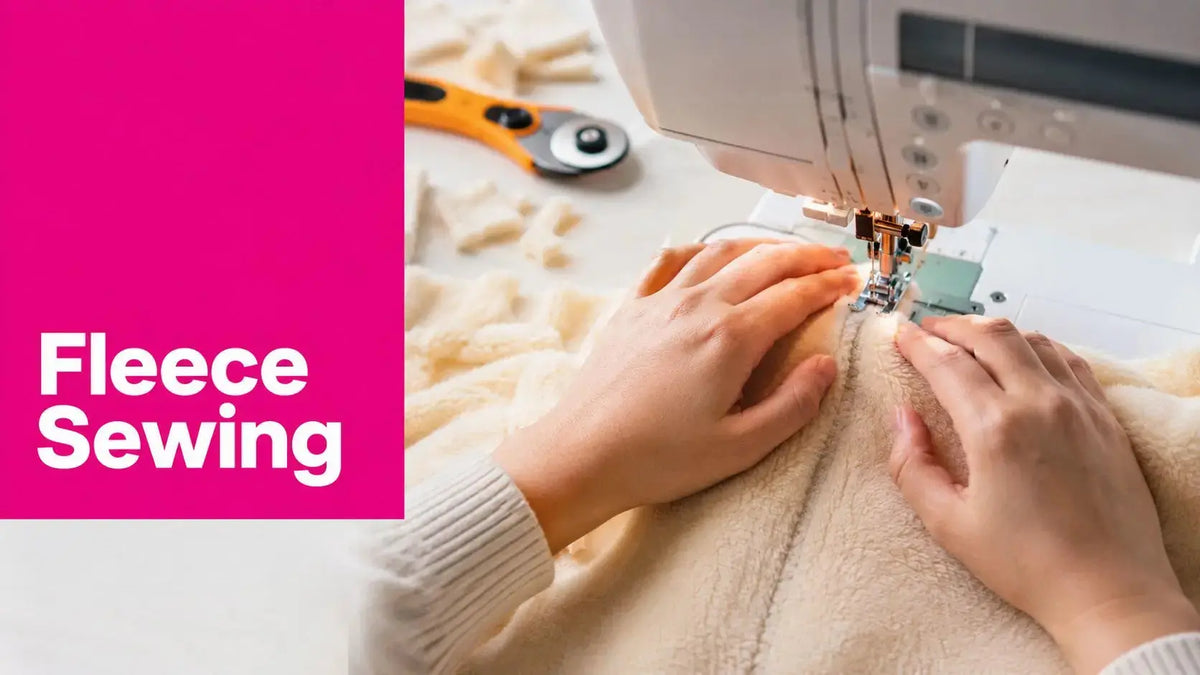
You've got a stack of soft fleece on the table, a project in mind, and one nagging question: will this sew cleanly, or turn into a lint-filled mess? Fleece fabric sewing is straightforward once you respect the fabric's knit structure, stretch, and heat sensitivity. Start with a ballpoint or stretch needle, a longer stitch length, and a walking foot, and you'll avoid most of the trouble before it starts. That simple setup matters because fleece was engineered to be lightweight, warm, breathable, and quick-drying, and it behaves more like a knit than a woven cloth.
Choosing the Right Fleece for Your Project
The first smart move in fleece fabric sewing is choosing the right fleece type for the job, not just the softest bolt on the shelf. Most guides lump fleece into one bucket, but that overlooks key differences between anti-pill, recycled, performance, and plush, high-loft versions. Those differences change how the fabric feels in your hand, how it drapes, and how it behaves under the needle, especially because fleece can develop surface pills, fuse when exposed to heat, and distort during stitching depending on construction source.
Match hand and loft to the project
If you want a blanket, choose fleece with more loft and a softer hand. If you're sewing a jacket, pullover, or a layer that needs less bulk under seams, look for a smoother surface and a more stable feel. In Texas, we see a lot of sewers fall in love with the feel of a thick fleece, then fight bulky intersections later. That's not a fabric problem, it's a project match problem.
Practical rule: the more structure your project needs, the less you want a bulky fleece with a lot of loft.
For pet gear or structured accessories, it can help to compare fleece against other performance textiles. A useful reference point is neoprene material for pet products, because it shows how a more structured synthetic behaves differently from soft fleece when the project has to hold shape.
Compare fleece types before you cut
| Fleece Fabric Type Comparison | Key Properties | Best For |
|---|---|---|
| Anti-pill fleece | Smoother surface, designed to keep a cleaner look with wear | Blankets, hoodies, everyday loungewear |
| Recycled fleece | Made from recycled content, often chosen for sustainability-minded projects | Casual apparel, eco-conscious sewing |
| Performance fleece | Built for layering, warmth, and active use | Outer layers, sportswear, technical garments |
If you want a quilt pattern that uses bold, graphic lines rather than soft garment shaping, a pattern like #1 Fan shows how fleece-friendly thinking also applies to project planning, especially when you're pairing solids and strong contrast.
The best buying decision is the one that matches how the item will be used, washed, and worn. If you're just starting out, choose a fleece with predictable stretch and a smooth surface, then save specialty textures for later projects.
Must-Have Tools and Supplies for Fleece Sewing
The right tools make fleece fabric sewing calmer, cleaner, and faster. Fleece doesn't punish you with fraying edges like many wovens do, but it does expose weak tool choices immediately. A dull needle, sticky scissors, or a foot that feeds unevenly will show up as skipped stitches, stretched seams, and ragged cutting lines.

Start with the needle and thread
A ballpoint or stretch needle is the first essential. The rounded tip parts knit fibers instead of piercing them like a sharp needle would, which helps prevent holes and snags in fleece. A 90/14 is a practical starting size for many projects, especially if the fleece has noticeable body.
Use polyester all-purpose thread for most fleece work. Polyester gives you the strength and give you want in seams that need to move with the cloth, and it's a better everyday choice than thread that behaves too rigidly. That matters in hems, side seams, and anything that gets tugged during wear.
Let the machine feed the fabric for you
A walking foot or dual-feed system helps control the top and bottom layers evenly. That's especially useful when the fleece has a lot of loft or when you're matching thick seams. If your machine struggles with bulk, slow down and let the feed dogs work instead of pulling the fabric through by hand.
The team in McKinney, Texas, leans on this setup for most fleece jobs, and it's the same kind of logic that helps with other high-hand projects too. If you're building a sports-themed gift or home project, the structure in fleece can pair well with a graphic quilt design like #1 Fan, where accuracy and clean seams matter more than fancy finishing.
Cut cleanly before anything reaches the machine
A rotary cutter and mat are better than scissors for many fleece cuts because they keep the edge cleaner and reduce distortion. Fleece can shift under a blade if you force it, so keep the fabric flat and controlled. Pattern weights are often easier than pins because they don't compress the pile.
A fresh blade matters more on fleece than many beginners expect. If the cut edge looks fuzzy or dragged, replace the blade before you blame the fabric.
Soft CTA: If you're missing any of the basics, stock up on fleece-friendly notions before your next cut so the project starts right.
Soft CTA: A better needle and cleaner cut edge usually solve more fleece problems than a dozen machine tweaks.
Soft CTA: When your tools match the fabric, fleece feels easy instead of slippery.
Soft CTA: Keep a dedicated fleece needle in your sewing kit so you're not guessing mid-project.
Soft CTA: Good tools save time on every seam, not just the first one.
How to Prepare and Cut Fleece Without Distortion
Fleece is forgiving in one major way, it generally does not fray at the cut edge because it's typically a knit fabric, not woven source. That means seam finishing is often optional, and you don't have to think about raw edges the same way you would with cotton or linen. You do, however, have to respect stretch. If you let fleece hang off the table or tug it while cutting, the shape can distort before the first seam is sewn.
Keep the fabric flat and control the grain
Lay fleece on a large, flat surface and keep it fully supported. Don't let the weight of the fabric hang off the edge, because that hanging weight can stretch the knit and throw off your pattern pieces. This is one of the easiest mistakes to make and one of the hardest to notice until the garment doesn't hang evenly.
Cut fleece in a single layer whenever accuracy matters. Folding can save time, but it also invites shifting and subtle asymmetry, especially on plush or stretchy fleece. If the pattern piece has a front and back that must mirror each other, single-layer cutting gives you far better control.
Use pre-washing with purpose, not habit
Most fleece is stable enough that it doesn't demand pre-washing for shrinkage alone. If you're combining fleece with another fabric that does shrink, like cotton flannel, wash the materials first so the finished piece doesn't twist or skew after laundering. That's a practical choice, not a rule for every fleece project.
For projects where a raw or bound edge is part of the design, fleece is especially useful because the edge stays put. That's why it works so well in blankets, throws, and casual pieces where seam finishing isn't the star of the show. It also helps explain why fleece behaves differently from woven fabrics in pattern layout and edge treatment.
Cutting rule: if the edge is waving before it reaches the machine, the problem started on the table, not at the needle.
Soft CTA: Choose a large cutting surface if you're planning more than one fleece project this season.
Soft CTA: Single-layer cutting takes longer, but it protects symmetry and saves seam ripping later.
Soft CTA: Treat the grain gently and fleece will reward you with a better drape.
Soft CTA: If you're combining fleece with another fabric, think through laundering before you cut.
Soft CTA: Clean edges at the cutting stage make every later step easier.
Machine Settings and Seams for a Professional Finish
For fleece fabric sewing, stitch length is not a detail, it's a control knob. Expert guidance recommends a longer stitch length of about 3.5 to 4 mm, or roughly 8 to 10 stitches per inch, to reduce puckering and keep seams from fighting the fabric's give source. A standard tight stitch can lock fleece down too hard, which is why seams sometimes look rippled even when the sewing itself was technically straight.
Use stitches that move with the fabric
When a seam needs stretch, choose a narrow zigzag or a proper stretch stitch instead of a straight stitch. The seam needs to move with the fleece, especially in cuffs, necklines, and activewear-style projects. If you use a straight stitch in a spot that has to flex, the seam can feel restrictive and may pop under stress.
A serger gives you speed and a polished edge, but it isn't the only clean finish. On a standard machine, you can press seams open with a press cloth and low heat, topstitch allowances down, or use a flatlock-style finish where the design calls for it. The right choice depends on how much bulk your project has and how visible you want the seam to be.
Manage bulk at the intersections
Trim and grade seam allowances where seams stack up. That matters most at hems, cuffs, corners, and places where multiple fleece layers meet. If you don't reduce bulk there, the machine can hesitate and the seam can start to climb.
Pro-Tip: When a fleece corner feels too thick to turn neatly, trim one layer's allowance shorter than the others before you press. The seam lies flatter, and you avoid that lumpy “ledge” that shows through from the right side.
For visual learners, pair the stitch guidance with a quick reference guide like the infographic below, then test settings on scraps before touching your project.

Check tension before you sew the final seam
If the stitches look tight, wavy, or compressed, test a slightly looser tension on scraps. Don't make big changes all at once. Fleece is forgiving, but it's still worth dialing in the machine before you commit to the garment or quilt.
Soft CTA: Sew two scrap seams before you start the main project. Soft CTA: Keep a press cloth near the iron so you don't inadvertently flatten the pile. Soft CTA: Grade seam allowances anytime several fleece layers meet. Soft CTA: Use the seam type your project truly needs, not the one you always use. Soft CTA: A better hem starts with the right stitch choice, not more topstitching.
Troubleshooting Common Fleece Sewing Problems
The most common fleece frustrations have clear causes, and that's good news. Skipped stitches usually point to a needle that's too dull, too small, or wrong for knit fibers. A fresh ballpoint or stretch needle is often the fix. If the seam looks wavy or stretched, the fabric was probably pulled while feeding through the machine, which is why a walking foot helps so much.

Watch lint before it becomes a machine problem
Fleece sheds lint, and that lint doesn't stay politely on the fabric. It moves into the bobbin area, feed dogs, and bobbin case, where it can affect machine performance over time source. If you sew multiple fleece projects back to back, clean your machine more often than you would after a cotton project.
That maintenance issue gets more serious at scale. Guidance on fleece sewing notes that lint build-up can jam machines, while bulk and stretch can cause stalling over seams and skipped stitches, which hurts reliability over many projects source. That's why a heavier-duty setup can matter when fleece is part of your regular workflow.
Treat pilling, static, and heat carefully
Pilling is a fabric-quality issue as much as a sewing issue. Lower-quality fleece may show wear faster, and gentle washing with air-drying can help preserve the surface. Static cling can be managed, but don't over-handle the fabric while it's charging up, because tugging makes alignment harder.
Heat is another place where beginners get into trouble. Fleece can melt under an iron, so use low heat and a pressing cloth, or finger-press whenever you can. If a seam won't sit flat, it usually needs better seam planning, not more heat.
Choose a machine that matches the workload
If you sew fleece often, a machine with better bulk handling makes a real difference. In a high-use setting, a reliable machine like the Juki HZL-F600 is often discussed because it handles repeated seam work more comfortably than a basic lightweight machine. That doesn't mean every fleece project requires an upgrade, but it does mean your machine choice should match your sewing habits.
Soft CTA: Clean lint before it reaches the bobbin case.
Soft CTA: Swap needles the moment stitches start looking inconsistent.
Soft CTA: Slow down at thick seams instead of forcing the fabric through.
Soft CTA: Test heat on a scrap before you press the project itself.
Soft CTA: If fleece is a regular material for you, machine reliability deserves as much attention as stitch quality.
Frequently Asked Questions About Sewing Fleece
Fleece raises a few recurring questions because it doesn't behave like woven cotton, and that's exactly why a quick reference helps. The answers below are the ones customers ask most often when they're starting or troubleshooting fleece fabric sewing.

Do I need to pre-wash fleece
Not usually. Fleece is generally stable, and many fleece projects can be cut and sewn without pre-washing. Wash first if you're pairing it with another fabric that shrinks, like cotton flannel, so the finished piece doesn't distort later.
What thread works best for fleece
Polyester all-purpose thread is the most reliable everyday choice. It has the strength and give needed for seams that stretch a little during wear. Match it with a ballpoint or stretch needle for the smoothest result.
Can I iron fleece
Use caution. Fleece can melt under heat, so low heat and a press cloth are the safest approach. Finger-pressing seams is often enough, especially when the project doesn't need a crisp edge.
Why does my fleece seam look wavy
The fabric was probably stretched while sewing, or the stitch length was too short for the fabric's bulk. A walking foot, a longer stitch, and less handling usually solve the problem. If the seam is already sewn, pressing won't fix a stretched-out edge.
How often should I clean my machine after sewing fleece
Clean it after large fleece projects and any time you notice lint collecting near the bobbin area. Fleece produces enough lint that waiting too long can affect stitch quality and machine reliability. A quick clean between major projects is a practical habit, not overkill.
If you're ready to put these fleece sewing techniques to work, visit Linda's Electric Quilters for the fabrics, notions, and project supplies that make clean seams easier from the very first cut. You'll find the materials and support to tackle fleece with more confidence, whether you're sewing a cozy blanket, a garment, or your next favorite gift.