You've finished the quilt top, pressed the backing, and laid both across the cutting table. The middle layer is next, and that choice affects nearly everything you'll feel later, from needle resistance and drape to warmth, puckering, and how confidently you can describe the finished quilt.
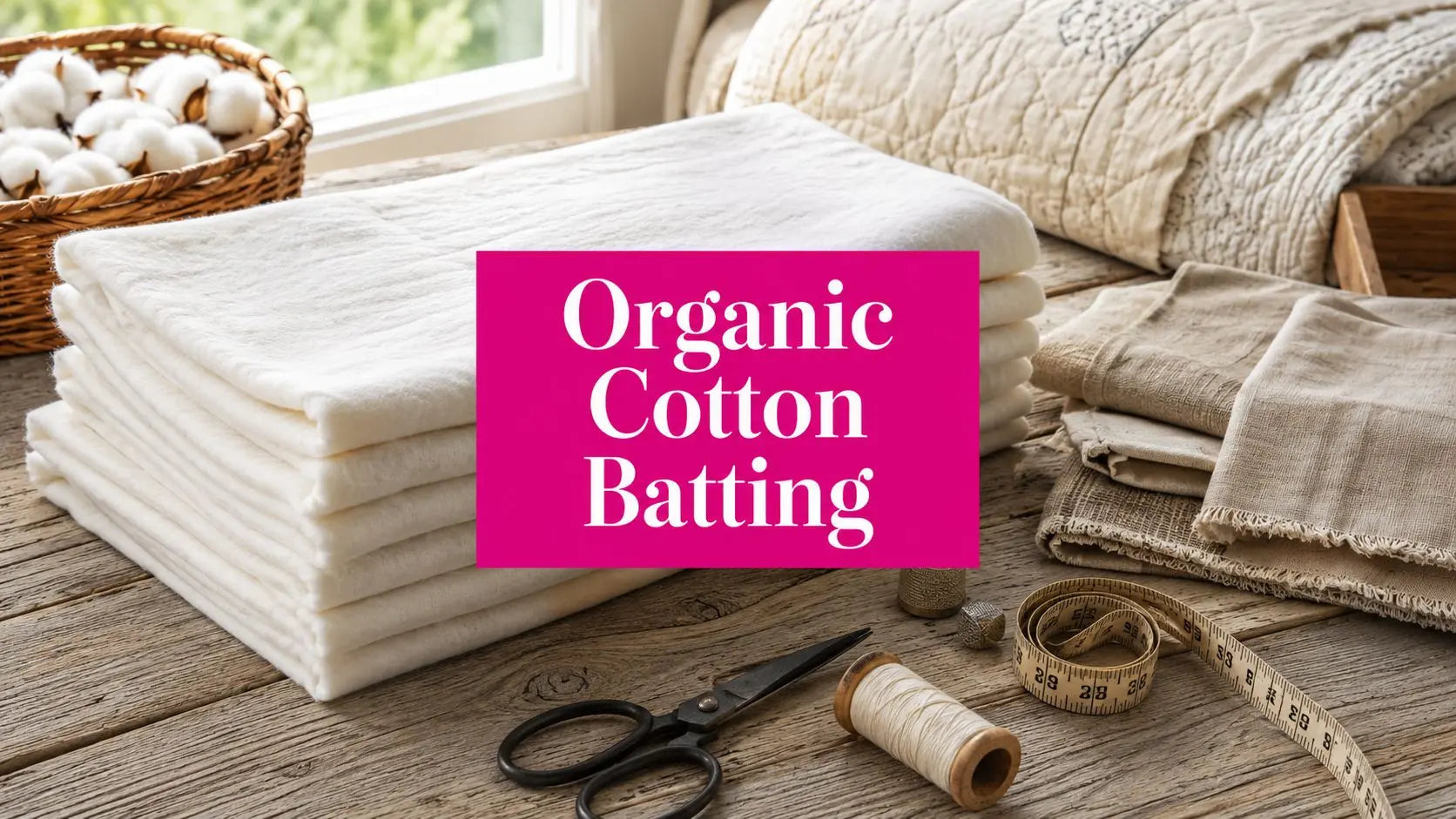
Organic cotton batting is a low-loft cotton fill valued for its breathable hand, traditional drape, and traceable fiber story. Look beyond the word “organic,” though. Certification, construction, scrim, shrinkage, and your machine all matter. A carefully chosen batting can give a baby quilt a soft, natural feel, a bed quilt a comfortable year-round weight, or a wall hanging the flat structure needed for precise quilting.
What Organic Cotton Batting Actually Is
Organic cotton batting is a non-woven or lightly needle-punched sheet made from cotton fibers grown under organic farming standards and then processed into quilt fill. Product descriptions commonly specify 100% pure, unbleached cotton, often with GOTS certification, because the certification signals controlled organic fiber and chemical inputs through the textile process. This organic cotton batting example shows how manufacturers connect the fiber claim with quilting and skin-contact use.
The important distinction is that cotton's plant origin and the finished batting's processing story aren't the same thing. Organic cotton certification has to follow the fiber through ginning, spinning, and manufacturing if the maker wants a credible finished-product claim. OEKO-TEX explains that its system tests for GMOs, pesticides, and other harmful substances, helping buyers evaluate more than the farm-level origin alone. The Lavender Lobster's guide to organic cotton for eco-conscious shoppers offers useful background on why shoppers often look beyond the fiber name.
Construction changes the hand
You'll commonly encounter three constructions:
- Needle-punched batting uses mechanical needling to interlock fibers. It generally feels denser and more stable, with less loose movement under the needle.
- Bonded batting uses a bonding method to help fibers stay together, making the batt easier to handle and less prone to shifting.
- Unbleached natural batting keeps a soft cream tone rather than a bright white appearance.
Cotton batting is known for being breathable and easy to needle, but conservation guidance also notes that it can flatten over time and attract insects. One museum reference lists natural cotton batting at about 1/16 inch loft and 3 to 5 percent shrinkage, so pre-washing or shrinkage planning matters when the top, batting, backing, and binding need to finish together. CAMEO's cotton batting reference explains these practical material characteristics.
That lower, natural profile suits an heirloom quilt, a baby quilt, or a wall hanging where you want quilting lines rather than puffiness to define the surface. Before cutting, check whether the product contains scrim, binders, or resins. The middle layer affects how the quilt accepts stitches, how it hangs, and how confidently you can match it to the project.
GOTS and Other Organic Cotton Certifications Explained
Certification labels can look similar while covering different parts of the supply chain. GOTS, the Global Organic Textile Standard, is commonly associated with finished textile products and is used to evaluate organic fibers along with processing and manufacturing requirements. Batting described as 100% organic cotton with GOTS certification gives the shopper a stronger basis for evaluating the whole textile process, not only the crop.
OEKO-TEX introduced its ORGANIC COTTON certification in April 2023 as a verified chain-of-custody system from farm to finished product. Under the standard, products labeled ORGANIC COTTON must contain 100% organic cotton, while ORGANIC COTTON Blended products must contain at least 70% organic cotton. OEKO-TEX's ORGANIC COTTON announcement sets out those composition rules clearly.
The label is only useful when you know its scope
Textile Exchange explains that “organic” is legally controlled at the farm level, but the claim needs chain-of-custody controls after the cotton leaves the farm. That matters for batting because ginning, spinning, cleaning, bonding, and finishing can introduce materials that change what “100% organic cotton” means in the finished product.
| Standard | Scope | Fiber threshold | What it certifies |
|---|---|---|---|
| GOTS | Organic textile processing and finished-product chain | Product claims depend on the certified composition stated by the manufacturer | Organic fiber use, processing controls, and restricted chemical inputs |
| OEKO-TEX ORGANIC COTTON | Farm-to-finished-product chain of custody | 100% for ORGANIC COTTON, at least 70% for ORGANIC COTTON Blended | Verified organic cotton content and testing for specified substances |
A product can therefore carry an organic cotton description while still requiring closer inspection of the fiber percentage and the certificate. The OEKO-TEX ORGANIC COTTON factsheet explains why traceability and testing extend beyond the original farm claim.
Shopping rule: Read the exact composition statement, then look for the certificate or certification number. “Organic cotton” and “100% organic cotton batting” aren't interchangeable descriptions.
Loft, Warmth, Drape, and Shrinkage Compared
The easiest way to choose batting is to imagine the finished quilt in your lap. Do you want a flat, traditional surface with visible quilting? A springy, puffy bed quilt? Or a light, fluid layer that adds warmth without much weight?
Organic cotton usually occupies the lower-loft end of the batting family. The product descriptions and conservation references above point to a dense, modest profile, while commercial organic cotton batting is often listed around 1 centimeter thick and 250 grams per square meter. This organic cotton batting listing also recommends gentle washing at 30°C and avoiding tumble drying, which reflects the care needed to preserve dimensional consistency.
| Property | Organic cotton | Polyester | Wool |
|---|---|---|---|
| Loft | Low to moderate, with a flatter traditional appearance | Springier and generally fuller | Naturally lofty and highly insulating |
| Warmth | Breathable, moderate warmth | Holds heat differently and can feel less breathable | Strong warmth for its weight |
| Drape | Crisp at first, then softens with washing | More resilient and memory-prone | Fluid with a soft natural hand |
| Shrinkage | Plan for 3 to 5 percent in many products | Generally chosen when minimal shrinkage is important | Follow the maker's care instructions closely |
Independent materials data reports cotton batting thermal conductivity around 0.032 W/(m·K) at 15°C, rising to about 0.038 to 0.039 W/(m·K) at 65°C, with specific heat around 1,339 to 1,559 J/kg-K across 10 to 40°C. The FSRI cotton batting materials data supports the practical observation that cotton functions as an insulating, heat-stable loft layer rather than a highly conductive fill.
Shrinkage is the trade-off many quilters either love or need to control. A first wash can create the softly puckered, antique appearance prized in reproduction and heirloom quilts. For a fitted wall hanging or a precision-pieced top, that same movement needs to be planned before quilting.
Choosing Organic Cotton Batting by Project and Machine
Start with the project, then consider the machine. A hand-quilted heirloom and a longarm-loaded bed quilt may both benefit from organic cotton batting, but they don't need identical density, width, or stabilization.
For a baby quilt or everyday bed quilt, a medium-weight, lightly needle-punched batt gives a stable sandwich without turning the quilt into a stiff panel. A wall hanging usually benefits from a thinner, denser material that resists shifting and keeps sculptural quilting crisp. If you're choosing a roll for a longarm, consistent width and even needle-punch density are more important than a lofty marketing description.
Machine setup matters
On a longarm, the batting should feed smoothly beneath the quilt top without creating tucks as the machine head changes direction. A 90/14 quilting needle is a sensible starting point for cotton, but test the actual thread and batting combination. If the needle deflects, the thread shreds, or the bobbin casing shows inconsistent tension, change one variable at a time.
On a domestic machine, cotton's dense hand can create foot drag. Baste thoroughly, keep the quilt supported on the table, and test the stitch length on a scrap sandwich before committing to the full project.
| Project or machine | Recommended batting choice | Needle and thread | Basting method |
|---|---|---|---|
| Baby quilt, domestic machine | Soft, stable low-loft cotton | 90/14 quilting needle with cotton thread | Pins or temporary spray adhesive |
| Bed quilt, longarm | Even, wide roll with consistent density | 90/14 needle, cotton or compatible quilting thread | Frame loading with careful side tension |
| Wall hanging, domestic or longarm | Thin, dense needled cotton | 90/14 needle and finer cotton thread | Close basting to prevent distortion |
Always make a test sandwich with the actual top fabric, backing, batting, needle, bobbin thread, and upper thread. Your tensioning settings, presser-foot pressure, bobbin casing, and stitch length can behave differently when the middle layer has a dense needled surface.
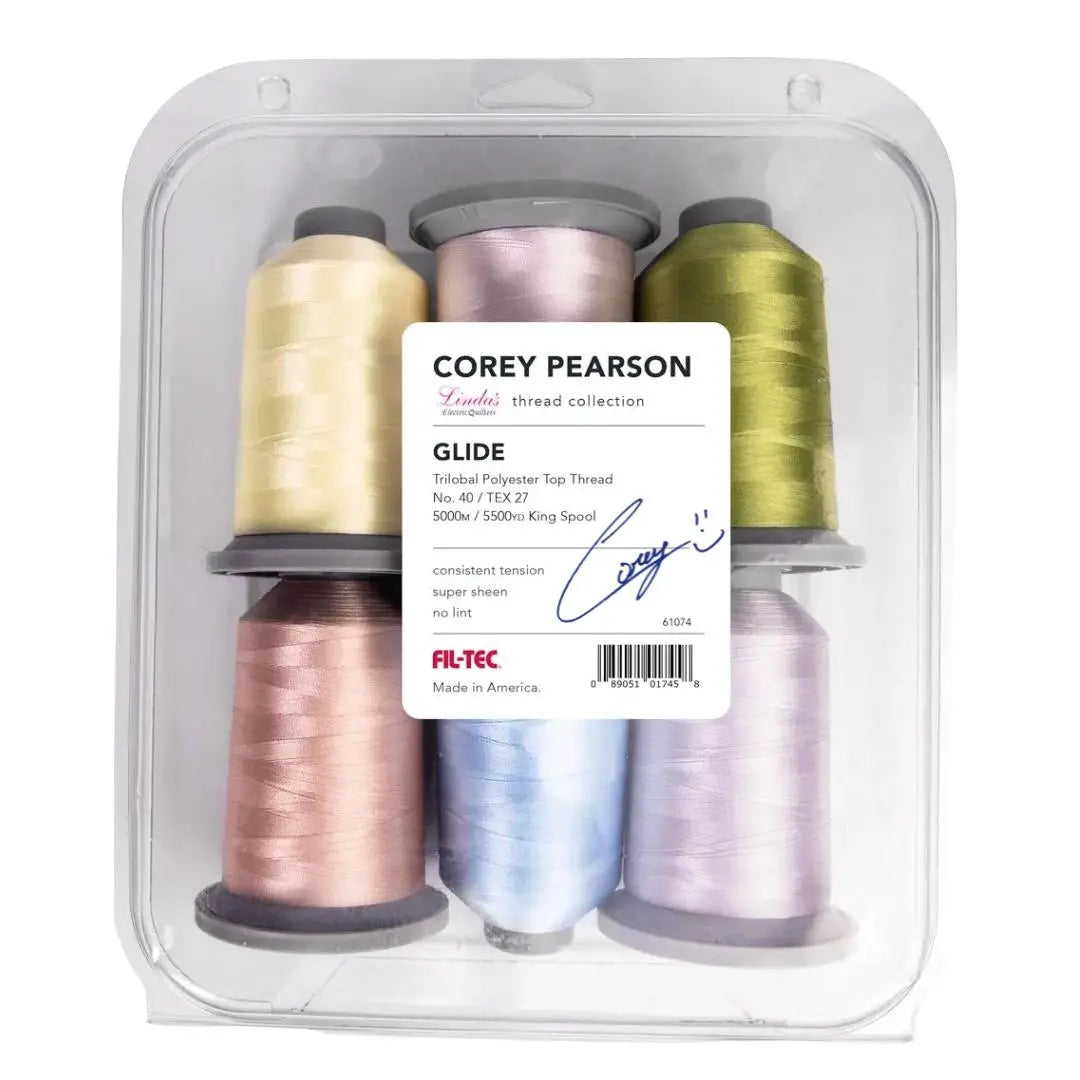
For a cotton-through-and-through option, Linda's Electric Quilters carries 008 Sand Dollar Signature Cotton Thread, a three-ply long-staple cotton thread with low-lint characteristics suited to quilting work. Match the thread to the batting after testing, rather than assuming one setting will work on every machine.
Washing, Caring For, and Pre-Shrinking
Cotton batting can relax during its first wash, so decide whether you want that movement before cutting the backing. Manufacturer guidance commonly places shrinkage around 3 to 5 percent, while conservation guidance also identifies the same range for natural cotton batting. Some products specifically say no preshrinking is required, so the package instructions should take priority over a general rule.
A practical preparation routine
- Check the label. Confirm whether the maker recommends preshrinking, cold washing, air drying, or avoiding the dryer.
- Use cool water. Soak gently rather than agitating aggressively.
- Remove water without wringing. Press excess water out with care so the fibers aren't stretched.
- Dry flat or according to the product directions. Shape the batt while damp and let it return to an even rectangle.

Avoid assuming that heat is harmless. Commercial care guidance for one organic cotton batting product limits washing to 30°C and advises against tumble drying, while other cotton batting makers describe controlled cold-water washing and modest first-wash shrinkage. Hot water and high dryer heat can encourage uneven puckering or flattening.
For a finished quilt, use cold water, a gentle cycle, and a mild detergent. Dry on low only when the manufacturer permits it, or air-dry flat when preserving loft and dimensional stability matters most. Store unused batting flat in a cool, dry place away from direct sunlight.
Watch this batting preparation video tutorial before handling a large batt. Seeing how the material is supported and smoothed is often more helpful than reading a short care label.
Quilting Tips for a Smooth, Flat Finish
A smooth cotton quilt starts with a stable sandwich. Spread the backing without stretching it, place the batting carefully, and smooth the top from the center outward. Cotton batting can be forgiving under the needle, but excessive handling can distort the fibers before quilting begins.
The McKinney team's practical approach is to test tensioning on a layered scrap before loading the full quilt. Use the same thread in the top and bobbin when appropriate, check the bobbin casing for lint, and confirm that the needle is sharp. A 40 or 50 weight cotton thread paired with a 90/14 chrome topstitch needle is a useful starting combination for a dense cotton batt, but the test sandwich decides the final setting.
Keep the quilting balanced
Cotton's natural movement becomes easier to manage when quilting is distributed consistently. Manufacturer guidance for some cotton battings permits quilting distances as wide as 10 inches, while other constructions require closer stitching. The scrim, if present, changes how far apart the quilting can safely be placed, so follow the product's stated limit rather than applying one spacing rule to every batt.
Pro tip: Don't judge tension from the top alone. Turn the test sandwich over, inspect the bobbin side, and then adjust the upper tension in small increments. A clean back is the fastest way to spot looping before it becomes a full-quilt repair.
For straight-line quilting, support the quilt's weight on the table so the domestic machine's feed dogs aren't fighting a hanging mass. On a longarm, keep the side clamps even and avoid pulling the quilt top tight enough to remove its natural give. Press the completed quilt from the back while it's slightly damp if you want to coax residual movement into an even, softly crinkled surface.
Is Organic Cotton Batting Really More Sustainable
Organic cotton batting can reduce concerns about synthetic agricultural inputs and can offer a more transparent fiber story, but organic doesn't automatically mean low-impact in every region. A 2025 life-cycle assessment reported approximately 15,000 cubic meters of water per metric ton of organic cotton fiber. The cited life-cycle assessment also reflects a broader challenge, regionalized cultivation data for organic cotton remains incomplete, and researchers may need proxy datasets from other countries.
That limitation matters because cotton's water profile depends on climate, irrigation, soil, and farming practice. Certification can verify production requirements and chain of custody, but it can't erase the environmental conditions where the crop was grown.
Look at the whole middle layer
A batting's sustainability story also includes processing. Consider whether the product contains a synthetic scrim, resin, binder, harsh bleaching sequence, or chemical finish. Some cotton battings are mechanically cleaned to remove seeds and plant debris and are described as never having been washed or bleached with harsh chemicals. Warm Company's Warm & Natural information gives an example of how a manufacturer can describe cleaning, quilting distance, and expected shrinkage together.
| Metric | Conventional cotton | Organic cotton |
|---|---|---|
| Farm inputs | May involve routine synthetic pesticides and fertilizers | Organic systems restrict specified synthetic inputs and GMO seed |
| Fiber claim | Requires chain-of-custody evidence if the claim continues beyond the farm | Also requires traceability after the fiber leaves the farm |
| Processing | May include conventional scouring and bleaching | Certified systems restrict or control specified chemical inputs |
| Life-cycle certainty | Varies by region and dataset | Regional cultivation data remains incomplete in some assessments |
For broader household purchasing decisions, readers may also find this discussion of sustainable home furniture from Willis useful because it frames sustainability as a sourcing and materials question rather than a single label.
Choose organic cotton batting when restricted agricultural inputs, traceability, and skin-contact materials guide your decision. If your priority is the lowest possible lifecycle impact, evaluate the fiber origin, processing, scrim, packaging, shipping, and expected service life together.
Frequently Asked Questions and Where to Buy
What needle and thread work with organic cotton batting?
Begin with a 90/14 quilting or chrome topstitch needle and cotton quilting thread. A 100/16 needle can help when the sandwich is dense or the thread is heavier, but test first. Clean the bobbin casing and check both sides of the sample for balanced tension before loading the quilt.
How much will organic cotton batting shrink?
Plan for 3 to 5 percent shrinkage after the first wash when the product and care instructions support that expectation. Honey Bee Good's batting listings include organic cotton products described with that shrinkage range, along with composition and construction details. Some lightweight needled products or specific care conditions can behave differently, so follow the label.
Can I dry it on medium heat?
Don't assume medium heat is safe. Some commercial organic cotton batting instructions recommend no tumble drying, while other cotton products allow controlled drying. If the package doesn't clearly permit medium heat, air-dry flat or use the lowest approved setting.
How wide should the batting roll be?
Buy enough width for the quilt top plus at least a 4-inch allowance around the edges. Measure the actual top, not the nominal bed size, and remember that a longarm frame benefits from a batt that loads squarely without stretching. A commercial organic cotton batting may be offered at approximately 96 inches wide, but available widths vary by product and supplier.
The sustainable cotton guide from SEYANTE is another useful resource if you want to compare organic fiber benefits with the wider lifecycle questions discussed above. When you're ready to finish the quilt, look for compatible batting rolls, cotton thread spools, needles, and basting supplies together so your test sandwich matches the final materials.
Linda's Electric Quilters offers batting, quilting threads, needles, and finishing notions for makers working on everyday quilts and heirloom projects. Visit Linda's Electric Quilters to choose your organic cotton batting and pair it with the supplies your domestic machine or longarm setup needs.