If you're just starting out, the best sewing machine for quilting is one that's easy to use but gives you room to grow. You'll want to look for a model with a wider throat space, a walking foot to feed fabric evenly, and a needle-down function. These three features are total game-changers that make quilting so much simpler, right from your very first project. Once you have the right machine, you'll be amazed at how quickly you can finish beautiful projects with the amazing products from Linda's.
Your Guide to Choosing a First Quilting Machine
Welcome to the wonderful world of quilting! Picking out your first machine is one of the most exciting parts of the journey—it’s the tool that will help you turn simple fabric scraps into beautiful works of art. A quilting machine isn't just a regular sewing machine with a different label; it's built to handle the specific challenge of stitching through multiple layers of fabric and batting, helping you complete your quilting project with ease.
Think of a standard sewing machine as a reliable sedan—perfect for everyday tasks. A quilting machine, however, is more like an SUV ready for an adventure. It has a bigger frame (we call this throat space) to handle bulky quilts and special tools (like a walking foot) to navigate that tricky terrain without the layers shifting around. This guide will break down all these features so you can feel confident and start creating gorgeous quilts from day one.
Why Start Quilting Now
There’s never been a better time to join this amazing community. The U.S. quilting scene has exploded, growing into a $4.5 billion market projected for 2025. This growth is powered by new tech and awesome online groups that make it easier than ever for beginners to learn the ropes and share their work. Discover more insights about the quilting industry's growth to see just how much is happening!
The right machine is your most important partner in quilting. It gets rid of creative roadblocks and turns a project that seems complicated into a series of simple, enjoyable steps.
To make sure you get a machine you'll love, it helps to know what really matters for a new quilter. Here’s what to focus on:
- Ease of Use: You want a machine that feels like a friend, not a puzzle. It should be intuitive and straightforward.
- Essential Features: Don't get distracted by a million fancy stitches. Focus on the tools that directly improve your quilt quality, like stitch control and fabric handling.
- Room for Growth: Pick a machine that can keep up with you as your skills get better and your quilting dreams get bigger.
With the perfect machine from Linda's, you'll have everything you need to dive into your first project with total confidence.
Understanding Essential Quilting Machine Features
When you start shopping for a quilting machine, it's easy to get bogged down in a sea of technical specs and fancy-sounding features. But here’s the secret: not every sewing machine is cut out for quilting. Let's slice through the noise and talk about the non-negotiables—the features that will make your quilting journey a joy instead of a chore.
Think of your machine's throat space as your creative workspace. It’s the open area to the right of the needle, and the bigger it is, the more room you have to play. When you're wrangling a big quilt sandwich, that space is everything. A standard machine might give you 5-6 inches, but for quilting, you'll want 7 inches or more. That extra room is the difference between smoothly gliding your fabric and fighting a bunched-up, frustrating mess.
Tools That Make Quilting Easier
Beyond just the size of the machine, a few key accessories will become your best friends. The most important one, hands down, is the walking foot. You might also hear it called an even-feed foot, and it’s a total game-changer. This attachment works with your machine’s feed dogs (those little teeth that pull the fabric) to grip and pull all three layers of your quilt—top, batting, and backing—through at the exact same speed.
Without it, the top layer tends to scoot ahead of the bottom, leaving you with ugly puckers and shifted seams. A walking foot is your ticket to perfectly aligned layers and crisp, professional-looking straight-line quilting.
Next up is the free-motion (or darning) foot. This little wonder lets you drop the feed dogs and move the fabric in any direction you want. It's how you "draw" with thread, creating beautiful stippling, flowing swirls, and all sorts of other artistic quilting designs. This foot is what unlocks your creative freedom.
A quilter's secret weapon is the needle-down function. This simple setting tells the machine to always stop with the needle in the fabric. Why is this so great? It acts like an anchor, letting you lift the presser foot, pivot your entire quilt at a corner, and start sewing in a new direction without ever losing your spot or getting a jagged stitch.
Quilting Machine Features Must-Haves vs Nice-to-Haves
With so many bells and whistles on modern machines, it’s tough to know what you really need. This little cheat sheet breaks down the absolute essentials versus the "nice-to-have" upgrades you can think about later.
| Feature | Why It's a Must-Have for Beginners | Corresponding Nice-to-Have Feature |
|---|---|---|
| Wide Throat Space | Gives you enough room to manage the bulk of a quilt without it bunching up and causing a headache. | An Extension Table |
| Walking Foot | Guarantees all layers of your quilt feed evenly, which prevents puckers and shifting for straight-line work. | Integrated Dual Feed System |
| Needle-Down Function | Works like an anchor, so you can pivot at corners and adjust the fabric without losing your stitch placement. | Automatic Presser Foot Lift |
| Adjustable Stitch Speed | Lets you slow down for tricky spots and speed up on long, straight seams, giving you total control. | Automatic Thread Cutter |
It's amazing to see how technology has made quilting more accessible. The global sewing machine market is valued at around $4.65 billion as of 2025, and a big part of that growth comes from features that help hobbyists create high-quality work. Learn more about sewing machine market trends to see how the craft is evolving!
Getting a machine with these core features will set you up for success and let you build your skills on a solid foundation. Once you're geared up and ready to create, you can find all the thread, fabric, and notions you could ever dream of to finish your project right here at Linda's Electric Quilters.
Choosing Between Mechanical and Computerized Machines
One of the first big crossroads you'll hit when looking for a sewing machine for quilting beginners is the "mechanical vs. computerized" debate. It can feel like a massive decision, but honestly, it just boils down to your personality and how you like to learn.
Think of it this way: a mechanical machine is the classic, reliable pickup truck of the sewing world. It’s all knobs, dials, and solid metal parts on the inside. That beautiful simplicity is its superpower. You'll learn the real nuts and bolts of sewing—like how to set your tension and stitch length by feel—which gives you an amazing, hands-on connection to the craft. They’re built like tanks and are usually a breeze to maintain.
A computerized machine, on the other hand, is like having a helpful co-pilot. Instead of twisting dials, you're tapping buttons on an LCD screen to pick your stitches and settings. This tech can seriously shorten the learning curve and get you quilting more smoothly, right from day one.
The Mechanical Approach: Simplicity and Control
Going with a mechanical machine puts you squarely in the driver's seat. You have total, direct control over every little tweak and adjustment. This is absolutely perfect for quilters who love that tactile, hands-on experience and want to master the craft from the ground up.
- Durability: With fewer electronic components, there’s simply less that can go wrong. These machines are famous for their longevity.
- Cost-Effective: They generally have a friendlier price tag, which is a huge bonus when you're just starting out and also buying fabric, rulers, and everything else!
- Fundamental Skills: You’ll build a rock-solid understanding of how a sewing machine works that will benefit you for your entire quilting life.
The Computerized Advantage: Precision and Ease
A computerized sewing machine is all about making your creative process easier and more fun. These machines handle a lot of the tedious little tasks for you, letting you focus on your quilt design instead of the machine's setup. For a beginner, that can be a massive confidence booster.
Many computerized models come packed with features that feel like magic, such as automatic thread cutters, speed control sliders, and a massive built-in library of decorative stitches. These aren't just bells and whistles; they save time and help you get consistent, perfect stitches every single time.
This infographic does a great job of breaking down the features you should look for, separating the absolute must-haves from the nice-to-haves.
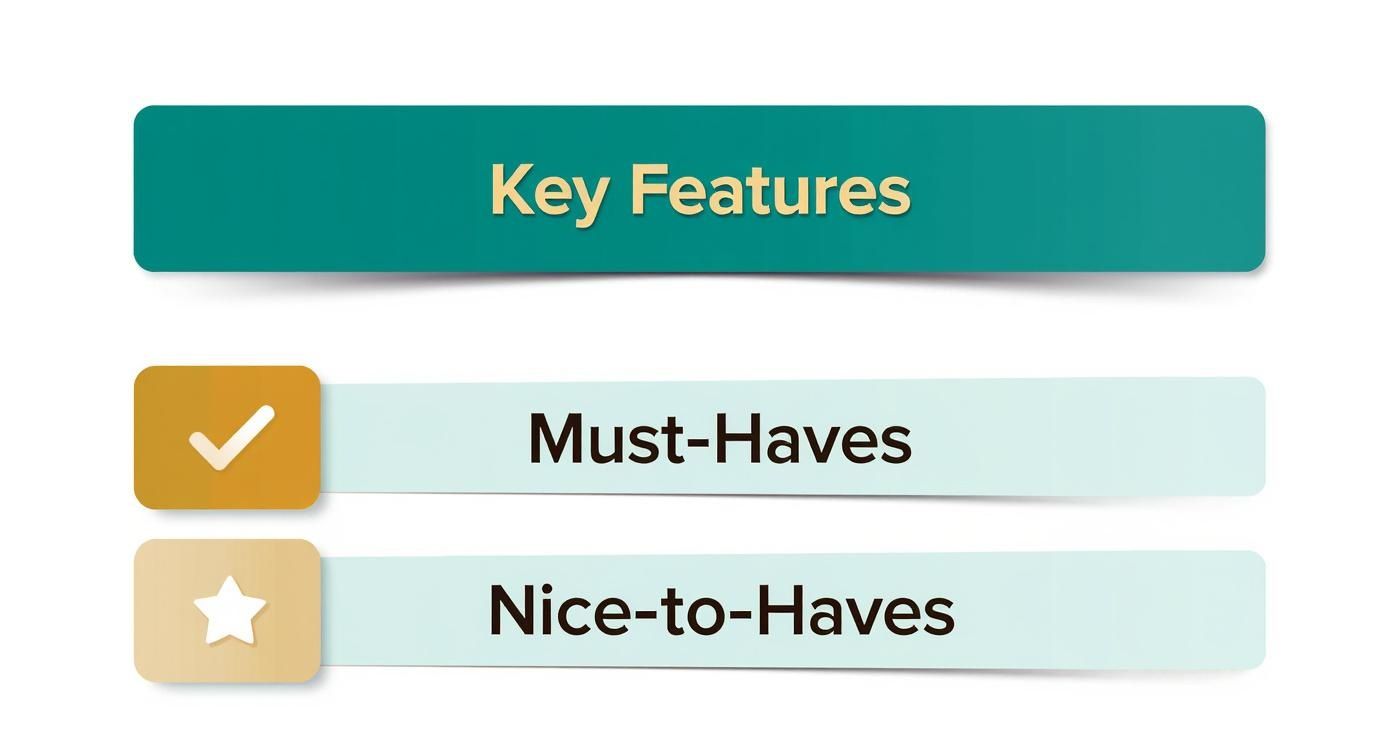
As you can see, getting the core functions right is what really matters, while the fancy extras are great for when you're ready to grow.
Ultimately, the best machine is the one that fits your budget and your personal learning style. Whether you prefer the straightforward muscle of a mechanical model or the helpful smarts of a computerized one, Linda's has an incredible selection to kickstart your quilting adventure. Explore our collection of beginner-friendly machines at Linda's to find your perfect creative partner
Top Sewing Machines for Quilting Beginners
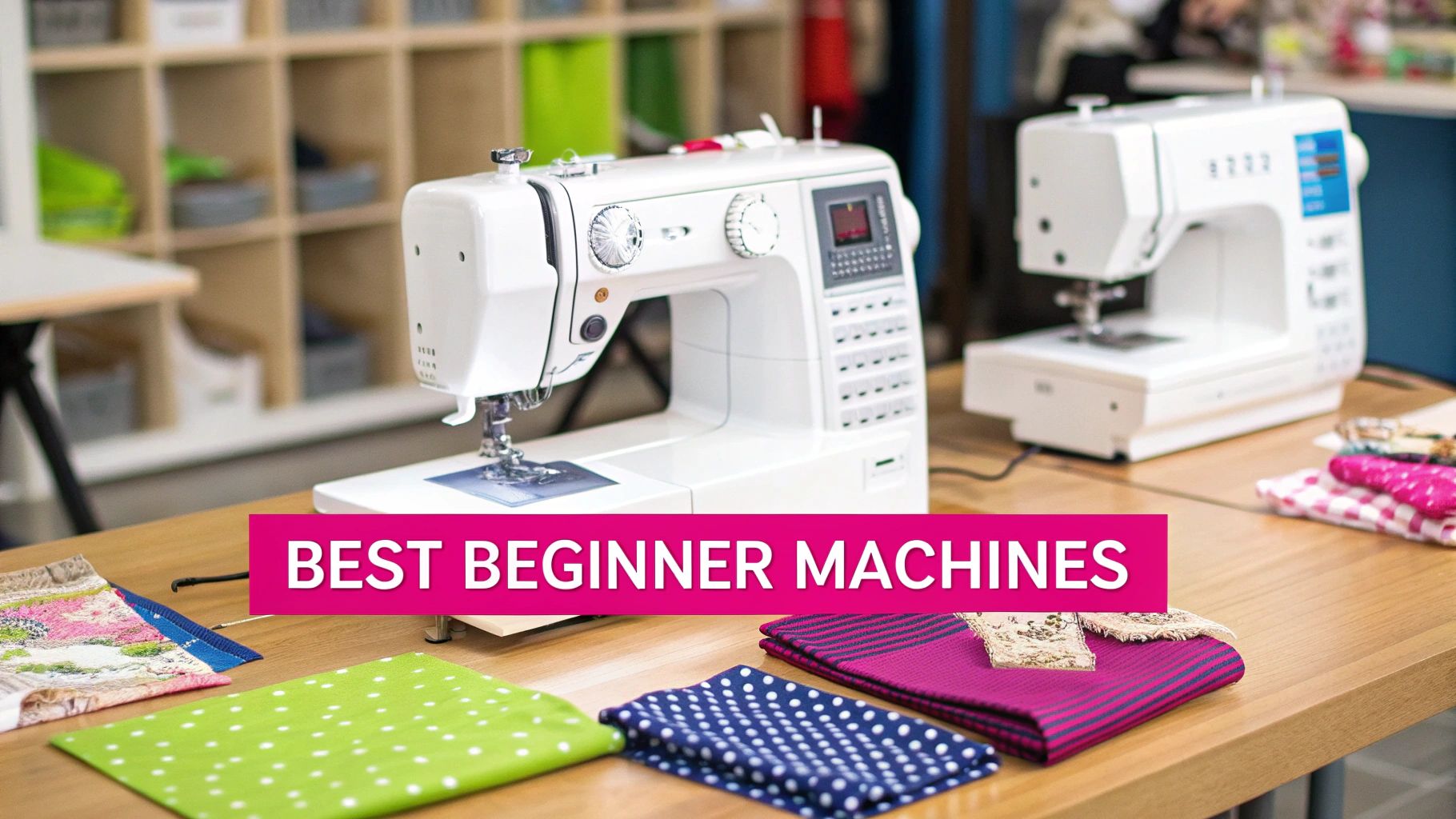
Okay, you know what to look for. Now for the exciting part—let's meet some of the best machines to get your quilting journey started right. Think of us as your personal shoppers, pointing you to the top-notch options we have right here at Linda's. We’ve personally picked a few favorites that we consider the perfect sewing machine for quilting beginners.
These models have a fantastic mix of the essential features we’ve been talking about, from generous workspace to easy-to-use controls. Whether you’re dreaming of mastering perfect straight lines or diving into the art of free-motion quilting, one of these machines is ready to help you bring those ideas to life. Let's find your perfect match.
The Reliable Workhorse for Straight-Line Quilting
For the beginner who just wants simplicity, durability, and a flawless straight stitch, you really can't beat a sturdy mechanical or entry-level computerized machine. These models are designed to feel intuitive from the get-go, letting you focus on the fundamentals without getting lost in a sea of buttons.
A perfect example is the Baby Lock Jubilant. It's a fantastic starting point—lightweight enough to take to a class, but powerful enough to handle your projects. Most importantly, it nails the features that truly matter for a new quilter:
- Needle-Down Function: This is a game-changer. It keeps your fabric perfectly still when you stop, so you can pivot and turn sharp corners like a pro.
- Speed Control: A simple slider lets you set your own pace. Start slow to build confidence, then speed up as you master your piecing.
- Included Walking Foot: This is a must-have for quilting! It ensures all your quilt layers feed through the machine evenly, preventing those frustrating puckers and giving you a beautiful, flat finish.
This machine is ideal for anyone who wants to build a solid quilting foundation. It's a dependable partner that will grow with you as you move from simple nine-patch blocks to more ambitious designs.
Ready to meet your new creative partner? The right machine makes all the difference. Explore our collection at Linda's and let us help you find the one that feels like it was made just for you.
The Creative Gateway to Free-Motion Quilting
Are you already dreaming of "drawing" with thread and adding your own artistic signature to your quilts? If so, a computerized model with a few more bells and whistles is probably your speed. These machines open up a world of decorative stitches and add handy automation that makes the creative process feel almost effortless.
The Brother NQ575PRW is an excellent first step into this creative space. It’s still incredibly user-friendly, but it adds a whole new layer of possibility for quilters just starting out. It has everything the simpler models do, but adds features that specifically support more artistic quilting styles, making it an incredible value.
The market for beginner machines is stronger than ever, with brands focusing on features that help new quilters succeed right away. In 2025, popular models are striking a brilliant balance between affordability and advanced functions. For example, some computerized sewing and quilting machines are selling over 500 units a month with rave reviews. This just proves that beginners are hungry for machines that offer both ease of use and quilting-specific options. You can discover more insights about top-selling quilting machines to see what your fellow quilters are choosing.
Finding your perfect machine is such an exciting moment. Whether you're drawn to the steadfast simplicity of a mechanical model or the creative freedom of a computerized one, Linda's has the machine to kick off your quilting adventure. We invite you to browse our selection of beginner-friendly machines at Linda's or schedule a consultation with our experts today.
Starting Your First Project
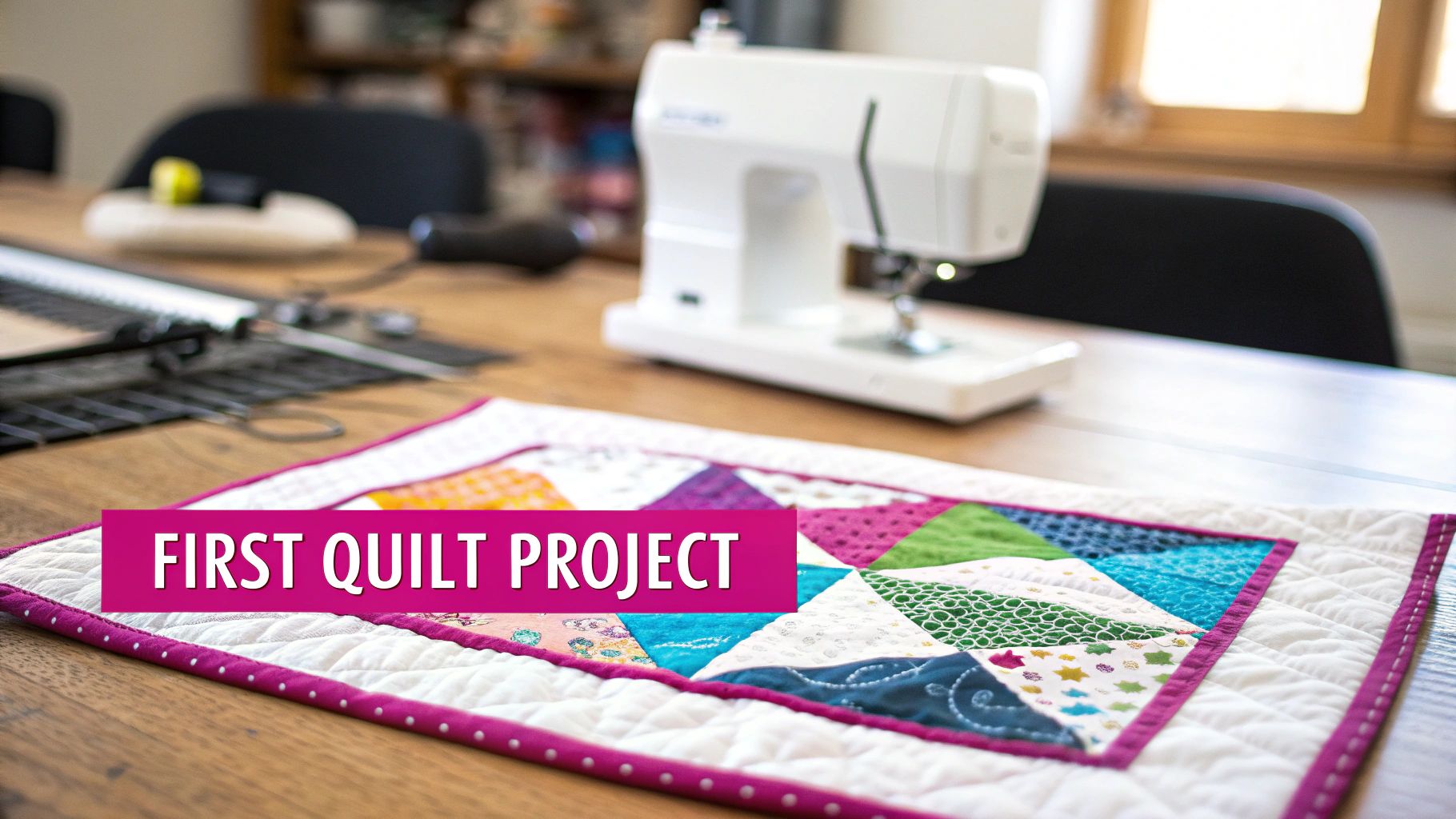
The absolute best way to get to know your new machine is to dive in and just make something. Reading the manual is one thing, but nothing builds real confidence like turning a pile of pretty fabric into something you can be proud of.
A fantastic first project? A set of quilted placemats. They're small, super satisfying, and let you get a feel for all the essential quilting skills without the pressure of a giant quilt. This is a perfect project to complete and showcase your new skills.
This little project will walk you through cutting your fabric, piecing the top, and quilting all the layers together. Every step is a chance to master a key function of your new sewing machine for quilting beginners, from nailing perfect seams to using your walking foot for flawlessly straight quilting lines.
Let’s get you started on your very first quilted treasure!
Gathering Your Supplies
Before you press that foot pedal, let's get your creative toolkit in order. Having all your supplies ready to go means you can focus on the fun part—the actual sewing! For a successful project, you'll need the right tools.
Here’s your checklist for a smooth start:
- Fabric: Grab a few coordinating cotton prints for the placemat tops. You'll also need fabric for the backing and the binding that goes around the edge.
- Batting: A low-loft cotton batting is perfect for placemats. It gives them just the right amount of body without being too puffy.
- Rotary Cutter, Mat, and Ruler: I call this the holy trinity of quilting. This trio is the secret to cutting accurate fabric pieces quickly and safely.
- Quality Quilting Thread: A 100% cotton thread is a great choice. Try to pick a color that matches your lightest fabric—it’s very forgiving and helps hide any wobbly beginner stitches!
- Walking Foot: Seriously, this is non-negotiable for quilting the layers. It grips the top and bottom fabric evenly, making sure your placemat lies perfectly flat with zero bunching.
Project Tip: Want to make things even easier? Start with pre-cut fabric squares, like charm packs (5" squares) or layer cakes (10" squares). This lets you skip most of the initial cutting and jump right into the sewing, which is a massive confidence booster when you're just starting out.
Missing a few things on the list? No worries at all! We've gathered everything you need for your quilting journey right here. You can find all these amazing supplies to finish your project in our Beginner's Quilting Corner at Linda's.
Your First Steps From Fabric to Quilt
Alright, ready to make some magic? We'll break it down into simple, easy-to-follow steps. For a classic placemat, you can arrange nine 5-inch squares in a three-by-three grid to create your top.
- Piecing the Top: First, sew your squares together into rows, using a consistent quarter-inch seam allowance. This is where your machine's guide lines or a quarter-inch foot become your best friend. Once the rows are stitched, press your seams and then sew the rows together to complete the placemat top.
- Making the Quilt Sandwich: Now for the layers! Lay your backing fabric down (wrong side up), place your batting on top of it, and finish with your beautifully pieced placemat top (right side up). Smooth out every wrinkle and pin the layers together every few inches to keep them from shifting.
- Quilting the Layers: This is where it all comes to life! Pop on your walking foot and start quilting from the middle of your placemat, sewing your way toward the edges. This little trick prevents the fabric from bunching up. For your first go, stick to simple straight lines—quilting along both sides of your seam lines (we call this "stitching in the ditch") is a fantastic and easy technique to master.
- Finishing: Almost there! Once you're done quilting, trim the extra batting and backing fabric. The final touch is to add binding around the edges. This neatens everything up and gives your placemat a clean, professional finish.
Each of these steps puts your new machine’s features to the test, turning theory into actual skill. As you guide the fabric and watch your placemat take shape, you’re building the muscle memory and confidence you need to tackle any project you can dream of.
Ready to find the perfect fabrics and tools for this project? Shop our amazing collection at Linda's and get everything you need delivered right to your door to finish your project.
Answering Your Top Questions About Beginner Quilting Machines
Diving into the world of quilting machines for the first time always stirs up a few questions. Feeling a little uncertain before you commit is totally normal! To help you out, we've rounded up the questions we hear most often from new quilters, complete with the straightforward answers you need to pick your first machine with confidence.
Let's clear the air and tackle those big questions so you can feel excited and ready to start your quilting journey.
Can I Just Use My Regular Sewing Machine for Quilting?
This is the big one, and it's a great question. The short answer is yes, you can absolutely piece a quilt top on any standard sewing machine. But—and it's a big but—a machine built with quilting in mind makes the whole process, especially the actual quilting, so much easier and more fun.
A sewing machine for quilting beginners has a few key advantages. The most obvious is a bigger throat space, which gives you the room to handle your quilt sandwich without wrestling a bunched-up mess. They also usually come with essential feet, like a walking foot for perfect fabric feeding and a free-motion foot for creative stitching. These tools are designed to prevent the most common frustrations and help you get beautiful results, even on your very first project.
What Should I Budget for a Good Beginner Machine?
You really don't have to break the bank to get a fantastic machine. For a reliable, quality entry-level machine that's perfect for quilting, you can expect to spend somewhere in the $300 to $600 range.
In this sweet spot, you'll find models from trusted brands that give you the durability and features you need to grow your skills without feeling overwhelming. They typically include essentials like a good variety of stitches, a needle-down function, and sometimes even a walking foot right out of the box. You can create absolutely stunning quilts without needing a professional long-arm machine.
Choosing a quality machine in this budget range is a smart investment. It will give you the reliability and core features you'll lean on as you grow from your first placemat to that king-sized quilt you've been dreaming about.
What Are the Must-Have Accessories I Need to Buy?
Once you've got your machine, a few key accessories will set you up for success. Think of this as your quilting starter pack—the non-negotiables that make all the difference.
- A Walking Foot: This is non-negotiable for quilting through multiple layers. It stops the fabric from shifting and puckering, making sure your quilt lies flat and looks professional.
- A Free-Motion Foot: Often called a darning foot, this is your ticket to creative freedom. It lets you "draw" with thread and create amazing designs.
- Machine Quilting Needles: Grab a pack of size 80/12 or 90/14 needles to start. They're designed to punch through all those layers without shredding your fabric or thread.
- High-Quality Quilting Thread: Good thread saves you from the headache of constant breaks and lint buildup. A neutral-colored, 100% cotton thread is a great, versatile place to start.
- The Quilting Basics: You'll also need a rotary cutter, a self-healing cutting mat, and a long quilting ruler. These are the tools that ensure your fabric pieces are cut perfectly from the get-go.
Getting these essentials will make your first project so much smoother and way more enjoyable.
Ready to put this knowledge into action? At Linda's Electric Quilters, we’ve put together the perfect collection of machines, fabrics, and all the essential accessories you need to kick off your quilting adventure. Our team loves helping new quilters find the perfect tools to bring their creative ideas to life.
Explore our beginner-friendly quilting supplies at Linda's today!