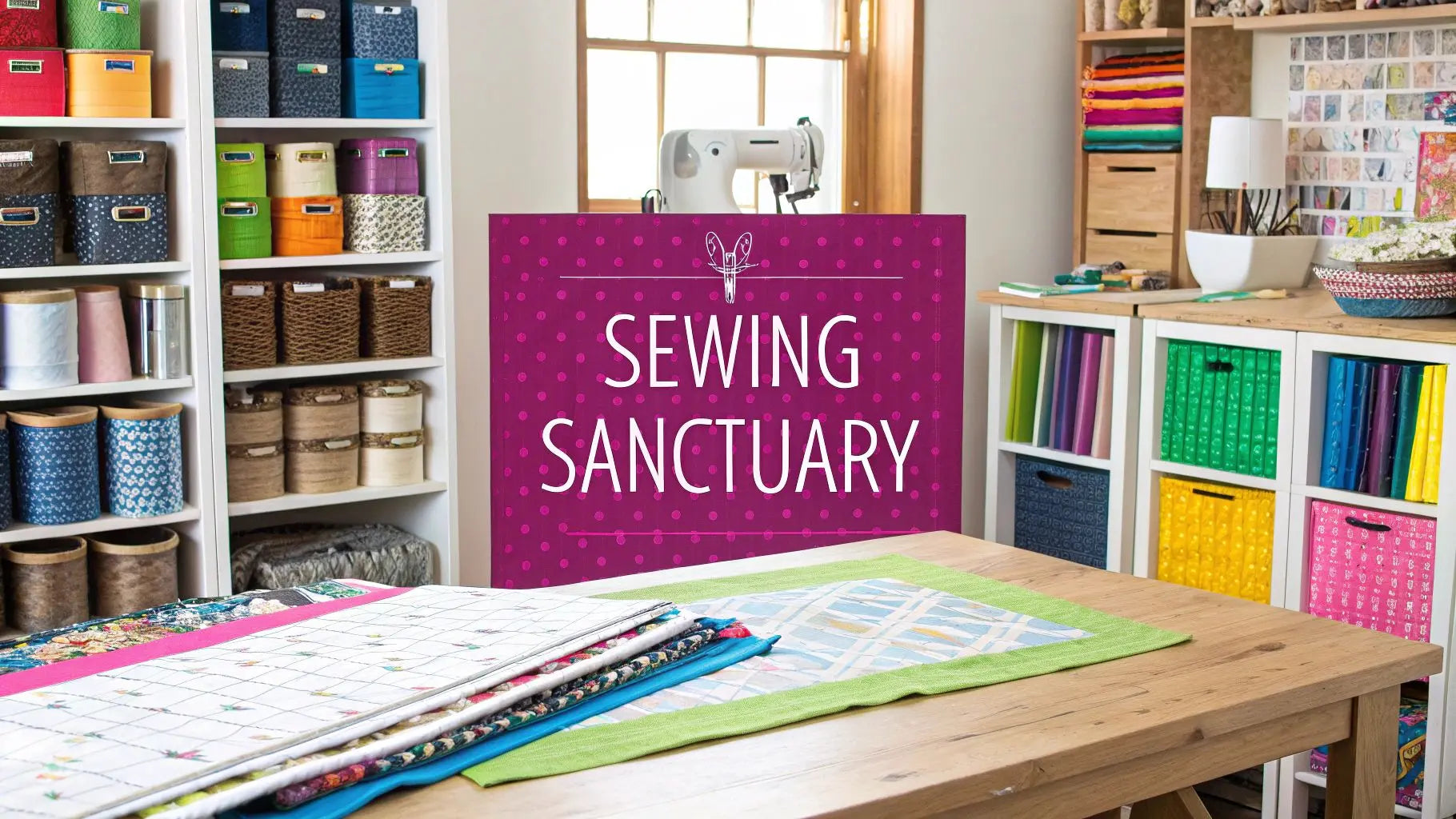
A cluttered sewing room can stifle creativity before the first stitch is even made. The search for the right thread, a misplaced rotary cutter, or a wrinkled piece of fabric can turn a passion project into a frustrating chore. This guide offers practical and inspiring sewing room organization ideas designed to transform your workspace into an efficient, beautiful, and productive sanctuary. We'll move beyond generic advice to provide actionable strategies that help you spend less time searching and more time creating.
Each idea is a project in itself, and we will cover specific systems for everything from thread and fabric to patterns and notions. These methods are designed to work in various room sizes, and for even more inspiration on optimizing compact areas, explore these clever small space storage ideas that can help transform any compact room, including your sewing nook.
Whether you're organizing a small corner or a dedicated studio, our goal is to help you build a system that works for your unique workflow. For every step, Linda's Electric Quilters has the high-quality supplies you need, from essential notions to beautiful fabrics, to bring your organizational vision to life. Let's dive in and create a space that truly inspires your craft.
1. Pegboard Wall Organization System
A pegboard system is one of the most transformative sewing room organization ideas for reclaiming valuable desk and floor space. This project uses perforated hardboard panels mounted on a wall, creating a modular grid for an array of hooks, shelves, and baskets. It converts unused vertical wall space into a highly functional and completely customizable storage hub, keeping your essential tools visible and within arm's reach.
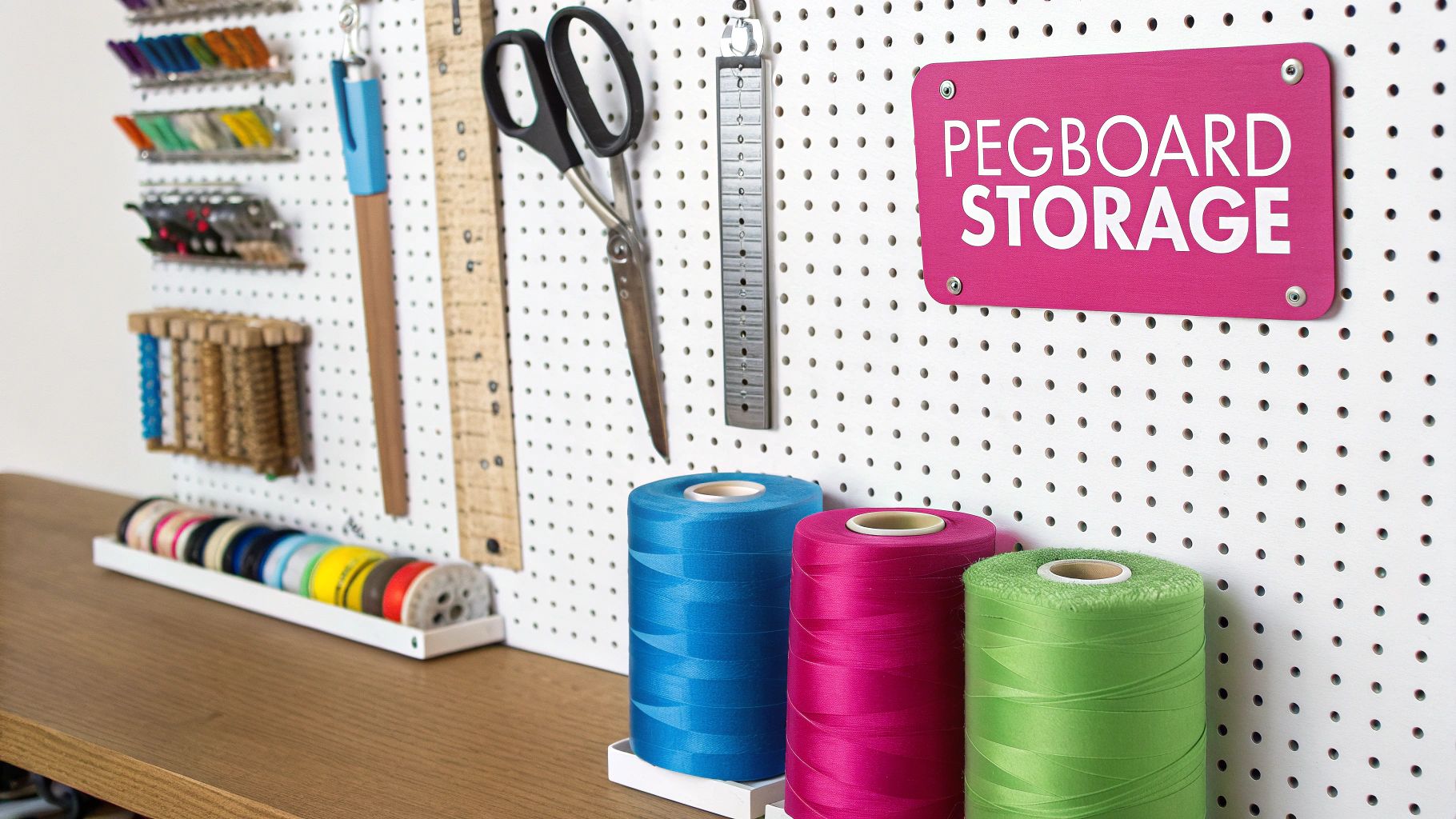
The true power of a pegboard lies in its adaptability. As your projects, tools, and needs evolve, you can effortlessly rearrange the accessories without drilling new holes. Systems like the IKEA SKÅDIS are popular for their modern aesthetic and wide range of compatible containers, while specialized kits from The Original Pegboard Company offer heavy-duty options perfect for quilters with numerous rulers and cutters.
Why This System Works for Sewing
A pegboard is ideal for sewists because it addresses the core challenge of managing many small, distinct tools. Instead of rummaging through drawers for your seam ripper or favorite scissors, you can see everything at a glance. This visual inventory not only saves time but also reduces the frustration of searching for misplaced items, allowing you to stay focused on your creative flow.
Key Insight: The ultimate benefit of a pegboard is "grab-and-go" efficiency. By keeping frequently used tools like rotary cutters, thread snips, and marking pens in plain sight, you minimize interruptions and maintain momentum during your projects.
Actionable Tips for Implementation
To maximize the effectiveness of your pegboard, follow these practical steps:
- Strategic Placement: Install the pegboard directly above your cutting mat or sewing machine. This creates an ergonomic "work zone" where your most-used tools are just a reach away.
- Group by Function: Create logical zones on your board. Dedicate one area for all cutting tools (scissors, rotary cutters), another for measuring tools (rulers, tape measures), and a third for marking implements (chalk, fabric pens).
- Contain Small Items: Use small bins or cups attached to hooks to corral loose notions like bobbins, buttons, and clips. This prevents tiny but essential items from getting lost.
- Stabilize Your Hooks: For a more secure setup, use pegboard hook locks or a small dab of hot glue to keep hooks from wiggling or falling out when you grab a tool.
Ready to build your perfect creative command center? Visit Linda's Electric Quilters to find premium cutting tools, rulers, and notions that will look fantastic on your new pegboard wall and help you complete this project with professional-grade supplies.
2. Rolling Cart Storage Station
A rolling cart storage station offers unmatched flexibility, making it one of the most practical sewing room organization ideas for dynamic creative spaces. This mobile unit acts as a portable command center for your notions, tools, and works-in-progress. It can be easily moved from your sewing machine to your cutting table or ironing board, ensuring your most-needed supplies are always right beside you. When you’re done for the day, it can be neatly tucked into a closet or corner.
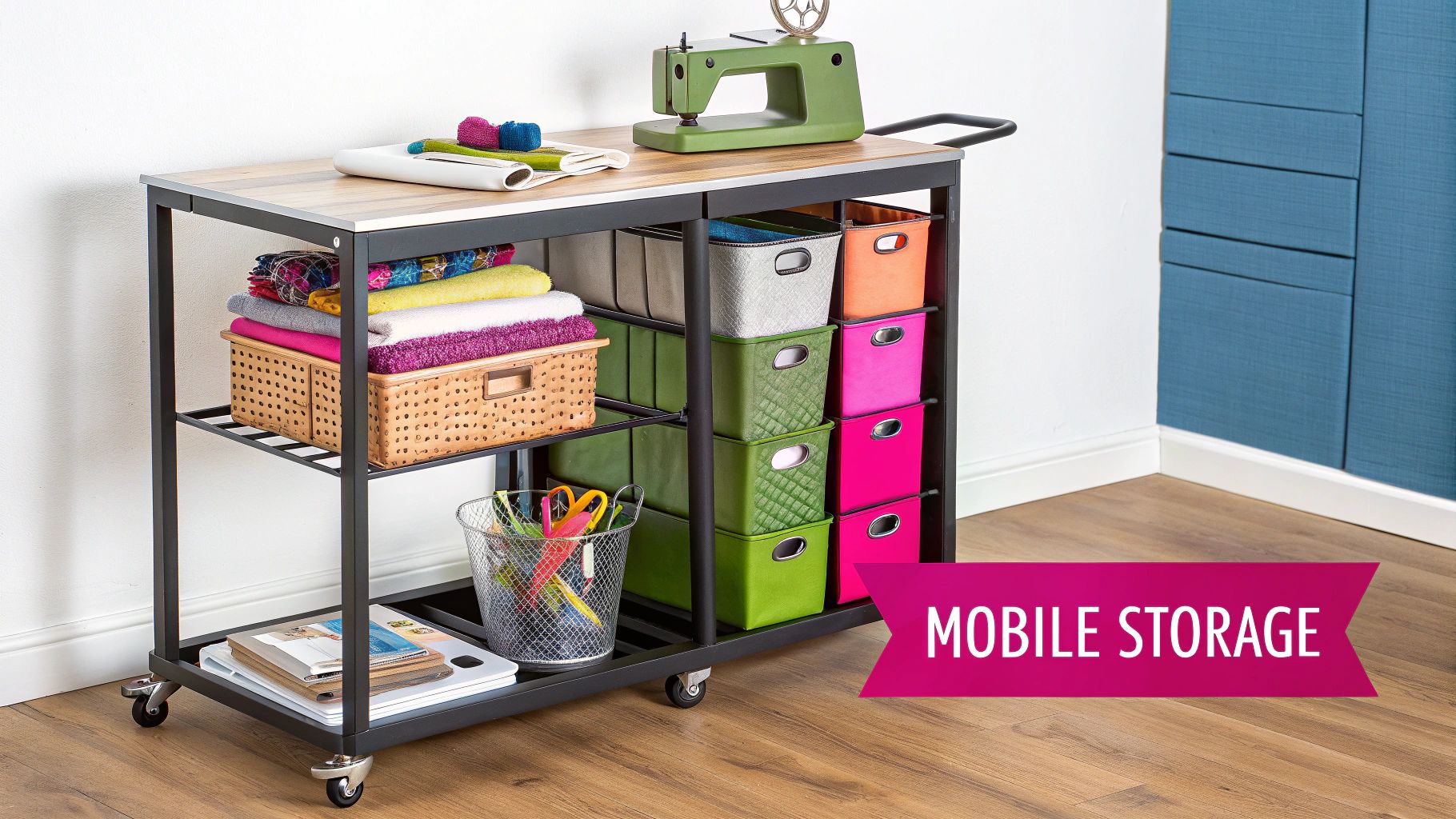
The versatility of rolling carts has made them a staple in modern craft rooms. The IKEA RÅSKOG cart is a classic, beloved for its deep baskets and sturdy frame, while multi-tiered plastic drawer units from brands like Honey-Can-Do offer contained storage. This project is all about adapting a simple piece of mobile furniture to serve the specific needs of your current creative endeavor, maximizing efficiency in both small and large sewing areas.
Why This System Works for Sewing
A rolling cart is perfect for sewists because projects rarely stay in one spot. You cut fabric at one station, sew at another, and press at a third. Instead of carrying armfuls of tools and fabric pieces between these zones, the cart brings the entire project hub with you. This fluid workflow minimizes setup time and keeps your main surfaces clear of clutter, dedicating them solely to the task at hand.
Key Insight: A rolling cart functions as "project-based" storage. You can dedicate an entire cart to a single quilt or garment, loading it with the specific fabric, thread, and notions needed, which streamlines your process and makes it easy to switch between multiple projects.
Actionable Tips for Implementation
To get the most out of your mobile storage station, apply these practical strategies:
- Create Project Kits: Designate each tier or drawer for a specific purpose. Use the top level for frequently used tools like scissors and seam rippers, the middle for fabric cuts, and the bottom for thread and bobbins related to your current project.
- Stabilize and Secure: Place heavier items like large rulers or fabric bolts on the bottom shelf to lower the center of gravity and prevent tipping. If your cart will be stationary for long periods, choose a model with locking wheels.
- Utilize Vertical and Side Space: Attach magnetic strips to the side of a metal cart for holding pins and scissors. Use S-hooks or clip-on containers to add extra storage for small items like wonder clips or marking pens.
- Contain and Categorize: Use small bins, jars, or dividers within the cart's shelves to keep notions like buttons, snaps, and bobbins organized and prevent them from rolling around.
To explore more ideas for integrating mobile units into your workspace, this guide to smart mobile shelving provides excellent insights. When you're ready to fill your new cart, stop by Linda's Electric Quilters to stock up on the high-quality notions and tools that will keep your projects rolling along smoothly.
3. Thread Storage Tower System
A thread storage tower system is a specialized solution designed to conquer one of the biggest challenges in any sewing room: managing an ever-growing collection of spools. These vertical organizers, whether rotating towers or wall-mounted racks, use individual pegs to hold each spool separately. This method is one of the most effective sewing room organization ideas for preventing tangles, protecting thread integrity, and turning your thread collection into a beautiful, functional display.
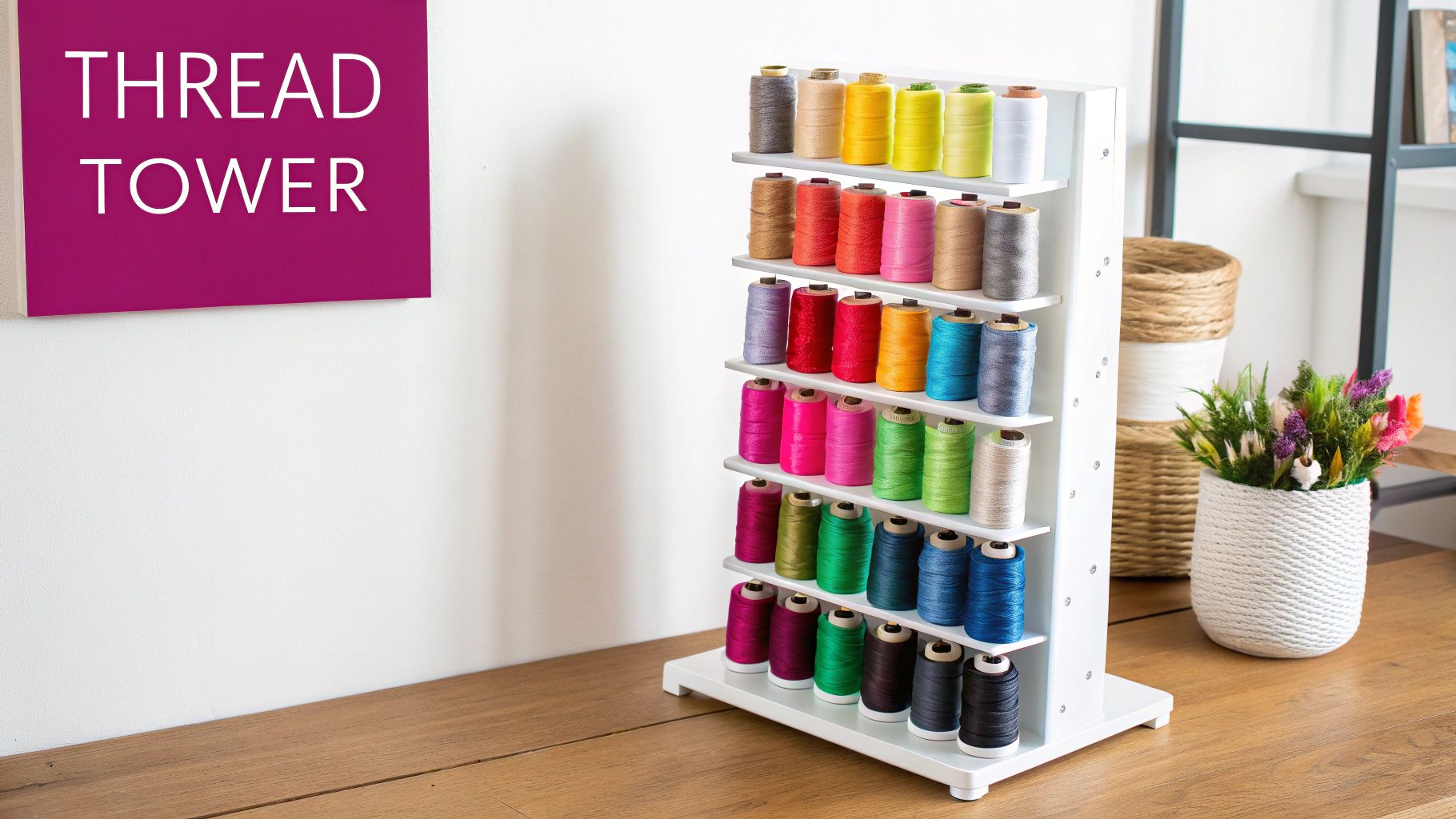
The brilliance of a dedicated thread tower lies in its efficiency. Instead of digging through a chaotic bin, you can instantly find the exact shade you need. Systems range from professional-grade Madeira thread chests to compact, rotating caddies perfect for smaller spaces. Many sewists even create DIY versions using PVC pipes or dowel rods, a testament to the system's practical appeal seen in professional quilting studios and popular YouTube sewing room tours.
Why This System Works for Sewing
This system is perfect for sewists, quilters, and embroiderers because it organizes thread by its most important attribute: color. Seeing your entire palette at once makes color matching for projects intuitive and fast. It also protects your investment by keeping spools from getting dusty, tangled, or exposed to excessive light, which can weaken the fibers and cause fading over time.
Key Insight: A thread tower transforms your collection from a storage problem into a creative asset. By organizing spools visually, you can easily pull color palettes for new projects, which speeds up your planning process and inspires new creative combinations.
Actionable Tips for Implementation
To get the most out of your thread storage system, follow these practical steps:
- Organize by Color Family: Arrange your spools in a rainbow or gradient order (e.g., all reds together, transitioning to oranges). This makes finding the perfect hue effortless.
- Protect from UV Rays: If your system is not enclosed, place it away from direct sunlight. Expensive embroidery and quilting threads can fade and become brittle with prolonged UV exposure.
- Use Thread Nets or Caps: For slippery threads like rayon or silk, use thread nets or "huggies" to keep the ends from unwinding and creating a tangled mess on your rack.
- Keep an Inventory: For very large collections, consider creating a simple spreadsheet or using an app to track what you own. This prevents you from buying duplicate colors during a sale.
Ready to display your beautiful thread collection? Visit Linda's Electric Quilters to explore our premium selection of quilting and embroidery threads that will bring your creative visions to life and make this organizational project truly shine.
4. Clear Storage Container System
A clear storage container system is a foundational element of effective sewing room organization ideas, offering a perfect blend of visibility and protection. This project utilizes transparent boxes, bins, and drawers to store fabric, notions, and works-in-progress, allowing you to see your inventory at a glance. It keeps your valuable supplies safe from dust, moisture, and pests while preventing the "out of sight, out of mind" problem common with opaque storage.
The system's strength lies in its modularity and clarity. Brands like IKEA (with their SAMLA series) and Sterilite offer stackable solutions in uniform sizes that create tidy, efficient storage walls in closets or on shelves. This method, popularized by home organization experts like Marie Kondo, transforms chaos into a calm, manageable, and visually appealing library of creative materials.
Why This System Works for Sewing
For sewists and quilters, managing a diverse and ever-growing stash of fabric and notions is a constant challenge. Clear containers solve this by making your inventory instantly accessible. Instead of digging through multiple unmarked bins to find that specific fat quarter bundle or a spool of navy thread, you can visually scan your collection. This saves immense time and helps you use what you already own, preventing duplicate purchases.
Key Insight: The ultimate benefit of a clear container system is "visual inventory control." It allows you to quickly assess your supplies, find what you need without disruption, and feel inspired by the colors and textures of the materials you’ve collected.
Actionable Tips for Implementation
To get the most out of your clear storage system, apply these organizational strategies:
- Standardize Your Sizes: Whenever possible, purchase containers from the same product line. This ensures they stack securely and create a clean, uniform look on your shelves.
- Label Everything: Even though the containers are clear, add labels to the front. This is especially helpful for stacked boxes, allowing you to identify contents without moving anything.
- Group by Category: Dedicate specific containers to categories like "cotton solids," "quilting fat quarters," "interfacing," or "zippers and buttons." This makes locating items intuitive.
- Use Internal Dividers: For larger boxes holding small notions, use smaller containers or dividers inside. This keeps items like bobbins, seam rippers, and marking pens from becoming a jumbled mess.
Ready to organize your fabric stash and notions? A well-organized space starts with the right materials. Explore the amazing selection of project kits and supplies at Linda's Electric Quilters to fill your new containers with inspiring materials for your next masterpiece.
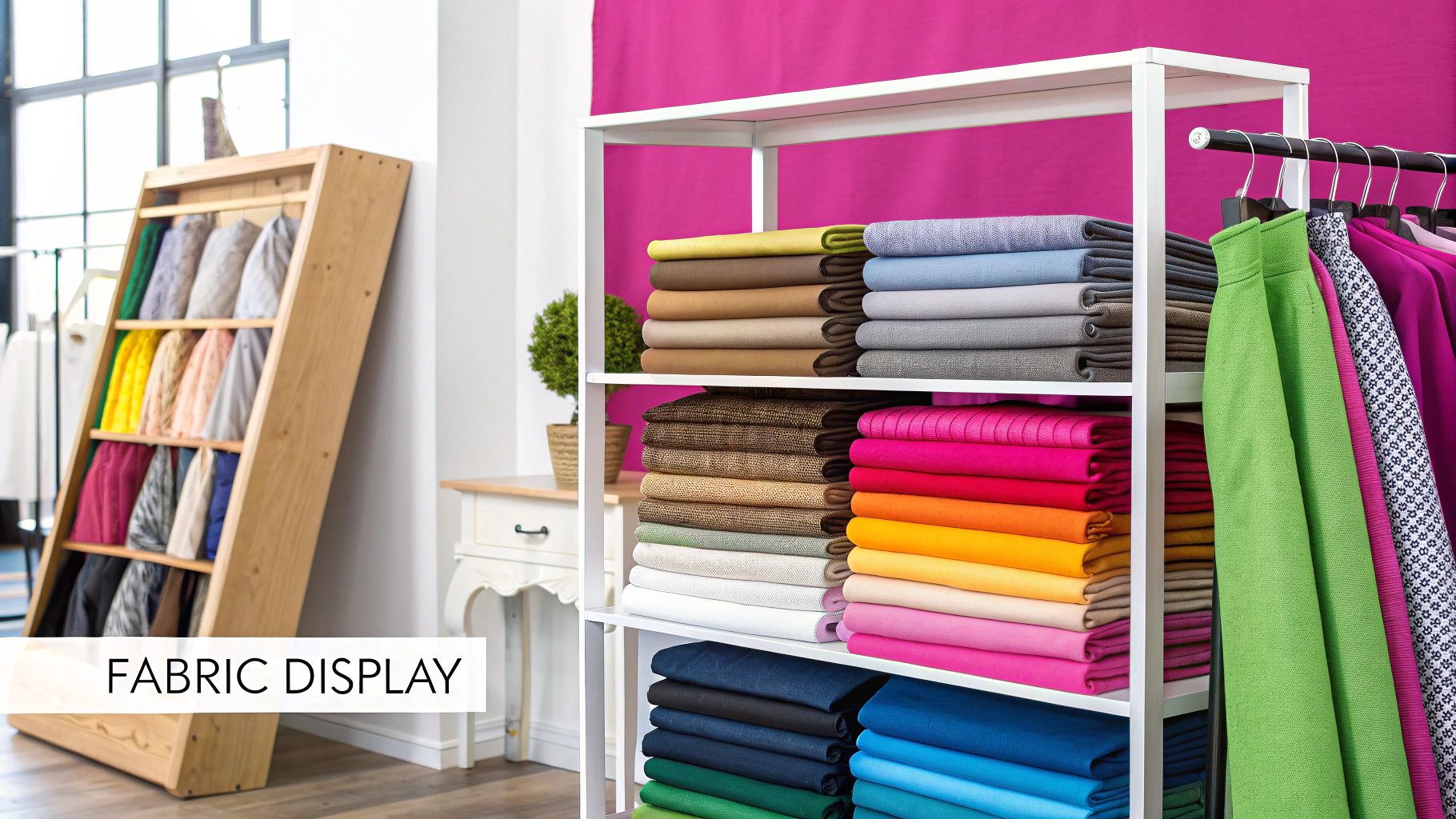
5. Fabric Bolt Organization Method
The fabric bolt organization method is a game-changing project for anyone with a growing fabric stash, transforming a cluttered pile into a curated, professional-style collection. This system mimics how high-end fabric stores display their inventory, keeping materials neatly wrapped around boards and stored either horizontally on shelves or vertically in bins. It makes your fabric collection look inspiring while keeping every piece visible, accessible, and wrinkle-free.
This method’s strength is its polished and uniform look, which elevates your creative space. You can achieve this with dedicated shelving like the IKEA IVAR system, which is easily adapted for horizontal bolt storage, or by using comic book storage boxes to file fabric bolts vertically. The goal of this educational project is to create a "fabric library" where you can easily pull a bolt, assess its texture and drape, and cut what you need without disturbing the entire stash.
Why This System Works for Sewing
This system is one of the most effective sewing room organization ideas because it solves the biggest fabric storage challenge: visibility. When fabric is folded and stacked in drawers or bins, you only see the top piece, leading you to forget what you own and buy duplicates. Organizing fabric on bolts allows you to see every print and color at a glance, making "shopping your stash" an efficient and enjoyable part of the creative process.
Key Insight: Storing fabric like a professional not only keeps it pristine but also shifts your mindset. When you can easily see and access your materials, you are more likely to use them, transforming your collection from a hidden hoard into a working palette of creative potential.
Actionable Tips for Implementation
To set up a functional and beautiful fabric bolt system, follow these steps:
- Create Uniform Bolts: Use specialty fabric organizer boards or cut your own from sturdy acid-free foam core or cardboard. A consistent width (around 10-14 inches) creates a clean, tidy appearance.
- Organize Logically: Group your fabric bolts by color, fabric type (cotton, knits, linen), or intended project. This makes finding the perfect material for your next quilt or garment quick and intuitive.
- Use Dividers for Stability: If storing bolts vertically in a bin or horizontally on a deep shelf, use dividers to prevent them from slumping or falling over. This maintains the clean lines of your display.
- Track Your Yardage: As you wrap each fabric, attach a small tag or label to the bolt with the yardage information. This simple step saves you from having to unwrap and measure fabric every time you plan a new project.
Ready to create your dream fabric library? Start by stocking up on high-quality fabrics from Linda's Electric Quilters, perfect for wrapping and displaying in your newly organized space to finish your project in style.
6. Magnetic Storage Solutions
Magnetic storage is a brilliantly simple yet effective sewing room organization idea that leverages the power of magnets to keep metal tools tidy and accessible. This project involves using magnetic strips, bowls, and holders to create designated spots for scissors, pins, needles, and other metal notions. It transforms any flat surface, from the side of a cabinet to a section of wall, into a powerful grab-and-go storage station.
The versatility of magnetic solutions is their biggest advantage. Strong magnetic bars, originally designed for kitchen knives or workshop tools, can be mounted above a cutting table to hold rotary cutters and fabric shears. Small magnetic bowls can sit beside your sewing machine to catch stray pins and clips, preventing them from falling on the floor. This system is all about securing small, easily lost items exactly where you need them.
Why This System Works for Sewing
Sewists constantly work with small, sharp metal objects that are both essential and hazardous if misplaced. A magnetic system directly addresses this challenge by providing a secure "home base" for these items. Instead of digging for a needle or worrying about a pin dropping into the carpet, you have a designated magnetic surface that holds them firmly in place, making your workspace safer and more efficient.
Key Insight: The primary benefit of magnetic storage is instant containment and retrieval. A magnetic pin bowl or wand acts like a "pin magnet," allowing you to quickly sweep up and secure scattered pins, saving time and protecting your fingers and feet.
Actionable Tips for Implementation
To get the most out of your magnetic storage setup, consider these practical tips:
- Create Work Zones: Install magnetic strips on the side of your sewing table or on the wall directly behind your machine to keep snips, seam rippers, and tweezers within easy reach.
- Choose the Right Strength: Use heavy-duty magnetic bars for larger tools like shears and rotary cutters. Smaller magnetic dishes or pin cushions are perfect for needles, bobbins, and clips.
- Protect Your Tools: To prevent scratches on high-quality scissors or tools, you can cover a magnetic bar with a thin layer of felt or decorative fabric before mounting it.
- Mind Your Machine: Be cautious about placing very strong magnets too close to the electronic components of a computerized sewing machine, as they can potentially cause interference.
Ready to add the convenience of magnetic organization to your creative space? Stop by Linda's Electric Quilters to explore our selection of high-quality metal snips, pins, and notions that are perfect for completing this organizational project.
7. Pattern Storage and Filing System
A dedicated pattern storage and filing system is a crucial sewing room organization idea for managing your ever-growing collection. This project moves beyond a simple pile of envelopes, creating a structured library that protects delicate tissue paper and makes finding the right design effortless. It involves using tools like binders, filing cabinets, or digital apps to categorize and store commercial patterns, PDF printouts, and traced pattern pieces.
The versatility of this system allows you to tailor it to your specific collection. For commercial envelope patterns, simple magazine holders or comic book storage boxes are excellent. For PDF patterns, three-ring binders with sheet protectors keep everything clean and orderly. For large, traced pattern pieces, a flat-file cabinet or large manila envelopes stored upright in a bin prevents creasing and damage.
Why This System Works for Sewing
A pattern filing system is essential for sewists because it prevents the loss and damage of valuable patterns, which are often reused for years. Instead of desperately searching for a specific pattern or finding it crumpled and torn, you have a reliable method for locating exactly what you need. This organized approach also makes it easier to track your inventory, see what you already own, and avoid buying duplicates.
Key Insight: The ultimate benefit of a pattern filing system is project readiness. By having your patterns organized and accessible, you can move from inspiration to action quickly, without the frustrating delay of hunting down a specific design.
Actionable Tips for Implementation
To create an effective pattern library that works for you, follow these practical steps:
- Categorize Logically: File your patterns in a way that makes sense to you. Common methods include organizing by garment type (dresses, tops, pants), by brand, or even by size.
- Protect Traced Pieces: Store self-drafted or traced patterns in large manila envelopes. Label the outside with a sketch of the design, the size, and any modification notes for easy identification.
- Create a Digital Index: For a physical collection, consider creating a simple spreadsheet or using an app to inventory your patterns. Include a photo of the envelope and key details so you can browse your collection from your phone.
- Utilize Binders for PDFs: Keep printed PDF patterns in three-ring binders with sheet protectors. Use tab dividers to separate them by category, making it simple to flip through your collection.
Ready to get your patterns in order? While you’re organizing, make sure you have the best tools for tracing and cutting. Visit Linda's Electric Quilters to explore our selection of high-quality marking tools and rulers that will help you perfect your next project.
Sewing Room Organization Solutions Comparison
| Storage System | Implementation Complexity 🔄 | Resource Requirements ⚡ | Expected Outcomes 📊 | Ideal Use Cases 💡 | Key Advantages ⭐ |
|---|---|---|---|---|---|
| Pegboard Wall Organization System | Moderate (wall mounting required) | Low to moderate (pegboard + accessories) | Flexible, visible tool storage | Sewers needing customizable, accessible wall storage | Highly flexible, cost-effective, visible tools |
| Rolling Cart Storage Station | Low (no installation) | Moderate (cart purchase, possible containers) | Mobile, flexible storage | Small/multi-use spaces, frequent repositioning | Portable, no installation, multi-purpose |
| Thread Storage Tower System | Moderate (assembly or mounting) | Moderate to high (specialized towers) | Efficient thread organization | Serious sewers/quilters with large thread collections | Vertical space use, thread protection |
| Clear Storage Container System | Low (just purchase and stacking) | Moderate to high (containers and labels) | Dust-protected, visible contents | Organized, dust-sensitive supplies, inventory control | Clear visibility, dust/moisture protection |
| Fabric Bolt Organization Method | Moderate to high (shelving setup) | Moderate to high (shelving, space) | Wrinkle-free, inspiring fabric display | Professional/semi-professional fabric collection | Prevents wrinkles, professional appearance |
| Magnetic Storage Solutions | Low (easy mounting) | Low (magnetic strips, bowls) | Secure, quick-access metal tool storage | Metal tool organization in small or busy workspaces | Space-efficient, easy tool retrieval |
| Pattern Storage and Filing System | Moderate (filing setup, digital tools) | Low to moderate (folders, boxes, apps) | Protected, searchable pattern library | Pattern-heavy sewers needing organized access | Protects patterns, easy retrieval, digital options |
Your Organized Future Awaits
We've explored a comprehensive toolkit of strategies, from vertical pegboard systems to mobile rolling carts and meticulous pattern filing. Each of these sewing room organization ideas is more than just a method for tidying up; it's a pathway to a more efficient, enjoyable, and productive creative process. The journey from a cluttered space to an orderly sanctuary is not about achieving perfection overnight. It is about making deliberate choices that serve your unique workflow and crafting habits.
Remember the core principles we discussed. Visibility and accessibility are paramount. Clear containers, magnetic strips, and well-labeled systems ensure you can find what you need the moment inspiration strikes, eliminating frustrating searches for that specific spool of thread or rotary cutter. Similarly, zoning your space by function transforms chaos into a logical, step-by-step environment where every tool has a designated home.
Key Takeaways for Lasting Organization
To truly transform your creative space, focus on these foundational concepts:
- Customize Your System: The most effective organization plan is one tailored to you. A quilter with a vast fabric stash will benefit greatly from the fabric bolt method, while a garment sewer might prioritize an expansive pattern filing system. Do not feel pressured to adopt every idea; instead, select and adapt the ones that solve your biggest challenges.
- Embrace Vertical Space: Many sewing rooms are limited in square footage. Solutions like pegboards and thread towers are brilliant because they draw the eye upward, utilizing wall space that often goes to waste. This frees up your valuable work surfaces for cutting, pressing, and sewing.
- Maintain with Micro-Habits: A perfectly organized room can quickly revert to its former state without consistent upkeep. Develop small, manageable habits, like putting away tools after each session or dedicating five minutes to tidying up at the end of the day. This small investment of time prevents clutter from accumulating and becoming an overwhelming project.
Your Actionable Next Steps
Transforming your sewing room from a source of stress to a haven of creativity is an empowering project. Start by assessing your current space and identifying the single biggest point of frustration. Is it your tangled thread collection? The pile of unsorted fabric? The jumble of patterns?
Choose one of the sewing room organization ideas from this article that directly addresses that problem. Begin small. You do not need to overhaul everything at once. Implementing a single system, like the rolling cart station for your current project, can create a ripple effect of positive change, motivating you to tackle the next area. The goal is progress, not perfection. An organized sewing room directly translates to more time spent creating and less time spent searching, allowing your best work to flourish.
Ready to fill your newly organized drawers, carts, and containers with high-quality supplies? At Linda's Electric Quilters, we offer a curated selection of premium fabrics, threads, notions, and tools to bring your creative vision to life. Explore our collection and find the perfect materials to stock your beautifully organized sewing sanctuary at Linda's Electric Quilters.