You’re ready to stitch, your fabric is chosen, your design is printed, and then the thread wall stops you cold.
One spool says polyester. Another says rayon. A soft cotton perle looks perfect until you wonder if it will snag on your quilt top. Metallic catches the light beautifully, but you’ve heard it can be fussy. If you’ve ever held two spools in your hand and thought, “I have no idea which one belongs in this project,” you’re in the right place.
That confusion is normal. Threads for embroidery aren’t just about color. They change how a design looks, how a stitch behaves, how well a project washes, and how much frustration you’ll feel while sewing. A thread that works beautifully on a linen monogram can be the wrong choice for a denim tote or a quilt block that needs texture and durability.
The good news is that thread selection gets much easier once you know three things: fiber, weight, and finish. Those three details tell you almost everything you need to know about how a thread will perform.
Introduction to Embroidery Threads
A beginner often starts with color and only later learns that color is the easy part.
The harder question is what the thread needs to do. Does it need to hold up on a quilt that will be washed often? Does it need to sit delicately on fine linen? Does it need to add texture without pulling the fabric out of shape? Those are thread questions, not design questions.
Embroidery thread has a very long history. The history of embroidery threads traces back over 30,000 years to the Cro-Magnon era, with early examples used for both decoration and reinforcement of fabric. That history still shows up in the choices we make today. Some threads are practical first. Others are decorative first. The smartest stitchers learn when to choose each one.
What beginners usually notice first
Sheen is often the first characteristic noticed.
Silk glows. Metallic flashes. Cotton tends to look softer and more grounded. Polyester often looks clean and crisp. But appearance is only half the story. Two threads can look similar on the spool and behave very differently once they pass through fabric or a machine needle.
Here’s where readers often get tangled up:
- Fiber confusion: Cotton, polyester, rayon, silk, and metallic all behave differently.
- Weight confusion: A finer thread won’t fill space the same way as a heavier one.
- Use confusion: A thread that works for hand embroidery may not be ideal for machine embroidery.
Practical rule: Don’t choose thread by color alone. Choose it by job first, then color second.
A better way to shop for thread
When you pick up a spool, ask four quick questions:
- What fabric am I stitching on
- Will this be done by machine or by hand
- Do I want detail, coverage, or texture
- Will this project be decorative, washable, or both
That simple habit turns a crowded display of thread into a set of clear options. Once you understand how fibers and weights behave, you’ll be able to walk up to a shelf of threads for embroidery and know which spools deserve a place in your cart.
Understanding Thread Fibers and Their Effects
A spool can look perfect in the shop and still be the wrong choice once it meets your fabric. That is why fiber matters so much. Fiber shapes how the thread reflects light, how it moves through a needle, how it sits on the surface, and how well it holds up on a quilt that will be folded, washed, and used.
Some fibers behave like quiet background music. Others act like a spotlight.

Cotton, polyester, silk, and metallic
Cotton gives a soft, matte finish that blends naturally with quilting cotton, linen, flannel, wool, and felt. If your goal is embroidery that feels at home on the fabric rather than sitting on top of it, cotton is often the right starting point. It suits folk designs, rustic motifs, heirloom-inspired quilting, and projects where a gentle, less shiny surface looks more natural.
Polyester is a practical choice for machine embroidery, especially on quilts, children's items, bags, and anything that will be washed often. It resists wear well and usually runs with fewer problems than fussier fibers. On smooth cotton quilts or polyester-blend fabrics, it gives crisp definition and color that stays visible after repeated use.
Silk has a smoother, finer look. Light catches it in a softer, richer way than cotton, so it works beautifully for heirloom blocks, fine line detail, and decorative hand stitching on delicate fabrics. On coarse fabric, though, silk can feel a bit like wearing dress shoes on a gravel road. It can do the job, but it is not the most forgiving match.
Metallic draws attention fast. A small amount can brighten stars, holiday motifs, lettering, sashiko-inspired accents, or quilt borders. Too much metallic can overwhelm the surface, especially on already busy prints. Use it the way you would use jewelry with an outfit. One or two accents usually have more impact than covering everything in shine.
Why fiber changes the stitch
Fiber affects more than appearance. It changes the whole stitching experience.
A cotton thread may settle into a quilting cotton block and look like it belongs there from the start. The same design stitched in polyester will usually appear sharper and brighter. In silk, it may look finer and more refined. In metallic, the design becomes an accent first and a line of stitching second.
That difference matters when you are pairing thread with fabric and technique:
- On quilting cotton: Cotton and polyester are usually the easiest matches. Cotton looks softer. Polyester looks clearer and slightly brighter.
- On linen or textured natural fabrics: Cotton often blends better with the fabric's character, while silk can add elegant contrast for special motifs.
- On felt or wool appliqué: Cotton and some specialty matte threads tend to sit more comfortably on the surface than slick, high-shine options.
- For dense machine embroidery: Polyester is often easier to run cleanly.
- For decorative hand stitching: Cotton, silk, and texture-focused specialty threads often give more character.
Beginners often assume color mismatch is the problem when stitches look off. Fiber mismatch causes just as many disappointments. A shiny thread on a homespun-style quilt can feel out of place. A matte thread on a festive ornament can look flatter than intended.
Eco-friendly fibers deserve a real test
Eco-friendly thread deserves more than a passing glance, especially for quilters who care about materials as much as finished looks. Organic cotton, recycled polyester, bamboo blends, and hemp-based options can be smart choices, but they should be matched to the project with the same care you would give any other thread.
For example, organic cotton often makes sense on natural-fiber quilts where you want a soft, cohesive finish. Recycled polyester can be a strong fit for machine embroidery on utility quilts or bags that need wash durability. Bamboo or hemp blends may add subtle texture, which can be beautiful on art quilts and slow-stitch projects but less ideal for very dense machine designs.
Texture mixing is another overlooked option. A quilt does not need one thread fiber from edge to edge. You might use cotton for the main embroidered motif, then add a touch of metallic for highlights, or combine matte thread with a glossy accent so specific shapes stand out. That mix can give a quilt more depth without changing the fabric at all.
If you want to test these combinations, Linda's curated inventory makes that process easier because you can compare practical thread options side by side instead of guessing from packaging. If you are unsure what will suit your quilt top, batting choice, or stitching method, Linda's team can help you narrow it down before you invest in several spools that do not suit the project.
The safest approach is simple. Stitch a sample on the same fabric you plan to use. Wash it the way the finished piece will be washed. Rub the surface lightly. Check the sheen, the texture, and how the thread sits after drying. That small test tells you what the spool label cannot.
Exploring Thread Weights and Finishes
Thread weight sounds technical, but the idea is simple. Weight affects how bold, delicate, smooth, or textured your stitching looks.
If fiber is personality, weight is volume.

What weight really changes
That one fact clears up a lot of confusion. If you’ve been wondering where to begin for machine work, 40wt is the usual starting point because it handles everyday embroidery jobs well.
Here’s the practical feel of common choices:
- 60wt and finer: Best when the design needs delicacy. Think tiny lettering, subtle detail, and fine fabrics.
- 40wt: The all-around middle ground for many machine embroidery projects.
- 30wt: Better when you want stronger visual coverage, bolder outlines, or fuller stitches on denser fabric.
Weight and finish work together
A matte thread and a glossy thread can be the same weight and still look very different on the fabric.
A matte finish softens the design. It blends more naturally into traditional quilts, folk-inspired work, and projects where you want texture without shine.
A glossy finish catches light and sharpens contrast. It tends to make satin stitches, decorative motifs, and monograms stand out more clearly.
Then there’s metallic finish, which works best in small doses. It’s usually more effective as an accent than as the entire design.
A simple way to think about it: weight controls how much you see, finish controls how the light sees it.
Matching weight to the fabric
Heavy fabrics usually want more visual presence from the thread. Delicate fabrics usually want restraint.
A bold thread on a fine linen can look clumsy. A very fine thread on heavy canvas may disappear or fail to give enough coverage. That’s why thread choice should follow fabric choice, not the other way around.
This is also where shopping gets easier. If you know your project needs crisp everyday machine embroidery, start with 40wt. If your design has tiny detail, move finer. If your fabric is sturdy and the stitching needs to read clearly, move heavier.
For stitchers who like trying several looks before committing, it helps to keep a small range on hand: a fine thread for detail, a standard thread for general work, and a bolder thread for texture or dense fabric.
Comparing Threads for Machine vs Hand Embroidery
Machine embroidery and hand embroidery may share the same design language, but they ask very different things from thread.
A machine pulls thread quickly, repeatedly, and under steady mechanical tension. Your hand does none of that. Your hand changes angle, speed, pressure, and stitch length constantly. That’s why a thread that behaves beautifully in one method may feel awkward in the other.
What machine embroidery needs
Machine thread has to move cleanly and consistently.
That’s one reason 40wt polyester or rayon is so common for machine work. It offers a practical middle ground for many purchased designs. The machine also cares about twist direction, needle pairing, and whether the thread can tolerate speed without fraying or breaking.
For many hobbyists, machine success comes down to matching the thread to the design density and the fabric. Dense fills on sturdy fabric usually need a different approach than tiny lettering on a fine ground.
A few machine-minded habits help a lot:
- Use thread made for embroidery machines. General sewing thread doesn’t always behave the same way.
- Match the needle to the thread. If the thread struggles through the eye, the machine will tell you quickly.
- Watch the first few minutes of stitching. Early breaks often reveal a mismatch before the design is far along.
What hand embroidery needs
Hand embroidery rewards threads that feel good in the hand and form attractive stitches at low speed.
Perle cotton thread weights create distinct textural effects in hand embroidery, with #8 as the optimal general-purpose choice for quilters and crafters, delivering a balanced 1.2 to 1.5 mm stitch width that glides smoothly across cotton, linen, wool, or felt. That makes perle cotton #8 an easy recommendation for many hand projects, especially when you want visible texture without heavy bulk.
Side-by-side choices
| Need | Machine embroidery | Hand embroidery |
|---|---|---|
| Everyday all-purpose use | 40wt embroidery thread | Perle cotton #8 or stranded floss |
| Fine detail | Finer machine thread | Fewer floss strands or finer perle |
| Bold texture | Heavier machine thread on suitable fabric | Heavier perle or multiple strands |
| Main concern | Tension, speed, consistency | Hand feel, stitch shape, control |
Hand embroidery lets you negotiate with the thread. A machine expects the thread to cooperate.
Where beginners often mix them up
New stitchers often buy one thread and try to use it for everything.
Sometimes that works. Often it doesn’t. A non-divisible perle cotton that looks gorgeous in hand stitches won’t substitute neatly for machine embroidery thread. In the same way, a slick machine thread may not give the body some hand stitches need.
If you do both kinds of embroidery, it helps to keep separate mental categories: machine thread for performance, hand thread for feel and texture.
How to Choose the Right Thread for Specific Fabrics and Projects
The easiest way to choose threads for embroidery is to begin with the fabric, not the spool.
Fabric tells you how much drag it can tolerate, how much weight it can support, and whether shine will look natural or out of place. Once you read the fabric correctly, thread decisions become more obvious.
A simple selection method
Use this order when you shop or pull from your stash:
-
Check the fabric surface
Smooth cotton and linen usually show stitch definition clearly. Nubby, plush, or stretchy fabrics may need more testing and more careful thread choices. -
Decide what the stitching should do
Fine detail, bold outline, filled motif, visible texture, or decorative sparkle all point to different threads. -
Think about use after stitching
A wall piece, a baby quilt, a holiday stocking, and a tote bag don’t live the same life. Wash needs matter. -
Choose fiber and weight together
Don’t pick one without the other. A fiber may be right while the weight is wrong.
Recommended Thread Types for Common Fabrics
| Fabric | Recommended Fiber | Weight | Finish |
|---|---|---|---|
| Quilting cotton | Cotton or polyester | Medium general-purpose weight | Matte or soft sheen |
| Linen | Cotton, silk, or fine polyester | Fine to medium | Matte or glossy depending on style |
| Denim | Polyester or heavier cotton thread | Heavier coverage thread | Matte or slight sheen |
| Wool or felt | Perle cotton or wool-like decorative thread | Medium to heavy for texture | Matte |
| Holiday fabrics | Polyester or metallic accent thread | Medium with accent thread as needed | Glossy or metallic |
Fabric-specific guidance
Cotton quilting fabrics
Cotton quilt tops usually look best when the embroidery feels like part of the quilt rather than a separate layer pasted on top.
Matte or softly lustrous threads often suit this look. If you’re stitching by hand, a general-purpose perle can give visible texture without overwhelming the block. If you’re stitching by machine, a standard embroidery weight usually keeps the design crisp.
Linen
Linen is beautiful, but it shows mistakes clearly.
Choose a thread that won’t overpower the weave unless bold contrast is the goal. Fine details, monograms, and heirloom motifs often look cleaner with finer threads and controlled shine.
Denim and canvas
These fabrics can carry stronger stitching.
Heavier thread weights often make more sense here because they hold their own against the density of the fabric. Bold letters, patches, and outlined motifs usually read better with more coverage.
Sustainable projects
Eco-friendly thread is one of the least explained parts of thread buying. That matters because eco-friendly and sustainable embroidery threads remain underexplored for practical adoption, even though 68% of US crafters seek sustainable options.
If you want a lower-impact option, test for three things on your own sample:
- How it feels while stitching
- How it looks after pressing
- How it holds up after washing
That sample-first approach saves disappointment. It also lets you compare a sustainable choice against your usual cotton or polyester in a way that matches your real habits.
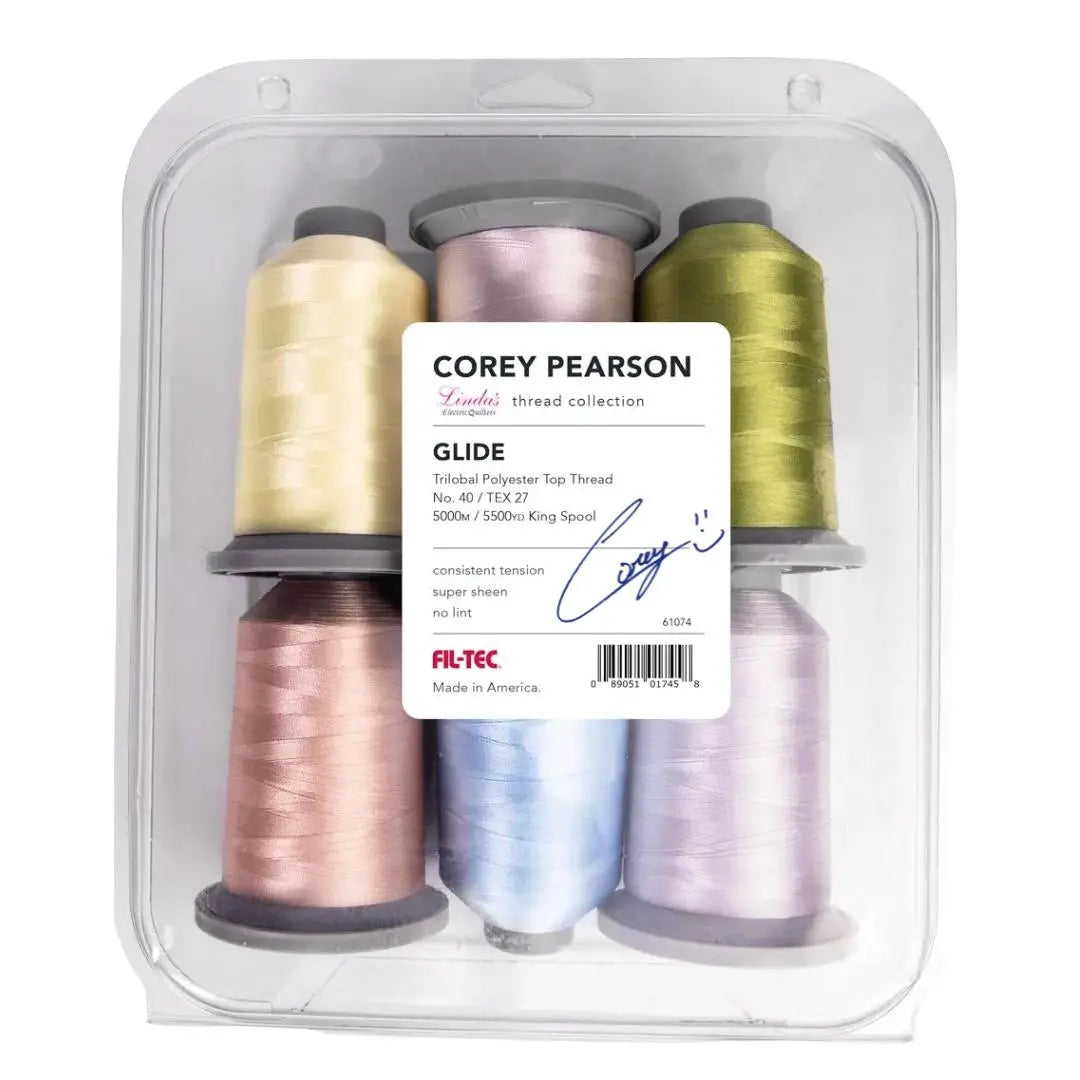
For stitchers who want several thread families in one place, Linda's Electric Quilters carries embroidery-specific options such as Floriani embroidery thread, Signature 40 weight thread, and mini glides, which makes side-by-side testing easier when you’re matching thread to fabric and technique.
Caring and Troubleshooting Embroidery Threads
Good thread can still misbehave if it’s stored badly, stitched under the wrong tension, or pressed carelessly.
Most thread trouble starts before the stitch ever lands on fabric. Sunlight dries and fades some fibers. Dust settles into spools. Loose ends tangle and knot. A thread that seemed “bad” may just have been handled poorly.
Storage that prevents common problems
Keep thread away from direct light, heat, and humidity.
A closed drawer, storage box, or cabinet works better than an open shelf near a sunny window. If you wind leftover lengths for hand embroidery, secure them neatly so they don’t kink and weaken.
Helpful habits:
- Store by type: Keep machine embroidery thread separate from hand embroidery fibers.
- Keep labels visible: Fiber and weight matter later, not just at purchase.
- Protect metallics: They’re more likely to snag if tossed loosely into a bin.
Washing and pressing
Always think about the project’s end use before the first stitch.
If the item will be washed often, test the thread and fabric together first. If the embroidery includes raised stitches or textured threads, pressing from the back with a protective layer helps preserve dimension. Pressing cloths are useful because they reduce direct friction on the stitched surface.
Press the project the way you want it to live. Flat table runner, soft quilt block, raised embellishment. Each one needs a slightly different hand.
Quick troubleshooting
When a project goes wrong, don’t blame the thread immediately. Check the setup.
| Problem | Likely cause | First fix |
|---|---|---|
| Thread frays | Needle mismatch or too much friction | Change the needle and rethread |
| Loops on surface | Tension issue | Recheck top thread path |
| Puckering | Thread too heavy or fabric unsupported | Use a more suitable thread or improve support |
| Frequent breaks | Thread and design not well matched | Slow down, test a different thread type |
If hand thread keeps knotting, shorten your working length. If machine thread keeps shredding, inspect the needle first. Those two fixes solve a surprising amount of frustration.
When a spool doesn’t suit a project, set it aside without guilt. Good stitchers aren’t the people who force every material to work. They’re the people who know when to switch.
Examples of Projects with Recommended Threads from Lindas
Seeing thread choices inside real projects makes the whole topic easier to grasp.
Many guides stop after naming thread types. That leaves hobbyists guessing how those threads behave on common sewing and quilting projects. That gap matters because mixing embroidery thread types for textured quilting effects is rarely detailed beyond basics, even though 42% of crafters prefer mixed textures for professional depth.

Monogrammed linen napkin
For a linen napkin, the thread should look refined, not bulky.
A fine machine embroidery thread works well for a clean monogram, especially if the lettering is small. If you prefer hand stitching, a restrained cotton thread keeps the letters readable without making the napkin feel stiff. Choose a finish that suits the table setting. Matte looks classic. Glossy feels dressier.
If you’re gathering supplies, look for a lighter, detail-friendly embroidery thread before you pick the font.
Textured quilt block with mixed threads
Many stitchers become excited and then encounter trouble.
A quilt block can handle mixed textures beautifully when each thread has a job. Use a standard embroidery thread for the main motif, then add perle cotton or another hand-friendly thread for outlines, knots, or visible accents. The contrast creates depth without needing complicated design changes.
Start mixed-thread quilting with one base thread and one accent thread. Two textures are easier to balance than five.
For this project, shop by purpose: one spool for coverage, one thread for texture.
Embroidered denim tote
Denim welcomes stronger visual stitching.
A heavier-looking embroidery thread gives outlines and motifs enough presence to stand up against the fabric. Floral motifs, initials, and patch-style designs all benefit from thread that doesn’t disappear into the weave. If you want the bag to stay practical, keep decorative metallics limited to small accent areas.
Choose threads with durability in mind first, then add sparkle only if the design needs it.
Holiday stocking with metallic accents
Holiday stitching is the perfect place for metallic thread because the project already invites light and contrast.
Use a stable base thread for the main design, then reserve metallic for stars, trim lines, ornament details, or lettering highlights. That keeps the sparkle noticeable and reduces frustration. Metallic usually behaves better as a supporting actor than the entire cast.
If you’re ready to build one of these projects, pull the exact family of threads you need instead of buying random colors. A planned set always stitches better than a basket of maybes.
Conclusion and Next Steps at Lindas Electric Quilters
Strong embroidery starts with matching the thread to the job.
If you remember nothing else, keep these three questions in mind. What is the fabric like, what should the stitch look like, and how will the finished piece be used? Those answers point you toward the right fiber, weight, and finish much faster than color shopping alone.
That same kind of clear matching matters in other parts of creative business too. If you sell handmade work online, this practical guide on How to Increase Sales in Ecommerce offers useful thinking about presentation and customer experience.
When you’re ready to stitch, build your thread choices with intention. Pick a dependable general-purpose machine thread, a hand thread with texture you enjoy using, and one specialty option for shine or dimension. That small, thoughtful collection covers far more projects than most beginners expect.
If you're ready to finish your next project with confidence, browse the thread selection at Linda's Electric Quilters for embroidery, quilting, and specialty stitching supplies, then choose the spools that match your fabric, technique, and design instead of guessing at the shelf.