Warm & Natural Wins: Three Beginner Projects with The Warm Company Batting
Quilted Coasters • Table Runner • Beginner Bed Quilt
Meta title: Easy Quilting Projects with Warm & Natural Batting: Coasters, Runner & Bed Quilt (Beginner)
Meta description: Make quilted coasters, a table runner, and a cozy bed quilt using Warm & Natural cotton batting. Step-by-step materials, sizes, pro tips, FAQs, and a quick loft guide—perfect for beginners.
Why these three?
They’re fast, photogenic, and beginner-friendly. You’ll practice the core skills—cutting, piecing, quilting, and binding—on a tiny project (coasters), scale to a small décor piece (runner), then apply it to a full quilt. Along the way, you’ll learn when Warm & Natural (and its sister Warm & White) shine so your quilts finish flat, cozy, and beautifully crinkled after washing.
Project 1: Quilted Coasters (4″ × 4″)
Skill: Beginner • Time: ~45–60 min for a set of 4 • Size: 4″ × 4″ each
Materials
-
Fabric scraps (top & backing)
-
Batting: Warm & Natural (thin, stable, cotton feel)
-
50 wt cotton or 40–50 wt poly thread; sewing machine
-
Rotary cutter, mat, quilting ruler; pins/clips; iron
-
Binding strips 1¼″–1½″ wide (or premade bias tape)
Steps
-
Cut top, backing, and batting to 4″ × 4″.
-
Layer: backing (RS down) + batting + top (RS up); clip.
-
Quilt straight or diagonal lines ½″–1″ apart through all layers.
-
Trim & square to 4″ × 4″.
-
Bind with narrow binding; miter corners; stitch to finish.
-
Press flat. Make a matching set.
Pro tips
-
Low-loft Warm & Natural keeps coasters flat under mugs.
-
Chain-piece tops to speed things up.
-
A walking foot helps tiny sandwiches feed evenly.
Project 2: Quilted Table Runner (~14″ × 40″)
Skill: Beginner • Time: 2–3 hours • Size: customize to your table
Materials
-
3–4 coordinating quilting cottons
-
Batting: Warm & Natural for a classic hand or Warm & White if your palette is light/white and you want colors to stay bright
-
Backing to size; thread; rotary supplies; pins/clips; iron
-
Binding strips 2½″ wide
Steps
-
Cut 3″ × WOF strips or 5″ squares.
-
Arrange your layout; snap a reference photo.
-
Piece rows with a ¼″ seam; press to one side.
-
Layer backing (RS down) + batting + top; baste.
-
Quilt a straight-line grid or gentle diagonals.
-
Trim edges flush; bind with 2½″ strips; miter corners.
Pro tips
-
Warm & White prevents dark seams from shadowing through pale runners.
-
A walking foot reduces shifting on long seams.
-
Swap colors seasonally—same pattern, fresh look.
Project 3: Simple Patchwork Bed Quilt
Skill: Confident beginner • Time: Weekend+ (piecing)
Sizes (approx.)
-
Twin: 68″ × 88″ (12″ finished blocks in 5 × 7)
-
Full/Queen: 88″ × 96″ (12″ blocks in 7 × 8)
Materials
-
3–5 coordinating cottons (add a little extra for squaring)
-
Batting: Warm & Natural for breathable cotton comfort; Warm & White for bright whites/low-value palettes
-
Backing to size (piece if needed), thread, rotary supplies, pins/clips, iron
-
Binding strips 2½″ wide
Steps
-
Plan blocks (e.g., 12″). Cut squares/rectangles.
-
Lay out on a design wall/floor; photograph to remember placement.
-
Piece rows with ¼″ seams; join rows; press.
-
Layer backing (RS down) + batting + top (RS up); baste.
-
Quilt straight-line grids, echo seams, or soft waves.
-
Trim square; bind by machine or hand.
Pro tips
-
Expect a soft, classic cotton crinkle after the first wash.
-
For large quilts, a walking foot and slightly longer stitch length (2.6–3.0 mm) keep layers smooth.
-
If your quilt is mostly white/low volume, choose Warm & White to maintain brightness.
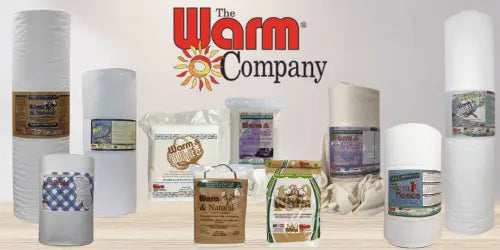
Warm & Natural Quick Guide
-
Warm & Natural (unbleached cotton): low loft, stable, breathable; perfect for coasters, runners, and everyday quilts with a traditional cotton feel.
-
Warm & White (bleached cotton): same hand/loft as Warm & Natural but bright white—great for modern and light palettes.
-
Warm & Plush / 80/20 / Soft & Bright (poly): if you want loftier puff, extra durability, or easy-care poly, explore these sister options.
Tip: Always check the package for recommended quilting distance; consistent spacing = smoother finish.
Troubleshooting & FAQs
Do I need to prewash Warm & Natural?
No—use it straight from the package. Expect gentle cotton shrink for that cozy, crinkled look after washing.
Which side up?
Warm & Natural is needle-punched to a scrim; it’s forgiving either way. Keep your quilt layers smooth and well-basted.
What thread works best?
50 wt cotton (matte, traditional) or 40–50 wt poly (durable, slightly sleeker). Match needle to thread weight (80/12 for 50 wt; 90/14 for heavier).
Can I back with Minky?
Yes—baste thoroughly, reduce presser-foot pressure, lengthen stitches slightly, and quilt a bit denser to control stretch.
Supplies Checklist (copy & save)
Quilting cotton • Backing fabric • Warm & Natural or Warm & White batting • 50 wt cotton/40–50 wt poly thread • Rotary cutter • Self-healing mat • Quilting ruler • Pins/clips • Iron • Walking foot (optional) • Binding strips
Callouts to Feature (great for social captions)
-
“Beginner-friendly: master three projects and learn when to pick Warm & Natural vs. Warm & White.”
-
“Coasters in under an hour, a runner in an afternoon, and a weekend bed quilt.”
-
“Classic cotton feel, breathable warmth, beautiful wash-crinkle.”
SEO Keywords
warm and natural batting, warm & natural cotton batting, warm and white batting, the warm company batting, best batting for beginners, cotton batting for quilts, low loft cotton batting, batting for table runner, batting for quilted coasters, how to choose quilt batting, cotton vs polyester batting
Long-Tail Phrases
best batting for quilted coasters flat finish warm and natural, warm & white vs warm & natural for low volume quilts, beginner table runner batting choice warm and natural, how to layer backing batting and quilt top with warm and natural, straight line quilting with cotton batting tips, should you prewash warm and natural batting, how much batting for a twin size quilt warm and natural, quilting with minky backing and warm and natural batting, walking foot settings for cotton batting, binding a quilt with 2.5 inch strips for beginners