Ever tried to wrestle a king-size quilt through the tiny throat of your domestic sewing machine? It’s a bit like trying to paint a masterpiece on a giant canvas while stuck in a tiny closet. You can do it, but it’s a struggle.
Now, imagine that canvas is stretched perfectly flat on a huge frame, and you can glide your paintbrush effortlessly over the entire surface. That’s the magic of longarm quilting. It’s a completely different approach where a large, specialized sewing machine moves over a stationary quilt sandwich (your top, batting, and back), which is held perfectly taut on a frame. This simple change makes the whole process smoother, faster, and a lot easier on your body, helping you bring any project to life.
The Core Concept of Longarm Quilting
At its heart, longarm quilting flips the whole process on its head. Instead of pushing, pulling, and wrangling a heavy quilt under a small, fixed needle, you get to move the machine itself. This single shift in perspective solves some of the biggest headaches quilters face when finishing their projects.
With a longarm, you gain a level of freedom and control you just can’t get with a domestic machine. Because the quilt stays flat and evenly tensioned on the frame, you can say goodbye to those frustrating fabric bunches, puckers, and uneven stitches. It gives you a beautifully smooth canvas to bring your quilting designs to life, ensuring your finished project is a masterpiece.
From Frustration to Freedom
So many quilters find their way to longarming after hitting a wall—or a sore back—with a big project. Trying to manage a queen or king-size quilt on a standard machine often means hunching over and contorting yourself into some pretty awkward positions, leading to serious back, shoulder, and neck pain.
A longarm system lets you stand comfortably while guiding the machine with just a light touch. It transforms quilting from a physically taxing chore back into a creative joy. Honestly, this ergonomic benefit is one of the top reasons so many people decide to make the switch.
A longarm setup gives you an efficient, ergonomic, and creatively liberating path to stunning, professional-looking quilts. It’s all about empowering you to tackle those ambitious projects with confidence, whether you’re dreaming of intricate free-motion swirls or perfectly executed digital patterns.
A Game-Changer in Craftsmanship
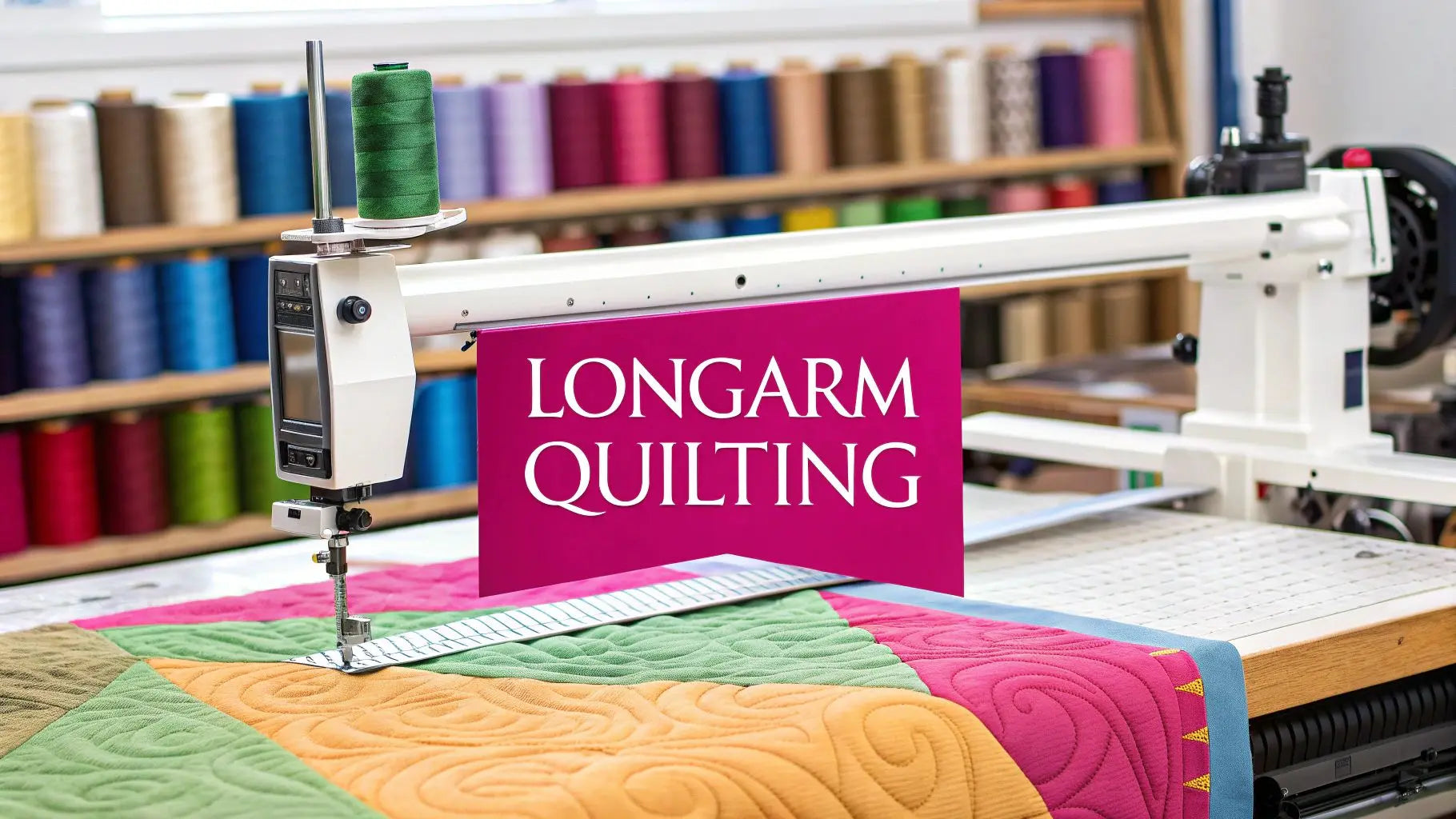
Longarm quilting machines are one of the biggest leaps forward in the world of quilting. They completely change how we approach the finishing process. These specialized machines have a massive throat space—the "long arm"—that lets you lay out the entire quilt so the machine can work its magic over the top.
It's a huge departure from traditional sewing, where you're constantly fighting the fabric under a much smaller arm. This method opens up a world of possibilities, even for big projects like the ones we talk about in our guide on making a t-shirt quilt.
A Closer Look at the Longarm Quilting Machine
At first glance, a longarm quilting machine can look a bit intimidating, but it’s really just a brilliant solution to an age-old quilting problem. The best way to think of it is as a team of specialized parts, all working together to let you create beautiful, professional-grade stitches without a fight. Once you get to know the core components, you’ll see exactly what makes the whole process so slick.
The entire setup really boils down to three key players: the machine head, the frame, and the carriage that lets it all glide around. Each piece is essential for the smooth, flawless operation that makes longarm quilting such a dream.
This diagram shows how the machine’s sewing head moves over the quilt, which stays perfectly still—a complete flip from how you’re used to working.
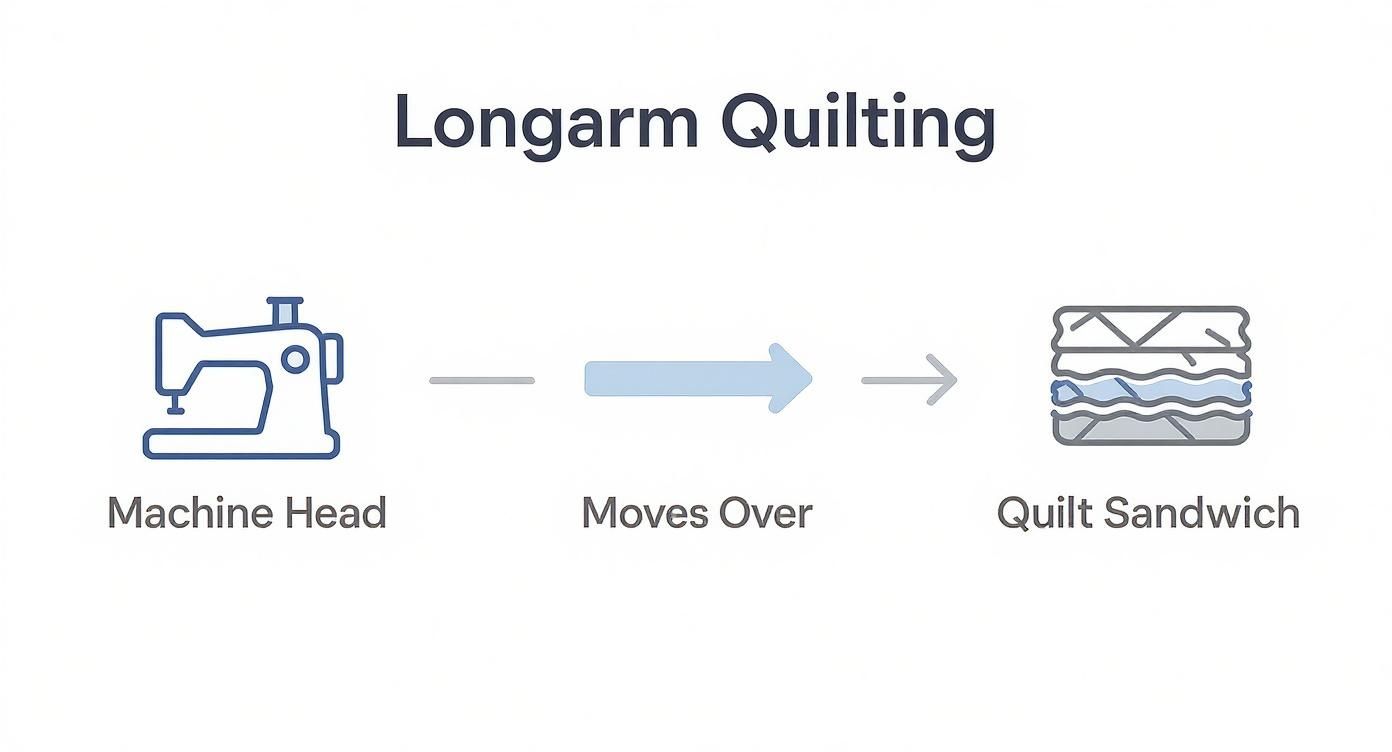
This is the fundamental difference that separates longarming from quilting on a domestic machine.
The Machine Head: The Powerhouse of the Operation
The machine head is the heart and soul of the whole setup. Think of it as a super-powered sewing machine, built on a much bigger and more robust scale than your home model. It boasts a huge throat space—anywhere from 15 to over 24 inches—giving you tons of room to work on even the biggest quilt projects without having to bunch or fold the fabric.
Inside that head is a high-speed motor that can churn out up to 2,500 stitches per minute or more. That incredible speed is paired with a stitch regulator, which is the secret to getting perfectly uniform stitches every single time, no matter how fast or slow you guide the machine. This is also where you’ll manage your tension and thread. If you need help, our guide on choosing the best thread for quilting is a great resource for matching the right materials to your machine.
The Frame System: Your Quilt's Foundation
The frame is the unsung hero. This sturdy structure holds your entire quilt sandwich—the top, batting, and backing—perfectly flat and taut. It uses a system of rollers that let you load each layer independently and then advance the quilt smoothly as you finish one section and move to the next.
These frames come in all sorts of lengths, usually from 5 to 14 feet, so you can find one that fits both your quilt size and your studio space.
A well-designed frame is what truly unlocks the magic of longarm quilting. It completely eliminates the need for pinning or basting spray. Even better, it prevents the fabric from shifting, which means no more puckers or pleats—just a perfect canvas for your artistry.
Movement and Control: Bringing Your Vision to Life
So how does it all move? The machine head sits on a carriage that rolls along tracks built into the frame. This lets you glide it effortlessly side-to-side and front-to-back. You steer this fluid motion with a set of handlebars attached to the machine, making the whole experience feel less like sewing and more like drawing with thread.
And for quilters who crave absolute precision, many longarm systems can be upgraded with computerized robotics. Systems like Pro-Stitcher connect a computer and motor to the machine, allowing it to execute intricate digital patterns with machine-like accuracy.
Whether you're all about hands-on, free-motion quilting or you prefer the perfection of automation, you can find the ideal setup and all the amazing products you need to finish your project right here at Linda's Electric Quilters.
Longarm Quilting vs. Domestic Machine Quilting
When it’s time to finish a quilt, you’re basically standing at a crossroads. Down one path is your trusty domestic sewing machine, and down the other is a dedicated longarm quilting system. While both can stitch through the layers, the journey—and the destination—are completely different. This isn't just about the size of the machine; it’s a whole new way of thinking about quilting.
Anyone who’s tried to quilt a big project on a domestic machine knows the struggle. You spend more time wrestling the quilt than actually sewing. All that pushing, pulling, and cramming a heavy, bunched-up quilt through a tiny throat space is exhausting. It’s a recipe for uneven stitches, puckered fabric, and a sore back and shoulders.
A longarm setup flips the script entirely. The quilt stays still, and the machine glides over it. You guide the machine head with just your fingertips, completely free from the weight and bulk of the quilt itself. It’s a night-and-day difference.
Longarm vs. Domestic Machine Quilting: A Feature Comparison
To really see what separates these two methods, let's put them head-to-head. The practical differences go way beyond the technical specs—they shape your entire quilting process, your comfort, and the final look of your masterpiece.
Here's a breakdown of how they stack up in the real world.
| Feature | Longarm Quilting | Domestic Machine Quilting |
|---|---|---|
| Workspace & Size | Needs a large, dedicated space for a 10-14 ft frame. Perfect for tackling king-size quilts. | Sits on a standard sewing table. You'll need plenty of clear space to manage quilt bulk. |
| Physical Effort | A dream. You stand comfortably and guide a lightweight machine head. Minimal strain. | It's a workout. You’re constantly pushing and shoving the entire weight of the quilt. |
| Quilting Speed | Incredibly fast. A big quilt can be beautifully finished in just a few hours. | Much, much slower. Finishing a large quilt can easily take days or even weeks. |
| Stitch Quality | Stitch regulators are your best friend, ensuring perfectly even stitches no matter how fast you go. | Stitch consistency is all on you. It depends entirely on your skill and steady speed. |
| Creative Freedom | The sky's the limit. Unrestricted movement allows for huge, sweeping designs and detailed free-motion work. | Designs are often limited by the small throat space and the sheer difficulty of moving the quilt. |
This table shows just how different the two experiences are. While a domestic machine is a versatile workhorse, a longarm is a specialized tool built for one purpose: to quilt beautifully and effortlessly.
The Quilting Experience
Ultimately, the best choice comes down to the kind of experience you want to have. Domestic quilting definitely builds patience and problem-solving skills. Smart techniques and the right tools can make a huge difference; for instance, learning how to use a walking foot is a fantastic skill for improving your stitch quality on a home machine.
But longarm quilting unlocks a level of creative freedom and physical ease that’s hard to imagine until you try it.
The core difference is simple: With a domestic machine, you move the quilt. With a longarm machine, you move the machine. This change is precisely why so many dedicated quilters consider a longarm a game-changing investment for their craft, turning a laborious task into an artistic joy.
The precision, speed, and ergonomic relief make longarming a truly compelling option for anyone who’s serious about finishing their projects with a professional touch. To find the amazing products and supplies needed to finish your next quilting project, visit us at Linda's Electric Quilters.
Unlocking the Real Benefits for Your Quilting Projects
Making the switch to a longarm isn’t just about getting a bigger machine—it’s about completely transforming your results. The most obvious change you’ll notice is how much faster you can finish quilts. A project that might have taken weeks of wrestling under a small domestic machine can be beautifully quilted in just a few hours.
This incredible speed doesn't mean you sacrifice quality. In fact, it's quite the opposite. Longarm machines with stitch regulators deliver flawlessly even and consistent stitches that are nearly impossible to get by hand. The result is a professional, polished finish that makes every quilt look incredible.
From Aches and Pains to Creative Freedom
Anyone who has spent hours hunched over a sewing machine knows the toll it takes. The backaches, the neck strain, the sore shoulders—it's a real problem. A longarm setup changes all of that. You get to stand comfortably, guiding the machine with a light touch instead of fighting the weight of a heavy quilt.
This physical comfort opens up a whole new world of creative possibility. With your quilt top perfectly taut on the frame, you finally have a smooth, stable canvas to let your imagination run wild.
- Master Free-Motion: You can glide the machine effortlessly to draw swirls, feathers, and stipples. There's no drag, no pulling, just pure creative flow.
- Create with Precision: Computerized systems let you execute intricate digital patterns with perfect accuracy, bringing sophisticated designs to life that you might never attempt otherwise.
- Edge-to-Edge Made Easy: Quickly cover your entire quilt with a consistent, beautiful design. It's a game-changer for everything from cozy couch quilts to modern showpieces.
Longarm quilting isn’t just a method; it’s a tool that unlocks your full potential as a quilter. It gives you the confidence to take on bigger, more ambitious projects and turn your craft into a true art form.
You're Joining a Massive Community
When you get into longarm quilting, you're not just buying a machine; you're plugging into a huge and passionate global community. Quilting has seen a massive surge in popularity, and there are now an estimated 21 million quilters worldwide! That's a huge family of creators sharing ideas, techniques, and inspiration.
There's a rich history behind it all, and if you're curious, you can learn more through insights on the craft's 5,000-year journey.
Of course, great results start with the right materials. A beautiful quilting job deserves the perfect foundation, so be sure to check out our guide to batting choices for the passionate quilter to make sure your masterpiece lasts. Here at Linda's Electric Quilters, we have all the amazing products you need to finish your next project and join this incredible community.
Your Path to Getting Started in Longarm Quilting
So, you've seen the incredible results and you're hooked. It's totally natural to start wondering, "How can I do that?" The great news is, you don't have to jump in headfirst and buy a machine right away. There are a few different ways to dip your toes into the world of longarm quilting, and the right one for you really depends on your budget, how much space you have, and what your quilting goals are.
Many people get their start by exploring more accessible options first. This gives you a real taste of what a longarm can do for your projects without the massive commitment. Let's walk through the three most common ways people get started.
Exploring Your Options
Your longarm journey can begin today, and it usually starts with one of these three paths. Each one offers a fantastic way to get that professional finish, whether you want to be hands-on or let an expert handle the quilting magic.
- Renting Time on a Machine: This is my number one recommendation for beginners! Many local quilt shops rent out their longarm machines by the hour. It’s a low-cost, low-pressure way to try before you buy, finish that special quilt top you’ve been saving, and just get a feel for how these amazing machines operate.
- Hiring a Professional Longarmer: Got a stack of quilt tops piling up? You are not alone! Hiring a professional longarmer is an incredibly popular choice. You get a stunning, perfectly quilted finish without the learning curve or the financial investment of owning a machine.
- Investing in Your Own Machine: For the quilter who is constantly creating and finishing several projects a year, buying your own machine is the dream. Nothing beats the convenience and creative freedom of being able to quilt whenever inspiration strikes, day or night.
Deciding which path is right for you often comes down to weighing the initial cost against your long-term quilting volume and desires. Renting is perfect for occasional projects, while buying makes sense for prolific quilters.
Gearing Up with Essential Supplies
No matter which route you take, using the right supplies is non-negotiable for a successful project. High-quality materials don't just make the process smoother; they ensure your finished quilt looks beautiful and lasts for generations.
Before you start, you'll want to gather a few key items. Think of these as the absolute must-haves for any longarm quilting adventure.
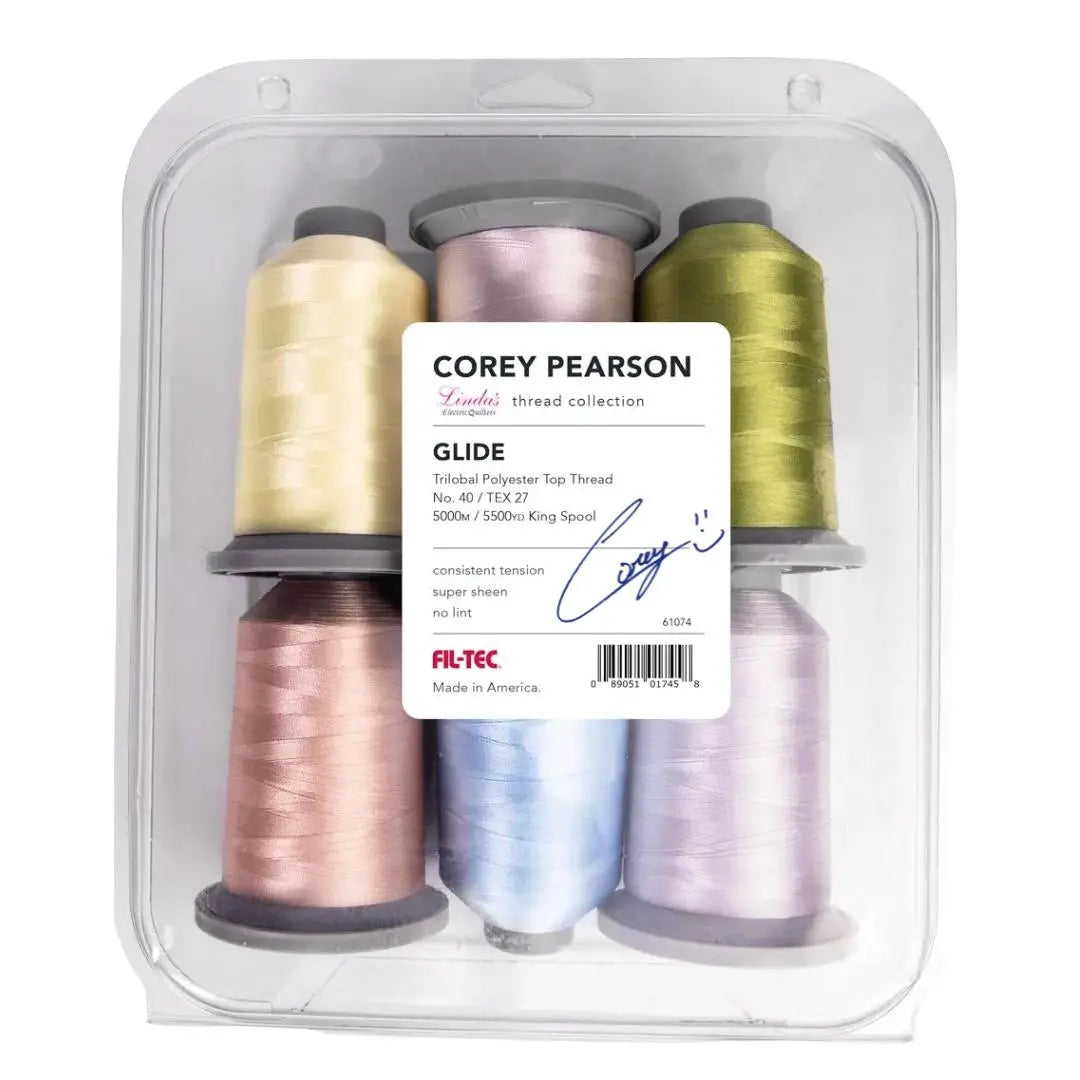
- High-Quality Thread: Your thread is the real star of the show. You’ll want a strong, low-lint thread specifically designed for high-speed machines. This helps prevent frustrating breaks and ensures every stitch is crisp and defined.
- Bobbins: Longarm machines use giant M-class bobbins for a reason—they hold a ton more thread than a domestic machine bobbin. This means you can quilt for much longer stretches without stopping to wind a new one.
- Premium Batting: The batting you choose gives your quilt its personality—its loft, drape, and warmth. Pick a batting that complements your fabric and how the quilt will be used.
- Specialty Rulers: If you plan on doing any custom work with straight lines, curves, or specific patterns, a set of thick acrylic longarm rulers is a must. They’re designed to be used safely against the machine’s hopping foot to guide it with precision.
Getting ready for your first longarm experience is so exciting! If you want to brush up on the basics and build your confidence, check out our quilting tips for beginners. And of course, here at Linda's Electric Quilters, we are your one-stop shop for all the amazing products you need to bring your quilting vision to life.
A Few More Longarm Quilting Questions Answered
As you get closer to jumping into the world of longarm quilting, it's totally normal for some last-minute questions to pop into your head. Getting a handle on these details is the best way to build your confidence and make sure your projects turn out just the way you imagined.
Think of this section as your friendly Q&A session. We'll clear up some of the most common things beginners ask so you can move forward with nothing but excitement.
How Much Does It Cost to Have a Quilt Longarm Quilted?
This is probably the number one question on everyone's mind when they think about hiring a professional. The short answer is: it depends. Pricing is almost always calculated per square inch, so the bigger the quilt, the more it will cost.
But the real driver of the price is the complexity of the quilting itself. For a simple, all-over pattern that covers your quilt from edge-to-edge, you can expect to pay somewhere between $0.02 to $0.05 per square inch. If you're looking for detailed, custom work—like special designs in certain blocks or intricate border patterns—the price goes up, sometimes reaching $0.10 per square inch or more. Little things like specialty thread or batting can also add to the final bill, so always chat with your longarmer and get a clear quote upfront.
What Is the Difference Between a Mid-Arm and a Longarm Machine?
The main difference between these two machines comes down to one thing: throat space. That's the open area between the needle and the back of the machine's head, and it dictates how much quilting you can do before you have to roll the quilt forward.
A true longarm machine is the big kahuna, usually offering 18 inches or more of throat space. These are designed to be used on those big, sturdy frames. A mid-arm machine is a fantastic hybrid, giving you a throat space of around 12 to 17 inches. It’s a huge step up from your home sewing machine and can be set up on a smaller frame or even a sit-down table. This makes it a perfect choice for quilters who are tight on space but still want that extra freedom to move.
Can I Do Free-Motion Quilting on a Longarm Machine?
Oh, absolutely! In fact, longarm machines were practically made for free-motion quilting. Since you're moving the machine's head over the fabric instead of wrestling the fabric under the needle, it feels less like sewing and more like drawing with thread. It's an incredibly creative and intuitive way to work.
The machine glides so smoothly, and your quilt is held perfectly taut on the frame, creating the ideal canvas. So many quilters find it’s a world away from the physical strain of shoving a big quilt through a small home machine. You get so much more control, which leads to those beautiful, fluid designs we all love.
With a longarm, you're no longer limited by the bulk of your project. This freedom allows you to create sweeping, beautiful free-motion designs that would be nearly impossible to achieve on a home machine, turning every quilt into a unique piece of art.
How Do I Prepare My Quilt for a Longarmer?
Getting your quilt top ready for a longarmer is one of the most important steps to ensure a gorgeous, professional finish. First things first: press your quilt top like you’ve never pressed before! Make sure it’s completely flat and all your seams are lying nicely.
Next, your backing fabric and batting need to be at least 4 to 6 inches larger than your quilt top on all four sides. This extra fabric is crucial for the longarmer to load everything onto the frame's rollers. And speaking of loading, always bring your three layers—top, batting, and backing—as separate pieces. Please don't pin or baste them together! The longarmer needs to load them one by one. Lastly, a quick check to make sure your backing is squared up will make a world of difference.
Your quilting journey is an exciting one, filled with creativity and beautiful results. For every step of the process, from selecting the perfect wide backing fabrics to choosing premium batting and thread, Linda's Electric Quilters has all the amazing products you need to finish your project with confidence. Explore our selection and get inspired at lindas.com.