
Hey everyone. Today we're talking about cutting knits, and why I wouldn't cut them with dressmaker shears instead of a rotary cutter.
I know why it tempts you. I really do. Your shears are right there. They cut your quilting cotton just fine. A rotary cutter means a mat, a blade, and more setup. So you pick up the shears and start snipping. Folks, that first snip is where the trouble starts.
Here is the plain truth. Shears have to lift to cut. Every time those blades open, the bottom blade slides under your fabric. It lifts the knit up off the table. Knit does not just sit there and take it. It stretches. It shifts. It creeps away from your pattern line. By the time you close the blades, you are not cutting the piece you laid out. You are cutting a stretched version of it. And stretched pieces do not sew up true.
The story
I learned this watching a simple knit top go sideways. Good fabric. Easy pattern. Careful sewist. The cutting is what undid it.
The front was cut with shears, on the fold. Each snip lifted one layer a little more than the other. Nobody saw it happening. It looked fine on the table. But when those pieces came off the fold, the two sides were not the same size. One side was longer. One edge had stretched wavy.
Then the seams told the story. They waved instead of lying flat. The side seams did not match at the hem. The neckline sat a little stretched out, like it had been pulled. Pressing helped some. It did not fix it. Pressing cannot shrink a piece back to the size it was supposed to be.
I have seen the same thing with leggings and tees in our sewing room. Pieces that start out different sizes fight you at every seam. You ease one in. You stretch the other out. The garment hangs twisted, and you blame the pattern. Oh my goodness, y'all. Most times, it was the cutting. I was the joke there, not the pattern. The tool that seemed faster made the sewing slower.
What I do instead
First, I let the knit rest flat. After pre-washing, I lay it out smooth on the table. No hanging off the edge. No pulling it straight. I give it a few minutes to relax back to its natural size. If the edges curl, a light press with a cloth helps. Then I leave it alone.
Second, I cut in a single layer when I can. One layer cannot shift against a second layer. For a piece on the fold, I am extra careful, and I check both layers are flat before I cut. Single layer takes a little longer. It saves a lot of unpicking later.
Third, I hold the pattern down with weights, not pins. Pattern weights sit on top and keep everything still. Pins can distort a knit and leave marks. Some folks trace the pattern onto the fabric first, then cut the traced line. Some folks still pin in the seam allowance only. My preference is weights and a rotary cutter. But completely up to you. The goal is the same: nothing moves.
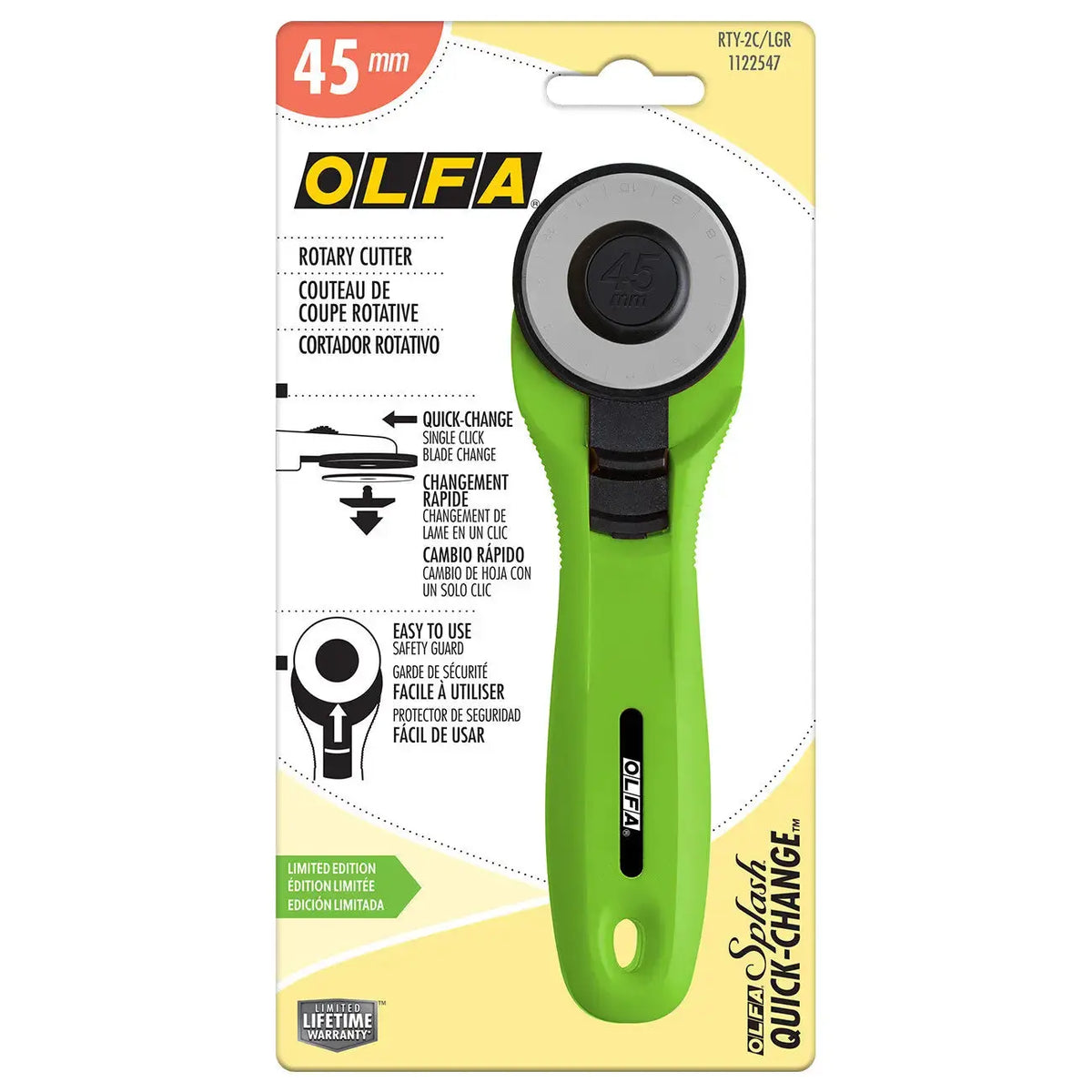
Fourth, I use a rotary cutter on a mat. A 45 millimeter blade is my home base for most knit pieces. It rolls through the fabric without lifting it. The knit stays flat on the mat the whole time. For tight curves, like a small neckline, a 28 millimeter cutter turns easier. I keep the blade sharp. A dull blade drags and skips, and dragging is just stretching by another name. If I have to push hard, I stop and change the blade.
Fifth, I let the blade do the work. I roll in smooth, steady passes. I do not saw back and forth. I do not lift the fabric to peek mid-cut. And here is your safety beat, right at the moment it matters. Retract or lock that blade every time you set the cutter down. Every single time, folks. A rotary blade is a razor on a wheel. Treat it that way.
Now hear me on this part. It doesn't have to be perfect. You're your own worst critic here. A tiny wobble on a seam allowance is not a ruined garment. Take your time. It's not a race. We're not reinventing the wheel here. We are just keeping the fabric flat, relaxed, and true to size while we cut it. If I can do this, y'all can do it.
This post is part of my What I Wouldn't Do as a Sewist series, where I share the lessons I learned the hard way so you don't have to.
Don't take my word for it — Threads Magazine's "Taming Jersey Knits" says the same thing plainly: use a rotary cutter and mat so jersey lies completely flat, because scissors lift the fabric and create a jagged cut.
Shop the OLFA 45mm Quick-Change Rotary Cutter Lime at Linda's Electric Quilters.
Thanks for hanging out with me today, folks. Keep that knit flat. Let the blade roll. Then sew with confidence. We'll see you next time. Bye.
— Corey, Chief Quilter, Linda's Electric Quilters


