Use this bar to show information about your cookie policy.
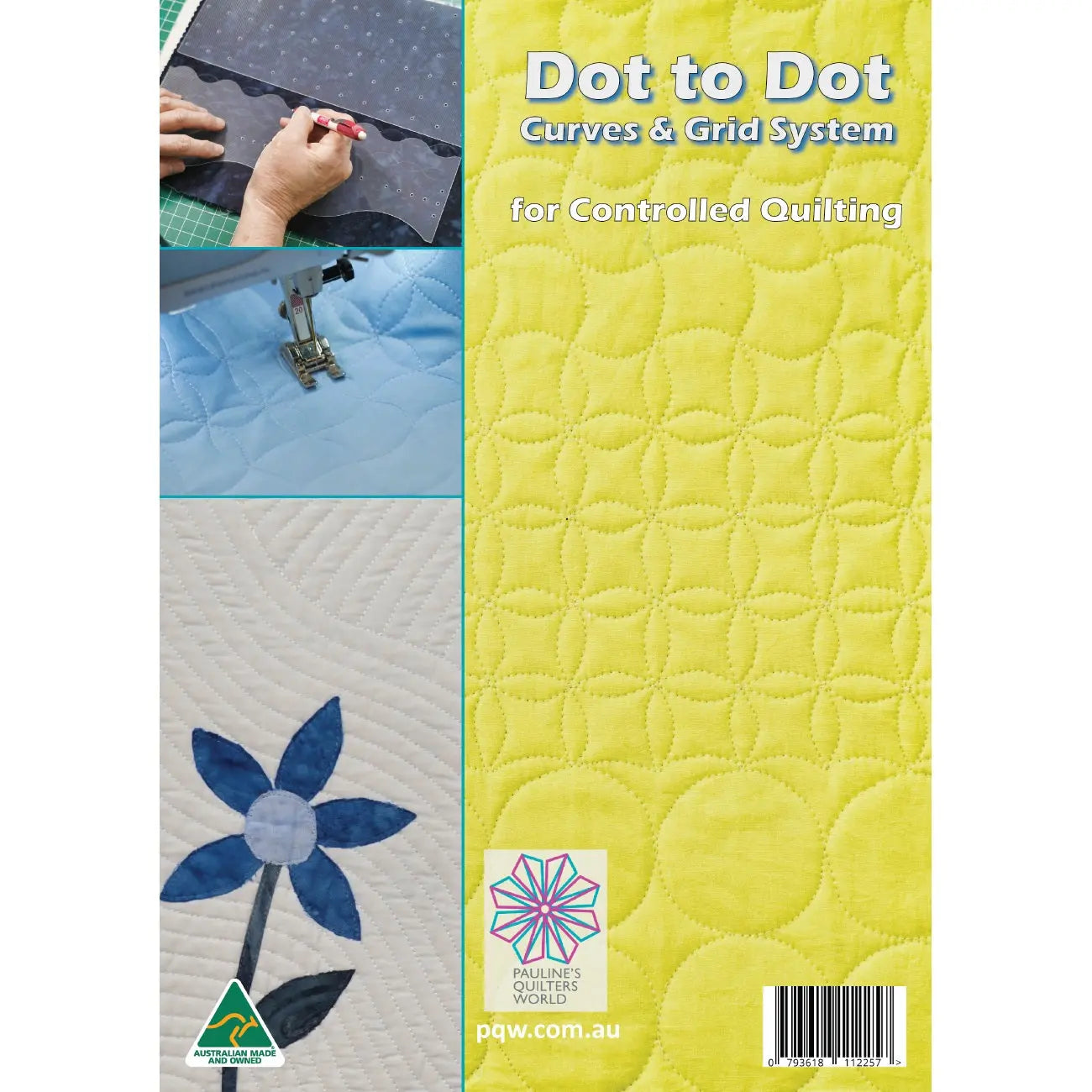
Dot To Dot Curves and Grid System Booklet
1 product
Showing 1 - 1 of 1 product
Dot To Dot Curves and Grid System Booklet is Cindy Needham-style structured quilting made teachable — the marking method that turns curves and grids into connectable dots instead of freehand acts of faith.
Product Details
Method: Mark dots, connect them — curved fills and grid designs built from guided points rather than freehand lines
Machines: Longarm and domestic both — the system is machine-agnostic
Level: Beginner-accessible by design; consistency tool for experienced quilters
Companion tool: The Bohin chalk pencil for the dot marking itself
Audience: Quilters and teachers wanting structured design without template costs
Frequently Asked Questions
What problem does dot-based marking solve?
The freehand-curve wall — most quilters can stitch smoothly between two visible points but can't sustain an unguided curve across a block. Dots break every curve into short guided segments; the skill required drops to what everyone already has.
Dots versus full-line marking?
Speed and removal — marking dots takes a fraction of drawing full design lines, and there's far less marking to remove afterward. The stitching connects them; the eye interpolates the curve.
What designs come out of it?
Curved crosshatch, orange-peel and cathedral curves, arc fills, and precise grids — the structured-custom vocabulary that sits between pantographs and full freehand.
The classroom angle?
Its natural habitat — the system is teachable in a session because it's a procedure, not a talent; instructors run it as the bridge class from meander to custom.
Tool pairing?
A fine removable marker — the white Bohin chalk pencil on darks, water-soluble on lights — and any ruler for the grid baselines.