
Hey everyone, today we're making Christmas stockings that actually hold their shape — with a batting-padded cuff and toe, built on woven fusible interfacing.
Here's the problem with most handmade stockings. They look great on the cutting table. Then you hang them up empty, and they flop. The cuff folds over itself, the toe curls, and by the second Christmas they're just sad. The fix is structure, y'all. A little batting for plush, and woven fusible interfacing underneath to hold the whole thing honest.
Why woven fusible interfacing?
Interfacing comes in three families: woven, non-woven, and knit. For a stocking, woven is my pick every time. It's real fabric — warp and weft threads, just like your quilting cotton — so it moves, drapes, and presses like fabric. Non-woven can feel papery and crack at folds over the years. Knit interfacing has stretch, which is great for garments and not what you want holding a stocking's shape.
Picking the weight is the whole game. The rule is simple: match the interfacing to your fabric, or go one step lighter. For quilting cotton stockings, a lightweight woven fusible is plenty — it adds body without making the cuff feel like cardboard. Save medium weights for canvas or home-dec fabrics. If the interfacing is heavier than the fashion fabric, you'll see it, and not in a good way.
Materials
- Stocking pattern or a template traced from a stocking you love
- 1/2 yard quilting cotton for the stocking body
- Fat quarter of contrast fabric for the cuff
- 1/2 yard lightweight woven fusible interfacing
- Low-loft batting scraps for the cuff and toe
- 1/2 yard lining fabric
- Ribbon or a fabric strip for the hanging loop
- Coordinating thread, pins or clips, and a press cloth
How to make it
- Cut your pieces. Cut two stocking bodies (mirror images), two linings, and one cuff piece. From the interfacing, cut two body pieces and one cuff piece. From batting, cut one cuff piece and two small toe patches — just the bottom few inches of the stocking shape.
- Fuse the interfacing. Lay each body piece wrong side up, interfacing glue side down on top. Press with a hot, dry iron — press and lift, about 10 to 15 seconds per spot. Don't slide the iron around, or you'll shift the piece and wrinkle it. Let everything cool flat before you move it. That cooling time is when the bond really sets.
- Add the batting. Layer the batting cuff piece behind your cuff fabric and baste or quilt it with a few simple lines — stitch in the ditch along a print, or a gentle meander. Do the same with the toe patches, layered behind each body piece. Trim batting out of the seam allowances so your seams stay slim.
- Build the cuff. Fold the cuff in half lengthwise, wrong sides together, and press. If you want a name or a little embroidery on it, now's the time — before it's attached.
- Sew the body. Place the two interfaced body pieces right sides together. Stitch around the stocking with a 1/4-inch seam, leaving the top open. Clip the curves — slow down here, small clips, don't snip the stitching. Turn right side out and push the toe out gently with a chopstick.
- Assemble. Sew your lining the same way, leaving a 3-inch gap in one side seam. Slip the cuff and hanging loop between the stocking and lining at the top edge, raw edges aligned. Stitch around the top, then turn everything through the gap. Stitch the gap closed, tuck the lining in, and press the top edge.
Tips and variations
Test your fusing first. Fuse a scrap of interfacing to a scrap of your fabric and live with it a minute. If it bubbles, your iron's too hot or the piece moved while warm. Better to learn that on a scrap.
Prewash or don't — just be consistent. Woven cotton interfacing can shrink a touch. If you prewash your stocking fabric, give the interfacing a gentle prewash too, or fuse first and accept they'll behave as one layer.
Go plush or go structured. Want a softer, vintage look? Skip the interfacing in the body and keep it only in the cuff. Want a stocking that stands up like it means it? Interface the lining too. Completely up to you.
Make them for everybody. Once you've made one, the rest go fast. I did a whole mantel's worth in an afternoon, and the padded cuffs made every single one look like the good heirloom kind. If I can do this, y'all can do it. And don't fuss over a wobbly stitch or two — you're your own worst critic, and nobody at Christmas is inspecting your seams.
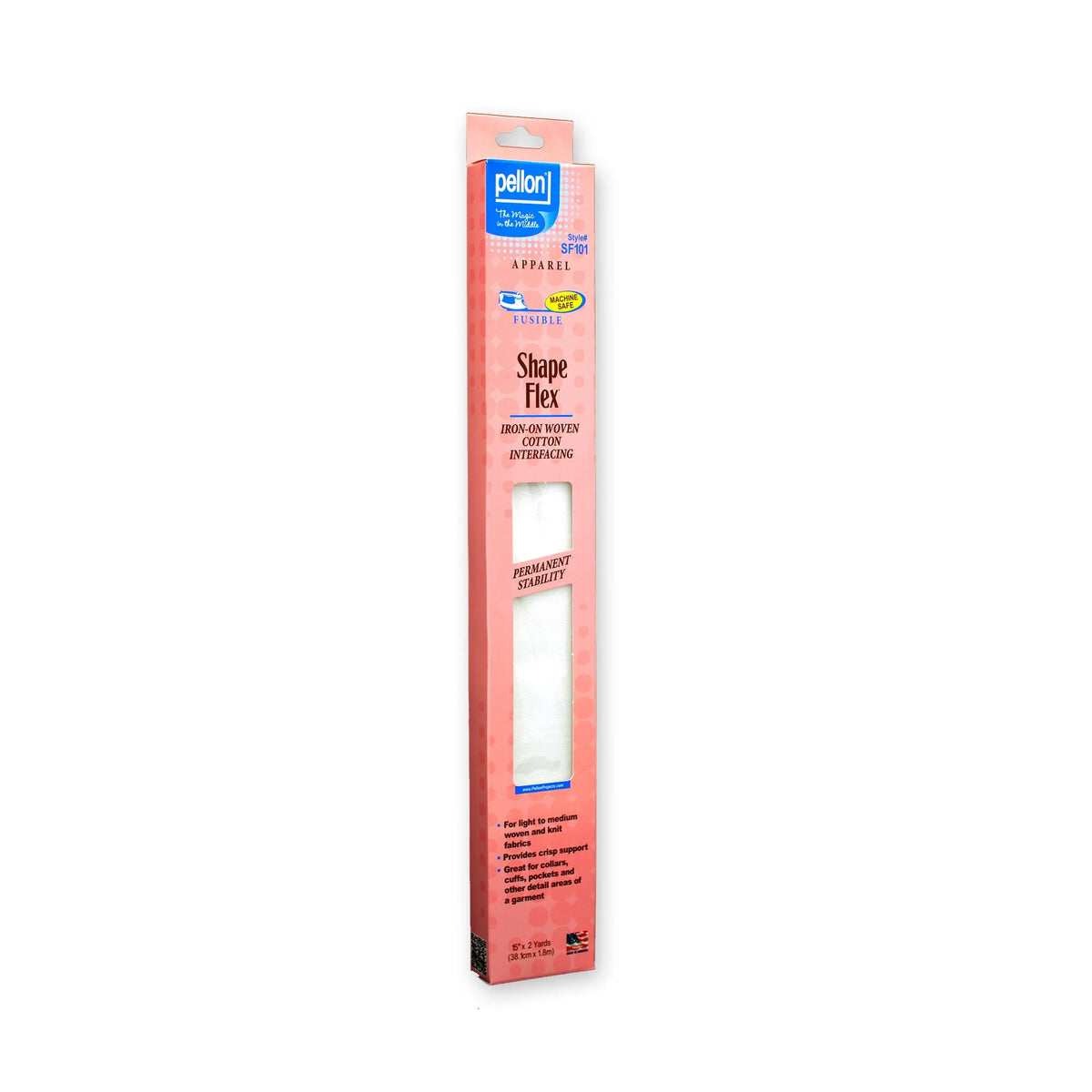
The interfacing I reach for on quilting cotton is a lightweight woven fusible — it's what I use in the shop for exactly this kind of project, and it's available at lindas.com.
Thanks for sewing along with me, folks. We'll see you next time. Bye.
Shop Pellon® SF101 Shape-Flex® Cotton Woven Fusible Interfacing 15" x 2 yards Package. Color: White. at Linda's Electric Quilters.


