
Hey everyone. Today you'll bring a flat quilted coat back to life without taking it apart.
Coats go flat in the usual spots. Elbows. Shoulders. The middle of the back. The quilting is still pretty. The batting inside has just packed down.
You do not have to rip the coat apart. Work new batting through one small opening, smooth it into the flat zones, then re-quilt those areas. Here we go.
Why black batting makes this work
Most coats needing this rescue are dark. Navy. Black. Plum. Charcoal.
White batting can be a problem there. Tiny fibers work through needle holes and show on dark fabric. We call that bearding, and it is not cute.
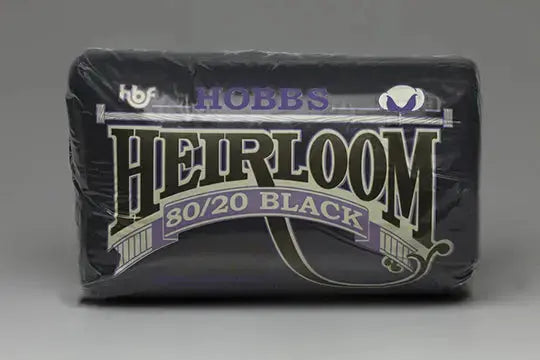
Black batting solves that. If a fiber migrates, it blends in. An 80/20 cotton-poly blend is a smart pick, too. It is low to medium loft, so it slips into a tight space easier than a puffy batting, and it washes well.
We're not reinventing the wheel here. Just replacing the part that wore out.
Materials
- Your flat quilted coat, clean and dry
- Black 80/20 batting, one package — you will use cut pieces only
- Seam ripper and small, sharp scissors
- Long tweezers, a chopstick, or a turning tool
- Pins and a hand-sewing needle
- Cotton thread, 50-weight, matching the coat
- Walking foot and a size 80/12 needle
- Tailor's chalk or a removable marker
Cut batting pieces a little oversized at first. You can trim inside the coat. You cannot add length later. Ask me how I know.
How to make it
- Find the flat zones. Lay the coat flat. Run your hand slowly over it. Mark the packed-down areas with chalk. Check elbows, shoulders, back, and bag-strap rub spots.
- Choose one small opening. Look for a seam near the flat zone. An inside lining seam is best, or a side seam. Open only 3 to 4 inches with the seam ripper. Work slow. Slow down or you will nick the outer fabric, and that is a whole different repair.
- Feel what is left inside. Slide your fingers in. Old batting may be thin, lumpy, or shifted. Smooth what is usable back into place. If a clump has balled up, tease it flat or pull it out. Leave good batting alone.
- Cut the new batting. Measure the zone by hand through the fabric. Cut a piece 1 inch larger on all sides. Taper the edges with scissors so they feather out thin. Feathered edges will not leave a hard ridge on the outside.
- Ease the new batting in. Roll the piece loosely, push it through the opening with the chopstick, and unroll it inside. Work from the far edge back toward the opening. Smooth with your fingertips through the outer fabric. Take your time. It's not a race.
- Check the loft from outside. Compare the repaired zone to a healthy zone. They should feel close. Too thin? Add a second feathered layer. Too puffy? Pull it out and trim. Completely up to you, but even is the goal.
- Pin through all layers. Pin from the outside, catching fabric, new batting, and lining, every 2 to 3 inches. This holds the batting while you stitch, so it cannot bunch.
- Re-quilt the flat zone. Use your walking foot. Set stitch length to about 3.0. Follow the original quilting lines where you can — stitch in the ditch hides your work nicely. Bury your thread ends. Keep stitching inside the zone so new lines blend in.
- Close the opening. Turn the raw edges in. Hand stitch closed with small, even stitches. Press lightly with a pressing cloth. Do not crush your fresh loft. Just a gentle kiss of steam.
Tips and variations
Work one zone at a time. Open, fill, quilt, close. Then move on. Opening three spots at once is how batting shifts.
Light coat, light batting. If your coat is pale, use white or natural batting in the same low-loft 80/20 style. The method stays the same.
Wash gently from here on. Gentle washing and low heat are kindest. Close quilting also helps new batting stay put — space lines no more than 3 to 4 inches apart.
And remember. Your added stitching does not have to match perfectly. It just has to hold the batting and look calm from three feet away. You're your own worst critic here. If I can do this, y'all can do this.
I reach for a black 80/20 package for dark coats like this. It feeds in flat, does not beard through dark fabric, and I have used it on dark quilts in the McKinney store, so I know how it behaves.
Thanks for sewing along with me, folks. We'll see you next time. Bye.
Shop Hobbs Heirloom Black 80/20 Batting Package at Linda's Electric Quilters.


