
Hey everyone. Today you'll learn why tiny fibers poke through your quilt top — and how to stop it before it starts.
We call it bearding.
Here we go.
You finish a quilt. You hold it up to the light. And there it is. Little fuzzy hairs. Poking right through the top fabric.
It looks like your quilt grew a beard.
Oh my goodness. I have been there. My first thought was, "I ruined it."
You didn't ruin it. And you're not alone. This one catches almost everybody once.
Why it happens
Batting is made of loose fibers. Millions of them. They are held together lightly.
Every time your needle goes down, it makes a path. Loose fibers love a path. They travel right along it.
Stitch after stitch, they work their way up. Then they pop out on top.
Loose-weave fabric makes it worse. The holes between threads are bigger. Fibers slip through easier.
That pretty, soft, open-weave cotton? It will show bearding first.
Loading your batting upside down makes it worse too. Remember those dimples and pimples from last time?
Dimples are where the needles entered. Pimples are where they exited. Pimple side up drags fibers up. Dimple side up pushes fibers down.
Just like that, orientation matters.
Fiber type matters too. Cotton beards as soft fuzz. Polyester beards as wiry little pokies. Blends land somewhere in between.
And dark tops show it worst of all. Light fibers on black or navy fabric? You see every single one. It's contrast, not extra bearding.
What to do about it
Start with the simplest fix. Check your batting direction.
Feel both sides with your palm. Smooth with little dimples goes up. Bumpy with tiny pimples goes down, toward the backing.
Do that before you baste. Every time. It takes ten seconds.
Next, look at your top fabric. Hold it up to a window. If you see lots of light through the weave, expect some migration.
For those looser fabrics, pick a batting with scrim. Or pick a tighter, needle-punched batt. The structure holds fibers in place better.
Use a fresh, sharp needle too. I like a 75/11 or 80/12 sharp for most quilting cottons. A dull needle punches bigger holes. Bigger holes mean an easier road for fibers.
Slow down at thick seams. Warn yourself right there. A bent or burred needle will drag fibers with every stitch.
Change that needle. It is cheaper than picking fuzz off a finished quilt.
Here's what I use and why. For dark tops, I reach for an 80/20 blend in the right color. The polyester adds strength. The cotton keeps the hand soft. And a dark batt under a dark top hides what little migration does happen.
Completely up to you, though. If you love 100% cotton, quilt with 100% cotton. Just load it dimple-side up and use a tight-weave top.
Already bearded? Don't panic. Don't shave it hard.
Lay the quilt flat. Gently pull stray fibers back from the backing side. A soft lint roller helps on top. A wash often settles the rest.
And listen, y'all. A few stray fibers do not make a bad quilt. You're your own worst critic here. Nobody at the quilt show is counting hairs.
It doesn't have to be perfect. Take your time. It's not a race.
When it matters most
Bearding matters most on dark, solid tops. It matters on wall hangings under bright lights. It matters on show quilts, where judges look close.
It matters less on busy prints. It matters less on light tops with light batting. The fibers are still there. You just can't see them.
So plan for the project in front of you. Dark and solid? Be picky about batting color, weave, and direction. Light and busy? Relax a little more.
If I can do this, y'all can do it. Feel for the dimples. Pick the right needle. Match the batt to the top.
We're not reinventing the wheel here. We're just loading it the right way up.
Thanks so much for learning along with me, folks. We'll see you next time. Bye.
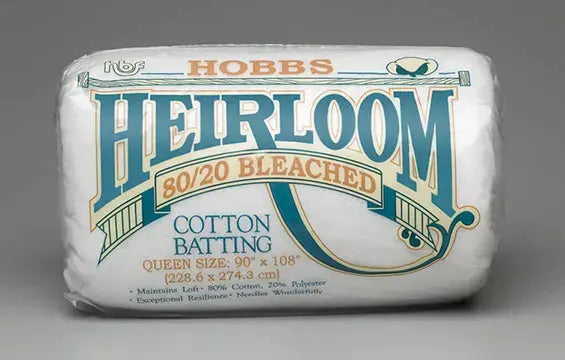
Shop Hobbs Heirloom Bleached 80/20 Batting Package at Linda's Electric Quilters.


