
Hey everyone. Today you will learn why steam loves one layer and flattens another.
Here is the surprise. Steam is wonderful for fusible interfacing. Steam helps that glue soften and bond. But steam can collapse polyester batting loft. Same iron. Same steam. Two opposite results.
I learned this the hard way. I fused a piece beautifully. Then I steam-pressed the whole basted sandwich. My nice, puffy batting went flat. Not ruined forever. Just sad and thin. Oh my goodness.
Why it happens
Fusible glue needs heat to melt. Steam carries heat deep and fast. It helps the glue dots spread a little. It helps them grab the fabric fibers. That is why a good press feels so solid.
Polyester batting is different. Its loft is trapped air. The fibers are springy little curls. They hold air between them. Heat plus steam plus pressure relaxes those curls. The air gets pushed out. The batting compresses under the iron.
Cotton batting reacts less dramatically. Wool has its own spring, too. But polyester loft is the most vulnerable here. Press it hard with steam, and it will tell on you. The quilt looks flatter. The quilting shows less dimension.
We are not reinventing the wheel here. It is just sequencing. Do the steam work before the batting joins the party.
What to do about it
First, fuse your interfacing early. Fuse it to the fabric piece alone. No batting underneath yet. Use a press cloth if your fabric needs one.
Lift and press. Do not slide the iron. Hold each spot about 10 seconds. Move to the next spot. Overlap a little as you go. Let the piece cool flat before you move it. Just like that.
Second, press your quilt top before you baste. If seams need steam, do it now. Press from the top side. Then build your sandwich.
Third, once the sandwich is basted, go easy. If you need to smooth it, use a dry iron. Use a light hand. Or use your hands and a little rest time. A warm, dry touch is safer than a steamy press.
Fourth, test when you are unsure. Make a small sandwich. About 10 inches square is plenty. Steam one half. Leave the other half alone. Wait an hour. Then feel both sides. You will feel the difference fast. Completely up to you which look you prefer.
And a quick warning at the moment of risk. Do not lean on a basted sandwich with a steam iron. Slow down. Lift your hand. Pressure plus steam is the combo that flattens loft. A quick pass is one thing. Parking the iron there is another.
When it matters most
This matters most with high-loft polyester. It matters with trapunto-style quilting, too. You picked that loft for dimension. Steam can quietly take it away.
It matters less with low-loft cotton. A thin placemat batt will not change much. A flat quilt is the goal there anyway.
For garments and bags, plan the order. Fuse collars, facings, and fronts first. Let them cool completely. Then layer in fleece or batting. Then sew. Your interfacing gets its steam. Your batting keeps its bounce.
If I can do this, y'all can do it. It does not have to be perfect. You are your own worst critic here. Take your time. It is not a race. Press in the right order, and both materials do their job really really well.
Thanks for spending a few minutes with me, folks. We'll see you next time. Bye.
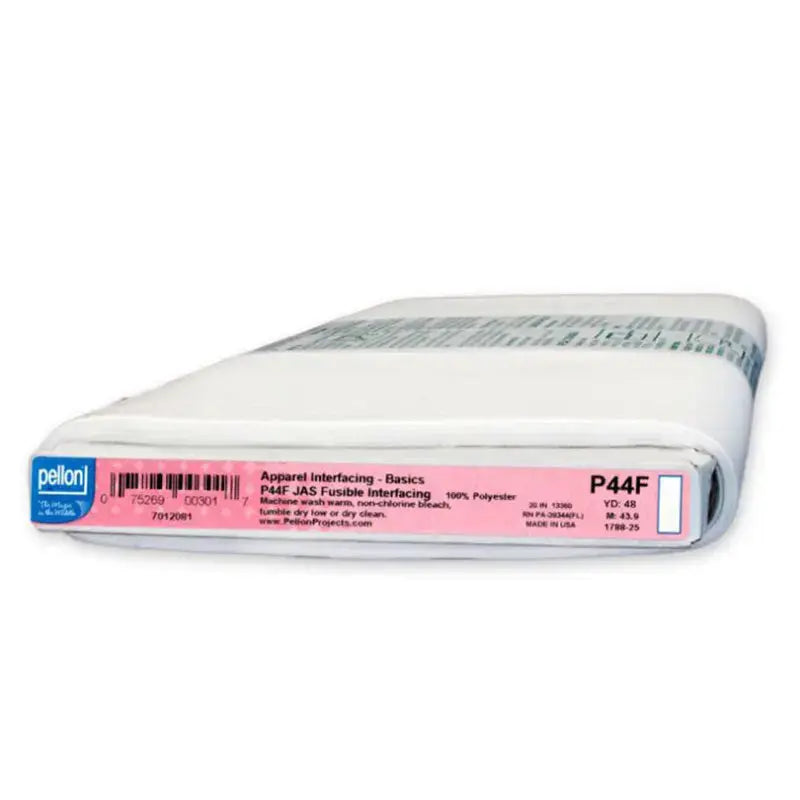
Shop Pellon Lightweight Nonwoven Fusible Interfacing 20" White By The Yard at Linda's Electric Quilters.


