
Hey everyone. Today you will learn why the thinnest batting in your stash is the right batting for your table.
Here we go. You finish a beautiful runner. You set it on the table. You put a plate down. And the plate wobbles. Oh my goodness. The runner is pretty. It is also puffy. That puff is the problem.
Most of us reach for the same batting for everything. We use it in quilts. So we use it on the table too. But a bed quilt and a placemat have opposite jobs. A quilt wants loft and drape. A table piece wants flat. Really really flat.
Why it happens
Loft is trapped air. That air is what makes a quilt feel cozy. It also makes a soft, uneven surface under anything hard.
Put a glass on a puffy runner and it finds a low spot. Put a plate on thick batting and the edge rides up on a quilting ridge. Add a seam allowance underneath and now you have a tiny hill. Dishes notice every hill, folks. Your eyes might miss it. A coffee mug will not.
Quilting makes it stronger too. Dense quilting on a thicker batt creates texture. That texture is lovely on a bed. On a table, it telegraphs right through. The piece looks handmade in a good way, but it works like a lumpy pad.
Here is the part nobody tells you. Thin batting is not a lesser batting. It is a different tool. Low-loft and ultra-thin batts are made to give you a smooth layer of stability without the puff. That is exactly what table work needs.
What to do about it
First, test with a real dish. Before you commit, make a small sandwich. Use your top fabric. Use the batting you are considering. Quilt it the way you plan to quilt. Then set a plate and a glass on it. If they sit steady, you are good. If they rock, go thinner. Just like that, you have your answer.
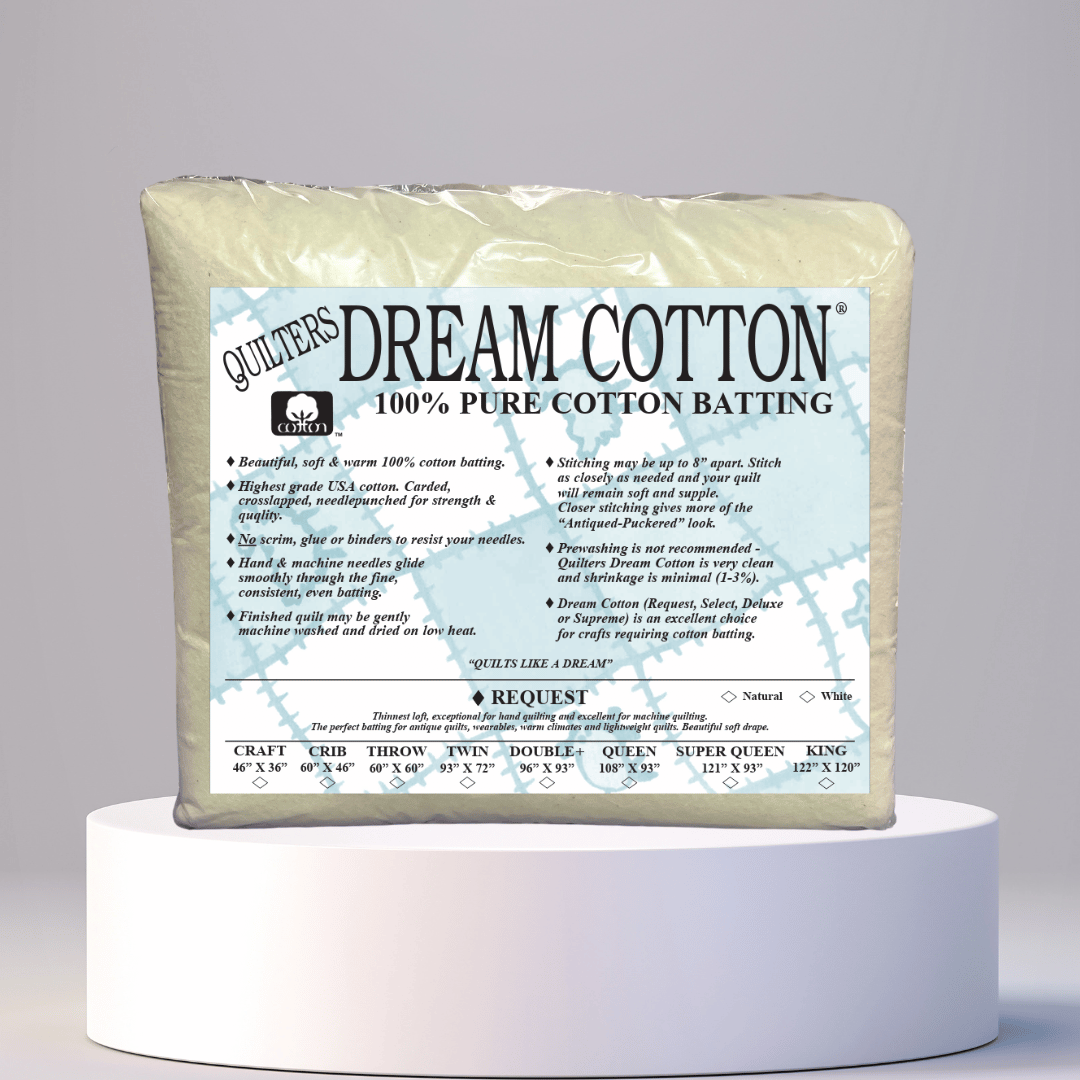
Second, keep a dedicated thin batt on hand. I keep one low-loft cotton package just for runners, placemats, and mug rugs. I do not cut into it for quilts. That way it is always there when a table project starts. It saves me from grabbing whatever is closest.
Third, quilt it simply. For table pieces I like straight lines or a gentle echo about 1 to 2 inches apart. That is enough to hold the layers. It keeps the surface even. Use a walking foot if you have one. It feeds all three layers at the same speed and helps everything stay flat.
Fourth, press with purpose, but do not crush and hope. Press your top before you baste. Press the finished piece from the back. A puffy batt will still be puffy under that press. Pressing finishes a flat piece. It does not turn a thick batt into a thin one.
Here is what I use and why. For most runners and placemats, I reach for the thinnest cotton batting I have. It lies smooth. It quilts clean on my home machine. And it lets the piecing be the star, not the puff. That is my preference, after a lot of holiday tables here in McKinney. A thin poly or a cotton-poly blend can work too if you like a crisper hand. Completely up to you.
And please hear this permission beat. If you already made a runner with thicker batting, it is not ruined. Use it under a centerpiece. Use it on a sideboard. Save it for soft things. You are your own worst critic here. Nobody at dinner is grading your batting choice.
When it matters most
This matters most for placemats. They get a plate, a glass, and silverware, all at once. It matters for runners under serving dishes too, especially hot dishes you want sitting level and steady.
It matters less for wall hangings and bed quilts. There, bring on the loft. Let it show off your quilting. Different project. Different job.
It also matters for gifts. A set of placemats that sit flat feels professional. The recipient may never know why. They will just know everything feels right on the table. Take your time choosing that layer. It is not a race. If I can do this, y'all can do it.
Thanks for spending a little time with me today. We'll see you next time. Bye.
Shop Quilters Dream Request Natural Cotton Batting Package — Craft 46" × 36" at Linda's Electric Quilters.


