
Hey everyone. Today you will learn how to make a quilted jacket that drapes like clothing, not like a sleeping bag.
Here we go. You have seen that jacket. Maybe you have made that jacket. The quilting is pretty. The fabric is perfect. But when you put it on, you look round. Really really round. Oh my goodness. Arms out. Shoulders puffed. You feel like a tire mascot.
That is not your sewing. That is your batting choice. A jacket is not a bed quilt that happens to have sleeves. It has a different job, folks.
Why it happens
A bed quilt wants loft. Loft is trapped air. That air gives you warmth and puff. On a bed, puff is cozy. On a body, puff adds bulk everywhere.
Your body bends. Your elbows bend. Your shoulders move. Thick batting fights every bend. It stands away from your body instead of falling with it. That is the Michelin look, plain and simple.
Here is the part nobody tells you. Batting also takes up room inside the jacket. Think about it. You have an outer layer. You have batting. You have a lining. All three live inside the same seam.
That stack eats ease. Ease is the extra room a pattern gives you to move. If the batting is thick, the inside of the jacket gets smaller. The sleeves feel tight. The back pulls. The front will not close right. Same pattern. Same size. Different batting. Completely different fit.
Warmth fools us too. We think thicker must mean warmer. For a jacket you wear indoors and out in town, a thin layer plus quilting is often plenty. You want warmth without the waddle.
What to do about it
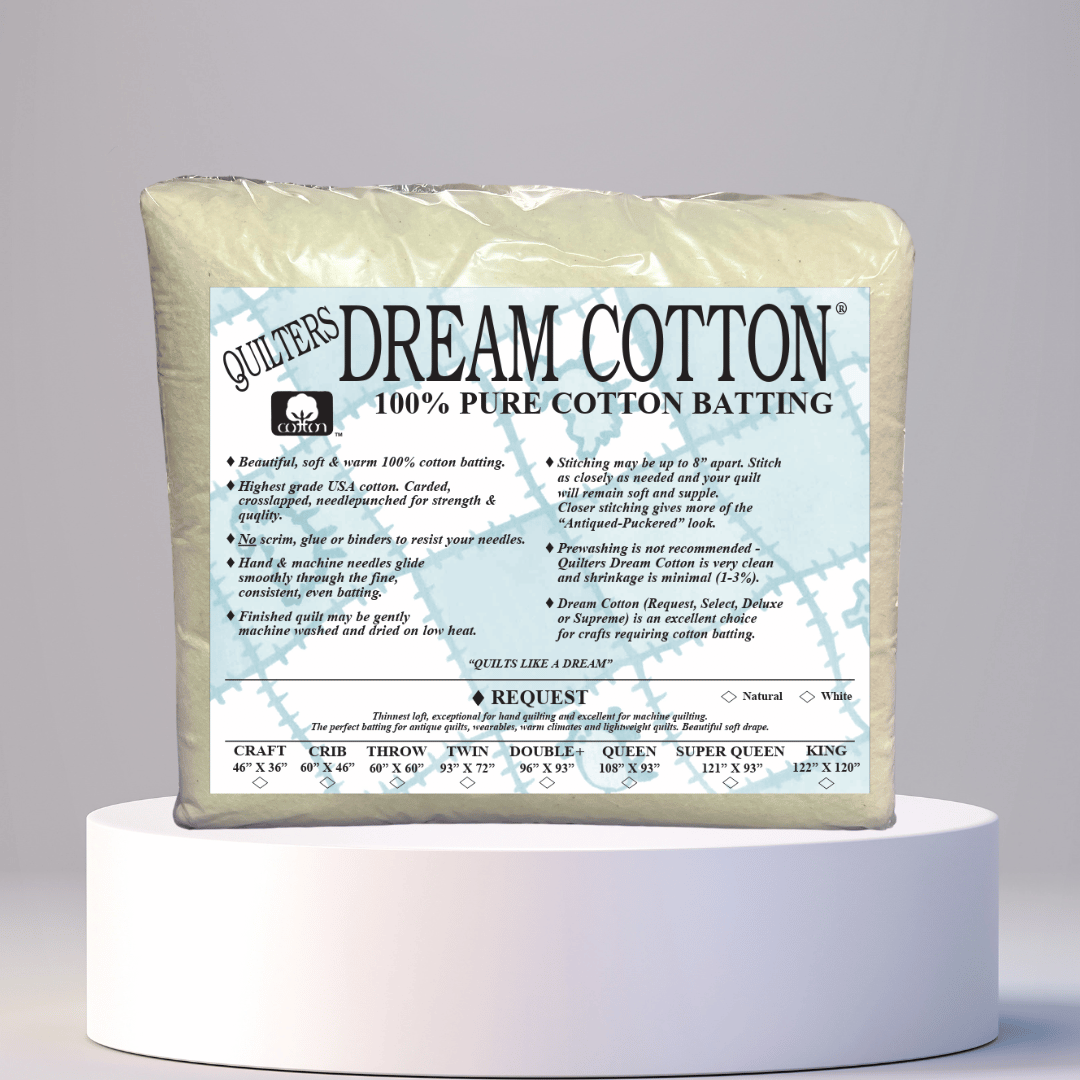
First, choose low-loft batting on purpose. Look for the thinnest cotton or cotton blend you would trust in a quilt. I reach for a low-loft, Request-style cotton batting for jackets. It lies flat. It drapes soft. And it quilts clean without adding a shell of puff around me.
Second, add a touch of extra ease. If your pattern was drafted for flat fabric, give the quilted version a little more room. That can mean going up a size in the body, or adding about 1/4 to 1/2 inch at the side seams on your test piece. Do not guess on the real jacket. Test it first.
Third, make the famous quilted sleeve test. Cut one sleeve shape from your fashion fabric. Layer it with your batting and lining. Quilt it just like the jacket. Then try that curved, quilted piece around your arm. Bend your elbow. Reach forward. If it feels stiff, go thinner. If it pulls, add ease. Just like that, one sleeve tells the truth.
Fourth, quilt with drape in mind. Wide, gentle lines keep a jacket soft. I like channels or a simple echo about 2 to 3 inches apart for garment work. Dense quilting at 1 inch can turn even thin batting into armor. More stitches means more stiffness. Completely up to you, but test the hand first.
Fifth, keep seams lean. Trim batting out of seam allowances where you can. Grade those layers so they do not stack into a ridge. Your collar, cuffs, and front edge will thank you. They will lie flat and close clean.
And here is your permission beat. If your first jacket came out puffy, you did not fail. You learned what every jacket maker learns. Take your time. It is not a race. The next one will drape better because now you know. If I can do this, y'all can do it.
When it matters most
This matters most for fitted jackets and vests. The closer the fit, the more batting bulk changes the size. It matters at sleeves and shoulders too. Those curves show stiffness first.
It matters less for a loose barn coat or a cozy overshirt. There, a little more loft is fine. The shape has room to spare. Different jacket. Different job.
It also matters for gifts. A jacket that moves like clothing gets worn. A jacket that feels like bedding stays in the closet. Choose the thin batt. Make the sleeve test. Wear the thing everywhere.
Thanks for spending a little time with me today. We'll see you next time. Bye.
Shop Quilters Dream Request Natural Cotton Batting Package — Craft 46" × 36" at Linda's Electric Quilters.


