
How to Choose Sewing Machine Needles: Nonstick, Topstitch, and Microtex Tips for Quilters
A sewing machine needle is a small part that does a big job. When stitches skip, thread shreds, or a seam looks less crisp than it should, the needle is often the first thing worth checking. This Sewing Machine Needles assortment covers three types — Universal Super Nonstick, Topstitch, and Microtex — so you can match the needle to the material and thread in front of you. Each pack includes 5 needles.
What These Needles Are
Universal Super Nonstick needles have a coating that helps them glide through materials such as stabilizers and fusibles. That makes them useful for all sorts of projects, including machine embroidery. Their design prevents skipped stitches and can penetrate thicker fabrics such as denim.
Topstitch needles have a larger eye, which is recommended for heavier, multiple, or delicate threads, such as metallic thread.
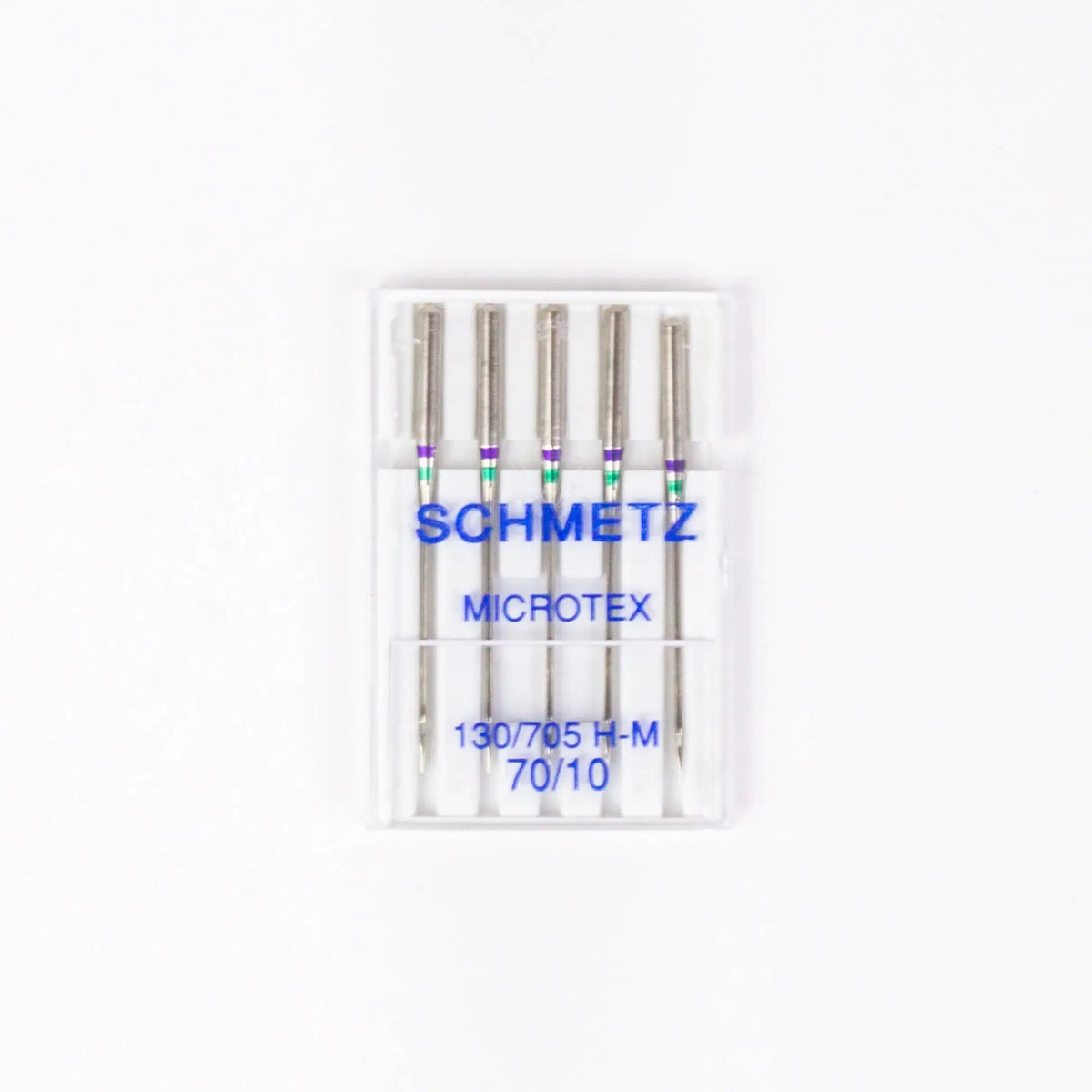
Microtex needles, in size 70/10 in this pack, are designed with a very slim, fine point that is perfect for precise stitching.
Why Quilters and Sewists Use Different Needles
Quilting rarely stays with one material for long. One project might combine cotton, a fusible interfacing, and a stabilizer for an embroidered label; the next might add decorative topstitching with a specialty thread. Each combination asks something different of the needle.
A nonstick needle helps when adhesives and stabilizers would otherwise drag as it passes through the layers. A topstitch needle gives bulkier or more delicate thread more room through the eye. A fine-point Microtex needle is the choice when placement matters most and you want each stitch to land exactly where you aimed it.
How to Use Them, Step by Step
- Start with the material. If your project involves stabilizers or fusibles — or machine embroidery — reach for the Universal Super Nonstick first.
- Then look at the thread. If you are stitching with a heavier thread, more than one thread, or a delicate thread such as metallic, switch to a Topstitch needle for its larger eye.
- Choose Microtex for precision work. When the stitching itself is the detail — careful, precise lines that will show — use the Microtex 70/10.
- Turn the machine off before changing the needle. Loosen the needle clamp, remove the old needle, and insert the new one fully before tightening the clamp again, following your machine manual.
- Test on scrap first. Stitch a short sample using the same layers and thread as your project. Check for skipped stitches and adjust your needle choice before you sew the real piece.
- Change needles when performance changes. If a needle that was stitching well starts skipping or struggling to penetrate your fabric, replace it rather than pushing on.
Practical Tips
- Keep the three types separate and labeled. Needles look similar at a glance, and the right needle in the wrong moment is no help at all.
- Let the project decide: sticky layers point to Nonstick, specialty thread points to Topstitch, and fine, precise stitching points to Microtex.
- For thicker fabrics such as denim, the Universal Super Nonstick design is made to penetrate while helping prevent skipped stitches — sew your test seam on the same thickness you will use in the project.
- When working with metallic or other delicate threads in a Topstitch needle, slow down a little and watch the first few stitches; a test seam will show you quickly whether the combination is happy.
Care and Storage
Store needles in their packs, sorted by type, so the size and style stay identifiable. Keep a separate container for used needles so dull ones never wander back in with the fresh ones. If a needle is bent or starts causing skipped stitches, retire it — with five to a pack, a fresh replacement is close at hand.
Project Ideas
Use the Universal Super Nonstick for machine-embroidered quilt labels and gifts built on stabilizer, and for fusible appliqué projects where layers are bonded before stitching. Reach for Topstitch needles for decorative quilting and topstitched finishes using heavier or metallic threads. Choose Microtex for precise piecing and detailed stitching where clean, accurate lines make the design.
Shop the Sewing Machine Needles at Linda's Electric Quilters.


