
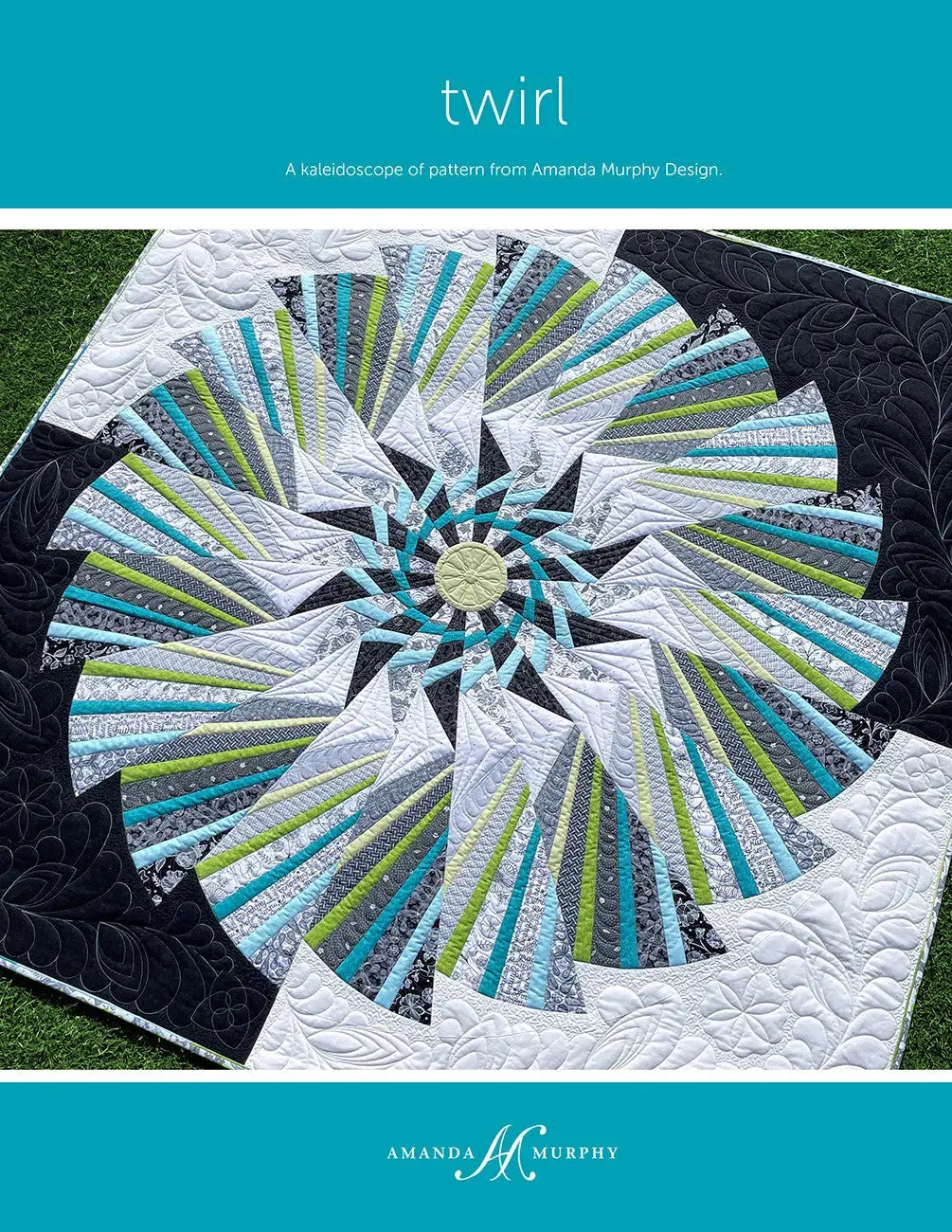
How to Make the Twirl Quilt: Foundation Paper Piecing a Kaleidoscope Design
If you love quilts that seem to spin, swirl, and dance across the bed, Twirl is a pattern worth knowing. Twirl is a printed paper pattern for a 70-1/2 inch by 70-1/2 inch quilt — a generous square throw or topper size. Its foundation-pieced design creates a kaleidoscope of movement, and it is presented in two different looks: one made from Amanda's black-and-white Botanica collection for Contempo or Benartex, and a second made from Amanda's colorful Vibrancy collection. That contrast is part of the lesson here: the same layout can feel graphic and modern in black and white, or joyful and energetic in color.
Twirl is rated for intermediate quilters. Along with standard machine sewing, it uses foundation paper piecing and appliqué, and paper templates are included. One of its most appealing features is that there are no seams to match — a real relief in a design that looks this intricate.
Why Quilters Choose a Design Like Twirl
Foundation paper piecing is prized for accuracy. Because you sew directly on a printed foundation line, sharp points and complex angles come together more precisely than they often do with conventional piecing alone. For a kaleidoscope effect, that accuracy matters: small errors multiply as units repeat around the design. Twirl channels that precision into movement, so the finished quilt reads as spinning rather than static. It also suits both modern and traditional quilters — change the fabric story, and the personality of the quilt changes with it.
How to Use the Pattern, Step by Step
- Read the whole pattern first. Confirm the finished size, the technique list, and which version you will make before you cut anything. Note where foundation piecing ends and appliqué begins.
- Choose your fabric direction. Follow the high-contrast idea of the black-and-white version for a crisp, graphic result, or choose a varied colorful palette for a vibrant effect. Lay fabrics out together in daylight to check contrast.
- Prepare the foundations. Use the included paper templates as directed. Make clean, complete copies or foundations as the pattern instructs, and label each unit so repeated kaleidoscope sections do not get mixed up.
- Piece one test unit. Sew a single foundation unit first, checking that your stitch length is short enough to perforate the paper for easy removal, but not so short that tearing distorts seams. Press and trim exactly as directed.
- Build and join the units. Work in batches, pressing as you go. Take comfort in the design's promise of no seams to match, but still pin carefully and keep edges even for a flat top.
- Finish the details. Complete any appliqué steps, remove foundation papers gently, give the top a final press, then layer, quilt, and bind as you prefer.
Practical Tips for Success
Keep your fabrics organized by position, not just by color — in a spinning design, placement creates the movement. Use a consistent seam and pressing routine from unit to unit. If a point looks off, unpick that one small foundation seam rather than forcing the next unit to compensate. And photograph your layout before final joining; a phone picture makes it easy to spot a turned unit that creates a break in the kaleidoscope.
Care and Storage
Store the printed pattern flat in a labeled envelope or pattern sleeve, keeping the paper templates together so none go missing between projects. Keep it away from moisture and direct sunlight. Once finished, care for the quilt according to your fabric and batting choices, and fold or roll it for storage to avoid hard creases across the pieced design.
Project Ideas
Make Twirl exactly as shown at 70-1/2 inches square for a statement throw, sofa quilt, or bed topper. Try it once in neutrals for a modern room, then again in saturated color for a completely different mood. It also makes a memorable gift quilt for someone who loves motion and geometry, and a strong skill-builder if you want to grow more confident with foundation paper piecing and appliqué in one project.
Shop the Twirl at Linda's Electric Quilters.


