
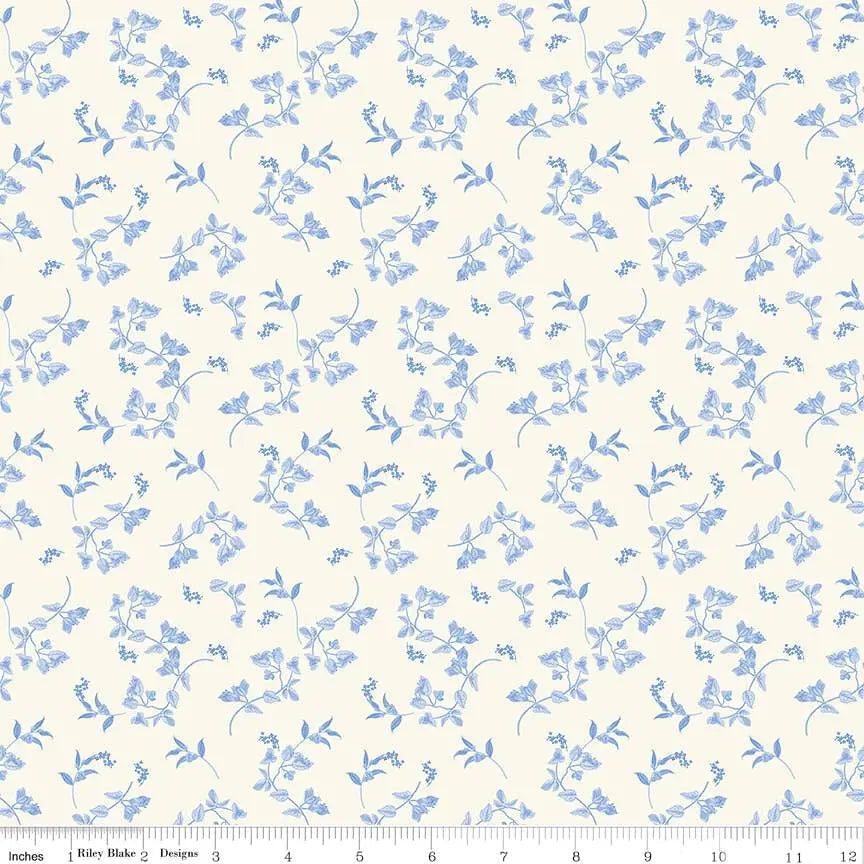
How to Back a Quilt in One Seamless Piece: Cream Wideback Basics
Piecing a quilt back from standard-width fabric means measuring, seaming, and pressing long panels — and hoping the seams land where you want them. A wideback fabric skips most of that work. At 107/108 inches wide, Penelope Stems Cream Cotton Wideback gives you a single, seamless backing for most quilts, printed with tossed sprigs of leaves on a soft cream ground. Here is how widebacks work, and how to get the most from this one.
What This Fabric Is
Penelope Stems Cream is a 100 percent cotton wideback fabric from the Penelope collection by My Mind's Eye for Riley Blake Designs. It measures 107/108 inches wide — more than double the width of a standard quilting cotton — and it is sold by the yard. The print features tossed sprigs of leaves scattered across a cream background, a gentle, allover design that adds texture without competing with the quilt top.
Riley Blake Designs describes the Penelope collection as suitable for quilting, apparel, and home decor, and this wideback is built to accommodate most quilt backs in a single piece. One yard gives you a cut roughly 36 inches long by the full 107/108-inch width, so a typical throw, twin, or even queen top often needs only two to three yards and no piecing at all.
Why Choose a Cream Leaf Print for the Back?
The back of a quilt gets seen more than we admit — draped over a sofa, folded at the foot of a bed, or flipped over on a chilly evening. A cream ground with a delicate leaf sprig print looks finished from every angle, and it hides the quilting stitches and everyday wear better than a flat solid would. Cream is also a forgiving partner: it sits comfortably behind warm autumn palettes, soft pastels, bright modern prints, and traditional florals alike, so one bolt of backing can serve several projects.
Because the sprigs are tossed rather than arranged in rows, there is no up or down to the print. You never have to worry about the design running sideways, and directional mistakes simply cannot happen.
Measuring, Cutting, and Layering
Start by measuring your finished quilt top, then add extra all the way around — most quilters allow at least 4 extra inches per side for longarm quilting, and a few inches for home-machine quilting so the layers can shift without exposing the batting. With a 107/108-inch width, check whether your top's shorter dimension fits across the width; if it does, you only need yardage equal to the longer dimension plus your overage.
Before layering, press the wideback well — fabric this wide can hold fold creases from the bolt, and a good steam press pays off. Square up the cut ends so the fabric hangs evenly. When you build your quilt sandwich, smooth the backing taut and flat, lay the batting over it, then center the top. Because there is no center seam, you avoid the ridge that pieced backs can telegraph through the quilting, and basting goes faster.
One practical tip: pin or mark the top edge of your backing before you load or baste it. The print looks the same from every direction, which is a blessing, but it also means the fabric will not remind you which end is up.
Beyond Quilt Backs
That generous width earns its keep elsewhere, too. Use it for duvet covers, curtain panels, and tablecloths — anywhere a wide, seamless span of cotton helps. Offcuts from trimming a quilt back make lovely pillow shams or napkins that coordinate with the finished quilt.
Care
Care follows the instructions given for this fabric: machine wash cold and tumble dry low. Many quilters pre-wash quilt backs, since the backing and top can shrink at slightly different rates; if you pre-wash your top fabrics, pre-wash this one the same way. Wash finished quilts in cold water and dry on low to keep the cream ground bright and the cotton soft.
Shop the Penelope Stems Cream Cotton Wideback Fabric per yard at Linda's Electric Quilters.


