

Last Updated: October 22, 2026
Quick Summary
The best detergents delicate quilting fabrics require are mild, pH-balanced formulas without optical brighteners or dyes. Choose from seven types: pH-neutral delicate wash, conservation-grade textile detergent, low-suds hand-wash formula, fragrance-free sensitive-skin detergent, wool-safe detergent, silk-safe detergent, or a plain cool-water soak for the most fragile pieces.
- Use cool water and soak 15-20 minutes rather than agitating when hand-washing quilts.
- Rinse thoroughly until water runs clear, typically 3-5 rinses, to prevent detergent residue from causing yellowing.
- Use about half the detergent amount you would for regular laundry to avoid leaving residue in batting and seams.
- Prewash quilting fabric before sewing with cool water and mild detergent to test colorfastness and prevent dye bleeding.
- Never use hot water, fabric softener, or high-heat drying, as these damage fibers, shift batting, and set stains.
Table of Contents
- Why Detergent Choice Matters for Quilting Fabrics
- What to Look for in a Detergent for Delicate Quilts
- Prewashing Quilting Fabric Before Sewing
- How to Wash a Handmade Quilt Properly
- Selecting the Right Detergent for Hand Washing Quilts
- Common Mistakes That Damage Delicate Quilts
- Frequently Asked Questions
Why Detergent Choice Matters for Quilting Fabrics
Choosing the right detergents delicate quilting fabrics requires is one of the most overlooked decisions quilters make.
Quilting fabrics are vulnerable: often natural fibers like cotton, linen, silk, or wool, and many quilts combine vintage and modern fabrics, embellishments, delicate stitching, and batting that can shift or pill.
Quilters often ask what detergent to use, and the answer is always a mild, pH-balanced formula that cleans without degrading fibers or changing colors.
What to Look for in a Detergent for Delicate Quilts
Not all mild detergents are created equal, and not all gentle-cycle settings protect quilts as you'd expect.
Mild and pH-Balanced Formulas
A mild detergent removes soil without stripping fibers. pH balance matters because natural fabrics are sensitive to alkaline environments, which can cause dyes to bleed, fibers to weaken, and colors to shift.
Look for detergents labeled pH-balanced or designed for delicate fabrics.
The gentlest detergents use surfactants that suspend dirt rather than scrubbing it away, reducing mechanical stress on fibers.
Dye-Free and Brightener-Free Options
Optical brighteners and dyes deposit chemicals on fabric surfaces to make whites whiter and colors more vibrant. On vintage or antique fabrics, these additives can alter original color, create a patchy appearance, leave dirt-attracting residue, and cause color bleeding in adjacent fabrics.
Dye-free and brightener-free detergents preserve the original appearance of your quilting fabrics, especially important for reproduction-era fabrics or vintage textiles where color accuracy matters.
Low-Suds and Low-Foaming Detergents
Excessive suds trap dirt and detergent residue in fibers that doesn't fully release when you rinse, leaving a film that dulls colors and causes spotting or staining.
Low-suds detergents rinse more completely and are essential for hand-washing, since rinsing out thick foam takes far longer than rinsing clear water.
Prewashing Quilting Fabric Before Sewing
Prewashing decides whether a finished quilt holds its colors or bleeds dye onto adjacent pieces, and teaches most quilters, sometimes the hard way, that colorfastness varies enormously between fabrics, even within one manufacturer's line.
Why prewash quilting cotton
Quilting cotton carries sizing, finishes, and excess dye from the mill. Washing before cutting removes those treatments, preshrinks the fabric, and reveals whether a saturated red, navy, or purple will bleed in cool water, before it's sewn next to a cream background, not after.
Test for colorfastness before you commit
Before washing a whole piece of yardage, run a simple bleed test:
- Cut a small square of the fabric.
- Place it on a white paper towel or a scrap of white cotton.
- Wet it with cool water and press it gently.
- Check whether color transfers to the white material.
If color moves, treat the fabric as a bleeder. Wash it separately in cool water, with a color catcher sheet if you use one, and repeat until the rinse water runs clear. Only then combine it with lighter fabrics in a project.
How to prewash
Use cool water and a mild, dye-free detergent. Soak 15-20 minutes rather than agitating, then rinse until the water runs clear. Wash dark or saturated fabrics separately from lights on the first pass. Dry flat or on a rack; if you use a dryer, choose a low or delicate setting.
Prewashing and shrinkage
Some quilters skip prewashing to avoid shrinkage, but it happens either way, the question is whether it happens before or after piecing. Once prewashed and dried, most shrinkage is done, reducing uneven puckering. If you mix prewashed and unwashed fabrics, prewash all of them so they behave consistently.
Mixed-fiber and embellished projects
When a project combines quilting cotton with linen, wool, or silk, prewash each fiber type to its own needs, cool water and mild detergent for cotton and linen, wool-safe for wool, silk-safe for silk. For appliqué or embroidery, test colorfastness on a swatch first and consider spot cleaning rather than a full prewash.
How to Wash a Handmade Quilt Properly
Washing a finished quilt differs from washing fabric: batting is sandwiched between layers, stitching holds everything together, and embellishments may be attached. Rough handling can shift batting, break stitches, or damage embroidery.
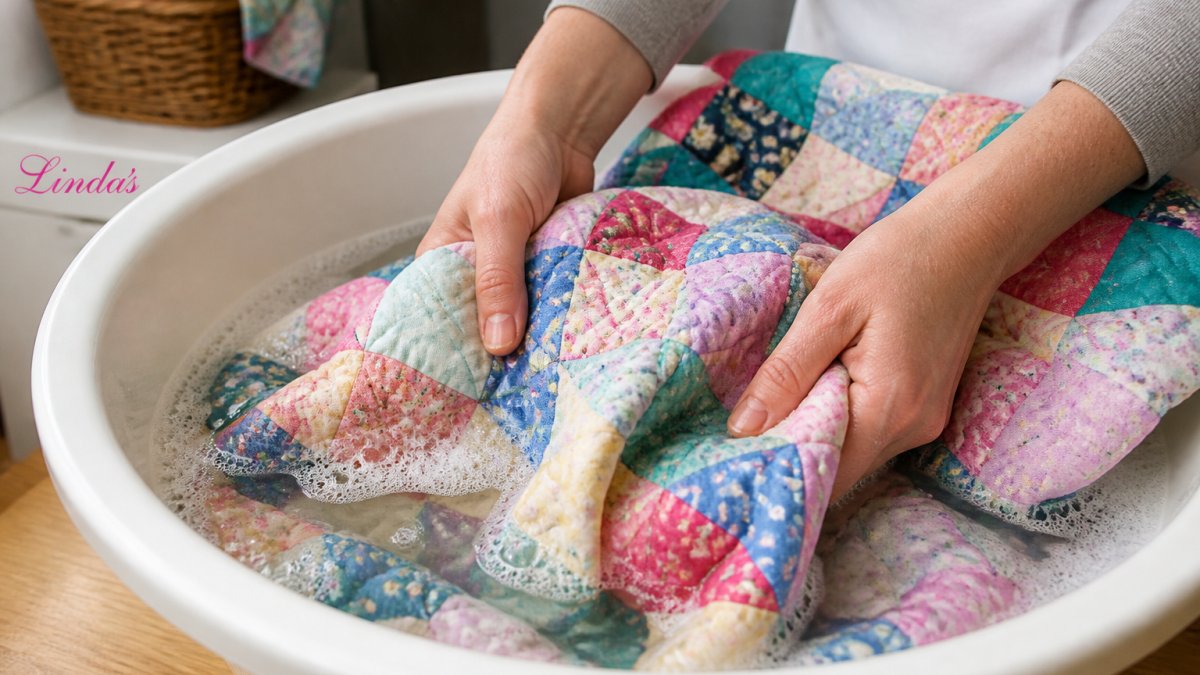
Hand-Washing Your Quilt
Hand-washing is the gentlest method. Fill a bathtub or large basin with cool water and a small amount of mild detergent, submerge the quilt, and soak 15-20 minutes without agitation.
After soaking, gently squeeze soapy water through the fabric. Don't wring, twist, or scrub; for stains, soak longer rather than rubbing, most release with time and gentle soaking.
Drain and refill with cool, clean water, squeezing out detergent, and repeat until the water runs clear, usually 3-5 rinses. Thorough rinsing is critical because detergent residue attracts dirt and causes yellowing over time.
Machine Washing on a Gentle Cycle
If you must use a machine, use the delicate or gentle cycle with cool water. Place the quilt in a mesh washing bag to reduce agitation. Use less detergent than for regular laundry, a quilt doesn't get as dirty as everyday clothes.
Never use the spin cycle. Instead, remove the quilt from the machine and let it drain naturally in a sink or bathtub. Spinning can stress seams and shift batting.
Cold Water and Rinse Thoroughly
Cold water is essential. Hot water opens fiber structures, increasing dye bleeding and damage, and sets stains rather than releasing them.
Rinse thoroughly. Detergent residue is one of the biggest culprits in quilt deterioration, it traps moisture, attracts dirt, and causes yellowing or spotting. If unsure, do one more rinse; there's no such thing as over-rinsing.
Selecting the Right Detergent for Hand Washing Quilts
Hand-washing removes the machine's mechanical action, so the detergent must do more work while still rinsing clean with manual squeezing. A formula that performs well in a front-loader may leave residue in a bathtub soak, and one fine for a whole-cloth quilt can be wrong for a pieced top with appliqué or metallic thread.
The seven detergents worth considering
Below are seven formulas quilters commonly reach for, grouped by what they do best. These are selection categories, not a ranking, the right pick depends on the quilt in front of you.
1. A pH-neutral, dye-free delicate wash (liquid). The default for finished quilts with mixed fabrics.
**2.
**3.
4. A fragrance-free baby or sensitive-skin detergent. A practical stand-in when a dedicated quilt detergent is not available.
5. A wool-safe detergent. Appropriate for quilts that incorporate wool batting or wool appliqué.
6. A silk-safe detergent. For quilts with silk embellishment, silk thread, or silk batting.
**7.
Match the detergent to the quilt's construction
Detergent choice should follow what is inside the quilt, not just what is on the outside.
- Batting. Polyester batting tolerates mild detergent well. Cotton batting can hold residue and may need an extra rinse. Wool batting calls for a wool-safe formula and cool water. Silk batting is the most sensitive and benefits from a conservation-grade product.
- Pieced tops with many seams. More seams mean more places for detergent residue to collect. A low-suds formula and extra rinses reduce the risk.
- Appliqué and embroidery. These add surface texture and thread that can trap suds. A mild, low-suds detergent and a longer, gentler soak are safer than a stronger formula.
- Metallic and specialty threads. Some metallic threads are sensitive to alkaline conditions and can dull or discolor. A pH-neutral formula is the conservative choice.
- Beading and embellishments. Use the mildest detergent available and avoid any product with enzymes, which can attack protein-based materials.
Dosage and residue prevention
More detergent does not mean cleaner fabric. For hand-washing a quilt, use roughly half the amount for a comparable load of everyday laundry, and less for low-suds formulas. Measure with the cap rather than pouring freely. After the soak, rinse in cool water until it runs clear, typically three to five changes, and squeeze gently rather than wringing.
When not to hand-wash
Some quilts should not be washed at all. Antique quilts with fragile seams, hand-dyed fabrics with unknown dye stability, quilts with structural damage, and pieces with water-sensitive embellishments are candidates for spot cleaning or professional textile conservation rather than a full soak. If the quilt is irreplaceable, consult a conservator before washing.
Common Mistakes That Damage Delicate Quilts
Most quilt damage happens in the wash, not in storage or use.
Using hot water. Hot water opens fiber structures and sets stains.
Skipping the rinse. Detergent residue is invisible but destructive.
Agitating or wringing. Mechanical stress breaks fibers, shifts batting, and can split seams.
Using too much detergent. More detergent doesn't clean better.
Using fabric softener. Fabric softener leaves a coating that traps moisture and attracts dirt.
| Common Mistake | Why It Damages Quilts | Better Alternative |
|---|---|---|
| Hot water | Opens fibers, sets stains, causes dye bleeding | Use cool or cold water always |
| Skipping rinses | Detergent residue causes yellowing and spotting | Rinse until water runs clear |
| Agitation or wringing | Breaks fibers, shifts batting, splits seams | Soak and squeeze gently |
| Too much detergent | Leaves residue that's hard to rinse | Use half the normal amount |
| Regular machine cycle | Too much agitation for delicate construction | Use delicate or gentle cycle |
| High-heat drying | Sets wrinkles, shrinks unevenly, damages batting | Air-dry flat or on a rack |
| Fabric softener | Traps moisture, attracts dirt, reduces absorbency | Skip it entirely |
Washing a quilt properly takes time, but it's an investment in longevity.
At Linda's Electric Quilters, we help quilters protect their work. Visit Linda's Electric Quilters to explore our full selection of quilting supplies and access our library of care guides to keep your projects protected for years to come.
Frequently Asked Questions
What detergent is best for washing quilting fabric?
Choose a mild, pH-balanced detergent specifically formulated for delicate fabrics. Look for formulas that are dye-free and brightener-free to prevent color bleeding and fading. Low-suds detergents work best because they rinse out more easily, reducing residue that can damage fibers. Avoid regular laundry detergents, which often contain harsh chemicals and optical brighteners that can harm quilting fabrics over time.
Should you prewash quilting fabric before sewing?
Prewashing quilting fabric is optional but recommended if you're concerned about color bleeding or shrinkage. Use cold water and a mild detergent, then lay the fabric flat to dry. If you skip prewashing, test for colorfastness by dampening a hidden corner of the fabric with cold water to check for dye transfer. Many quilters prewash to prevent surprises after the quilt is completed.
Can you wash a quilt with regular laundry detergent?
Regular laundry detergent can damage delicate quilts. Standard detergents contain optical brighteners, strong surfactants, and enzymes designed for heavy-duty cleaning that may cause color fading, fiber weakening, and residue buildup. Regular detergent is still too harsh for quilts with natural fibers like cotton, linen, silk, or wool.
How do you prevent color bleeding when washing a quilt?
Use cold water, a mild detergent, and a gentle cycle to minimize color bleeding. Wash separately the first time if the quilt has vibrant or mixed colors. Rinse thoroughly until the water runs clear to remove all detergent residue, which can trap dyes. Avoid fabric softener, which can set dyes and leave buildup. If the quilt is vintage or has delicate embellishments, hand-wash instead of machine-washing for maximum control.



